
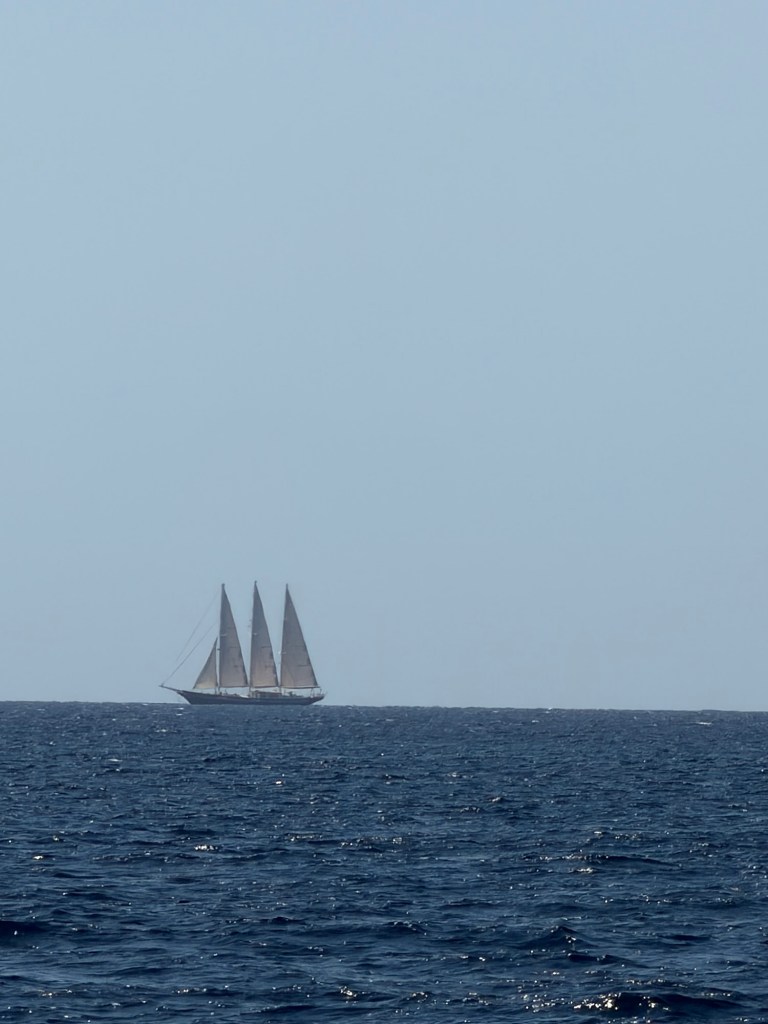
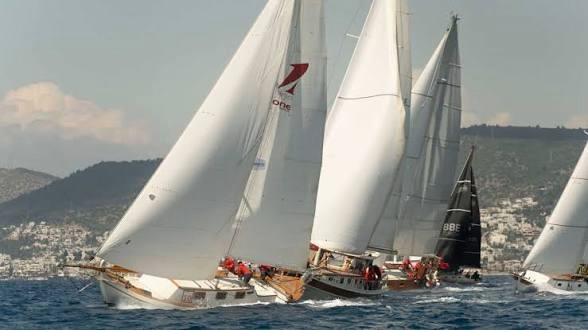
Imagine waking up in a bay somewhere in the Mediterranean, far from cities and civilisation. You are on a gulet, one of the wooden boats that originated in Bodrum, now doubling as a five-star hotel. You jump into the turquoise water while the chef prepares your breakfast.
After a leisurely swim and a hearty breakfast, the captain sails to another bay, perhaps even more beautiful than the last. If you are the curious type, you can hike ashore, explore the ruins of long-gone civilisations, then return completely rested.
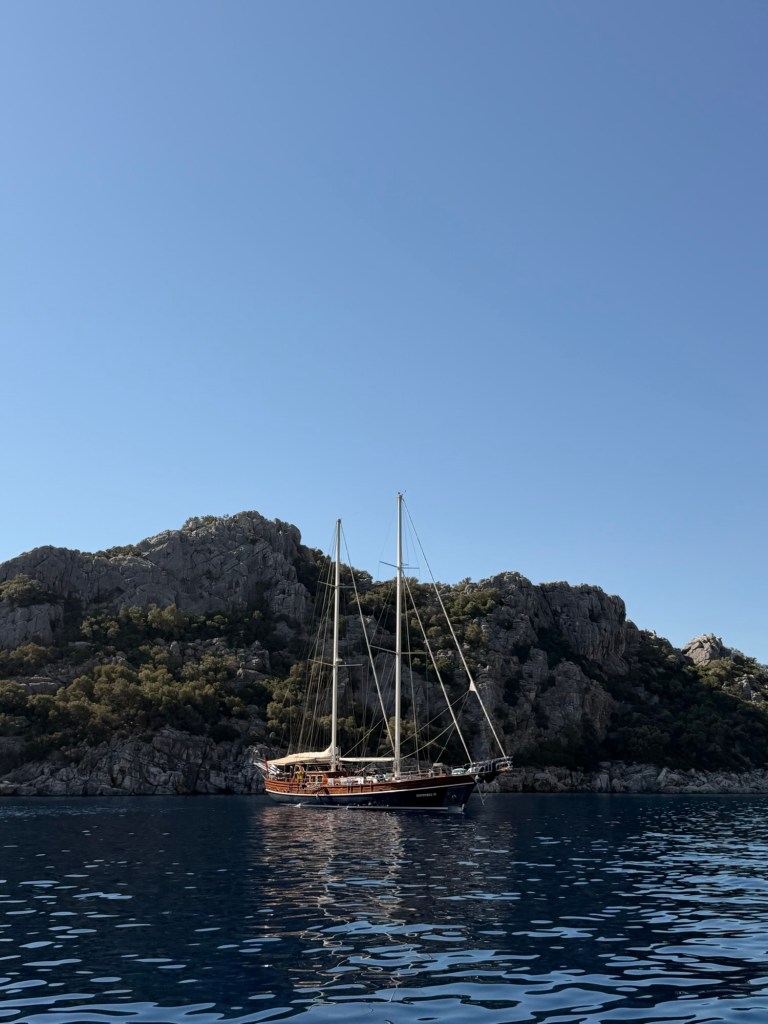
Depending on your budget, you can have one of the most exclusive and luxurious holidays imaginable.
This is the magic of the Blue Voyage along the Turkish Riviera.
But the original Blue Voyage began long before polished gulets, private cabins and carefully planned menus.
Its beginnings were considerably rougher.
In the 1940s, Cevat Şakir Kabaağaçlı, better known as the Halikarnas Balıkçısı, began inviting friends from Istanbul to join him on journeys along the coast around Bodrum and the Gulf of Gökova.
Cevat Şakir was one of the more colourful characters of the late Ottoman and early Republican generations. The son of a prominent pasha, he was born into privilege and superbly educated, including years spent in Europe. He was also something of a rebel, an intellectual aristocrat and the black sheep of his family.
Oh, and the accidental killer of his father.
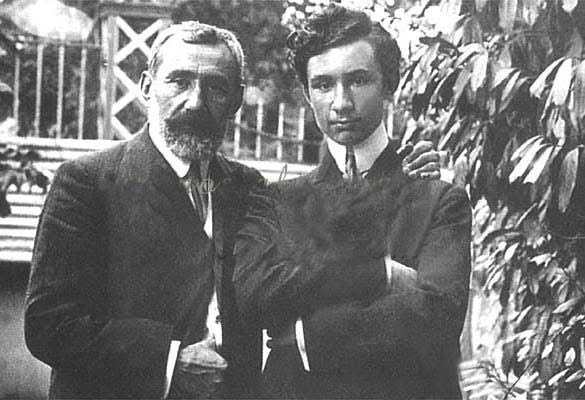
For that, he was sent into exile in Bodrum in 1925. That punishment not only changed him, but Bodrum as well.
He fell deeply in love with the place and started exploring the peninsula, learning about its climate, fauna, history and people. By the time his friends began arriving, he knew its fishermen, coves, ruins and stories intimately.
The first Blue Voyages were expeditions rather than holidays.
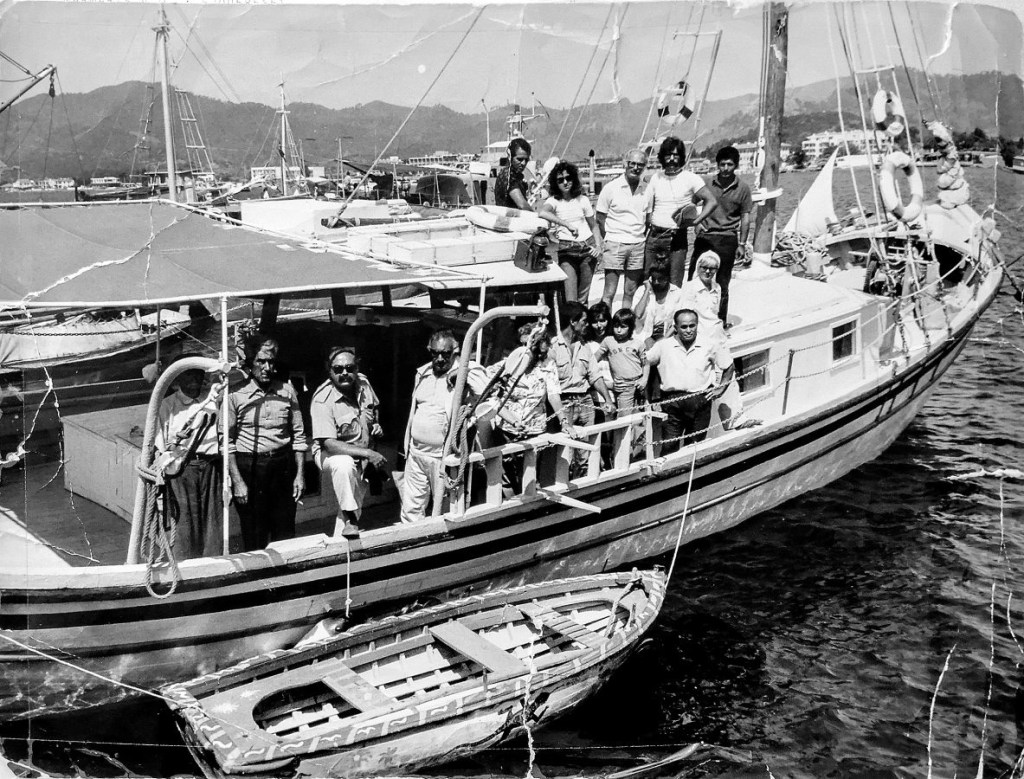
One of the earliest, in 1946, was made on a small tirhandil called Karakuş. There were no comfortable cabins or bathrooms. They slept on deck, carried the most basic provisions and supplemented them with whatever they could catch from the sea.
The people on board, however, were unusual: some of the leading intellectuals of their generation, working across very different disciplines.
Imagine the salons of 18th-century Paris, where philosophers and writers regularly exchanged ideas with artists, diplomats and scientists.
The early Blue Voyages had something of the same spirit, with the Mediterranean as their backdrop.
They might not have paved the way for another Enlightenment, but they achieved two things that were very important.
They brought Istanbul intellectuals and Anatolian locals together on more equal terms, something largely neglected during the Ottoman era.
And through their work, they made the ancient civilisations of Anatolia more visible and accessible.
Cevat Şakir was a writer and storyteller. Sabahattin Eyüboğlu was an essayist and translator. His brother Bedri Rahmi Eyüboğlu was both painter and poet. In later years they were joined by Azra Erhat, a classicist and translator; Alev Ebüzziya, an artist working in ceramics; and, somewhat later, Mina Urgan, a professor of English literature and writer.
There were many others over the years. But the core group rarely changed.
Their different disciplines were precisely the point. The boat became a kind of floating seminar.
Before visiting an ancient city, someone would read about it. A classicist might explain the mythology. Someone else would know the history. Cevat Şakir would tell them what local fishermen knew about the coast. Bedri Rahmi would sketch. The writers took notes.
They translated, argued, compared stories and questioned one another.
And then there was everyday life.
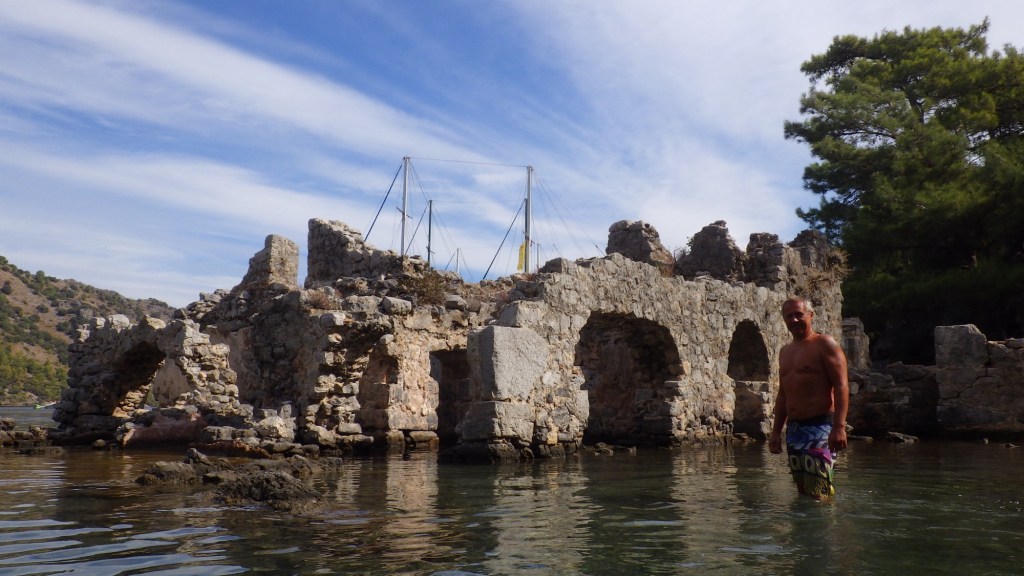
They fished during the day, swam, climbed ashore and walked through ruins that were often barely excavated, sometimes almost lost among olive trees and scrub.
At night they ate whatever had been caught, drank rakı and talked.
History. Archaeology. Carians. Homer. Artemis. Poetry. Politics. Literature. The origins of civilisation. The multi-layered culture of Anatolia.
I would give anything to have been part of those voyages and those discussions.
Everyone slept on deck in sleeping bags. They ate fish caught along the way. Mornings reportedly began with Cevat Şakir’s booming:
‘Merhaba!’ Whether you were ready or not.
The Blue Voyage was never simply about enjoying a beautiful coastline. They were trying to decipher it.
And that meant talking to the people who lived there.
Cevat Şakir’s relationship with Bodrum’s fishermen and sponge divers was central to the whole idea. One of the men involved in almost all the voyages was his fisherman friend Paluko, who knew the sea in a way none of the Istanbul intellectuals could.
This was also a period when Turkey’s intellectual climate was changing. Village life had become an important subject in literature and education, particularly through the Village Institutes and the writers who emerged from them. For a generation of intellectuals, Anatolia was no longer something to be observed only from Istanbul or Ankara. There was a conscious effort to travel through it, listen to people and understand how they actually lived.
The Blue Voyagers carried that attitude with them.
They did not assume that all useful knowledge belonged to them. Fishermen knew the sea, with its currents, winds and hidden coves. Villagers knew the land, local names, stories and traditions. Cevat Şakir in particular moved easily between these worlds, treating local knowledge as part of the history of the landscape rather than something separate from it.
By 1957, when Azra Erhat joined Cevat Şakir and Sabahattin Eyüboğlu on one of the voyages, the tradition had begun to take shape.
They travelled through Ephesus, Priene, Miletus and Didyma before eventually reaching Bodrum and heading into Gökova. At one stop, fish was being cooked over a fire while Sabahattin Eyüboğlu discussed a book he had been reading about the Sumerians.
They were also encountering places barely known beyond the people who lived around them.
One of the most striking examples was Sedir Adası, ancient Kedrai. Among the olive trees they came across the remains of an ancient theatre, a site that at the time had attracted little outside attention. Azra Erhat later wrote about it, helping bring wider notice to the island and its ruins.
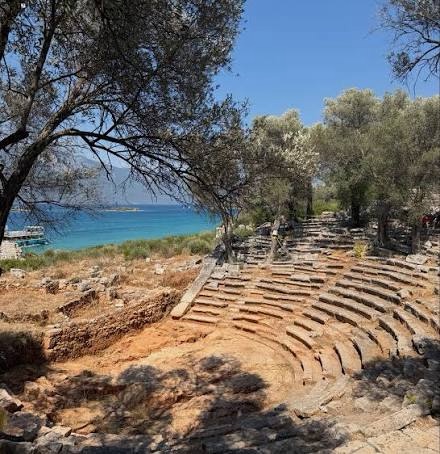
That was very much the spirit of the original Blue Voyage. They were not travelling from one famous sight to another. They were moving through a coastline where ancient remains, local memory and everyday life still overlapped.
Azra Erhat became one of the people who preserved this world. Her books Mavi Anadolu and Mavi Yolculuk transformed the journeys into something larger than a collection of boating memories. For Erhat, travelling this coast was a way of understanding Anatolia itself and the many civilisations layered upon one another there.
Sabahattin Eyüboğlu is generally credited with giving the journeys their name: Mavi Yolculuk, the Blue Voyage.
Cevat Şakir had begun the journeys; Eyüboğlu gave them a name. Bedri Rahmi gave them another kind of permanence.
He drew constantly. On the first Blue Voyage alone, he reportedly filled several notebooks with drawings. The landscapes and encounters later appeared in his poetry and painting.
One of his most well known works is the famous Fish he drew on a rock at Göcek, at the bay now carrying his name. Local artists regularly restore the ‘Fish’ to its original colours, for it’s open to the elements.
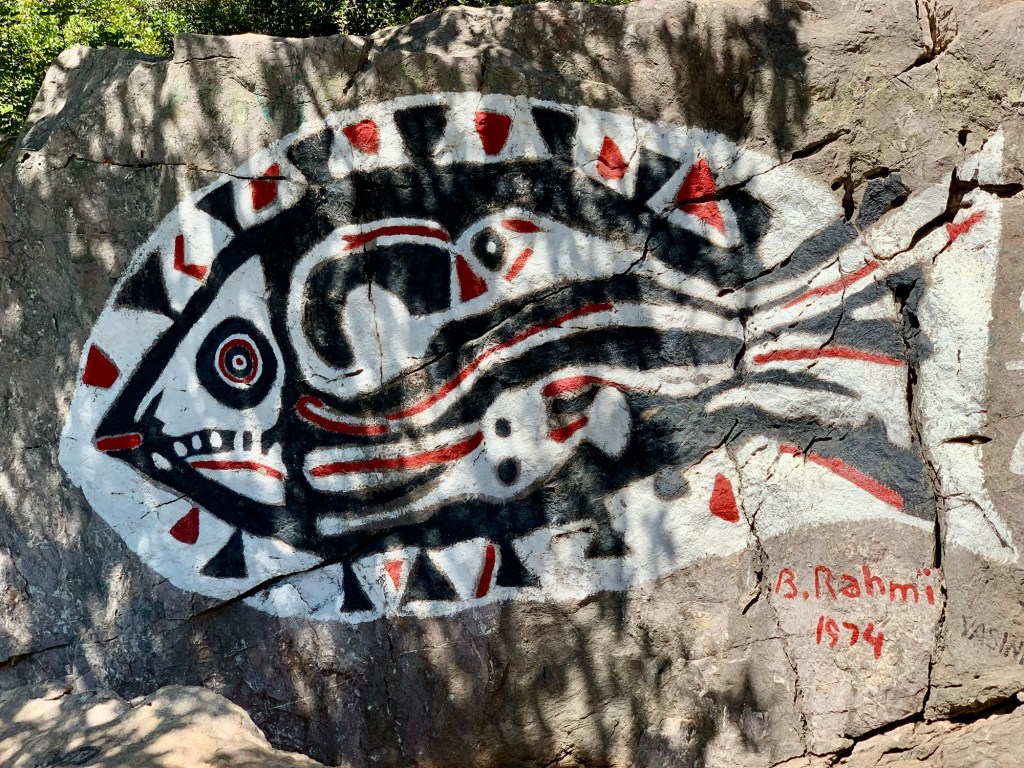
The voyages produced essays, poems, paintings, translations and books. The people travelling together were not merely consuming the landscape. They were responding to it creatively.
By the time Mina Urgan joined her first Blue Voyage in 1963, the trips had already become something of a tradition.
Her account is useful because it removes any temptation to make the early voyages sound too idyllic.
Thirty-two people left Kuşadası aboard an ageing boat called Macera. They immediately encountered bad weather. Everyone slept outside. Waves came over the deck. Blankets were soaked.
They eventually reached Bodrum exhausted.
And carried on.
Urgan remembered these journeys with affection, but without much romantic fog. Comfort was not the point. You were expected to get up early, go ashore, see the ruins, listen, read and learn.
Sleeping through the morning was apparently a sin.
By then, the Blue Voyage was becoming famous, but it was still very different from what the phrase would later come to mean.
There is something wonderful about that original idea, especially now, when almost every beautiful bay can be found on your phone before you ever arrive there.
A group of writers, painters, intellectuals and academics got onto rather uncomfortable boats and travelled along a coast that much of urban Turkey barely knew.
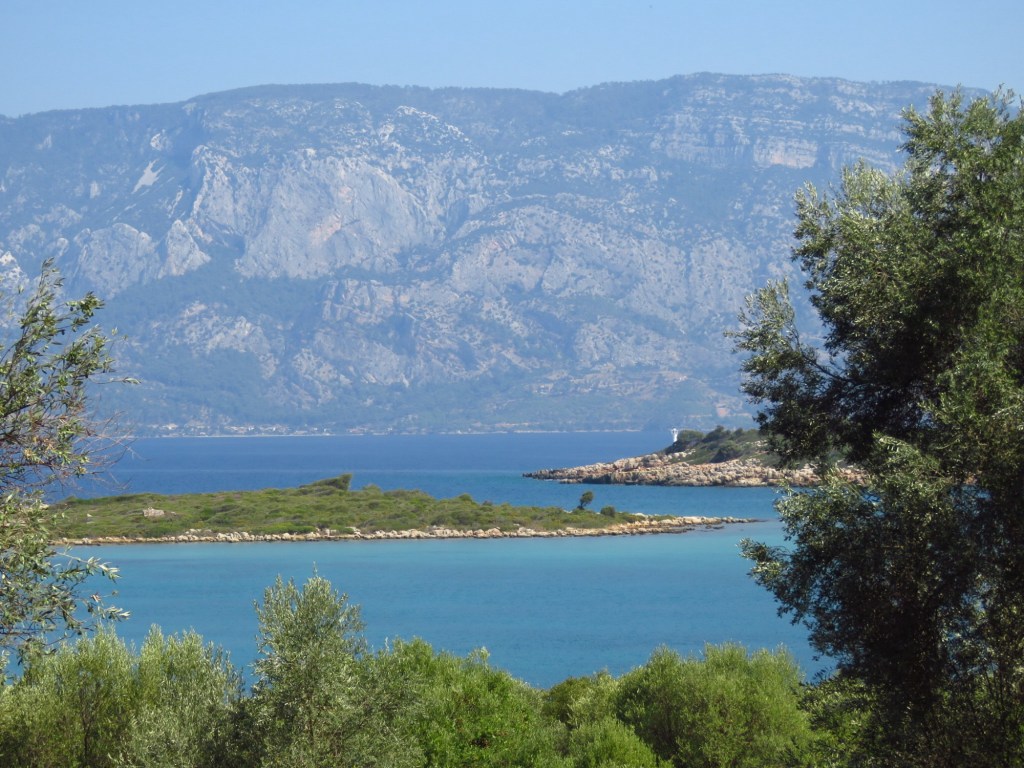
They caught their lunch, climbed through forgotten ruins, talked to fishermen and villagers, taught one another what they knew and admitted what they didn’t.
Then they went home and painted it, translated it, argued about it and wrote about it.
Today, the boats are more comfortable, the menus considerably better and very few people are expected to catch their own dinner.
But something of the original idea survives.
To travel slowly. To look closely. To learn from the people already there. And to leave knowing a place rather better than when you arrived.
Without really intending to, those first Blue Voyagers created one of the most enduring ways of travelling the Turkish coast.

 CherryPicks