
Some places seduce you the moment you arrive. Montenegro is not one of them.
Our first hours in the country were a lesson in patience. The immigration line at Tivat Airport was chaotic and endless. The queue for the rental car was even longer. By the time we finally got through, heavy rain had started, and traffic crawled along the coast.
When we finally reached our apartment in Tivat, my husband and I were tired, wet, and wondering whether coming here had been a mistake.
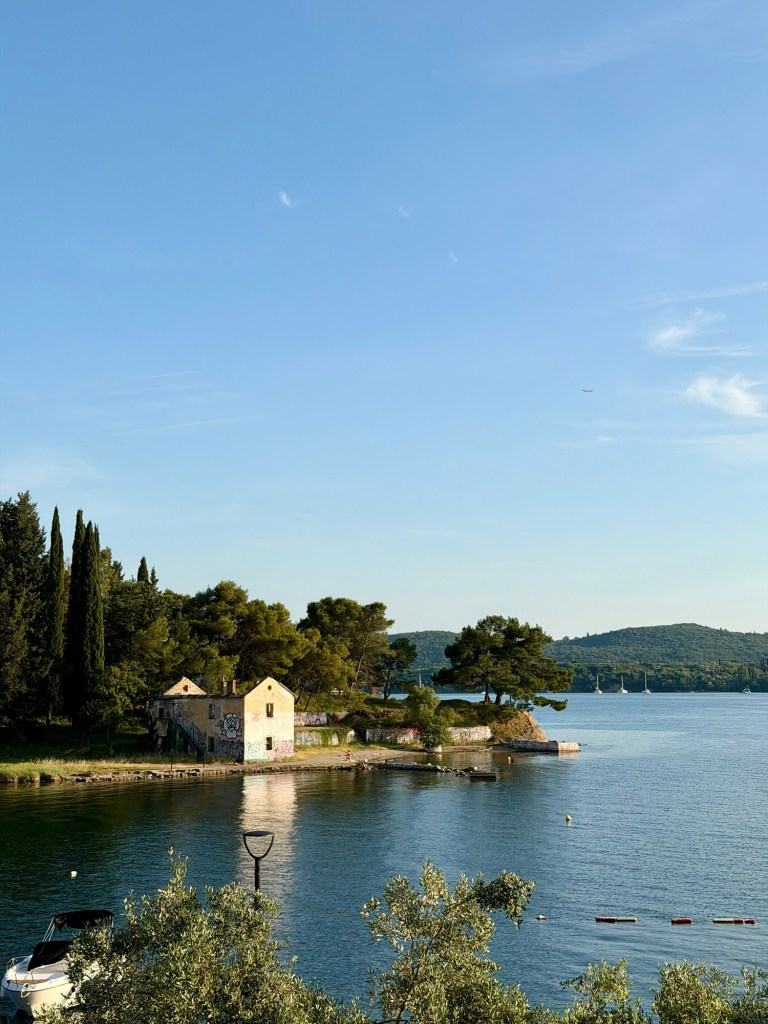
Outside our balcony, the view of the bay was peaceful, but it did little to lift our mood at first. The rain showed no sign of stopping.
Montenegro felt dark and gloomy for a country so often described as one of the Adriatic’s hidden treasures. Then, almost without warning, the rain stopped and the sky turned a soft shade of pink.
And just like that, life was good once more.
By evening, the storm was already a distant memory, and we were excited to discover somewhere new.
After a slow stop at a local grocery store—we were realising that waiting is a favourite pastime here—we wandered towards Porto Montenegro.
Every sailor in this part of the world has heard of this place: the marina that transformed Tivat from a quiet coastal town into one of the Adriatic’s most posh destinations. But seeing it in person was still something else.
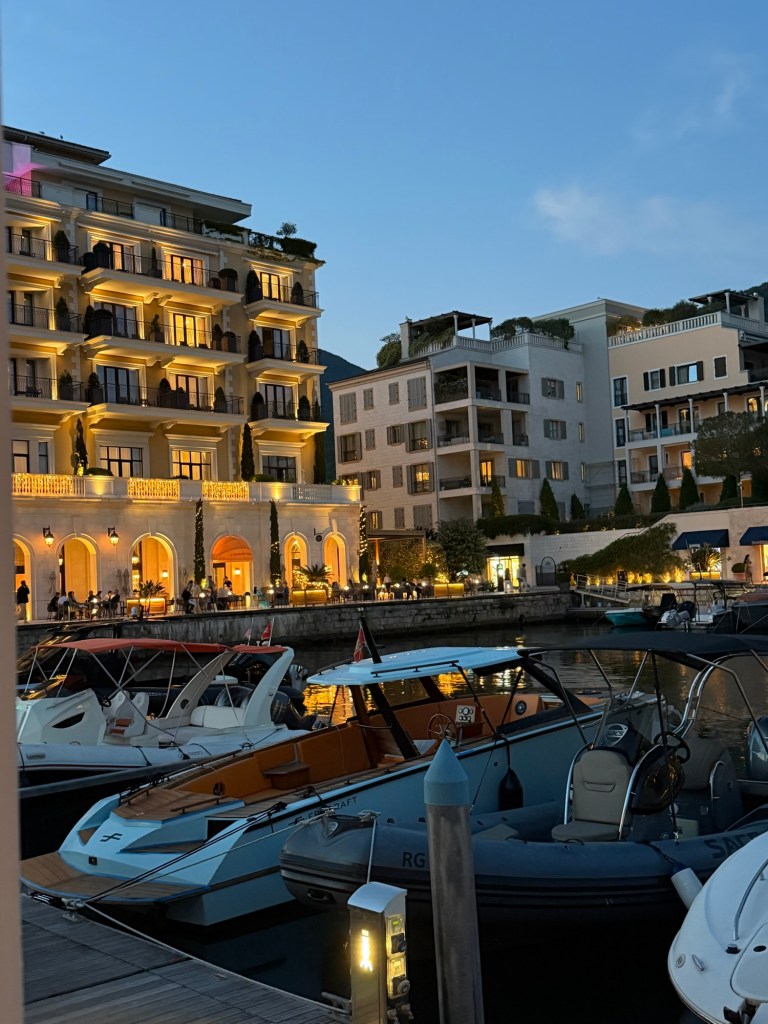
Porto Montenegro is not just a marina. It is a waterfront village built on the bones of a former Austro-Hungarian naval base, where shipyards once stood and now luxury yachts berth in their place. Among all the places I’ve sailed, only Porto Cervo in Sardinia surpasses it.
The atmosphere is calm and elegant; the people chic and out for a good time. We wandered past designer shops, admired the Italian-inspired architecture, and stood by the water watching the boats come and go. We ended up at the bar of Al Posto Guisto for cocktails and then stayed for dinner.
A few glasses of crisp local Sauvignon Blanc later, Montenegro began to soften. For the first time since landing, I was allowing myself to relax.
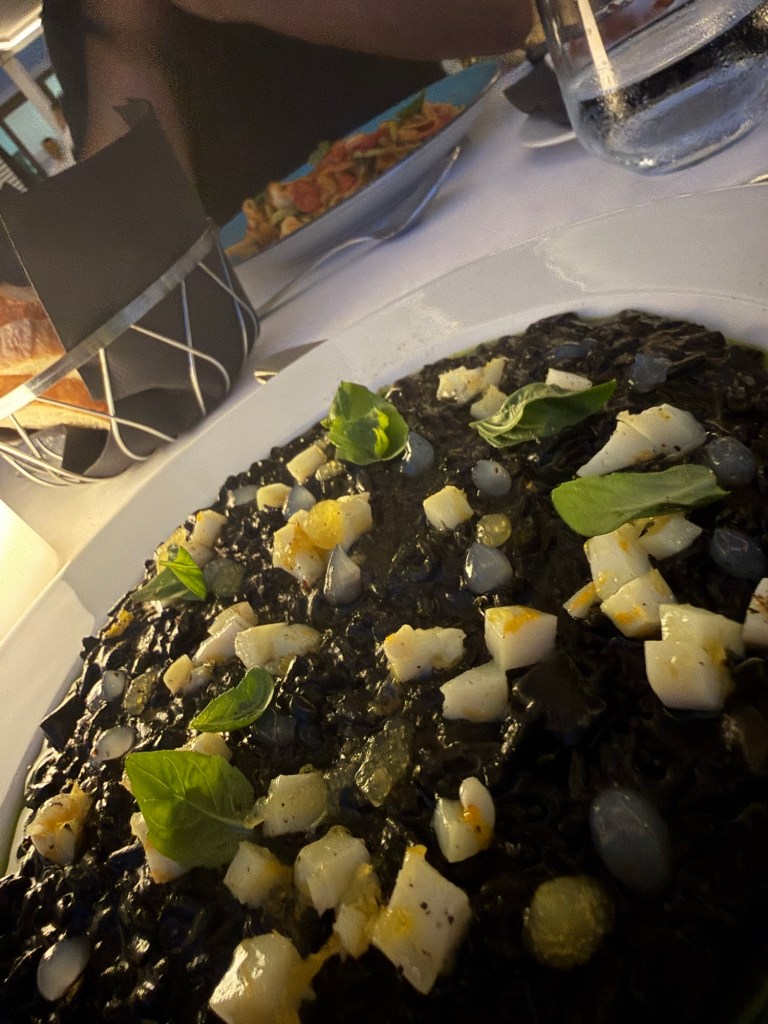
Our waiter suggested the local favourites : prosciutto (Njeguški pršut), followed by black cuttlefish risotto. By the end, my teeth were dark as the ink of the cuttlefish that coloured my risotto, and it was worth it.
In fact, we liked the marina a lot, so came back one more time to try another local favourite, Roberto’s Mare.
The next morning, the Bay of Kotor showed us what all the hype is about.
From Tivat, crossing to the Bay of Kotor by ferry is the fastest and easiest way. The service between Lepetane and Kamenari takes about ten minutes. The queue looks worse than it is; the attendants are super efficient and the service is non-stop. Cars cost five euros. Pedestrians go free.
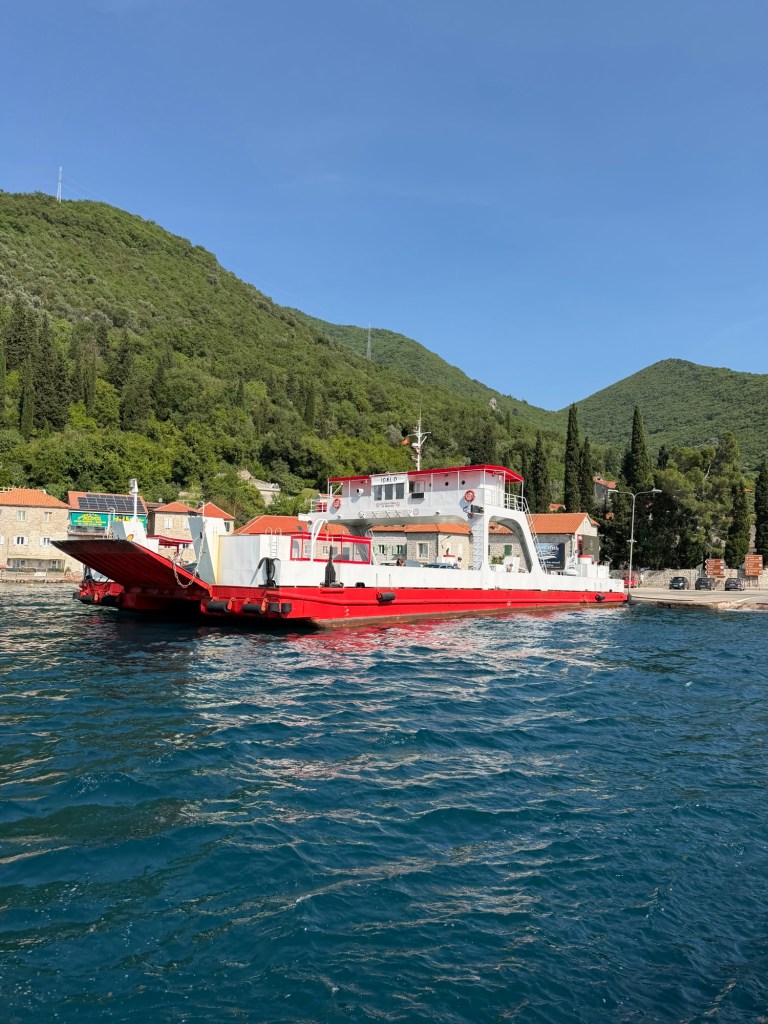
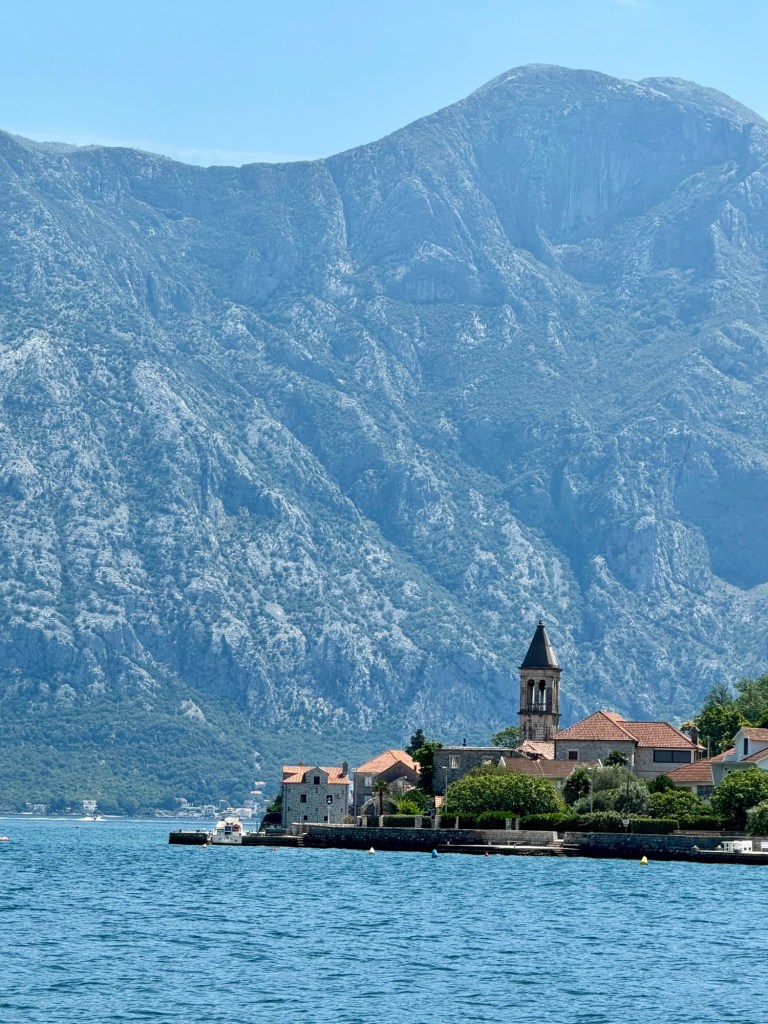
While crossing, you simply relax and enjoy the ride. Mountains rise directly from the sea. Stone villages adorn the shoreline. The whole landscape feels more Mediterranean than Balkan, almost like touring the Italian lakes.
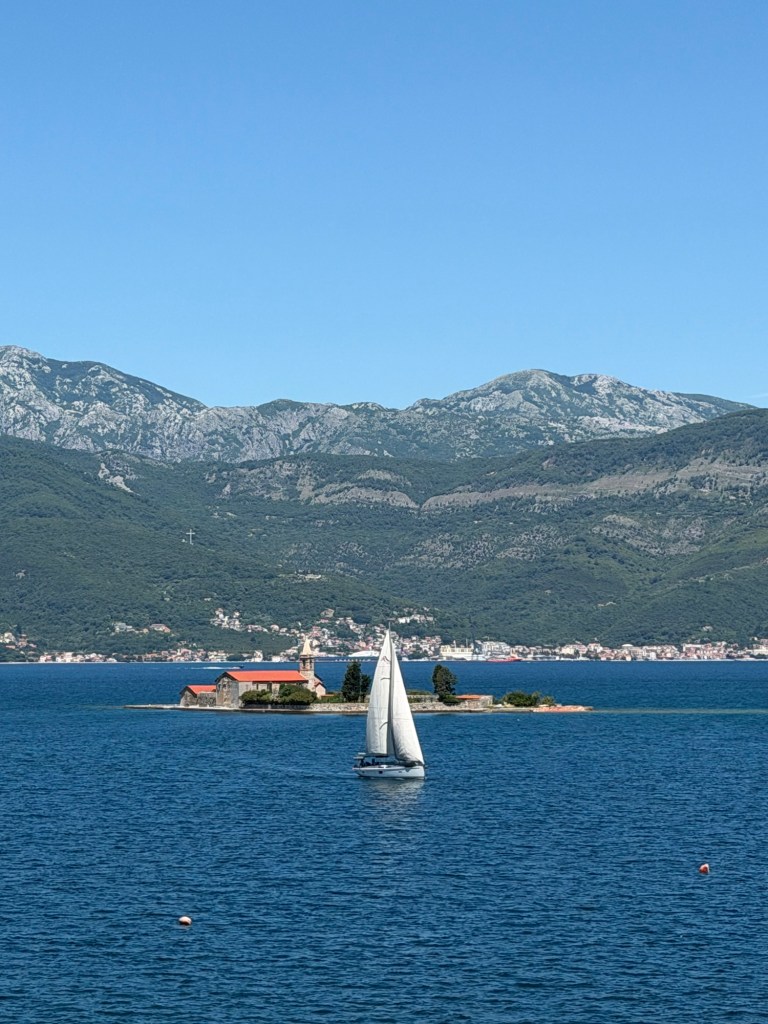
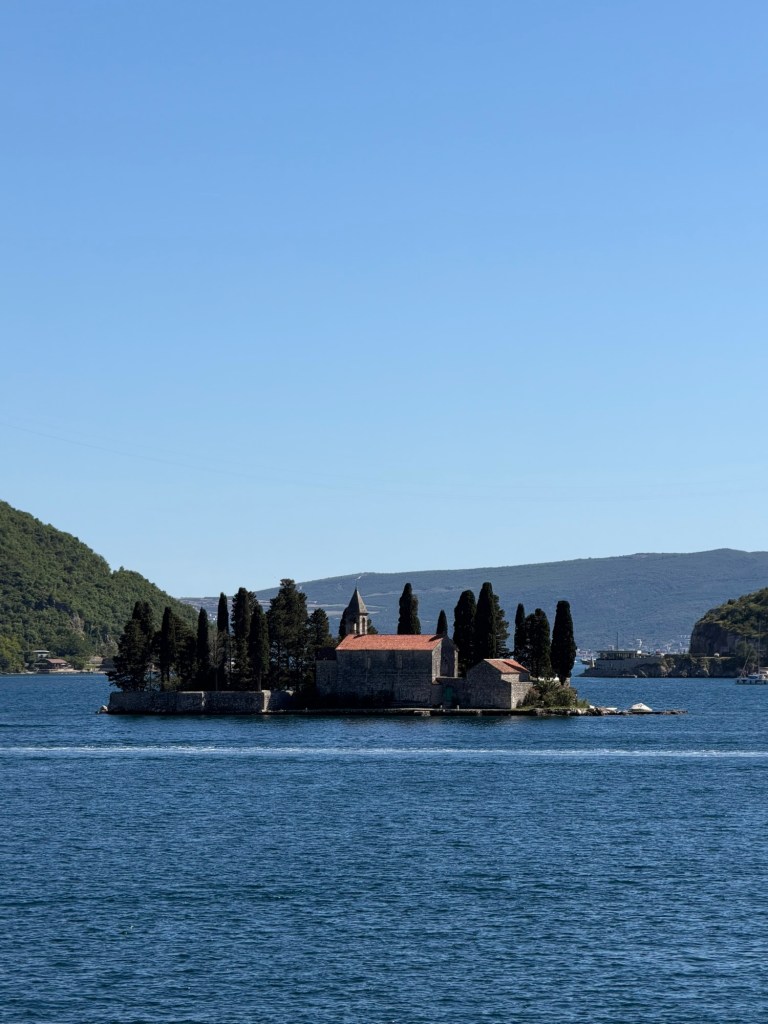
Lunch at Verige 65 came with one of those views that made us forget the time and simply take in the beauty. The baroque towers of Perast were directly in front of us. Across the bay, boats sailed around the twin islets of Our Lady of the Rocks and Saint George. The food was delicious and conversation was easy.
It felt like we were on a movie set. Another memory to cherish.
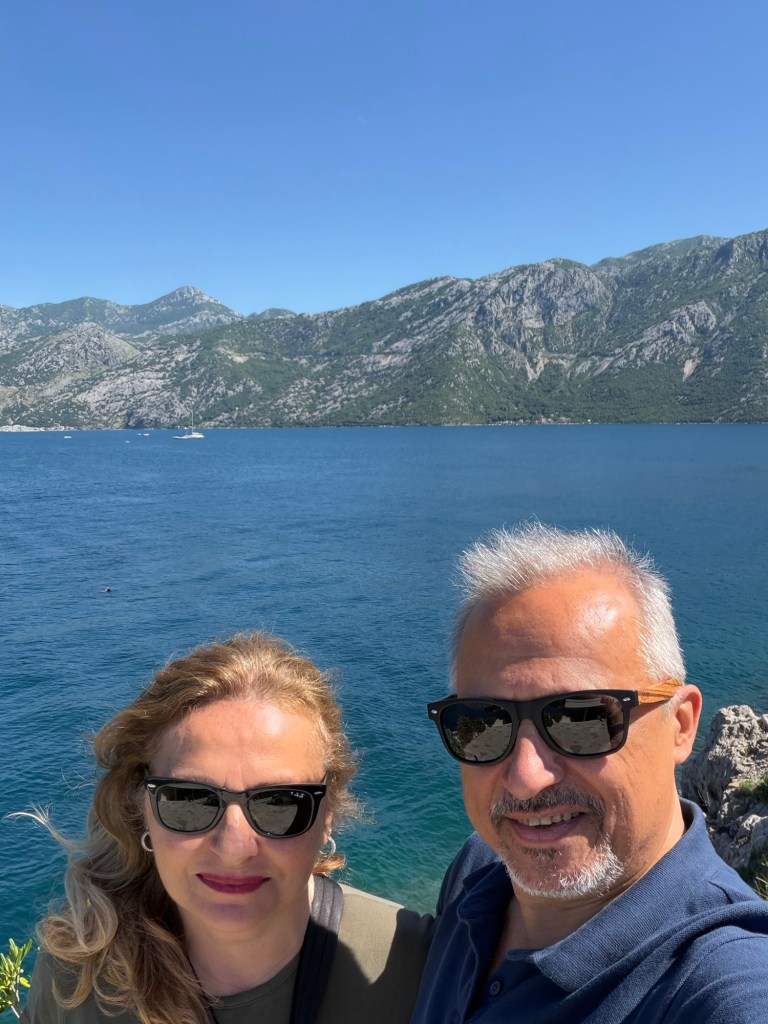
From there, we continued toward Perast, stopping briefly in Risan, where narrow streets and stone houses seemed carved into the hillside itself. There are some ruins at the top, a Roman villa where mosaics depicting Hypnos, the Greek god of sleep, are still visible. Erbil finally found a god that he can worship.
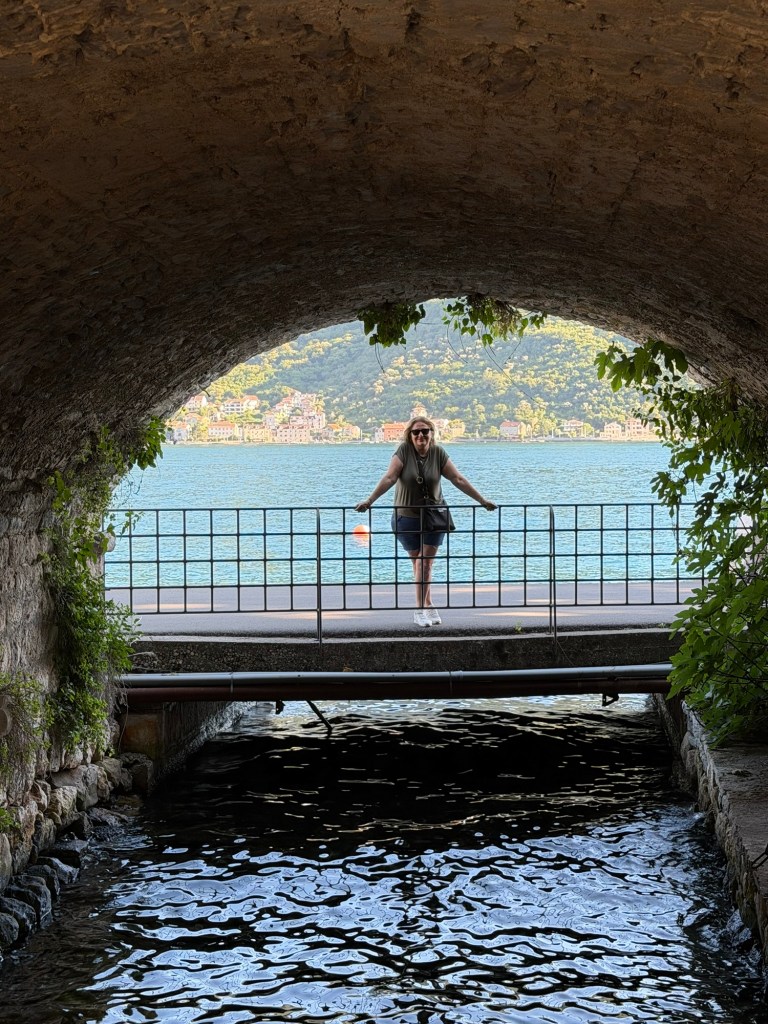
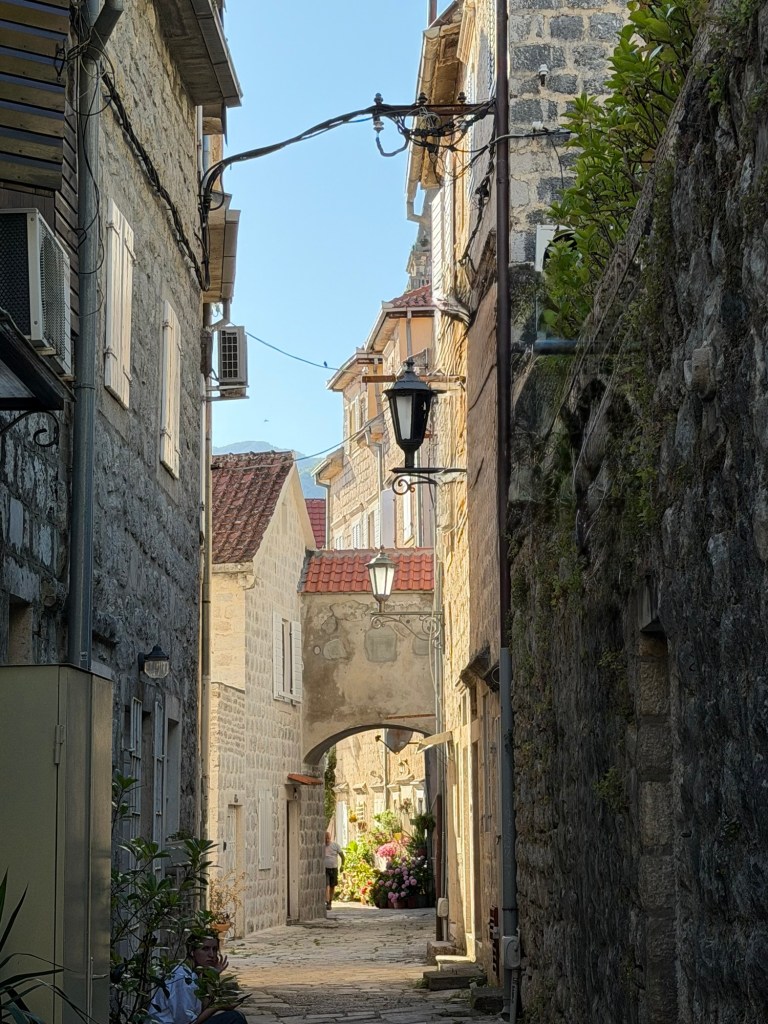
Cars cannot enter the town center of Perast, so we parked at the first opportunity and walked. It turned out to be one of the most charming seaside towns of the entire trip, and a must-selfie for influencers.
A friend of my cousin, İpek, is living in Montenegro and is an expert on all things Montenegrin. Before our trip, she very kindly sent me itineraries, valuable tips, and locations of parking lots around Montenegro. They turned out to be one of the most useful tips: never start your day without checking the parking at your next destination. The roads are narrow and crowds are everywhere, even in late May.
Perast is small and lovely. Small cafés on the water, church towers, stone façades, green hills rising behind it. We bought ice cream and walked the promenade slowly, taking in the rhythm of the place. A wedding was taking place at one of the waterfront hotels, which added to the crowds. Still, we found a quiet spot under the trees and watched ferries and speedboats slip in and out toward Kotor.
The next day took us inland, into a very different Montenegro.
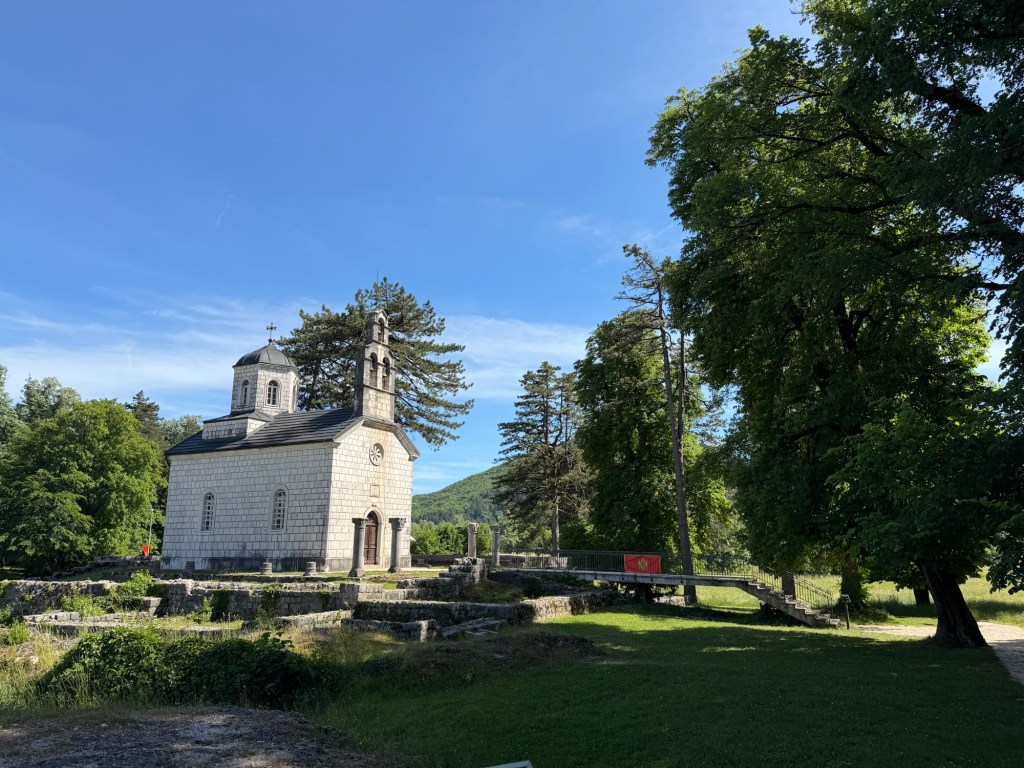
Cetinje, the old royal capital, felt like another country entirely. Fewer tourists, more space, and a certain seriousness in its architecture. It reminded me of parts of the Balkans I had seen as a teenager—faded and formal.
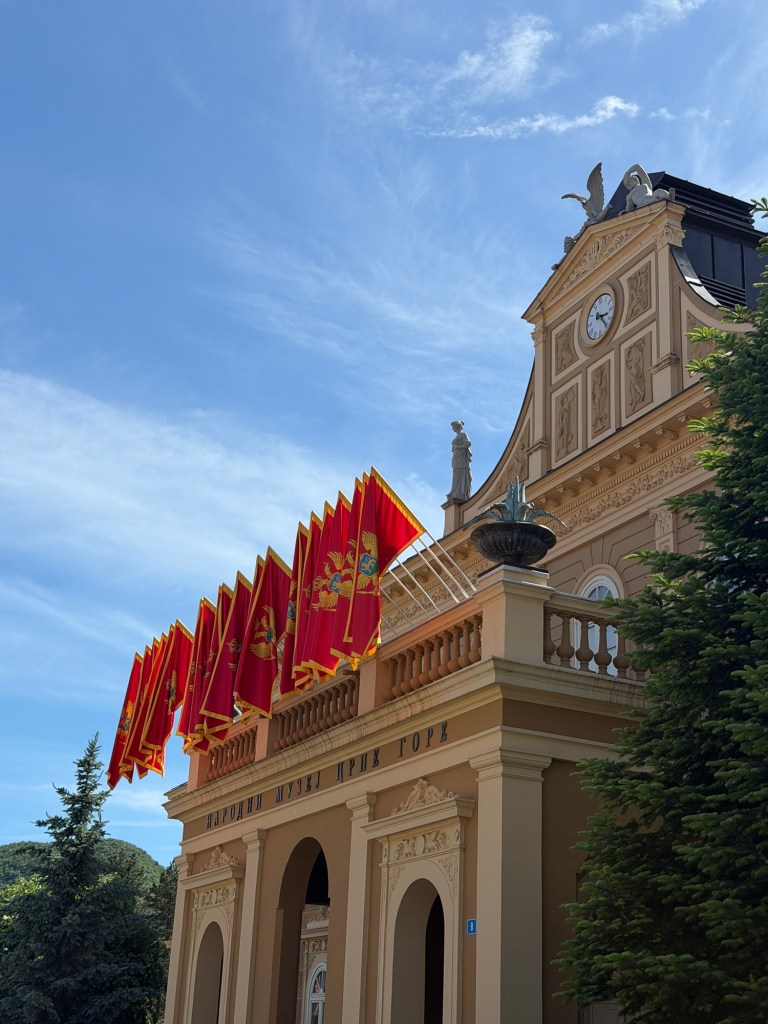
Former embassies and palaces now serve as museums, banks, or administrative buildings. But what stayed with me was the feeling of openness: wide boulevards, parks, and hills folding gently around the town.
Lunch at Kole was generous in the extreme. Montenegro, we realised, does not believe in small portions. The food is delicious, very filling, and relatively inexpensive. Plus, they are geniuses when it comes to patisseries.
Two places stood out in Cetinje. The first was the Palace of King Nikola, a modest residence that once belonged to Montenegro’s only king, now preserved as a museum of a short but proud history.
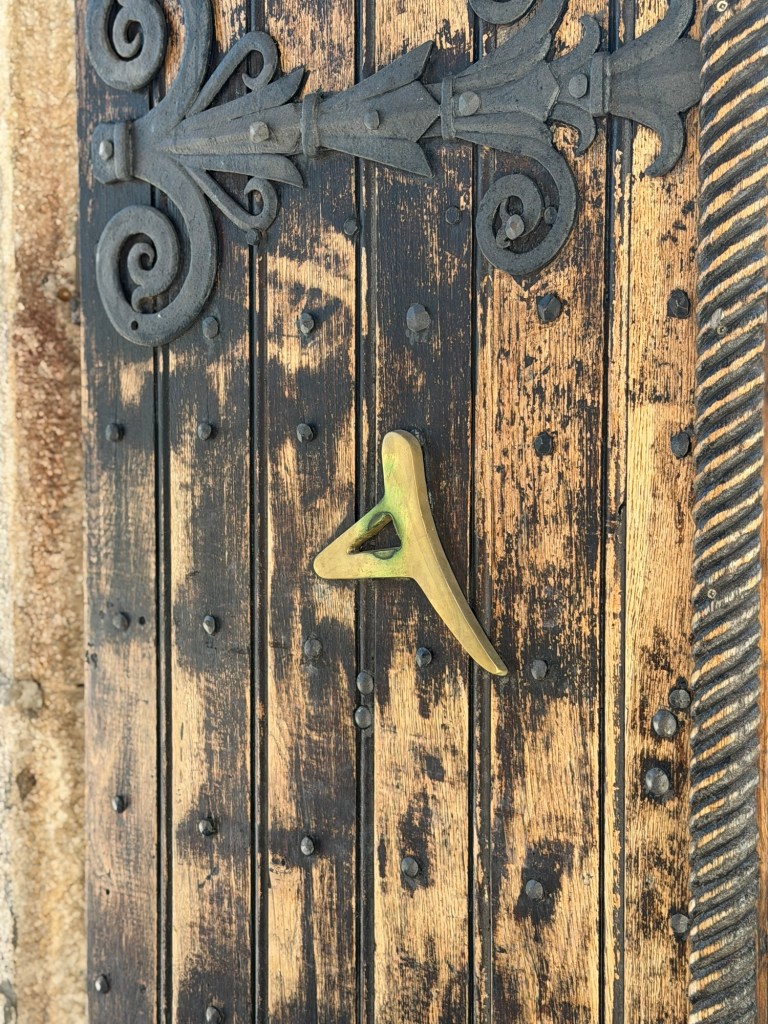
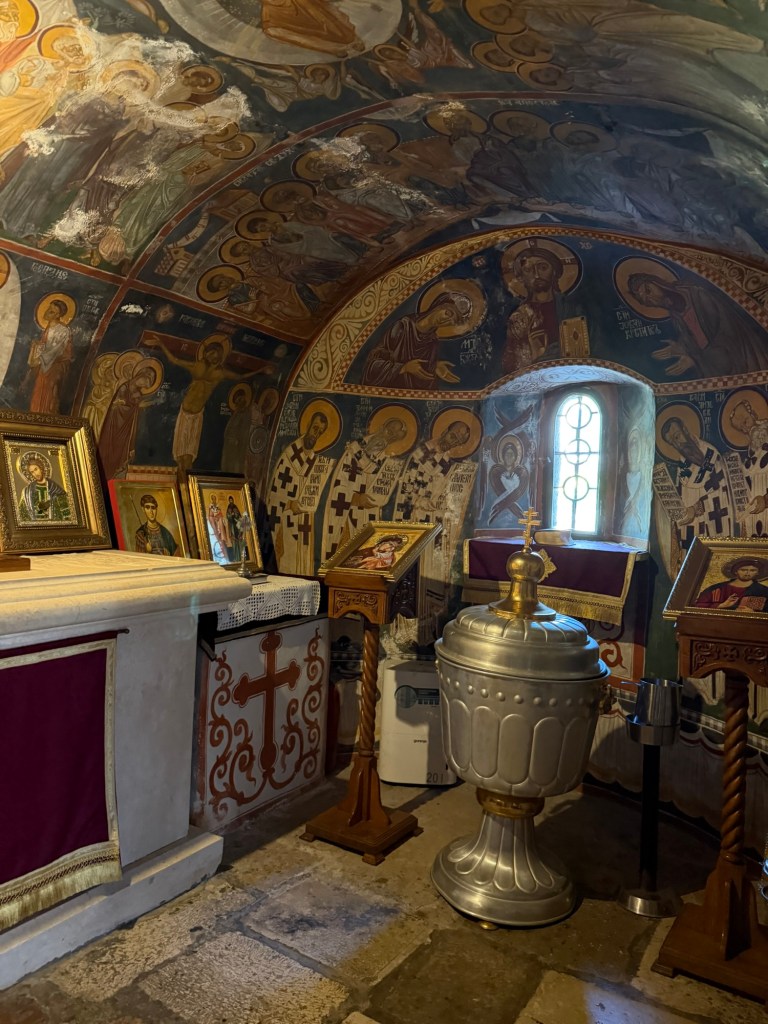
The second was the Cetinje Monastery, one of the country’s most important spiritual sites. It holds deeply revered Orthodox relics, including those associated with Saint Peter of Cetinje, the right hand of John the Baptist, and a fragment of the True Cross.
During our visit, a small group of pilgrims convinced a priest to open the sacred tomb. The atmosphere shifted completely. Some were visibly overcome with emotion.
From there, we drove toward Lipa Cave, only to find it closed. It was already past 4 p.m. A reminder that in Montenegro, relying only on Google Maps is not a safe bet. I should have checked their website.
On the way back, we stopped at Belvedere Tavern for coffee. It turned into one of those pauses that stay with you longer than the sights themselves. Mountains all around. Cool air. Ancient waiters. Nothing to do but sit and feel at peace with yourself and with the world.
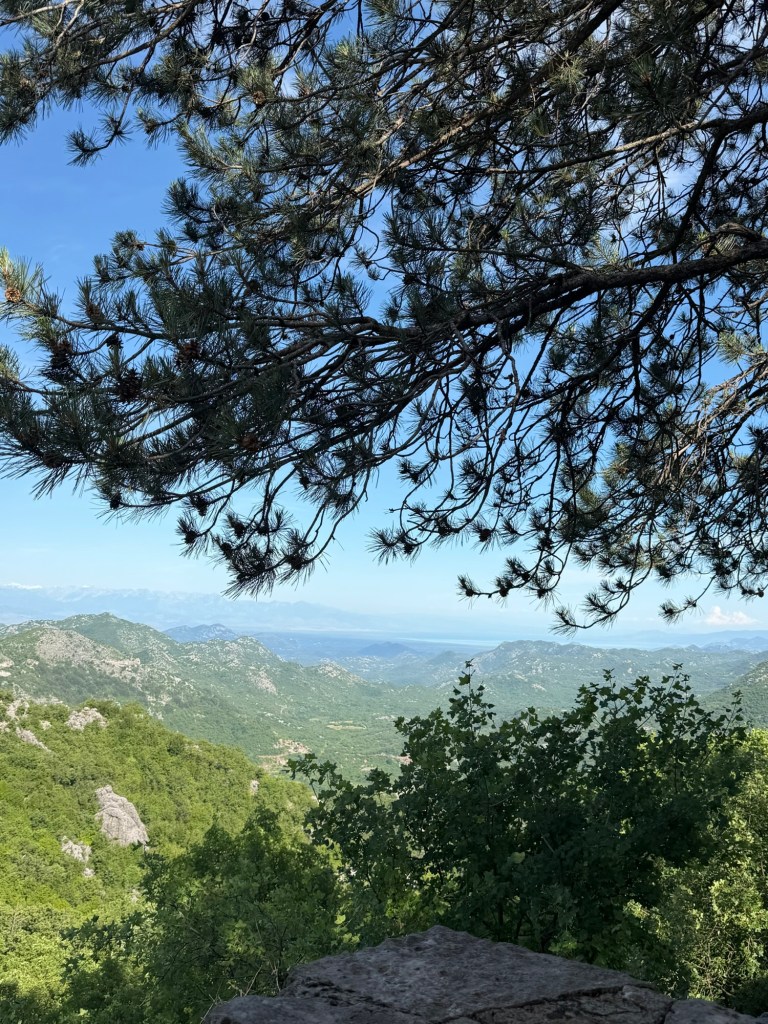
Afterwards we drove to Kotor, passing through the sleepy village of Njeguši. I was hoping to buy some of their famous prosciutto and cheese from the local vendors. It was a Sunday afternoon and the vendors had better things to do other than waiting for the occasional tourist. (Later, I bought them from Tivat. Yumm.)
Then came one of the most memorable drives of the trip.
The Kotor Serpentine connects the mountains to the sea in a series of tight hairpins, revealing new angles with every turn. I loved every second of it.
There were some brave souls zip-lining. Definetely for another time. But only after some liquid courage.
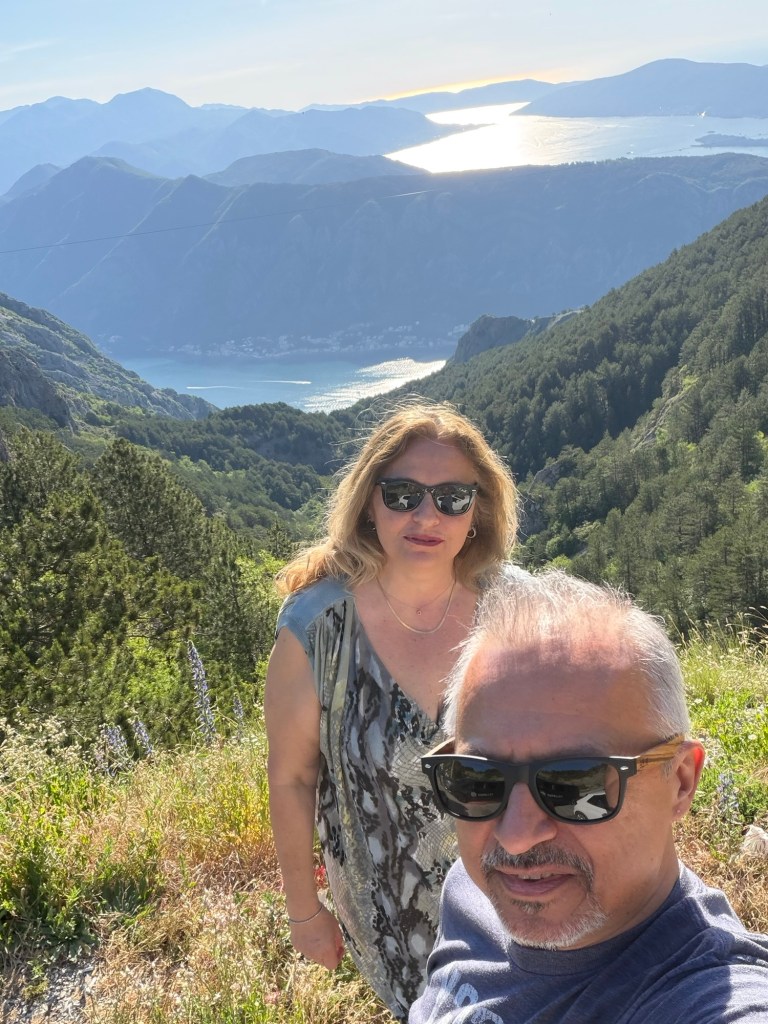
At Horizon Café at the top, we stopped and found ourselves looking at one of the finest views in the Balkans. Far below, the Bay of Kotor opened like a map—steep mountains, scattered villages, and water holding everything together.
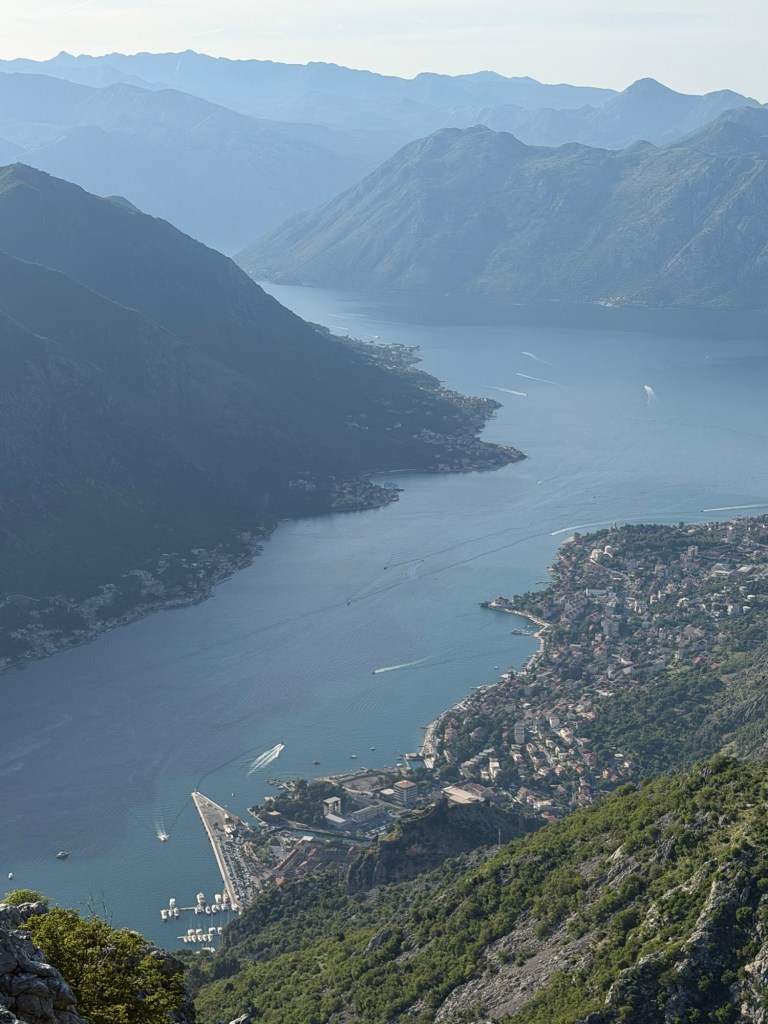
We took our drinks down through the terraces, slowly changing levels until we found the perfect spot.
Then we simply stopped and stared.
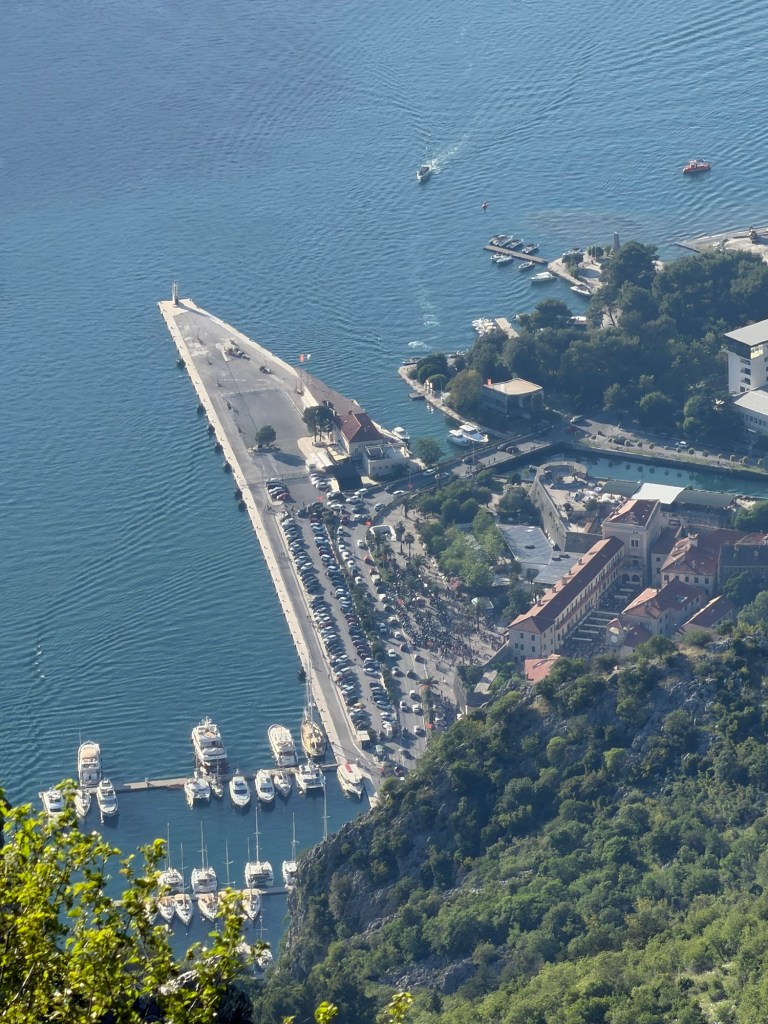
No photograph really carries the beauty and the awe. It’s one of those places that stays with you and makes you feel grateful to be alive.
Kotor was buzzing when we finally arrived.
I had read somewhere that early mornings and late afternoons are best here, and in May, that advice proved spot on.
We didn’t climb Kotor Castle, for we knew it couldn’t top the views we had just witnessed. So instead of ticking another box on our touristic itinerary, we decided to enjoy the moment.
The town was preparing for Pentecost celebrations, and churches throughout the old quarter were being decorated by local women. They were using freshly cut grass and oregano branches, and the smells were heavenly.
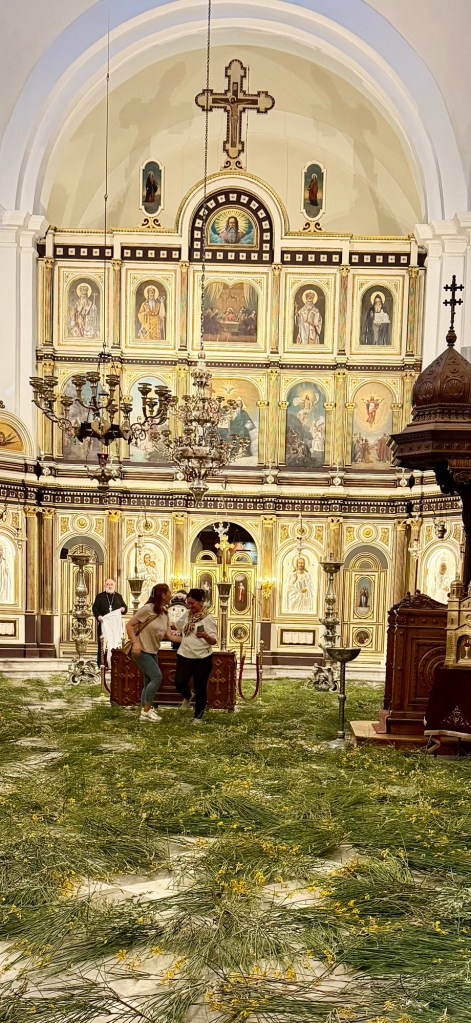
(For the non-religious: Pentecost is celebrated 50 days after Easter, when the Holy Spirit descended upon the Apostles. It is considered the birthday of the Church, because the Apostles began to spread the word of Jesus publicly from then on. In Montenegro, we’ve learned, it has a more symbolic meaning that emphasises rebirth and healing powers of belief. Hence the references to nature.)
We spent hours wandering through narrow stone streets, happily losing all sense of direction.
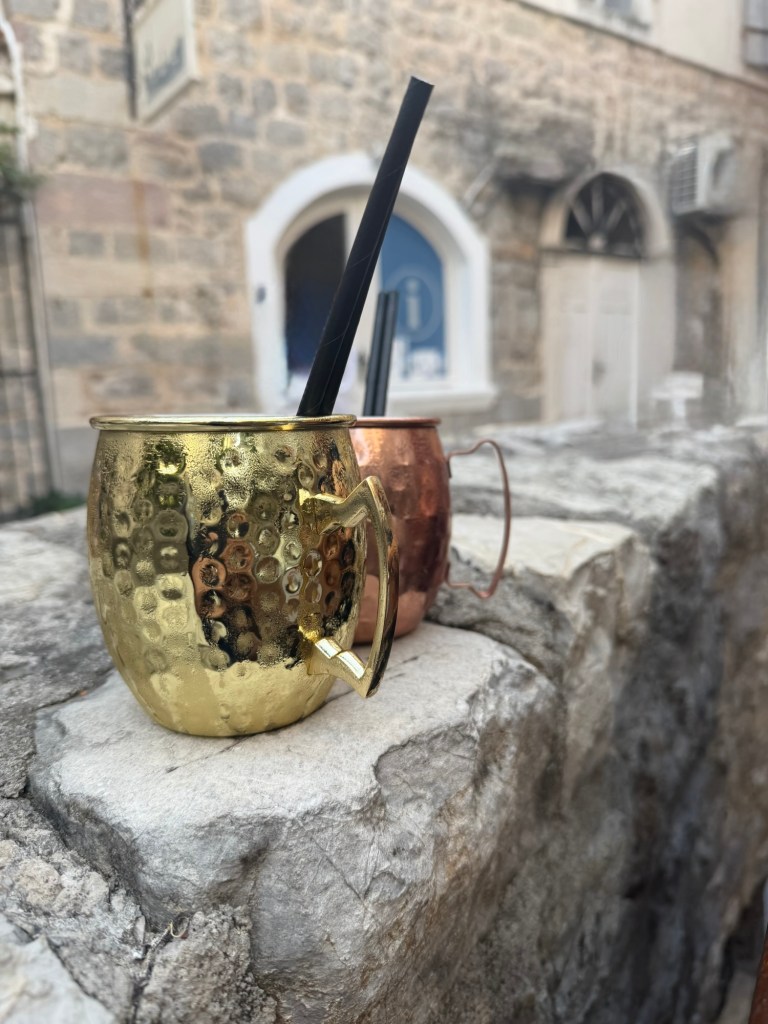
A chapel where we were firmly told to leave. A hidden courtyard that felt like a Venetian villa. A small bar serving surprisingly good Moscow Mules. A family-run restaurant where the waiter strongly approved of my husband’s grilled sea bass and strongly disapproved of my simple pasta with the sweetest tomatoes and herbs possible. We approved both.
Kotor was rewarding our aimless wandering.
The night ended with live jazz at Evergreen, music spilling into streets that have carried centuries of footsteps. Locals, travellers, and musicians all enjoying the cool night, adding another moment to this ancient port town’s long history.
As the days passed, Montenegro continued to unfold in layers.
Mornings began slowly. A walk to the nearby pekara for coffee and warm croissants. Days shaped around whims and instinct rather than a fixed itinerary. We knew that not everything would be seen, or tasted, or climbed, and that was okay—part of the plan.
We followed the Adriatic coast to Luštica Bay one day. That part was more residential, with summer houses, a golf course, and a few small marinas. We stumbled upon a new residential development and stopped for a late breakfast at one of the cafés at its open piazza. There were some wonderful beach clubs and restaurants nearby, but we had other plans.
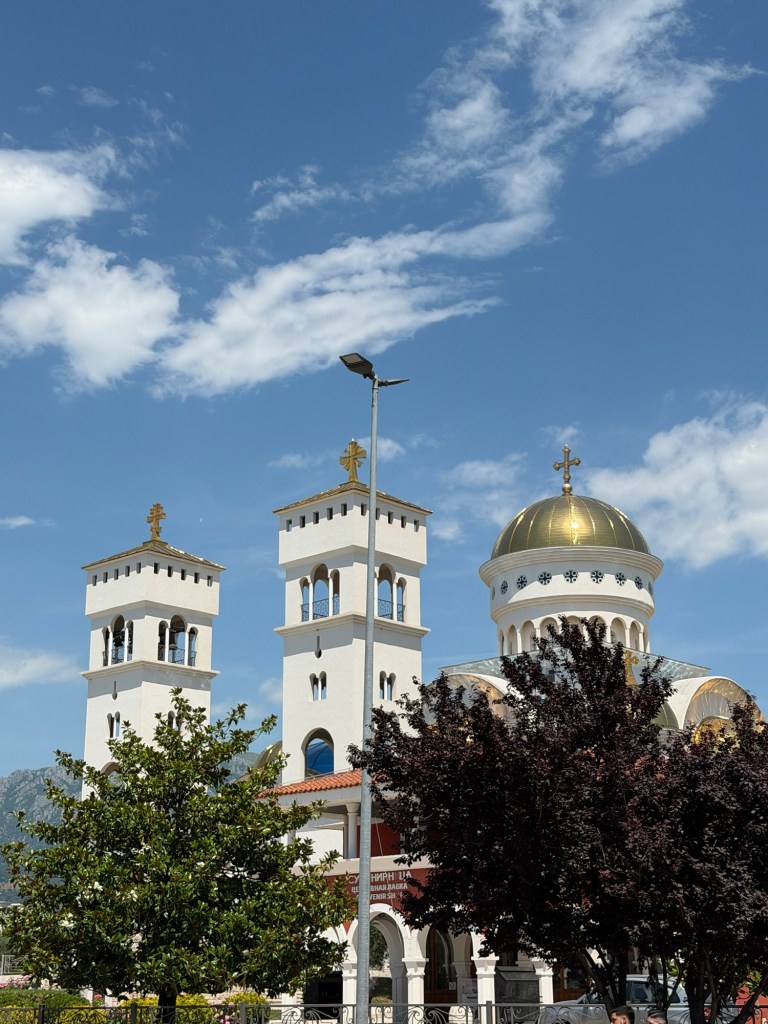
We drove to Bar another day, where the summer palace of King Nikola stands near the sea. It was elegant and forgotten.
Modern Bar, by contrast, is busy and functional. A modern port city and the beating heart of commerce. Close to the beaches of Budva and Sveti Stefan, but with none of their charm.
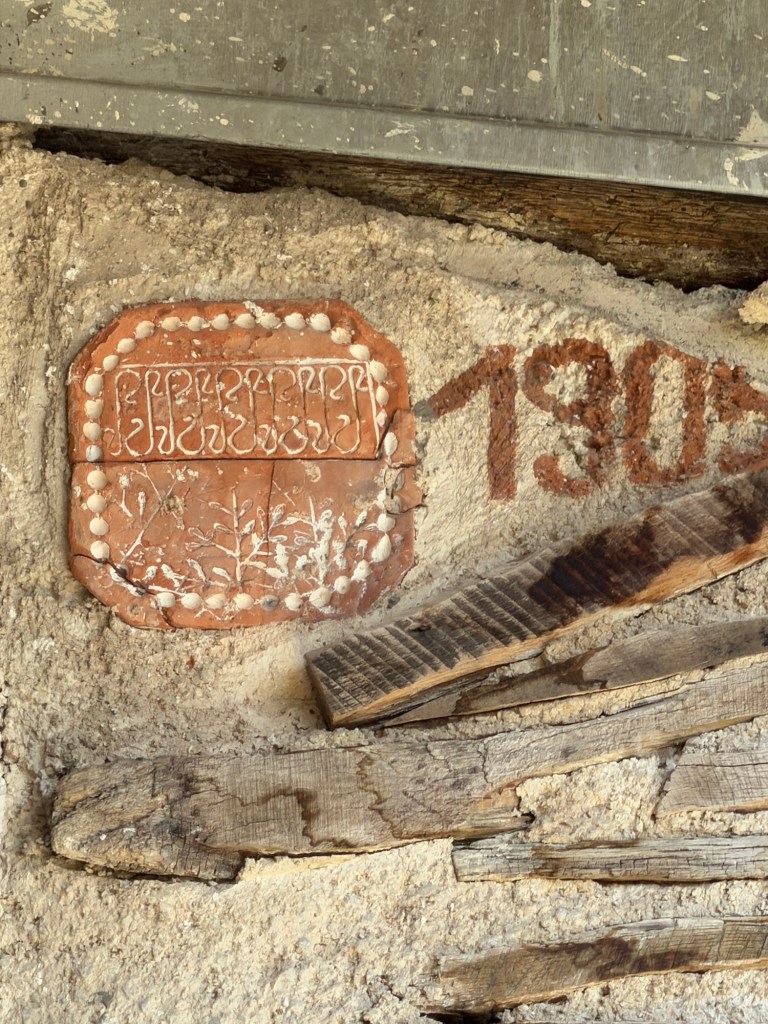
From there, we moved to Stari Bar, the Old Bar up on the hills, a ruined medieval city spread across a hillside, damaged by Ottoman conflicts and later by the 1979 earthquake.
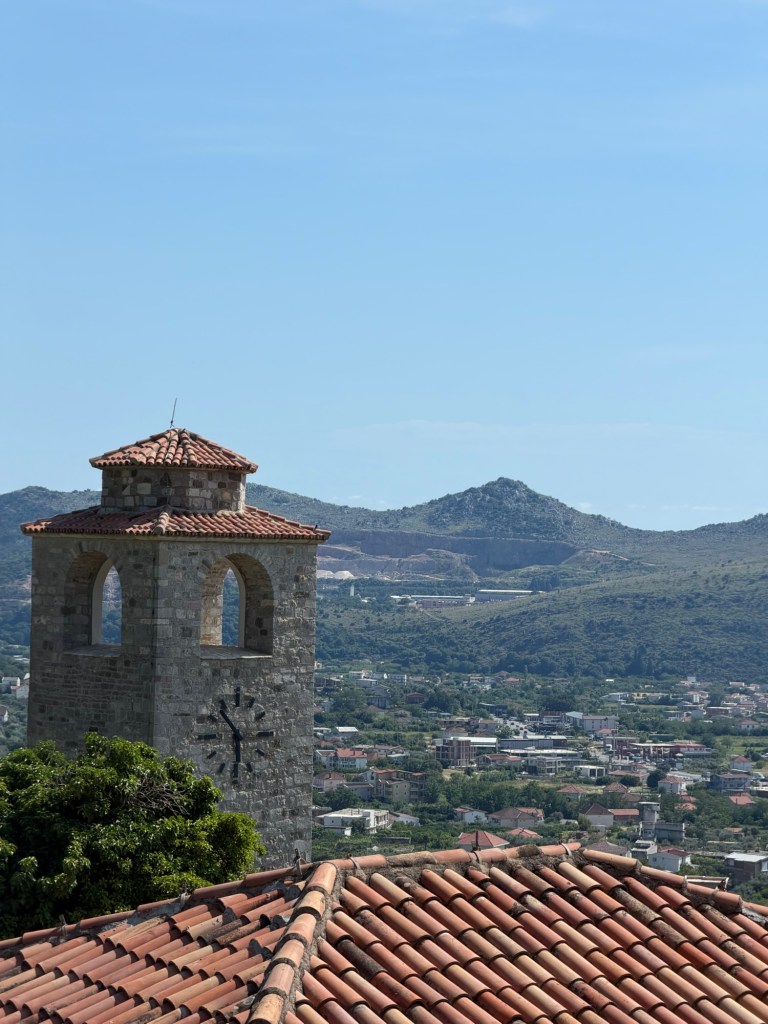
Since I am Turkish, i.e coming from a country so full of history everyone has their preferred era, and travelled extensively at Italy, Egpyt, Greece etc, Stari Bar is not really interesting. But, we wanted to see yet another layer of Montenegro. So we went.
After walking around the ruins for an hour or so, we found Kaldrma, a lovely restaurant a stone’s throw away from the city walls, and shared a vegetarian plate. After days of rich, meat-heavy Montenegrin cuisine, it felt both light and refreshing.
On the way back, Sveti Stefan appeared like a postcard.
Originally a 15th-century fishing village, it was transformed in the 1950s into a luxury hotel that attracted legends such as Sophia Loren and Elizabeth Taylor. Think Brigitte Bardot’s Saint-Tropez years, but more dazzling. Liz wearing those jewelery to the beach, parties on yachts, paparazzi on speedboats, and the only link to the mainland—and thus the real world—is a narrow causeway.
The overall experience must have been something special.
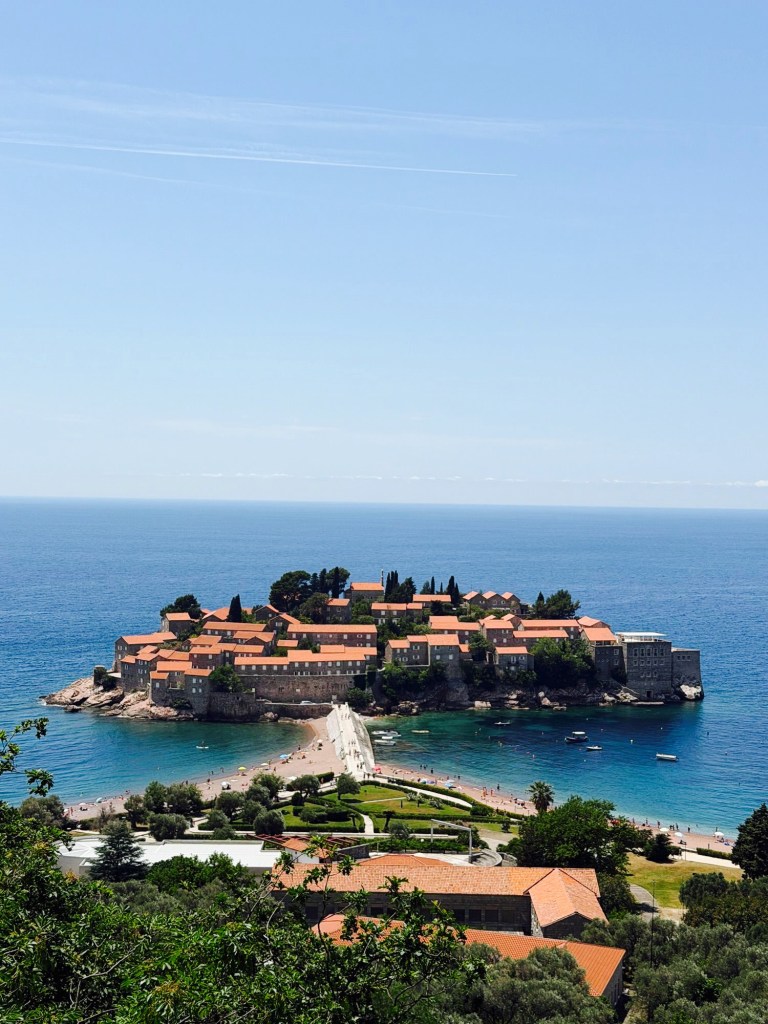
Then the Aman Group swept in and turned the whole island into a hotel. Italian village outside, minimalistic luxury inside. Today, however, the island is closed due to a dispute between Aman and the government. No cocktails, no wandering, no access—only the view from afar, which is unforgettable.
(Rumour is it will be reopened this summer. Another reason to come back 😉)
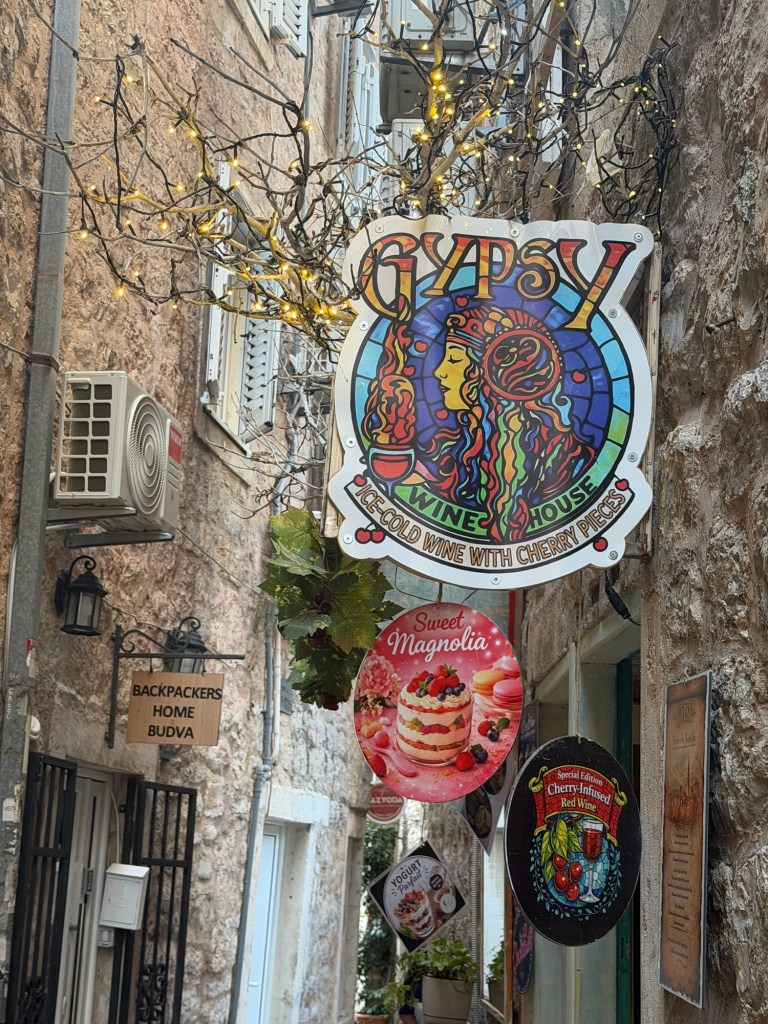
Budva showed a different rhythm altogether: a beach town with lively promenades, shopping malls, modern cafés, and a younger crowd moving through its ancient walls. Crowded beaches, busy streets, inexpensive eateries, shops full of whatevers. Not exactly my kind of place, but fun all the same.
And then came our final day.
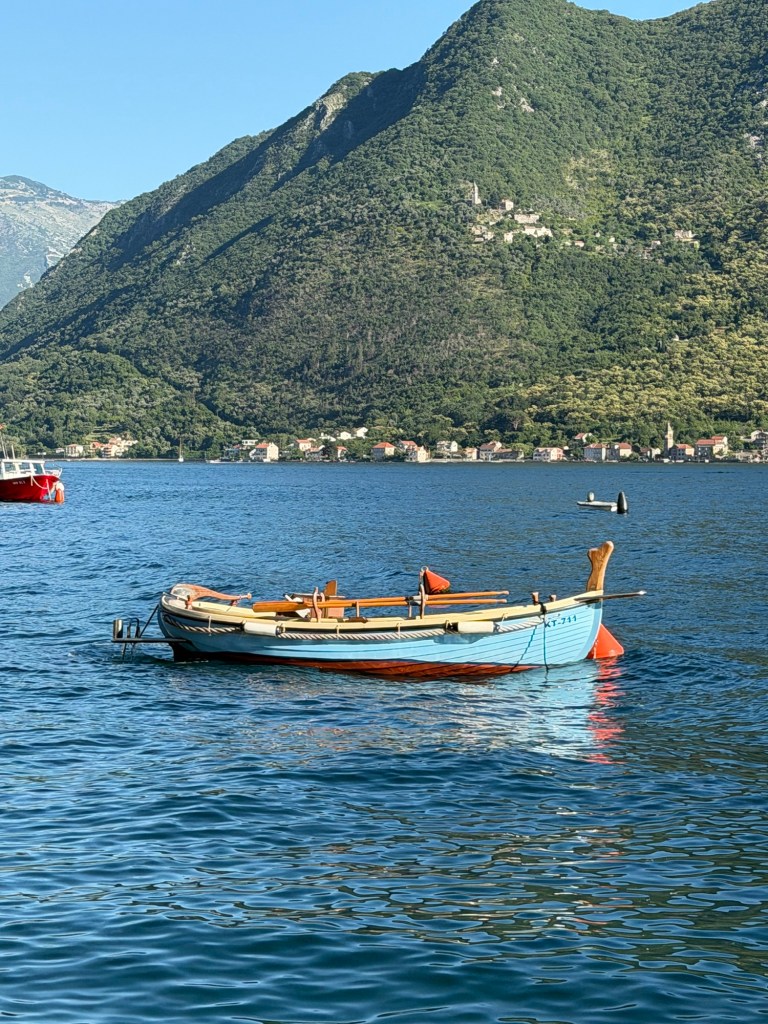
Instead of taking the ferry, we chose the scenic road from Tivat toward Herceg Novi, following the edge of the bay. Slow going for sure, but the villages we passed through were picturesque and cute. In summer it would be chaos. In May, it was beautiful.
We drove to Portonovi, which, when completely finished, will be another chic marina and resort. It is obvious that Montenegro aims to become an alternative to the Costa Smeralda crowd.
But the moment that stayed with me was much simpler.
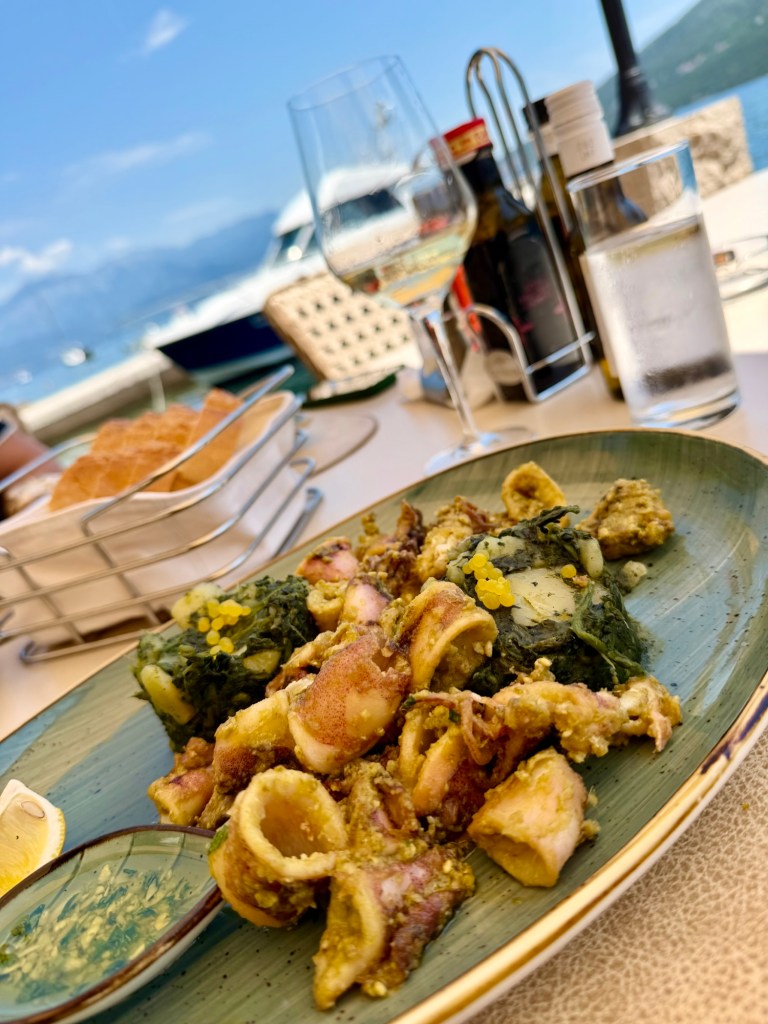
We had a most memorable time at Nautica Taverno in Đenovići. A simple lunch of grilled fish and squid and a bottle of local white. Our table was right at the water’s edge, and we were the only non-locals there. Everything was just right.
Montenegro is not a perfect destination.
Roads are crowded. Infrastructure strains even in the shoulder season. Everything can progress at a snail’s pace. It asks more from you as a traveler. But it rewards tolerance and patience.
Most importantly, it is authentic.
Mountain roads and medieval towns. Long lunches and ancient harbors. Ferry crossings and church bells. Jazz drifting through stone streets. And people who, in their own way, try to make things work.
I know I will come back and sail the Bay of Kotor one day soon. Dine at the small mussel farms and zip-line above Kotor. Drop anchor around Sveti Stefan and go for a cocktail to feel glamorous.
And I will leave my watch at home.


I love how you captured both the frustration and the magic of it. That “slow at first, then suddenly unforgettable” rhythm really does seem to define the country.
Porto Montenegro, Kotor, and that drive through the serpentine road all sound absolutely unreal, especially with that mix of patience, rain, and sudden pink skies turning everything around.
LikeLiked by 1 person
I’m glad you liked it 🙏🏻
LikeLiked by 1 person