
Carcassonne is a ancient city in southern France. Located in the plain of the river Aude between old trade routes that link Atlantic to the Mediterranean Sea and the Massif Central to the Pyrénées.
The first time I went to Carcassone; it was pitch black and we were tired and hungry after a long day’s driving. We were on a raod trip that had started in Bordeaux in September and continued in most of Spain and then back to France. It was now November and frankly, I was at a point where one place was melting to another.
Little did I know that, this one was a little bit more special; merging history and nature with la belle vie.

Our hotel was in La Cite and I remember that after a good meal and better wine; I went to sleep, without even attempting a stroll on the cobbled streets of the citadel.
Then I woke up, took a look from my window and spent the next two days enchanted with the Citadel, the town, its views and its history.
The second time was this June, while cruising the Canal du Midi. And Carcassone was even more magical, for we explored it with friends.
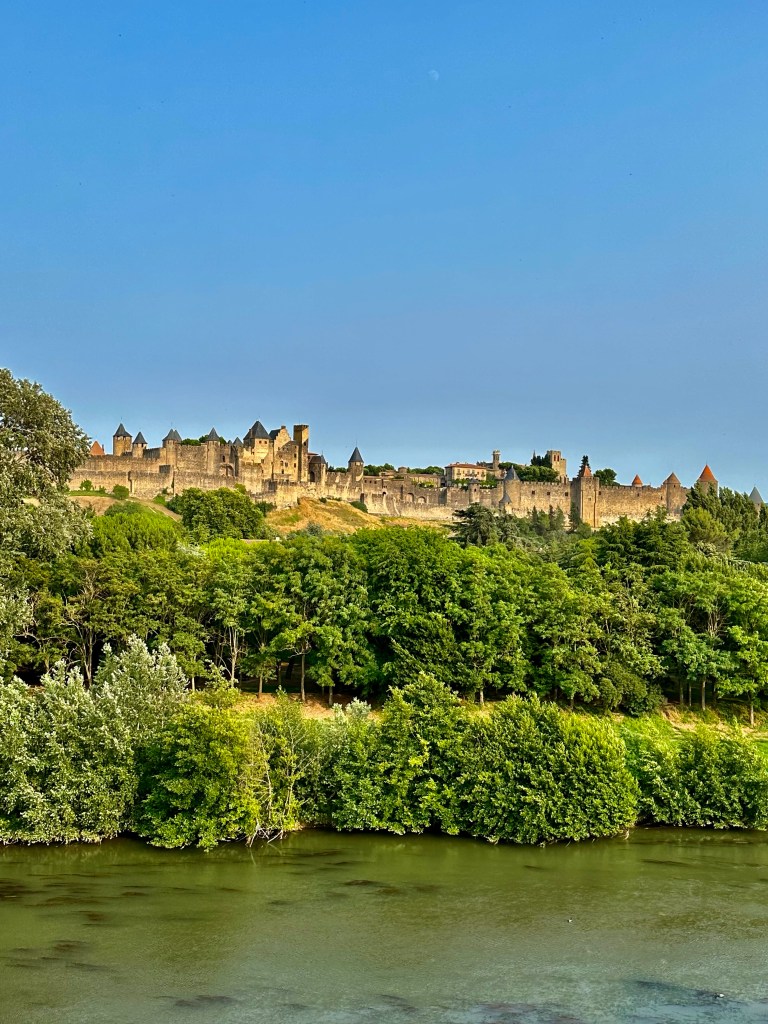
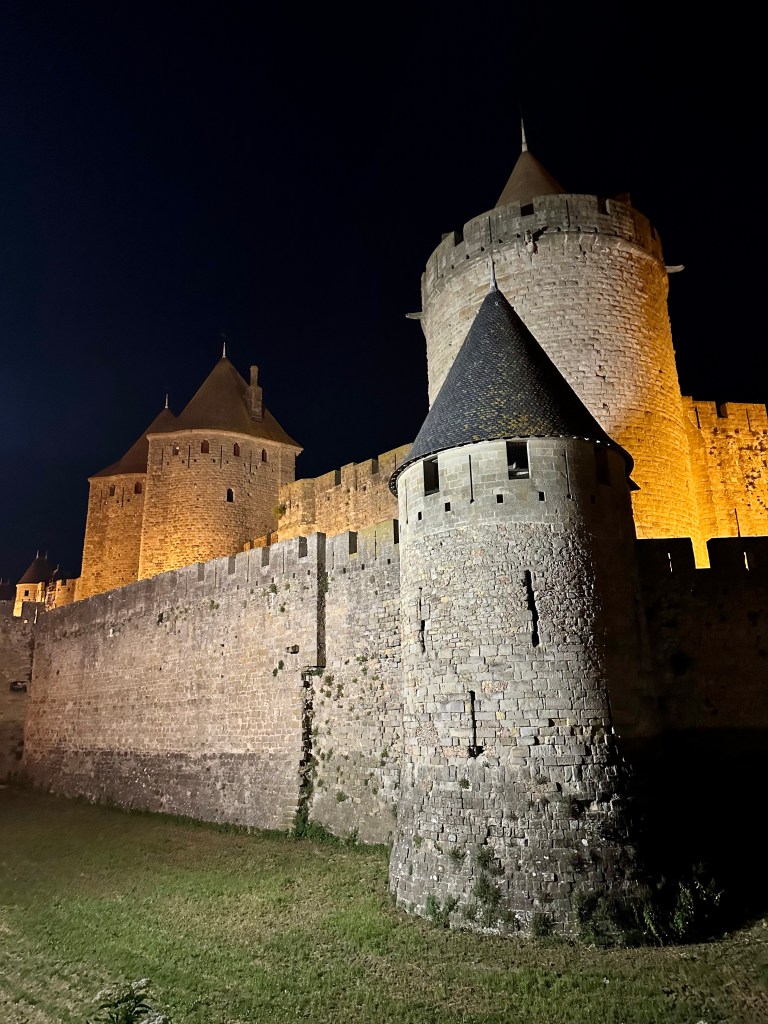
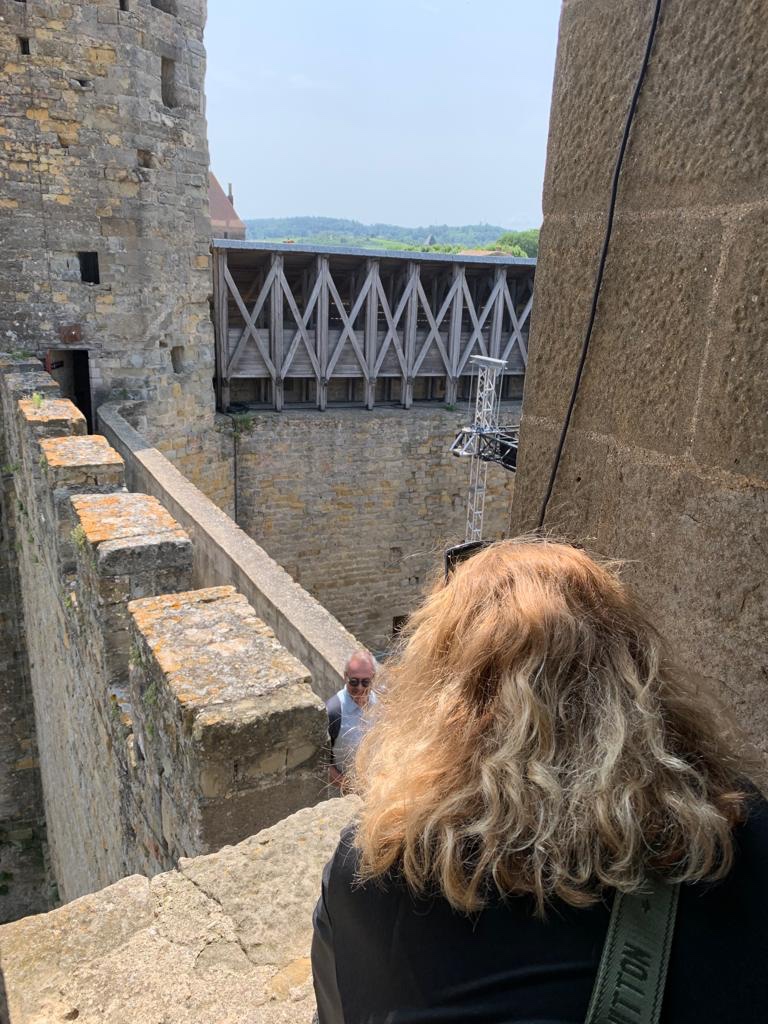
The citadel of Carcassonne is an absolute must-visit. Here, perched atop a rocky hill in ‘La Cité’, as the citadel is now known, lies the Carcassonne Castle. It looks like something straight out of a Disney fairytale: think thick walls and towers, spiky turrets, heavy drawbridges, and a moat.
It is the very image of a perfect medieval castle and the citadel was listed by UNESCO as a World Heritage Site in 1997.
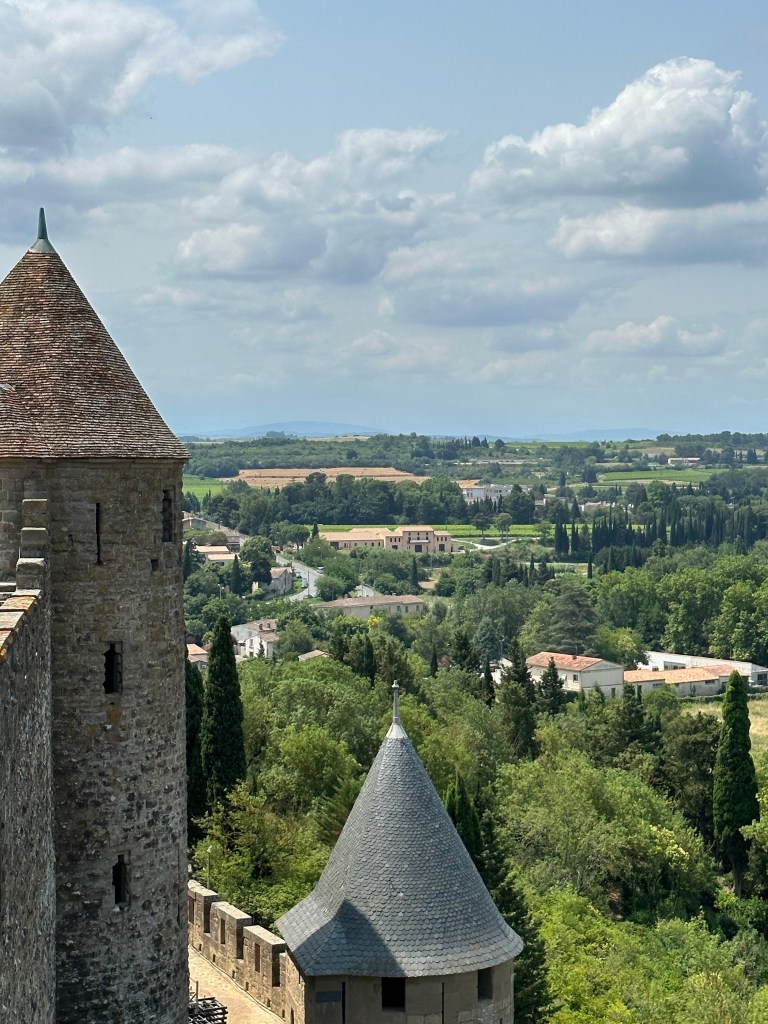
From the top of the hill, one gets stunning views of Carcassonne to the west, the Aude river and Canal du Midi to the north, and the snow-capped Pyrénées to the south. This, coupled with the castle’s grisly history, has made Carcassonne one of France’s most popular tourist attractions.
Carcassonne became famous for its role in the Albigensian Crusades when the city was a stronghold of Occitan Cathars.
The Viscount of Occitan was a man called Raymond Roger de Trencavel. He was not a Cathar, although many of his subjects were. He adopted a laissez-faire attitude to Catharism – and to other cultures and religions in his domains. For example, he relied on Jews to rule Bezier, his second seat in the region.
Cathars were opposing some of the rituals of the Catholic Church, challenging the Pope. And Occitan was fertile and rich, thanks to its warm climate and vineyards.
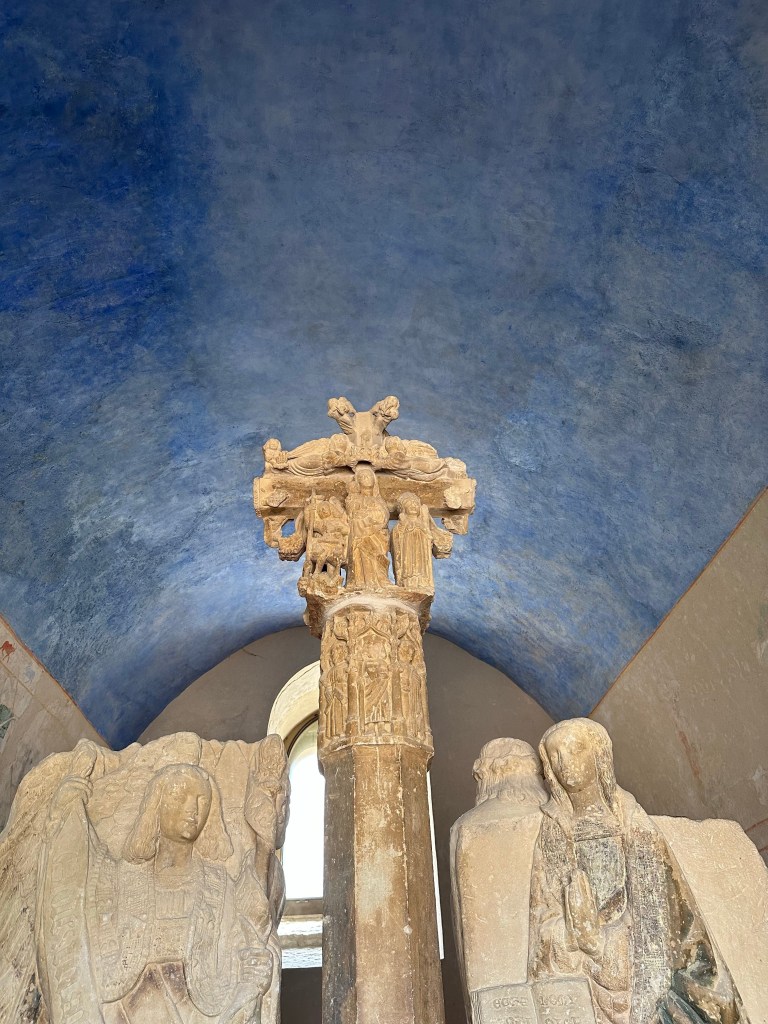
If the viscount was a 12th century liberal, the Pope of the era definetely was not. So there came the first Crusade that the Christians killed their own, for in most of the cities and towns that they had ransacked, only a portion of the population were Cathars.
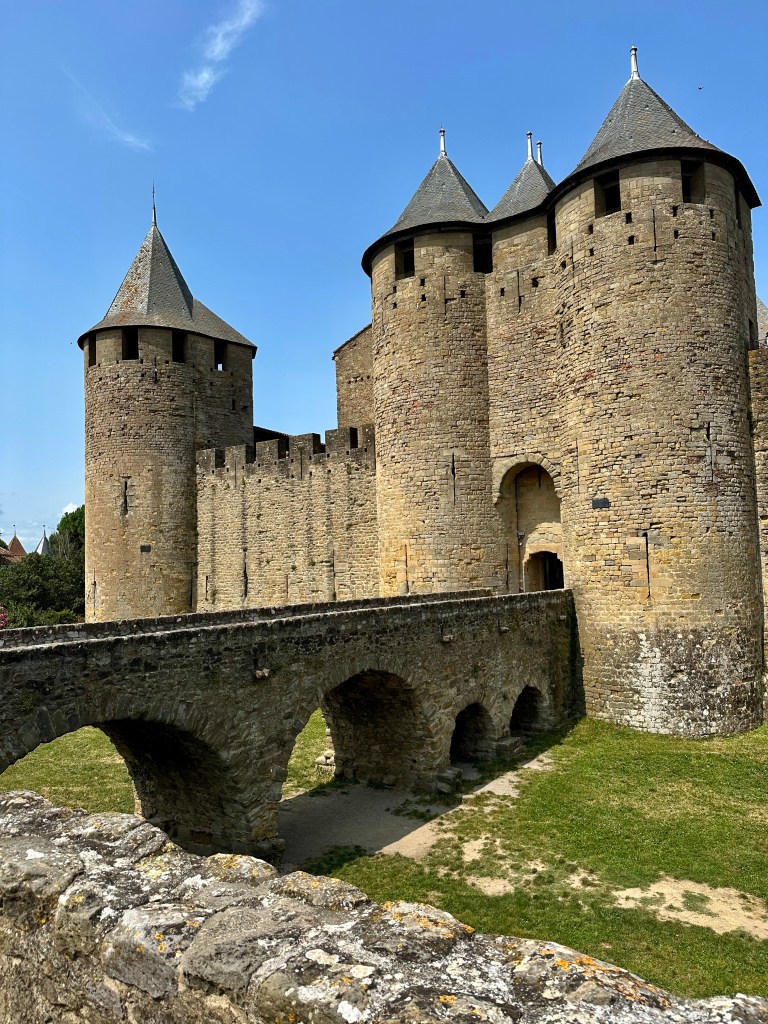
In August 1209, La Cite was surrounded by the crusading army, and it was soon forced to surrender. The viscount was imprisoned while negotiating his city’s surrender and died in mysterious circumstances three months later in his dungeon. The people of Carcassonne were allowed to leave—in effect, expelled from their city with nothing more than the shirts on their backs. That was the beginning of the end for Cathars and a huge win for the Catholic establishment.
Like many ancient and historically significant places, Carcassonne has its share of myths. Some legends suggest that treasures of great value are hidden within the walls of the city or in its vicinity. The others talk about hidden tunnels and secret passages beneath the city’s walls that were used by the Cathars to escape persecution.
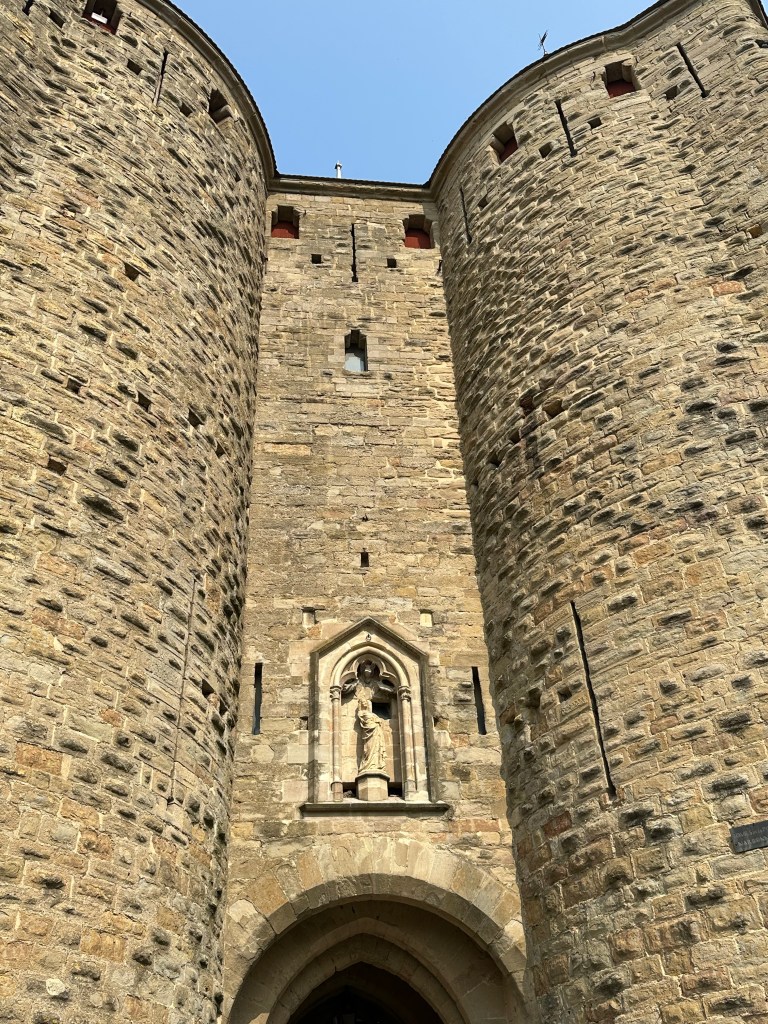
Here are a few of my favourites :
– The Lady Carcas: One of the most famous legends of Carcassonne revolves around its 8th-century siege by Charlemagne’s forces. According to the tale, Lady Carcas, the city’s ruler, devised a clever ruse to make it appear as though the city was well-supplied. She supposedly threw a pig and a sack of wheat over the walls, which led Charlemagne’s army to believe that the city still had plenty of food. In reality, the city was starving. This cunning move allegedly prolonged the siege and allowed Carcassonne to hold out.
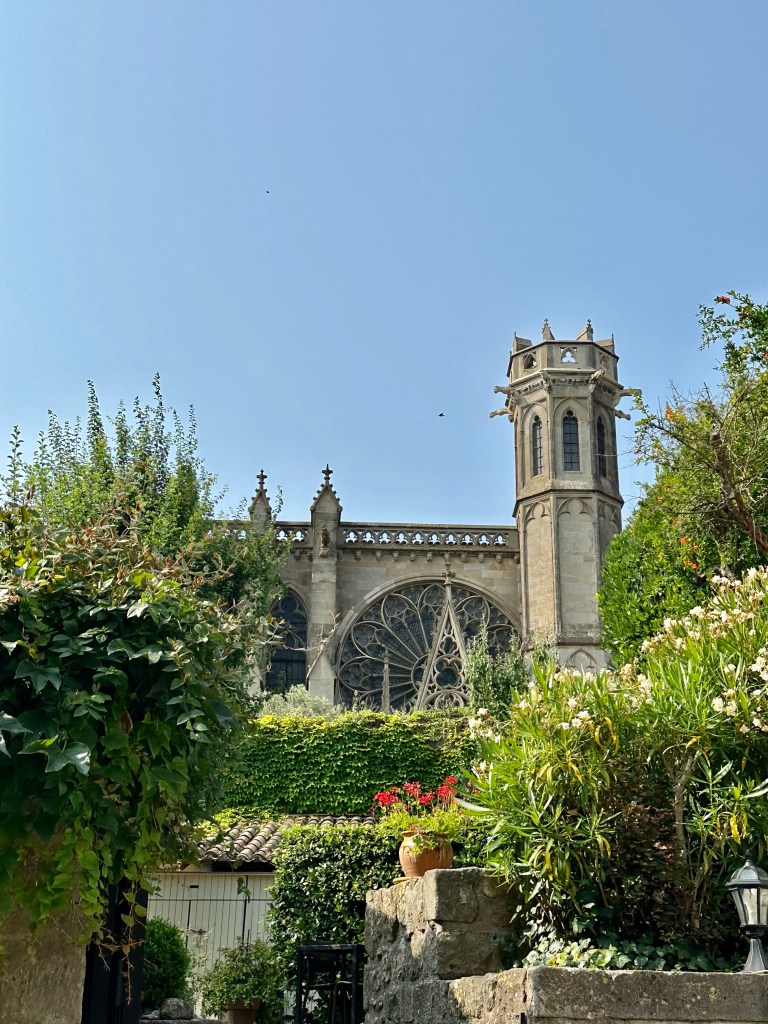
– There is a mysterious, bricked-up window in Carcassonne known as “La fenêtre condamnée” (The Condemned Window). Legend has it that a beautiful woman named Dame Carcas was confined to a tower by her jealous husband. She managed to escape through this window using bedsheets as a rope and found love with a knight. This romantic escape story is often associated with the bricked window.
– The Phantom Armies: Some locals claim to have seen ghostly armies and soldiers wandering around the ramparts of Carcassonne during the night.
– There’s a legend that the Visigoths, who once ruled Carcassonne, buried a treasure deep within the city’s walls before it fell to the Franks. To this day, treasure hunters occasionally search for this hidden fortune, although no substantial evidence has ever been found.
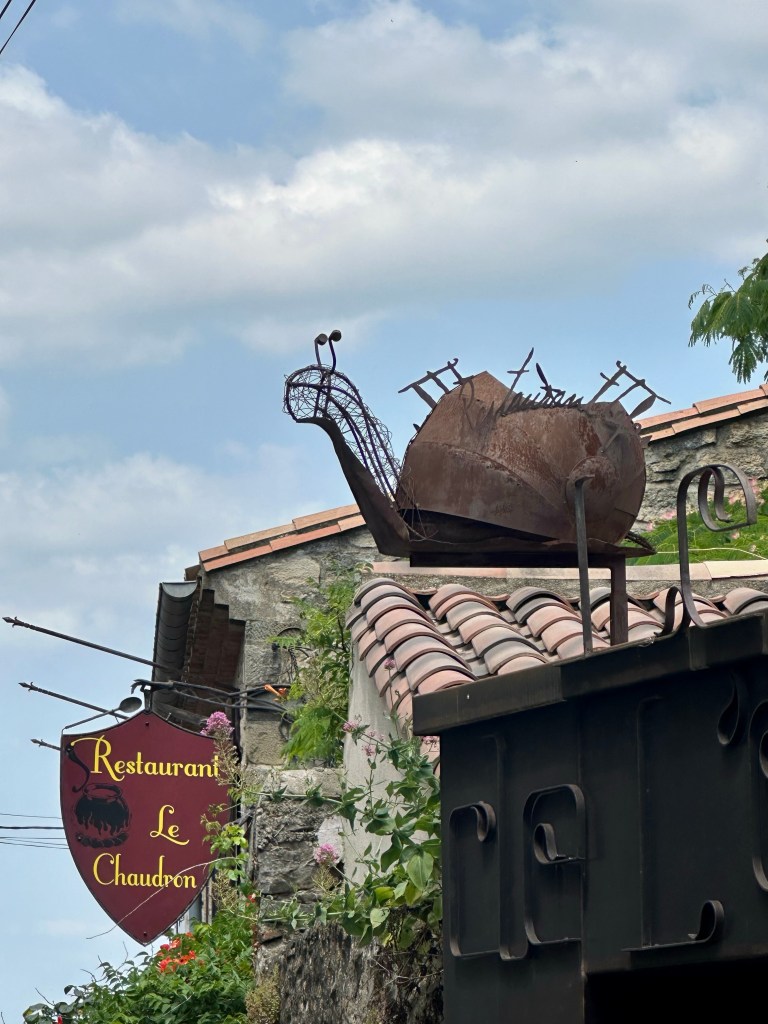
Visiting Carcassone is a great experience, not only because of La Cite, but because of the wonderful cuisine and wines of Languedoc.
Languedoc is the oldest and largest wine-producing region in France, and its wines are known for their diversity and value.
Languedoc wines are typically made in a more rustic style than wines from other regions of France. This means that they are often unfiltered and less refined. However, this also means that they are often more expressive of the terroir, or the unique growing conditions of the region.

Like its wines, Languedoc cuisine is diverse and flavourful reflecting the region’s Mediterranean climate, fertile lands, rich history, and diverse cultures. It’s not the chic nouvelle cuisine, but something that your grandma could cook; hearthy, delicious and rustic. In essence, a perfect companion to the Minervois & Corbières wines that we so enjoyed.
The Cité is divided into two parts: the upper town, which is enclosed by walls and towers, and the lower town, which is located outside the walls.
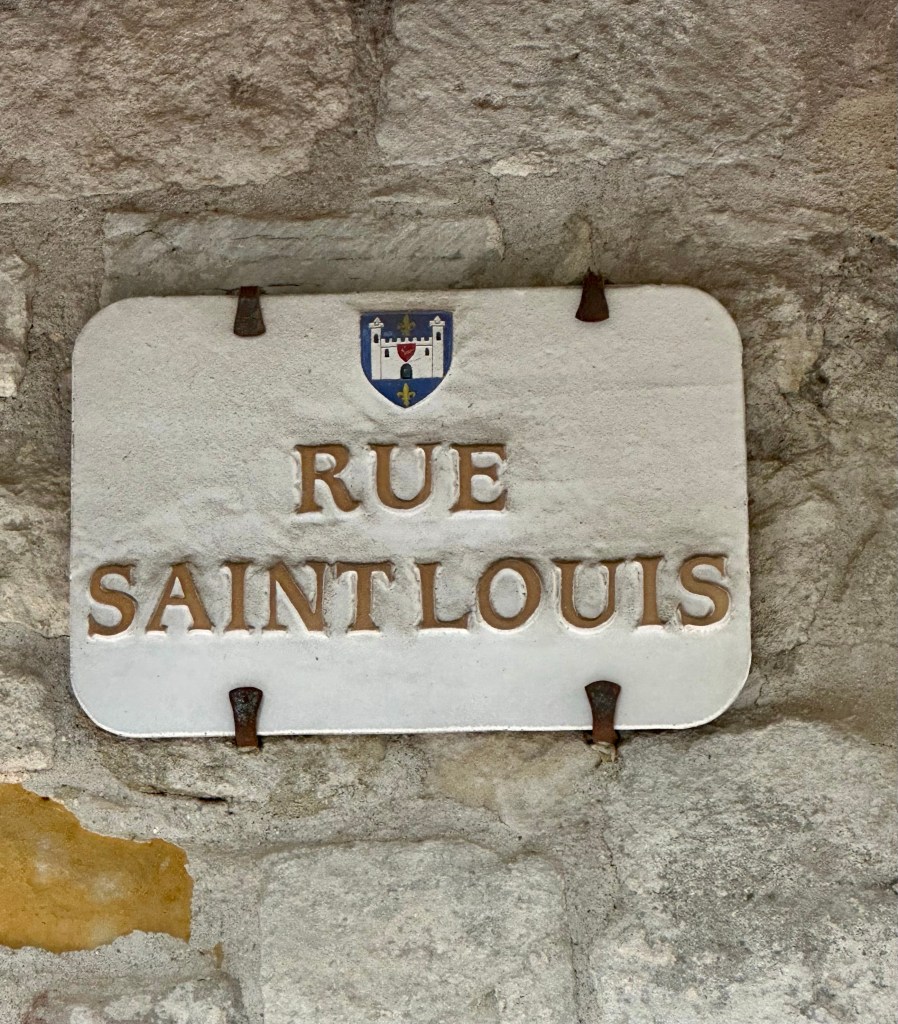
There are lots to do in Carcassone :
– Visit La Cite and take a tour of the Château Comtal. The audioguides give comphensive info about the history, the architecture and life in the middle ages. Be sure to book online, the tickets come with an online guide.
– The citadel is a lively place with cafes, shops and the obligatory crêperies. I think there’s a law in France that every historical / touristic town has to have at least three crêperies. But, it’s light, delicious and cheap; and a great way for a quick lunch.
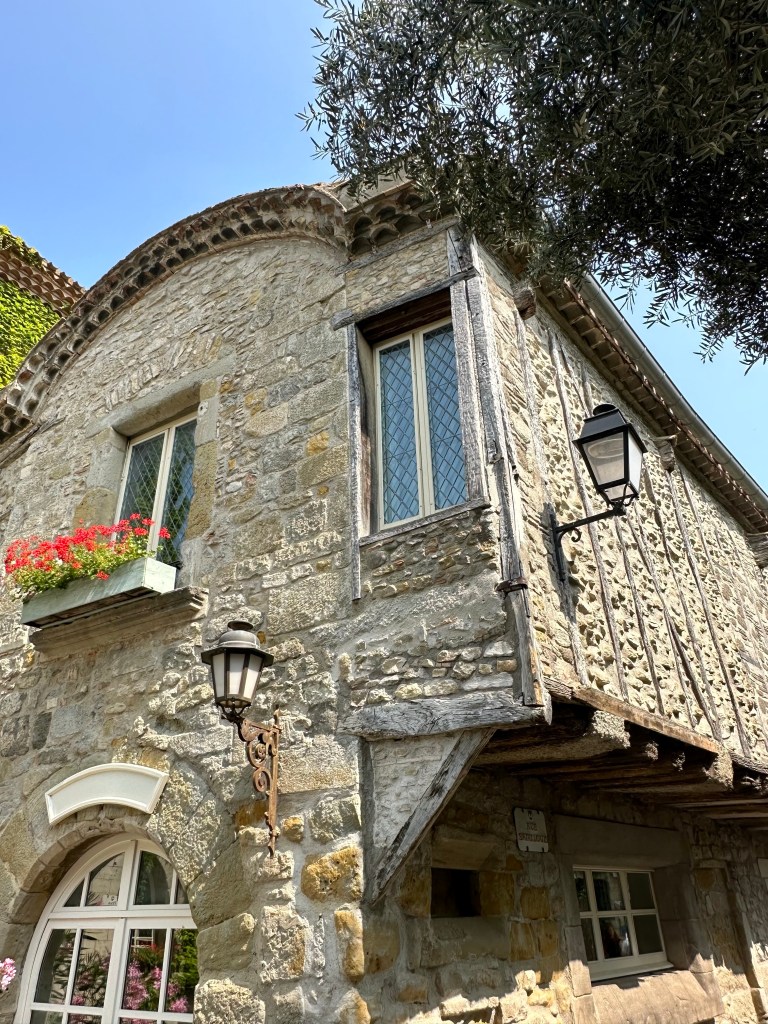
– A good option for breakfast or an afternoon break is the Boulangerie de la Citè. Choose your deserts and cafe and take them to the delightful little garden just across the road, where you can sit under the trees and get a respite from touristing.
– And don’t forget to visit the Citadel at night, when the crowds leave, just a few places are left open and you can hear your footsteps on the cobbled streets. You might glimps the ghost of Dame Carcass, who might be escaping her tower to meet with her noble knight.
– Take a stroll along the 11th century Pont Vieux. It has great views of the city and the Citadel.
– At sunset, go to Tribe Carcassone for cocktails. It’s rooftop bar has a killer view and a pretty decent cocktail menu.
– The city is full of wonderful restaurants among which I strongly recommend Brasserie a 4 Temps. I still dream about my cuisse de canard confite that went very well indeed with a bottle of Minervois.
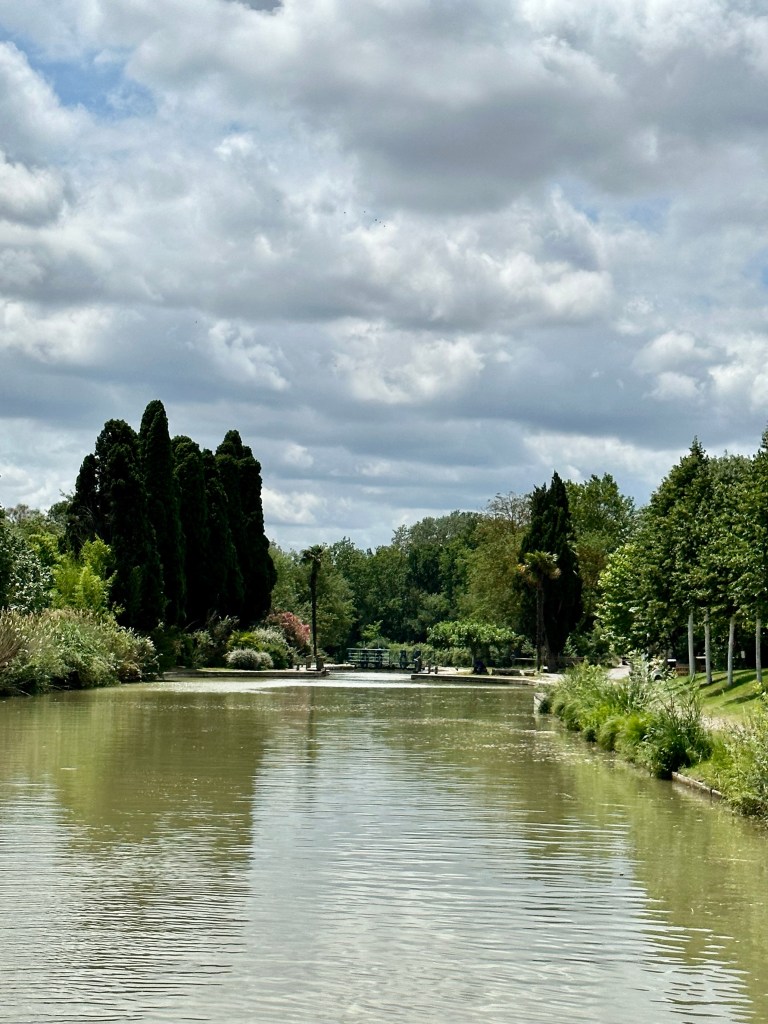
– Rent a canal boat, or bicycle and enjoy the routes along the Canal du Midi. There are cute little villages and wineries en route. (Check my blogpost about cruising the Canal du Midi here).
– Don’t forget to spend time in downtown Carcassonne, a modern city with its large avenues lined with oak trees, plazas full of bars and cafes.
The ancient city of Carcasssonne inspired many artists, writers and even game makers. Let it inspire you.
 CherryPicks
Compliments. You know some places in France better than I do…
Très bien…
LikeLike