
I’ll be honest — I picked up Allison Pataki’s book ‘The Magnificent Lives of Marjorie Post’ half expecting a breezy, glamorous read through old American money. And in some ways, it is that. But it’s also something I didn’t quite anticipate: a portrait of a woman who was genuinely complicated, resilient, and operating at a scale of ambition that most people — even today — would find hard to wrap their heads around.
Throughout the book, I found myself marvelling at the times she’d lived through and the things she’d witnessed. She really did that? She met him? She was there? She built that?

Marjorie Merriweather Post lived her long life to the fullest. Hers was a grand and epic story from start to finish — very American in its bones, but made universal by her resilience and reach.
I truly admired her by the end. Did I fly through every page? Not quite. There are stretches where things slow down and become predictable — another over-the-top party, another husband who sees her as a mere socialite rather than a person — and you feel the weight of a very long, very full life being catalogued. She really had the worst taste when it came to choosing husbands. But even in the slower chapters, something always pulls you back: a detail about her eye for beauty, a story about her sheer determination, a moment where you think, she really did that. And you keep reading.
What I didn’t expect was how much the book would stay with me when I finally visited Hillwood Estate. I’d been to Washington DC before, but Hillwood had always been one of those places on the list I’d never quite gotten around to. This time I did — and I walked through those gates already carrying a version of Marjorie in my head, formed entirely by reading about her. That’s a strange and wonderful way to visit someone’s home.

The gardens hit me first. They’re extraordinary in the way that well-loved gardens always are — not just beautiful, but cared for, tended with intention. You can feel that someone wanted these grounds to be a living thing, not just a backdrop. Walking through them, I kept thinking about how Marjorie entertained here, how many mornings she must have started by simply sitting there, enjoying all of this and feeling, maybe, a rare moment of quiet.
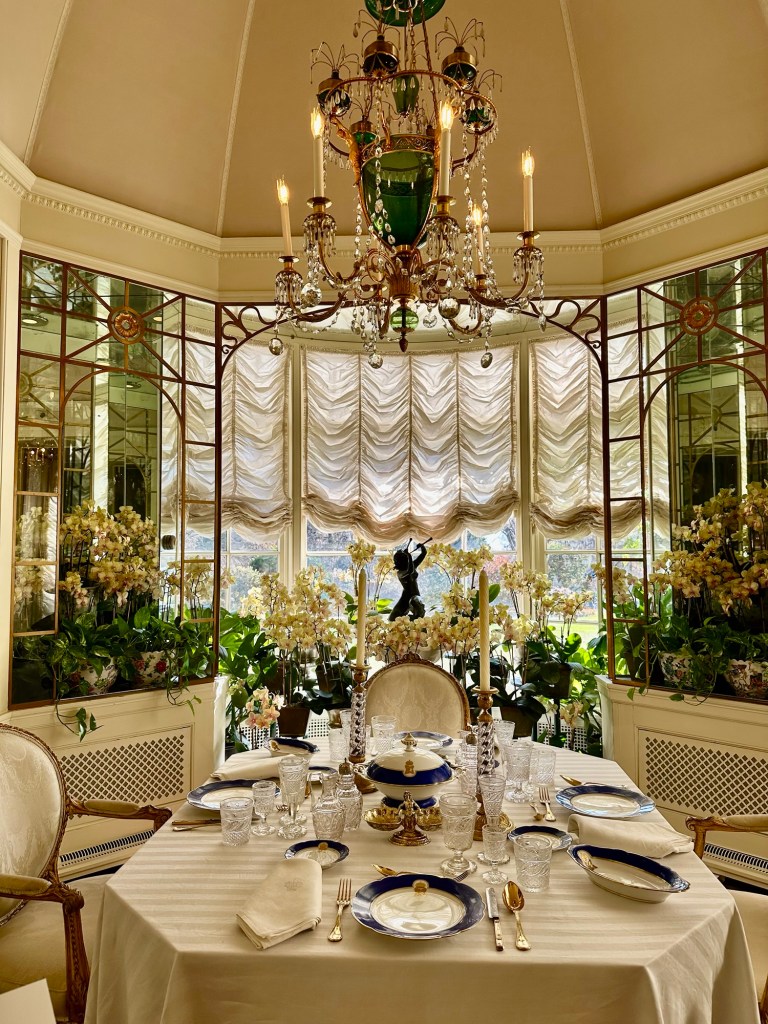
The breakfast room gave me that same feeling. It’s a lighter, more intimate space than you’d expect from a woman who regularly entertained heads of state and industry tycoons.. It is a room filled with such gorgeous floral displays in the window that it makes it hard to tell where the outside garden ends and the room itself begins. It felt human in a way the grander rooms can’t quite manage. The attention to detail in this small room was crazy. I stood there longer than I probably needed to.
Then there are the kitchens. Almost industrial in size and equipment, designed to cater for a hostess, who was born to entertain. Her parties were famous, and full of surprises. An ambassador could find himself sitting next to a hair dresser, for Marjorie taught they might have something in common. A love of cats, perhaps?
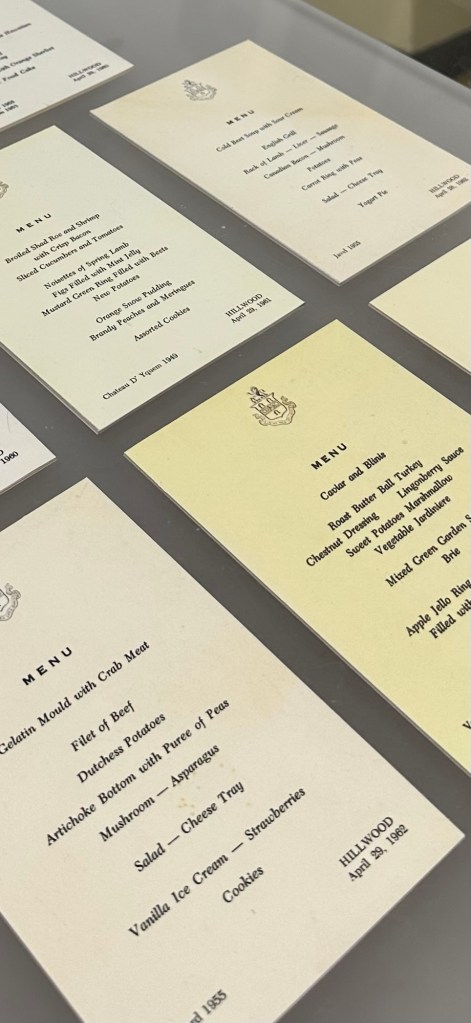
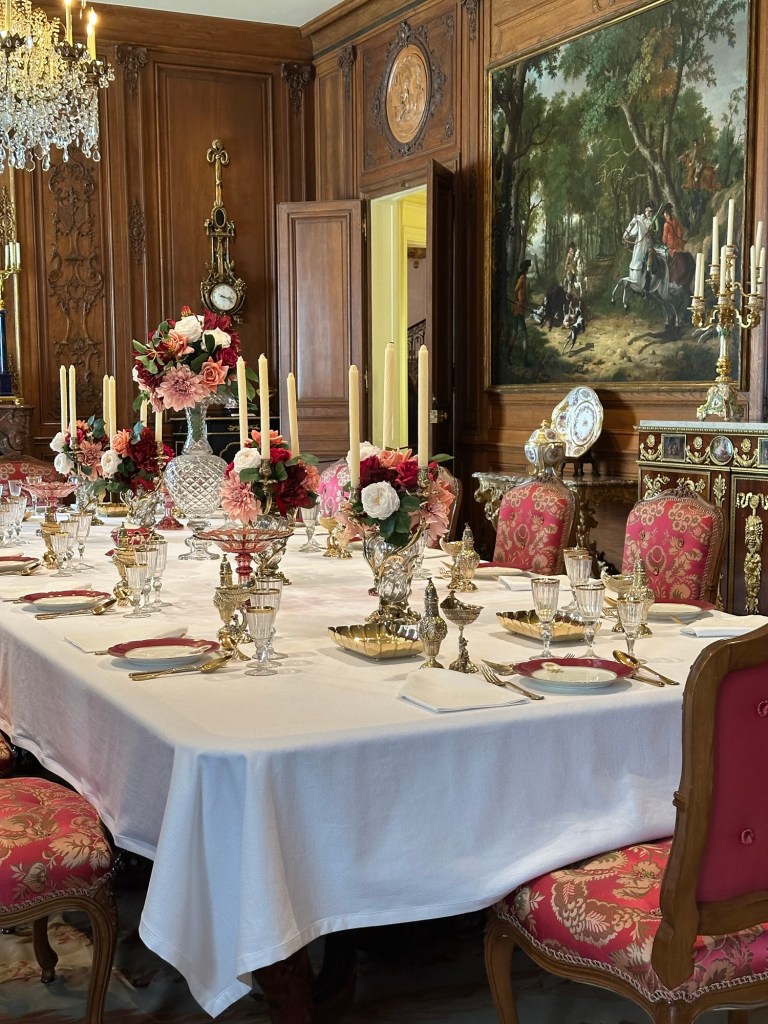
The staff quarters were, for me, unexpectedly moving. They were large, comfortable, welcoming. I was astonished with the sheer size of the staff members that it took to manage the site and care for it all: groundskeepers, maids, kitchen help, chef, gardeners, on-site caretakers, valets, chauffeurs and of course, the butler. This was a woman who understood the importance of a reliable support system and took care of the people who helped her. Walking through those rooms made the whole estate feel more real — not a museum piece, but an actual functioning household where dozens of lives played out every single day.
The flagpole on the grounds was a gift from her staff and friends. That detail alone tells you something.
And then there’s the Russian imperial collection.
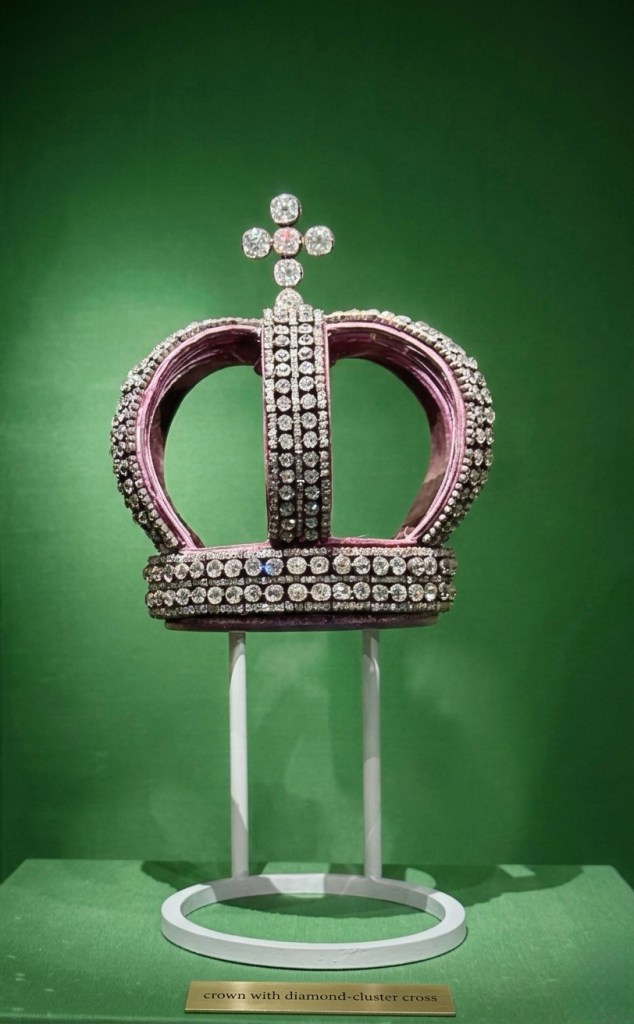
If you’ve read the book, you know that Marjorie’s time in the Soviet Union — when her third husband, Joseph Davies, served as US Ambassador — was one of the most defining periods of her life. She arrived in Moscow in the late 1930s, at a moment when the Soviet government was quietly liquidating the treasures of the Romanovs, and there she was: a wealthy American who was cultured enough to recognise the historical weight of what she was witnessing.
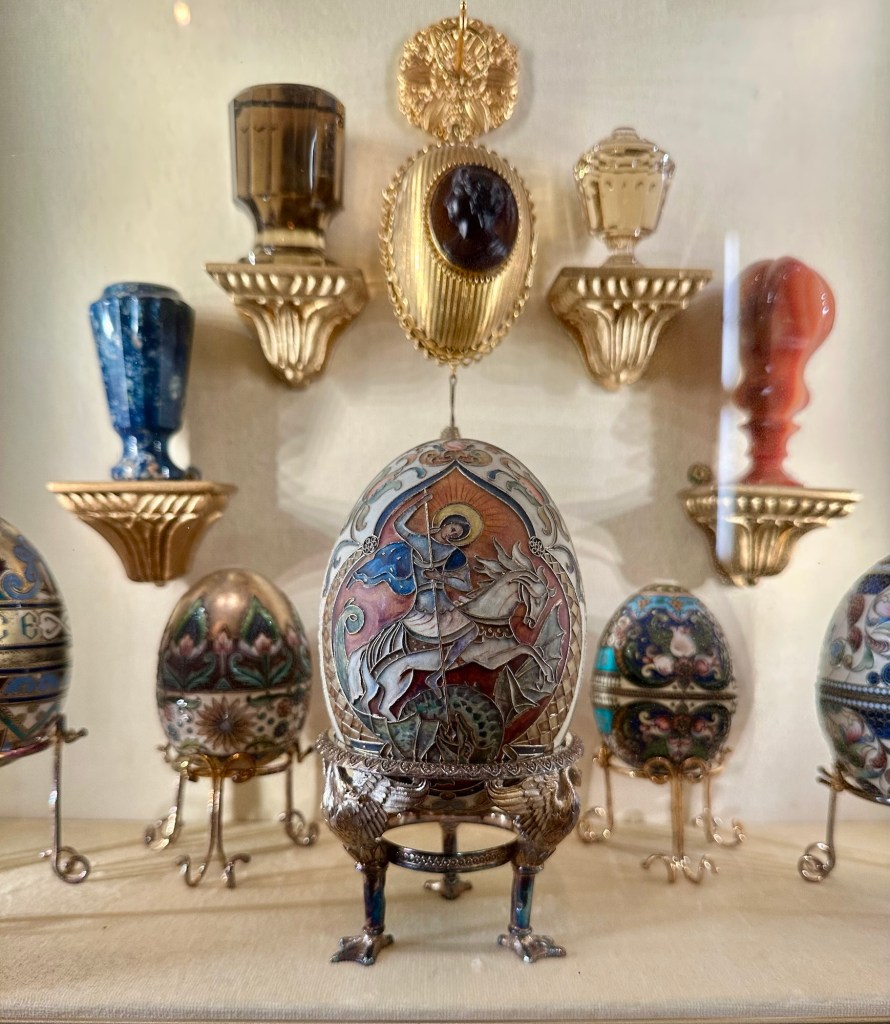
Fabergé eggs. Imperial porcelain. Orthodox icons. Pieces that had survived revolution and war, now being sold off in hangars — one rouble per gram. An empire’s history and wealth for pocket change.
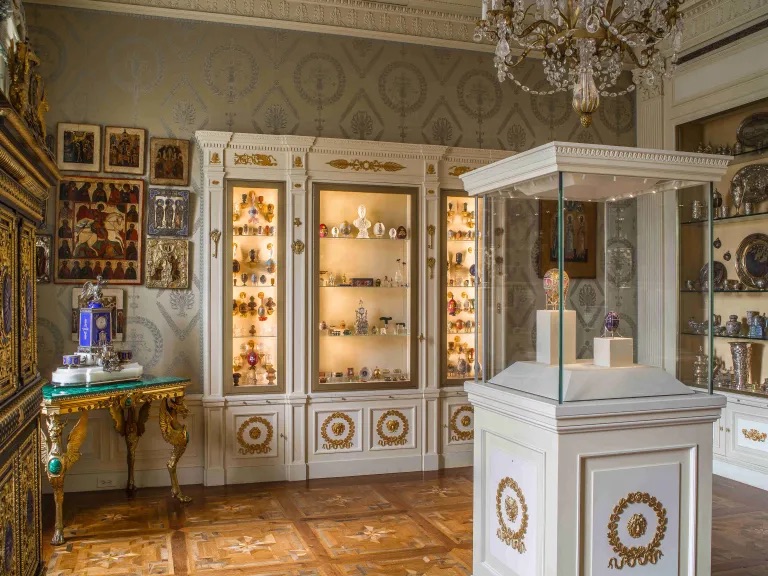
The first items she bought had belonged to Catherine the Great; her personal tea set. Then she kept on buying. Honestly, who wouldn’t?
Standing in front of those pieces, I was awed by the sheer scope of the collection. This wasn’t assembled by a wealthy woman who liked pretty things. It was assembled by someone who had been there — who understood what she was looking at and why it mattered. That changes how you see it entirely.
My one genuine wish — both for Hillwood and, in a way, for the book — is that there was more of her in a personal sense. I wanted to see more of her wardrobe. I wanted to go through her travel diaries, trace her routes through Russia, understand what she was feeling when she packed those pieces up and shipped them home across an ocean during one of history’s most volatile moments.
The public Marjorie is well documented. The private one — the woman who had opinions about what to wear and how to entertain and kept notes on what she saw — still feels just out of reach.
Two things about her stayed with me.
The first: she was a homemaker, in the deepest sense —she apparently took great pleasure in creating spaces for her family. Apart from the Hillwood Estate, there were residences in New York, a summer retreat in the Adirondacks, a train compartment- the Hussar- and of course the Sea Cloud, the legendary sailing yacht launched as the largest private vessel of its time.
I hadn’t known she built Mar-a-Lago in the late 1920s and donated it to the US federal government some forty years later, just before her death. However, her wish to see it become a grand public place didn’t quite work out; due to the high upkeep costs the government sold it a few decades later.

(Thinking about its current owner — that’s another house with stories to tell.)
The second: at a certain point in her life, she decided not to make herself small in order to allow the men around her to feel big. That was the woman I would have liked to meet.
If you’re in DC, go there on a sunny day. Read the book first if you can. Walk through the gardens slowly. Stand in the breakfast room. Imagine the guests at the dinner parties. Look at the Russian collection with the knowledge of how they got there.
And try not to wish, just a little, that the closets were open.

 CherryPicks