
To wrap up an already a packed year with some sun and laughter, we went sailing in Bahamas with a group of friends for a couple of weeks.
No, of course we didn’t sail the 700 islands and God knows how many cays that made up this beautiful island nation. We chose Great Abaco and its surrounding cays instead, mainly to avoid the crowds of Nassau while still being able to explore towns and enjoy good restaurants.
Great Abaco and its surrounding cays are one of the north-eastern anchors of the Bahamas; low, green, and deeply tied to the sea. Open to Atlantic and famous for boatbuilding and sailing, they have both picture-perfect resorts as well as settlements where people actually live and work. In short, we were searching for places with a soul, and we found them.

Before I start writing about our trip, here are some facts and figures and history about The Bahamas. Don’t skip it immediately, I tried to make it short and light. Well, you know me. But I’ve tried.
- The Bahamas , as I said earlier, is an island country made up of 700 islands and some 2000+ cays, most of them scarcely populated.
- It’s an independent country but part of the Commonwealth, so just like Canada and Australia, King Charles is the official Head of State.
- The local currency Bahamian Dollar is pegged to USD ; and 1 BSD = 1 USD.
- We found supermarkets in almost every island and cay. But, if you are attached to your own brand of tea or coffee or whatever, chances are, you won’t find them here. And if you are looking for a budget friendly holiday, Bahamas are not the best place, even at Caribbean standards.
- The plug types are A & B – same as the US. So, for us Europeans, we have to carry those clumsy plug adapters.
- Internet coverage was shaky, probably because we were on a boat. As a group we used e-sims from both Airalo and GigSky and Airalo was the better choice.

And some history to better understand the place and its people :
The Bahamas are far more than sun, sand, and breath taking sunsets. They are an island nation shaped by centuries of passing tides, each leaving its mark on the people, the culture, and the land.
It begins with the Arawaks, who arrived from South America and became the Lucayans, the peaceful “island people” who spread across the Bahamas long before Europeans appeared. Their world ended in the late 1400s with Columbus’s arrival, his exact landing place still debated. Though the Spanish never settled permanently, disease, slavery, and forced relocation nearly wiped out the Lucayans within a few generations.
By the late 1500s, English ships were drawn to the islands for trade and location. Permanent settlement followed in mid 1600s, and Nassau soon became a place ruled as much by pirates as by kings. Blackbeard, Anne Bonney, and their kind held sway in these islands until British authority was reasserted in the early 1700s, shaping laws that still linger today.
After the American Revolution, Loyalists arrived with their slaves. When slavery was abolished in the 1830s, their survival depended on the sea through fishing, boatbuilding, and salvaging shipwrecks, which was highly profitable until the government began building lighthouses, a move that was deeply unpopular with locals.
Short-lived booms followed, from Civil War trade to Prohibition-era rum running, before tourism reshaped the islands in the 20th century. Independence in 1973 marked another turning tide, bringing self-rule while retaining traces of British influence. Today, tourism, banking, and foreign development drive the economy, the latest currents in a long, shifting history.
And, finally our trip :
We chartered a fifty foot catamaran from Moorings. We usually choose the newest boat we can afford from a company we trust, and Moorings had never let us down. Until this time. Well, there is a first for everything.

Our catamaran, oddly named Golddigger, was rechristened Sh*tdigger just one day after leaving the base in Marsh Harbour. The Moorings team were pleasant and polite, but not especially receptive, which resulted in a full day of frustration on our part and a fair amount of extra work on theirs.
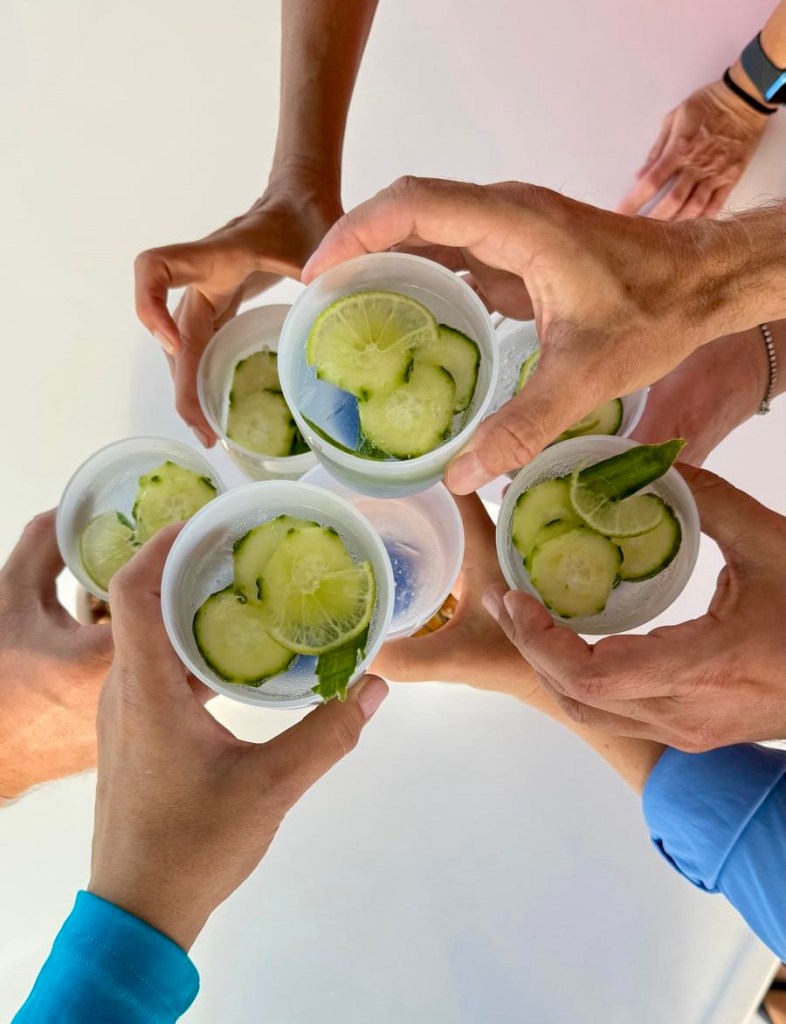
Our boat’s problems continued throughout the trip. Luckily, we were all seasoned sailors, so we did what sailors do best. We solved most of the problems ourselves and drank our troubles away.
In the end, I would say we were quite successful on both fronts.
The Bahamas, especially the Abacos, were hit by a bad-ass Category 5 storm in 2019, which made landfall at the Great Abaco and Elbow Cay and beaten the islands for two days with winds of up to 185 mph. Its devastating effects are still visible today in some of the remote places we’ve sailed to, but mostly in people’s memories.
We’ve sailed up and down the island and its cays, sometimes re-visiting a favorite place a second time, so I’ll just write about our trip anchorage by anchorage.
Great Abaco
Just after 40 minutes of departing from Miami, we’ve landed at Great Abaco and found our transfer to Abacos Beach Resort and Marina at the Marsh Harbour where our boat was waiting for us. Marsh Harbour is where people shop, work, and have fun. Before Hurricane Dorian, it was the commercial and social hearth of the Abacos; afterwards, it also became a symbol of resilience.
There’re couple of pretty decent supermarkets, liquor shops and restaurants within walking distance or a short drive away.

Apart from the Anglers, the restaurant of our marina, we’ve tried Wally’s Fine Dining and Jib Room. They were all casual places with good food and friendly people. Our top pick was the Jib Room, mostly due to their killer cocktails and slightly different menu. They had also pizza- yayyy !
(A note for the wise : They have barbecue nights at Wednesdays and Saturdays, and that’s when almost every table is full with locals and tourists alike. )
And Aloha Java Cafe, with its fresh brews and cinnamon rolls quickly became our go-to spot.
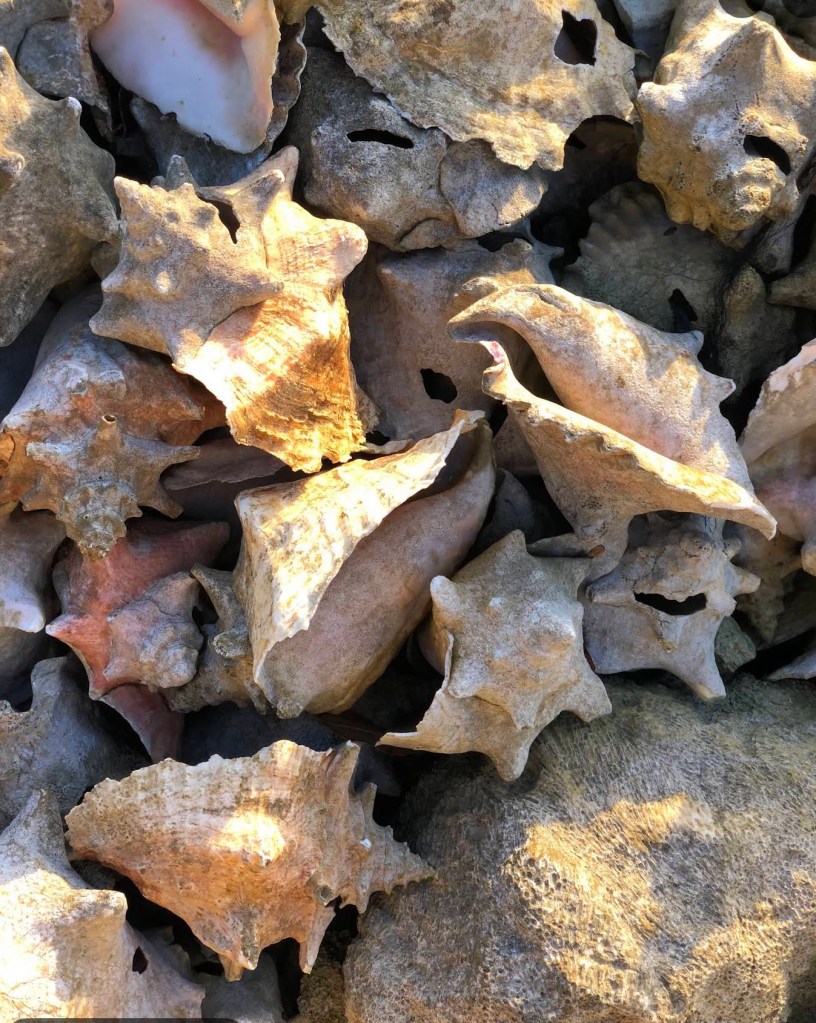
In general, the food in the Bahamas felt closer to a typical U.S. restaurant menu, with only small nods to the Creole flavors that are staples of the Caribbean. We ate plenty of chicken, mahi-mahi, and shrimp — blackened, grilled, or fried — along with burgers, pulled pork (yummm!!) and conch fritters in every shape and form. Everything was tasty, but I found myself craving for something more distinctly Caribbean.
Plus, where have all the lobsters gone ?
The real show stoppers were the cocktails.
Every island I’ve visited have a signature cocktail, and in Bahamas it’s the Goombay Smash – a deceptively strong cocktail made of rum and various fruit juices. The name comes from Goombay, a Bahamian style of music and festival rhythm, so the drink, like the music, is meant to be joyful, communal, and best enjoyed slowly.

Normally, sailing in the Caribbean is pretty straightforward. The prevailing winds are the trade winds, more precisely, the northeasterlies. The islands are usually protected by reefs, and passages from one to the next tend to be made in predictable conditions.
The Bahamas are different. It’s not so much a lack of reefs as their unpredictability; scattered and often far away. For the most part, we were sailing in shallow waters, loosely shielded from the Atlantic by the low cays and far-away reefs. Here, anchorages are protected by the islands themselves rather than by surrounding reefs, which make both the passages and the anchorages a little choppier.
From Marsh Harbour, we sailed south to the Little Harbour at mid-tide and instantly see why the Spanish named the Bahamas “Bajamar” or Shallow Waters. In fact, entrance to some of the cays that we’ve sailed to were so tricky that we had to wait for the high tide to enter.
Add that a very narrow strip of an entrance, and voila, welcome to the Little Harbour.

After three and a half hours of sailing with waves on the beam, we reached Little Harbour at high tide, easing our way through the shallow entrance without much trouble and found a buoy.
When I finally slipped into the water, it was cool and refreshing and, as you might guess, shallow.
Another side note : We depended a lot on the Tides application; which is free, reliable and easy to use.
At Little Harbour, there’s a small artist colony based around Pete Johnston’s Pub and Gallery. They also rent the buoys for forty dollars a night. We had dinner at the pub, with tuna steaks in ginger sauce and cold beer. The place was filled with fellow sailors and locals, making for a relaxed evening of comfort food and easy laughter.

The next morning we swam ashore — all white sand and only a handful of swimmers – and went for a walk. Here the island narrowed to a thin strip, and when we reached the other side we met the Atlantic in all its glory, and we’ve stopped for a while to listen to the sound of waves breaking. One of my all-time favorite lullabies.
A few beautiful houses sat atop the strip, open to the ocean on one side and the calm beaches on the other. In another life, I’d like to rent one of them for a few weeks, maybe to write my next novel.
We then walked over to Pete’s gallery, which was unfortunately closed. Still, its veranda was lined with metal sculptures of sharks, rays, and fish; some of them quite striking.
Elbow Cay is my top pick among the places we’ve visited.
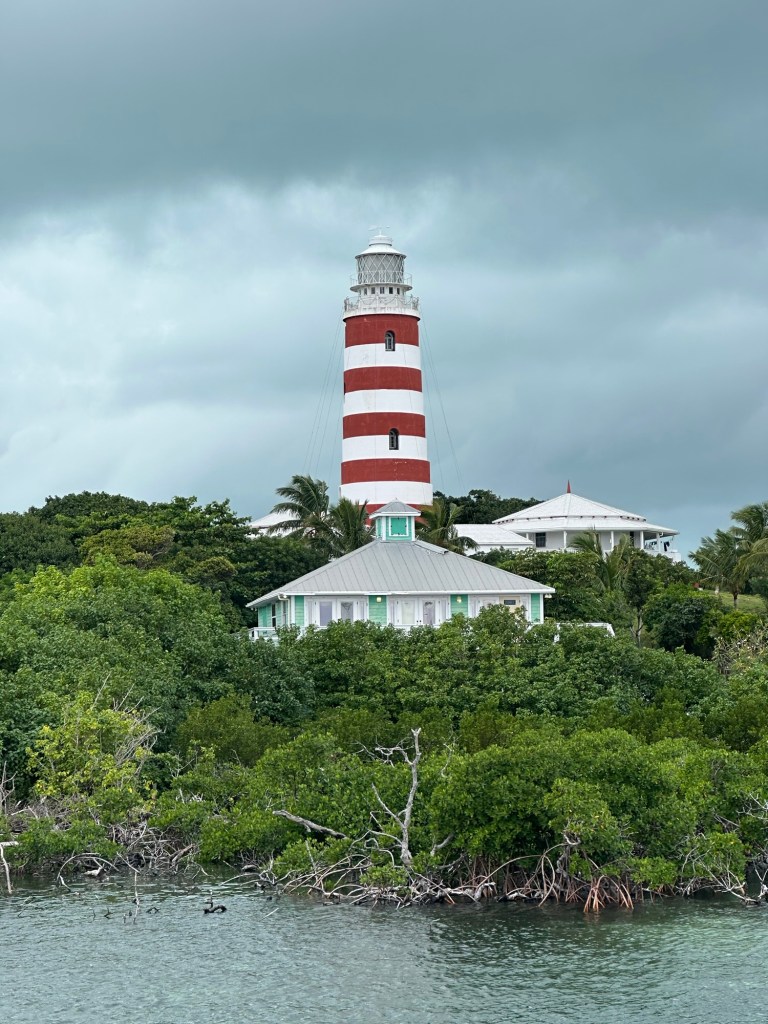
When sailing from Hope Town, you’ll see a candy stripped light house on the port side; the first of its kind in those parts. When it was built in 1863, the locals objected fiercely, for they were making a pretty decent living from salvaging the ships that were wrecked on the shallow sand banks of the islands.
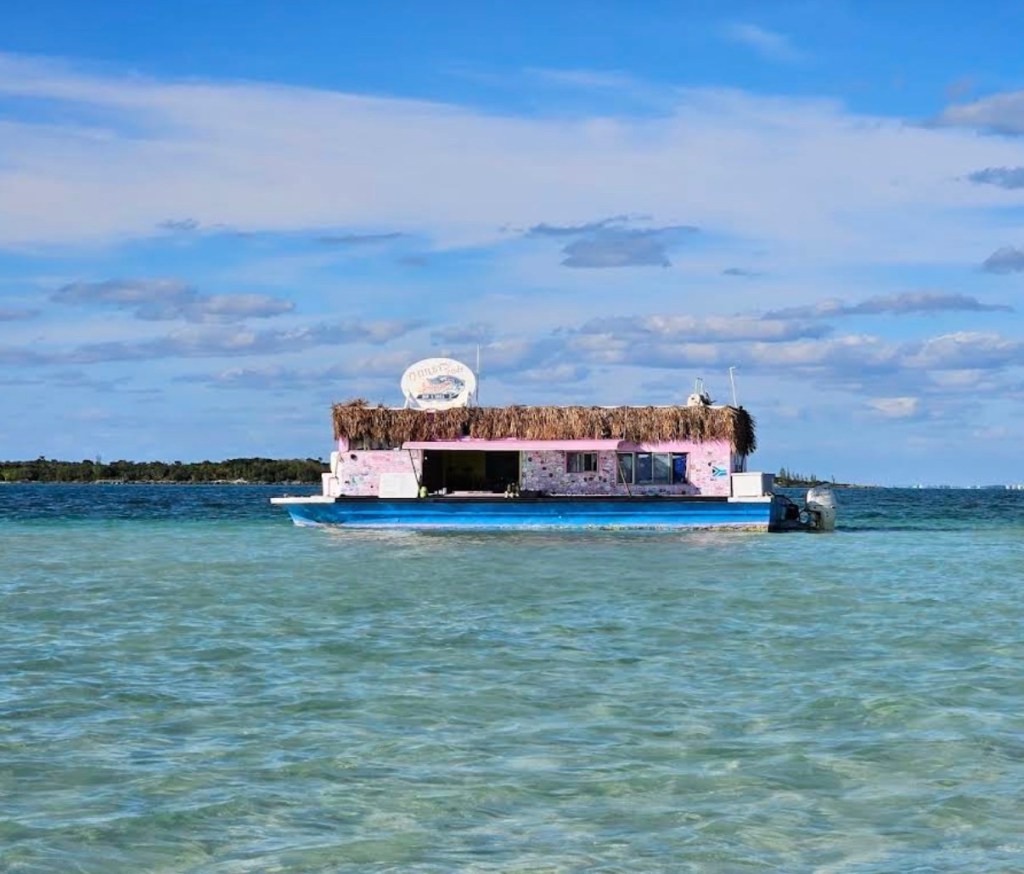
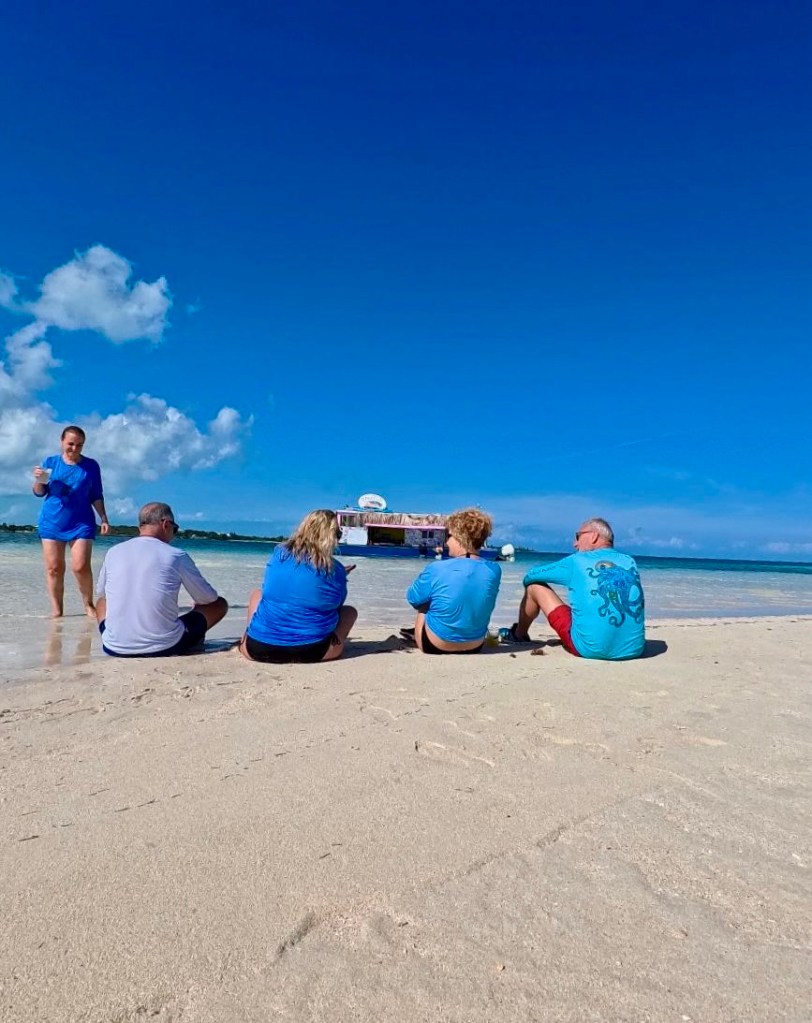
We anchored at the Tahiti Beach and swam to its tip which only surfaces at the low tide. We were just in time to catch the Thirsty (Barra)Cuda, the pink boat bar for cocktails and some delicious comfort food for an unforgettable wet lunch.
Sitting on those white sands, cocktails within reach and 80s latin-pop drifting through the air is a memory I’ll be holding onto for months.
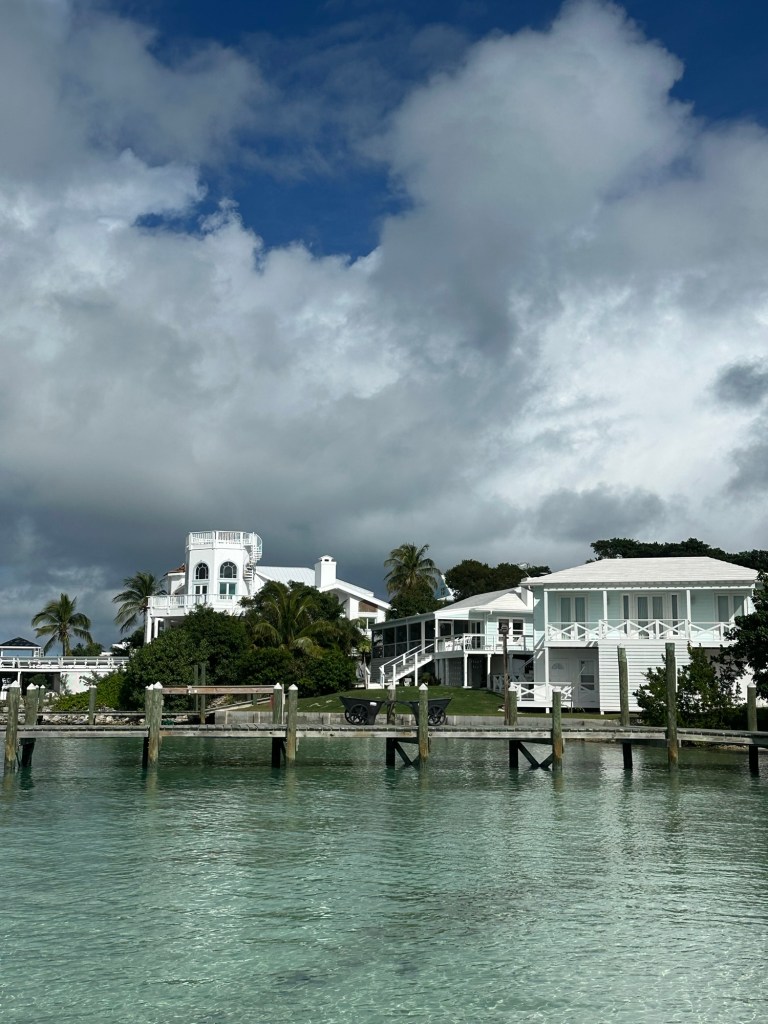
We were expecting some rough weather, so we decided to wait it out at Hope Town Marina, on the far side of Elbow Cay. Funny thing is, the only way to reach the marinas is by the sea, for the road that crosses the cay simply ends a few miles short of them. The only transportation between the marinas and the settlement are the tenders, so we called one and went to explore the cay on our rental carts. (Around 60-70 USD per cart – which carries up to 4 people.)
Hope Town turned out to be a charming little settlement, with colorful colonial houses, white picket fences, and small shops. Elbow Cay was lovely in every way. Lush and green, dotted with elegant colonial style homes and resorts, and edged by beaches that were even more beautiful.
We stopped at Oasis Cafe for a late breakfast; the garden, the coffee, the fresh fruit juices and croissants were all a treat, served by the chef herself.
Afterwards we drove to Tahiti Beach, and shocked to see our favorite strip disappear right before our eyes.
On the way back, we stopped at a market to pick up a few groceries, and at the little ice-cream parlor attached to it, a young girl asked if we were speaking Turkish. When we said yes, she lit up and started telling us how she’d learned to recognize the language by watching Turkish soap operas. She knew far more about those shows than we did — but somehow, we managed not to embarrass ourselves with our complete lack of TV-show trivia.
Lunch was at On Da Beach and oh so good; small tacos of shrimp and pulled beef washed down with delish cocktails. Afterwards, we took a long walk just to open up some space for the dinner.
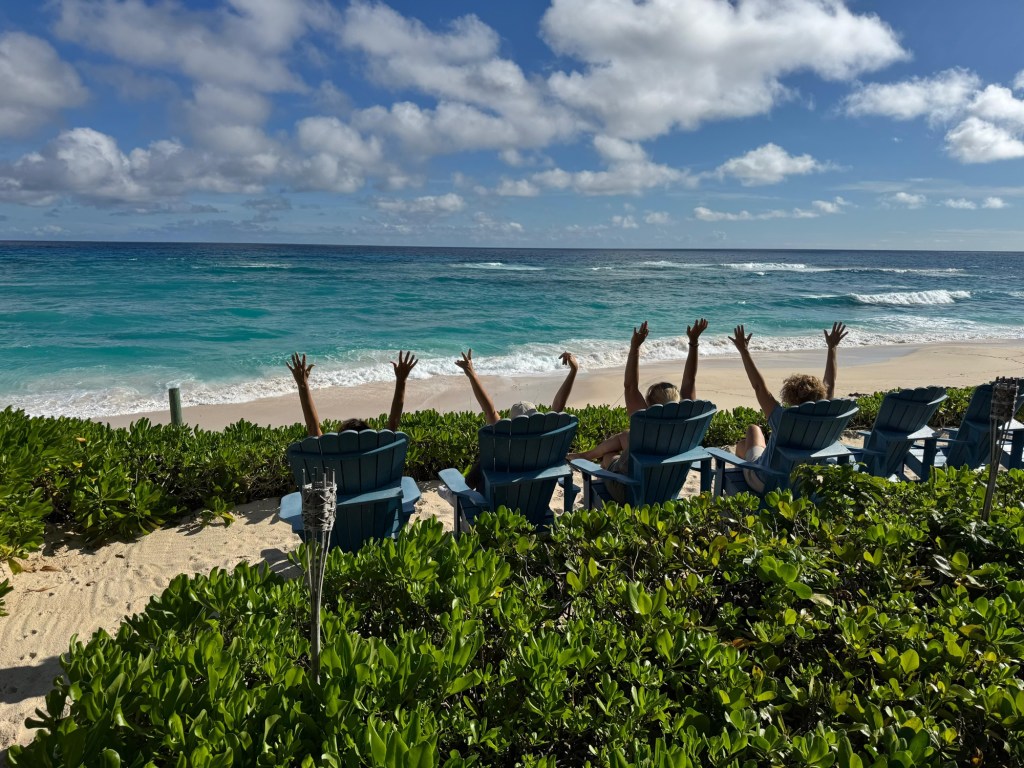
Cap’n Jack was a good choice for a light dinner of Caesar salads. I happily made up the calorie difference with a margarita or two.
Green Turtle Cay was another gem with a tricky entrance. After a full day of sailing and some dolphin watching, we arrived earlier than expected and waited for the high tide to sail into White Sound, a very protected anchorage, took a mooring buoy and enjoyed the technicolor sunsets of the Bahamas.
That night, the year’s last full moon rose slowly over the eastern horizon, a giant golden sphere, and the sight took my breath away.

Dinner was at the Boathouse, a nice restaurant with live music, just a boat ride away.
Next morning found us on golf carts again, driving to Coco Bay at the northern tip of the cay. It’s a beautiful beach with white sands, a turquoise sea and the friendliest stingrays that I’ve ever seen.
We went into the sea, and before I could walk up to my knees, a stingray swam to me, and touched my feet and legs, its touch gentle and soft like velvet. Then came another and another. Soon we were all surrounded by stingrays in knee deep water, enjoying their light touches, just marveling at this incredible welcome.

Now I know how it feels when a giant stingray sits on my bare feet. Silky and heavy.
Afterwards, we drove to the other side of the island and stopped at Miss Emily’s Blue Bee Bar. You remember Goombay Smash, the signature cocktail of Bahamas ? Rumor has it that it was created here in this bar, by Miss Emily herself.
There we met Violet, Miss Emily’s daughter and a truly delightful person. As she mixed our delicious cocktails, she told us stories about her mother and her own daughter. We were the first group she’d met from İstanbul, and she was surprised that we even knew about her little bar.
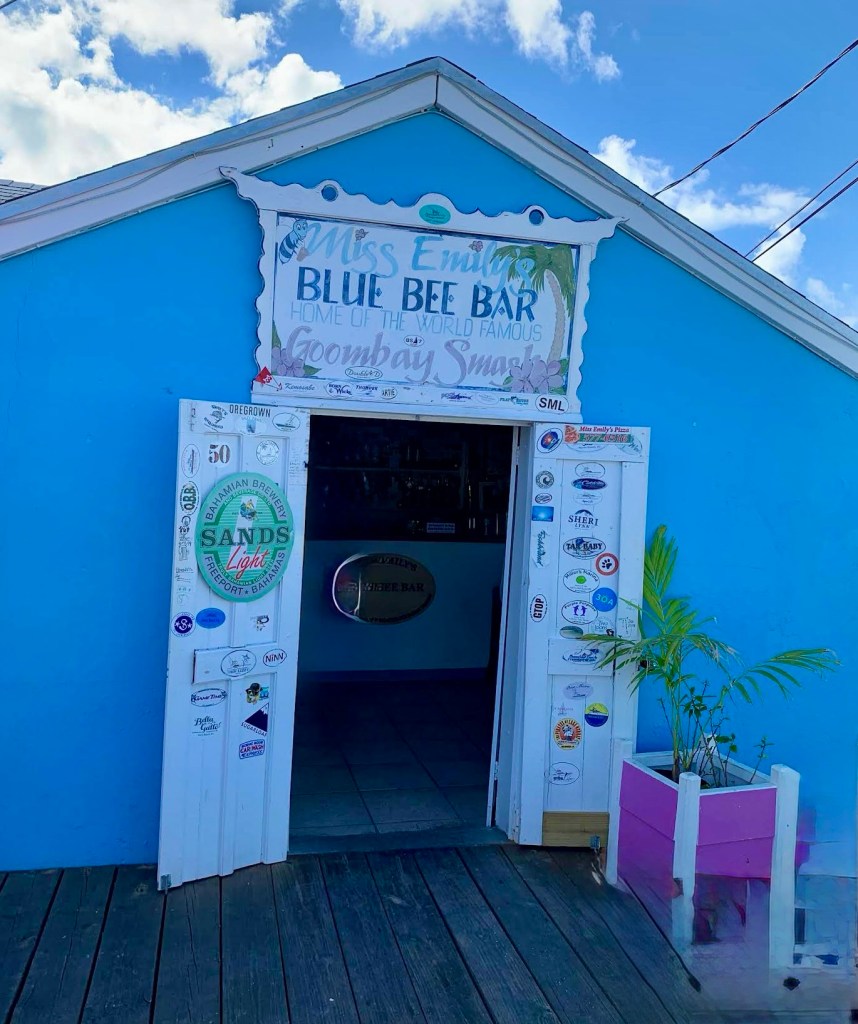
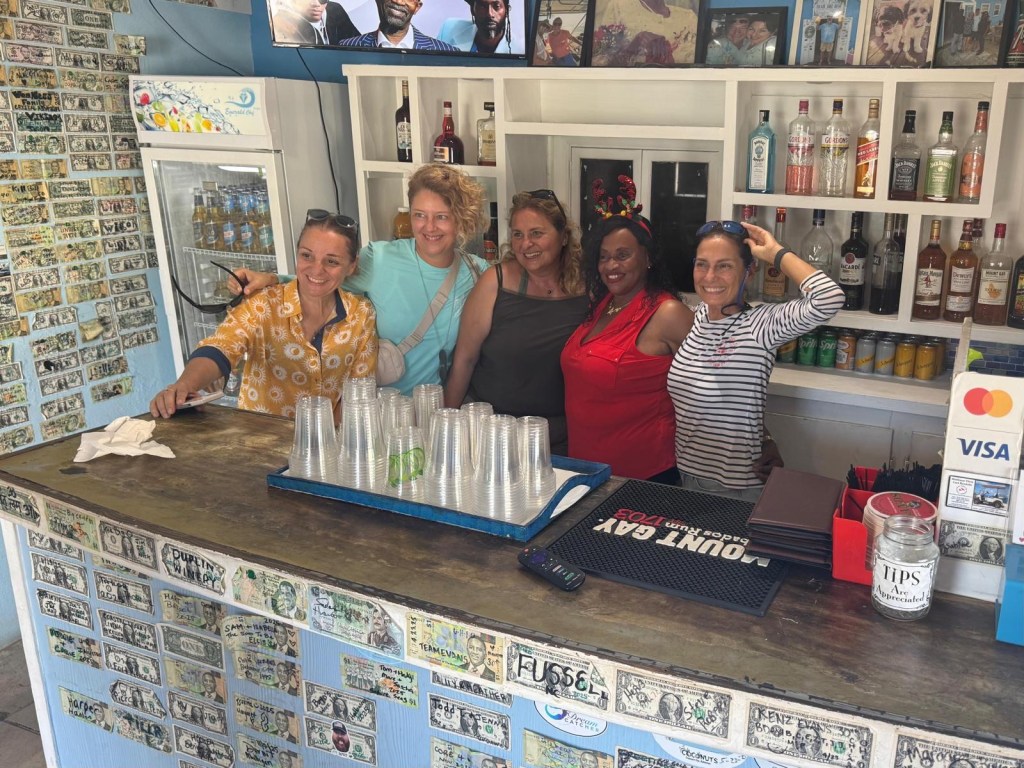
We’d hoped to grab a bite, but the kitchen was being repaired, so she pointed us toward a seaside café called the Pineapple.
Pineapple turned out to be a lovely seaside bar, with a well-stocked bar and even a swimming pool. Our first impression, however, wasn’t great. The bartender seemed far more interested in her multicolored eyelashes and gel nails than in serving us. By then we were starving and in no mood to hunt for another place, so we appointed the only guy in our group she was remotely friendly with as our spokesperson. In the end, it worked, and we managed to enjoy a truly delightful lunch of lobster burgers and tacos.
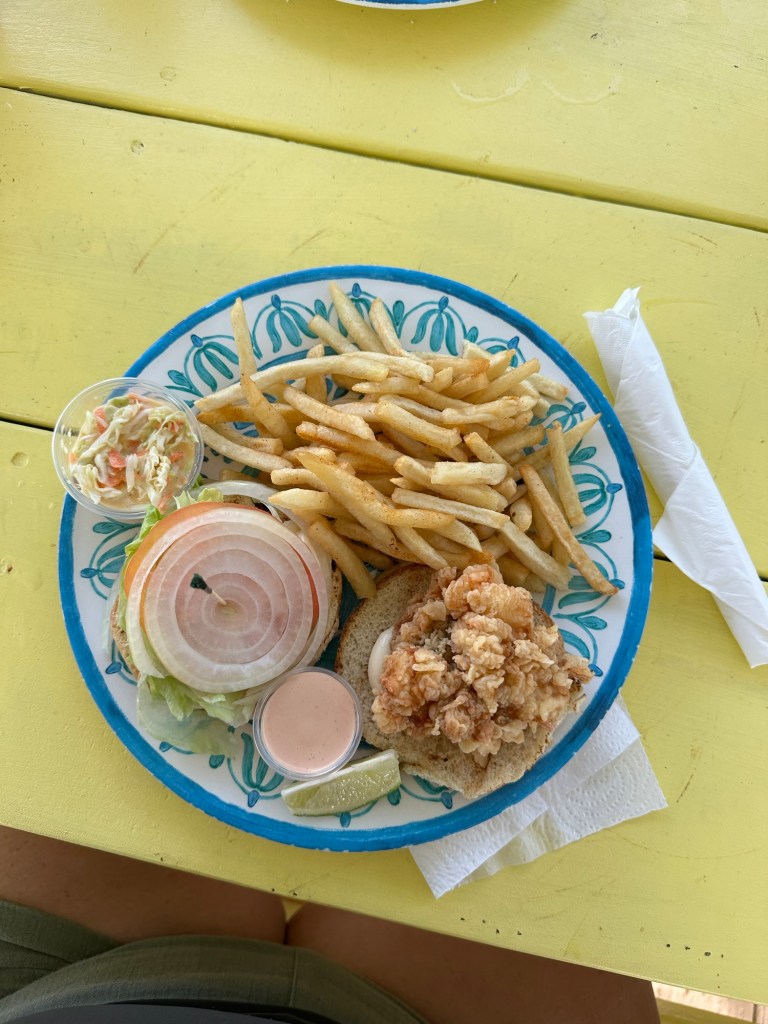
And got some fashion ideas about our own eyelashes.
We then drove to Gillam Bay at the southern tip of the island. It was a beautiful stretch of a beach, and quite empty. Perfect place for relaxing for a while, taking long walks and searching for shells and sand dollars in the white sands.
Bahamas are one of the locations on earth where you can swim with pigs. Why ? No idea. But, if you want to tick that off your bucket list, No Name Cay is the place.
Although no one lives there, there’s a restaurant on the cay that opens for lunch and looks after the pigs. We weren’t particularly enthusiastic about that particular experience, especially after one of our group had a tiny ‘finger nipped by a baby pig’ incident so we opted for snorkeling instead. It turned out to be a better choice for we saw barracudas, one quite large, which was more thrilling for me.
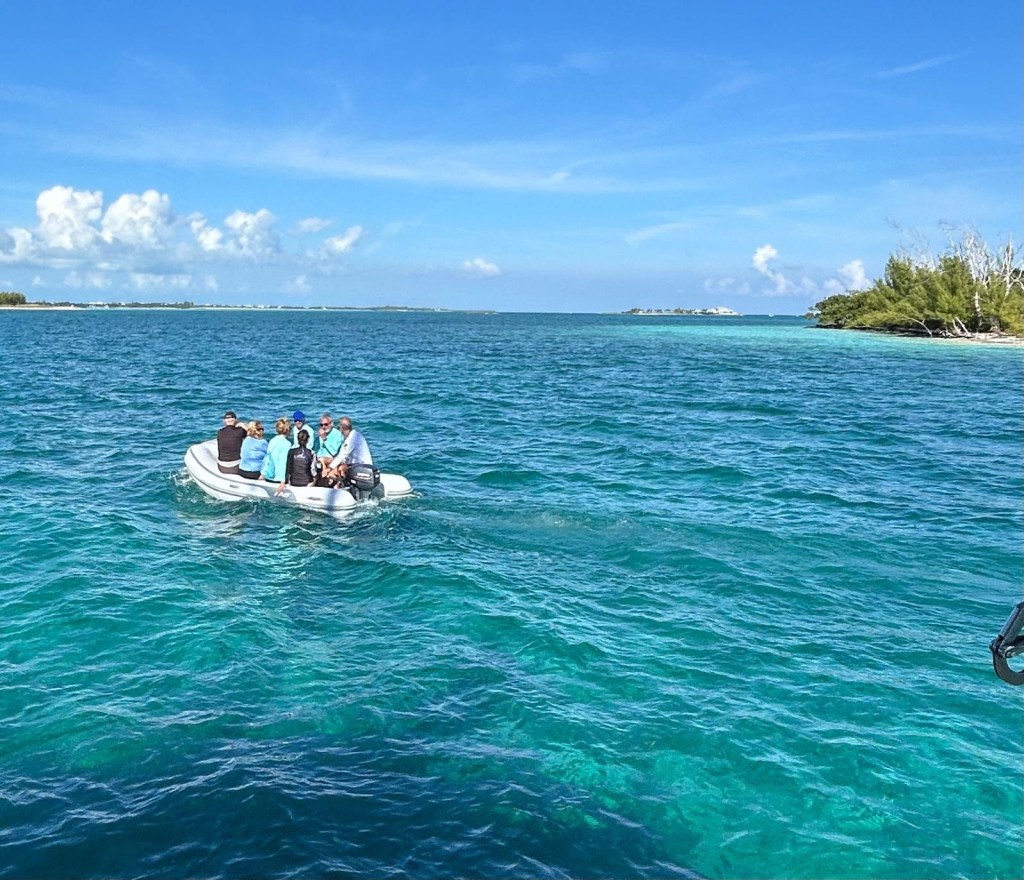
Another side note : The Abacos aren’t particularly known as a snorkeling destination, so swimming with barracudas was a rare treat. Exuma, a few hundred miles farther south, is reputed to be far better in that regard.
Great Guana Cay is one of the best-known cays in the Abacos, especially famous for its long beaches, relaxed vibe, and classic spots like Nippers and Grabbers.
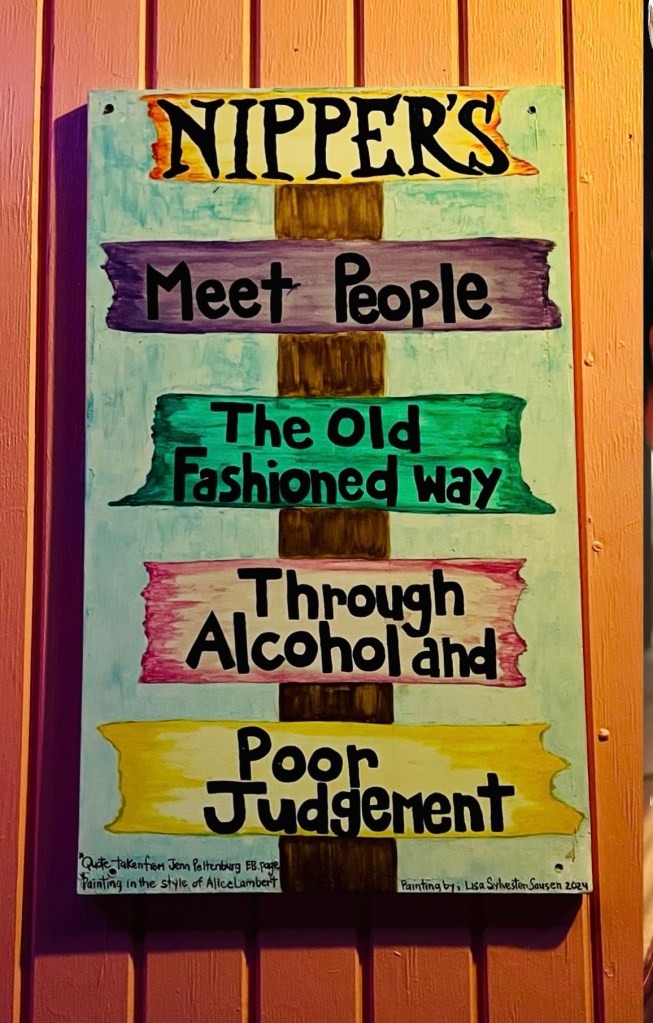
We tried both in different occasions, and enjoyed both. Nippers was a better spot to spend a night, with great food and good music, whereas Grabbers, with its direct beach access is a good option to spend the day and enjoy the sunset. Nippers is also famous for its Sunday beach roasts, but we didn’t have the time.
There’re around 100-150 people living in Great Guana Cay apart from he tourists, and we met some of them one night. They were Christmas caroling, and distributing home made cookies. Their generosity made a delicious addition to our morning coffee.

There are two good anchorages at Great Guana, Fisher’s Bay and Settlement Harbour. You have to take moorings buoys in each, because the seabed is full of sea grass and extremely shallow.
We’ve visited Great Guana twice and managed to find mooring buoys at Settlement Harbour both times. They cost thirty dollars per night and collected by the guy at the Dive Guana.
Man-o-War Cay sounded quite interesting on paper, but was the most disappointing one; at least for us. We were expecting some rain and bad weather, and decided to spend it at Man-o-War, a small settlement with a deep history.
The Loyalists, who moved from the United States during the War of Independence, started this settlement in the late 1700s. Man-O-War was once famous as the boat-building capital of the Bahamas, and some of the residents keep the heritage of craftsmanship alive by continuing in the work that made the island famous. Plus, we’ve learned it was a deeply religious island which do not allow alcoholic drinks to be served in its restaurants, or sold in its supermarket.
Who needs democracy, anyway ?

We took a mooring buoy and prepared to explore the settlement. (The mooring buoys are thirty dollars per night and the fee was collected by a man who visits each boat.)
We walked through the settlement, which was quite small and typical of these parts. An anchorage on one side, the open ocean on the other. A handful of shops, a café, a restaurant that serves food only until early afternoon, and a supermarket. What we did not expect was how many of them were closed, even on a Monday. No café, no restaurant; even the four churches of the settlement were shut.
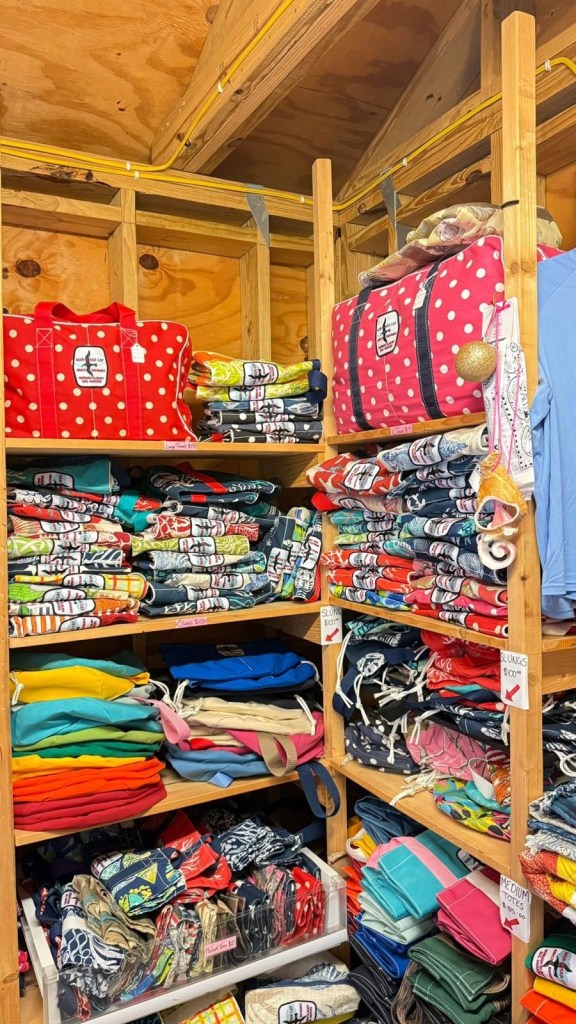
Thankfully, the supermarket was open, as was Albury’s Sail Shop, known for crafting bags and totes made from colorful Sunbrella fabric. The shop was full of small curiosities, and the women sewing as they answered our questions were warm and welcoming. Outside, the rain was pouring, so we stayed a while and shopped.
When we returned to the boat for a nice dinner on board, we were visited by another unpleasant resident of the Bahamas: no see’ums. These tiny, almost invisible vampire flies deliver surprisingly painful bites. I woke up the next morning with more than twenty little marks on each leg, itching like crazy for two days.
The best part of that cay was leaving it. En route, we came upon a stretch of sea so calm and so blue that we could not resist. We just stopped the boat, dove in, and had the most wonderful swim in the middle of nowhere. Pure bliss.

We were coming to the end of our tour and decided to spend our last day and night at Tilloo Cay.
There was a nearby cove we reached by dinghy, having read that it was a favorite haunt of dolphins. No luck that day, though we did spot a shy stingray. The cove itself felt depleted, still bearing the scars of Hurricane Dorian.
The spot where we anchored, on the other hand, was spot-on. The sea shifted from pale green to turquoise blue as far as the eye could see. Swimming there was a joy, and the long stretch of beach was isolated, white, and perfect.
It was a truly great anchorage, and for some reason we were the only ones there. I guess it was Bahama’s way of saying us goodbye and come back.

Overall, our trip to Abacos went like a breeze. Sailing to a place none of us had visited before, exploring & drinking & swimming & cooking & eating & sailing & dancing and making memories that will sustain me for a life time were all a treat.
But, most of all, what made it special were the people I shared them with. Sometimes friends slowly become your real family. And I love mine.

 CherryPicks
What delightful read. Thanx!
LikeLike