
Beautiful settings ? ✅
Gorgeous sunsets ? ✅
Sailing away with wind in your hair ? ✅
Potential for drama ? ✅✅✅
Living on a boat with your other half sounds like a dream. Think romantic sunsets, night swims in secluded bays, stargazing.
And it is.

But there are also tight quarters, endless chores, and the occasional argument about who forgot to close the hatches before it rained.
Cruising as a couple is one of the biggest relationship tests you’ll ever take. And one of the most rewarding. You share everything: the stress, the responsibility, and those moments of pure joy.
Some days, you’ll be perfectly in sync. Other days, you’ll want to toss them overboard (very lovingly, of course). But if you can survive that test, you’ll be stronger than you ever.
My husband and I are spending months on our 45’ boat for almost a decade now; so we both have a clue about how to survive as a couple.
Here are some of our relationship rules for cruising couples. They surprisingly work well on dry land too.
🎙️ Communicate Clearly — Like Crystal Clear
This is the golden rule and the emphasis is on clearly.
Even when something seems obvious, and you’re convinced your partner has developed telepathic powers, you have to let them know what’s happening on your side of the boat.

There’s a lot of stuff on a boat : ropes, lines, pulleys, winches, locks, and about a hundred things that all look suspiciously alike. And in the middle of a slightly panicked moment, every bit of sailing vocabulary you’ve ever learned goes out of the window, and you end up saying :
“Grab the blue thingy! No, the other blue thingy!”
Also, things could get noisy; there’s the wind, the waves, the hum of the engine, and the occasional dramatic seagull. Your partner might be busy with their own task, or simply not listening. That peaceful anchorage you stayed many times before can suddenly get crowded and gusty, demanding quick, coordinated moves.
So find a way to communicate clearly. Shouting doesn’t work. They still won’t understand you, and you’ll just end up hoarse and pissed.
Simple, yet a surprisingly disregarded fact : If are not in synch, you are doomed, both as a team and as sailors.
For example, for anchoring we’ve developed a set of hand signals; the sailors on bigger boats often use wireless headsets.
Whatever method works for you, the goal is simple: make sure you actually hear and understand each other.
💪🏻 Divide tasks by ability

Sailing as a couple is the ultimate teamwork; you’ll need to have patience, trust, and knowing when to step in or step back.
There’s a lot to do on a boat. We can both handle most of the chores onboard, but we each have our strengths and our “please-don’t-make-me-do-that” tasks. Traditional roles don’t really apply here; the sea doesn’t care who does the dishes or who drops the anchor.
Over time, we’ve learned to share the load and ask for help when needed. Some days that means I’m hauling lines while he cleans the galley; other days, it’s the other way around.
📈 Always Have a Plan
On a boat, if there’s even the slightest chance something can go wrong, it probably will.
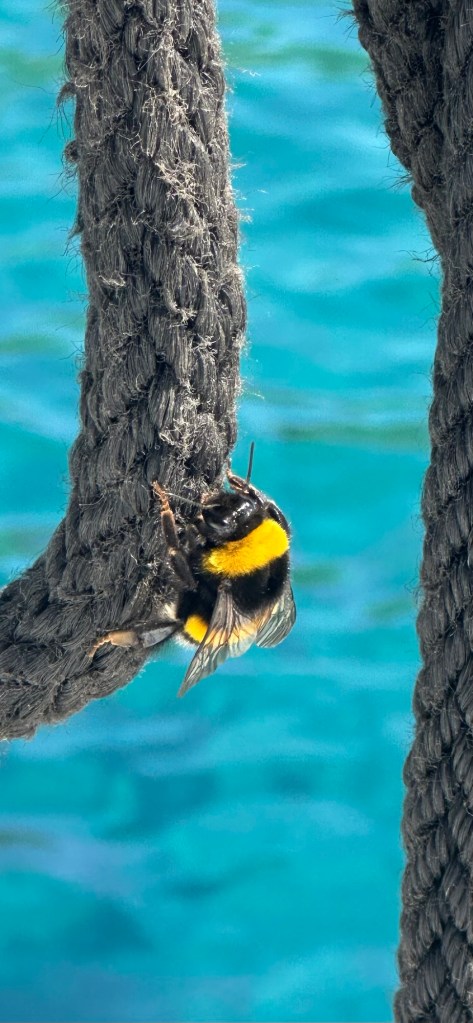
A rope can snap, a gust can wreak havoc in the cockpit, a bee can sting at the worst moment. In short, Mother Nature loves keeping things interesting.
Learn some basic first aid. Know what to do in any emergency.
Nothing creates tension faster than docking or anchoring without a plan. I saw seasoned sailors than us ending up shouting directions, waving arms, and inventing new words when things go sideways.
Even if you’re the world’s most experienced sailors, take two minutes to talk things through: who does what, and when. It’ll save you time, money, and headaches.
🧹More Preparation = Less Drama
Before setting sail, take a quick look around your boat: close the hatches, secure loose items, tighten the lines, check the weather app, warm up the engine, and plot your course.
Have a checklist. And actually use it. Mental notes don’t count – trust me.
A few minutes of preparation can save hours of chaos, drama and sometimes, money.
We learned in time that the sea rewards the organized and plays jokes with the overconfident, so a little prep now means more time later to enjoy what you’re really out there for : the adventure, the calm and the sunset drink you’ve been dreaming about.

👫Give Each Other Breathing Space
Boat life means you’re together. All. The. Time.
You eat, sleep, work, and use the toilets within a few meters of each other. And trust me, sometimes it can feel really crowded.
So respect each other’s moods, and give yourselves some ‘me’ time. Read a book, do your nails, go for a swim, or just put on your headphones and drift.
Everyone needs a little space to keep the peace and the romance.
🙊 Handle Conflict Quickly
Arguments happen. And that’s okay, as long as they’re handled well.
When something gets under your skin, take a moment before reacting. What feels like irritation might just be fatigue, hunger, or being together 24/7.
Just don’t let things fester. And definitely don’t keep score.
Also, do not shout. Unless you want everyone in the anchorage to hear your business. Sound carries beautifully over water.
For us humor is often the best policy. When things go sideways, try to laugh it off; even if you need a few deep breaths first. If you can’t do that, temporary loss of hearing works miracles as well. Anything to avoid a full blown mutiny will do .
Because when the weather turns or the anchor drags, you’ll need to trust each other completely.

🥂 Learn to Celebrate Any Win
On a boat, even the tiniest victories count; docking smoothly, fixing that thing that’s been broken for weeks, or surviving a tough day without snapping at each other.
When everything takes effort, the little wins feel huge.
High-five your partner after a tricky maneuver, or share a quiet toast after a long day. Tell them well done when they finish a particularly unpleasant task.
Celebrating the small stuff reminds you that you’re a team, and you’re getting better together.
Besides, little gestures keep romance alive far more than grand ones. A back massage or a hot cup of tea during a night sail beats a candlelit dinner any day.
⛵️ Know your limits
Agree on some basic safety rules; when to reef, when to turn back, and when to call it a night and look for a safe anchorage.
You’ll gain confidence as you go, but experience doesn’t mean you have to be fearless. One of you might be the daredevil while the other’s more of a “let’s live to sail another day” kind of sailor and both are perfectly fine.
What really matters is knowing not just your boat’s limits, but your own. Fatigue, rough weather, or one too many “I think we’ll be fine” moments can turn a normal day into a full-blown argument faster than a squall.
Learning when to stop, slow down, or change plans doesn’t make you less brave , but smart. And still married by the end of the day.
Because the goal isn’t to conquer the sea. It’s to love it, and each other, enough to go out again tomorrow. And tomorrow.
📕 Check You’re on the Same Page
Agreeing on the next destination isn’t enough. You need to talk about the kind of life you each want both onboard and off. Because dreams evolve, and even paradise can start to feel routine. So, circle back to the golden rule regularly and communicate clearly.
As long as you’re both excited about the same adventure, everything else will be ok.
💕🍀Remember How Lucky You Are (Him, more than I. But still…)
Some days it’s easy to forget it, for there’s so much going on : the heat, the flies, the endless to-do lists, the storms, the constant motion.
You might feel like a survivor instead of living your dream with the one person in the world that gets you.
But there are also the magical moments that take your breath away and pity everyone else who are not you.
Sometimes you might need to remind each other that boat life is something few people ever experience. Not everyone finds someone crazy -or brave- enough to share it.
So make the most of it . And yourselves.

Fair winds and calm seas, everyone.
 CherryPicks
very nicely written 👏👏👏
LikeLiked by 1 person
🥰🙏🏻
LikeLike