
“It was so easy. Why haven’t we done this before?”
That was the first thing we said while sipping our first ouzo at a seaside tavern in Chios. Just a few hours earlier, we were in Çeşme — the hip Aegean town on Turkey’s west coast — waiting to board the ferry for a 35-minute ride across the water.
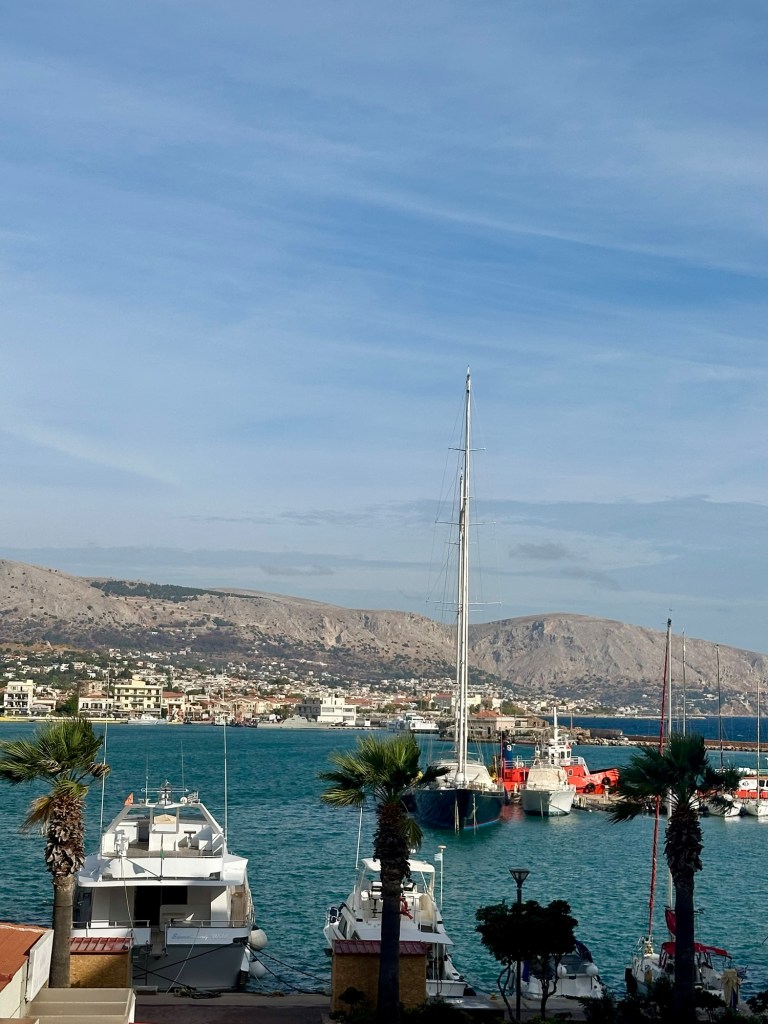
There are three ferry companies running the same route twice a day, all charging about 50 euros for a return ticket. We chose Sunrise Lines, the fastest connection, and before long we were docking in Chios Town — the Aegean sunset bouncing off the water, welcoming us.
Our apartment turned out to be a gem ; large, comfortable, and with a balcony framing the marina. Morning coffee there felt cinematic. Our host, Katerina, was as thoughtful as she was kind, leaving small gifts and plenty of good advice.
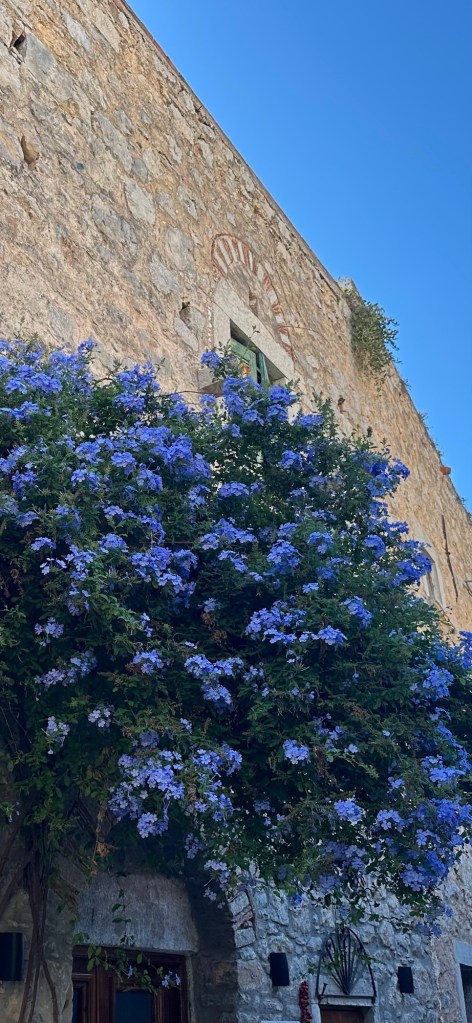
That first evening we wandered along the promenade, where locals and visitors mingle. Tsikoudo proved to be a good pick — delicious food, friendly service, and, best of all, a glass of mastic liqueur for a nightcap. Another excellent spot, right by the Chios Castle, is Apeiron, especially for its divine seafood meze. Just make sure to book ahead — they open only for dinner and are always packed.
Around us, bars and cafés buzzed with that easy summer rhythm that belongs to islands.
After coffee and biscuits the next morning, we rented a car from the small company conveniently located beneath our building. Peter, the owner, warned us about weekend crowds and suggested we start in the north — the southern, more famous villages would already be busy.
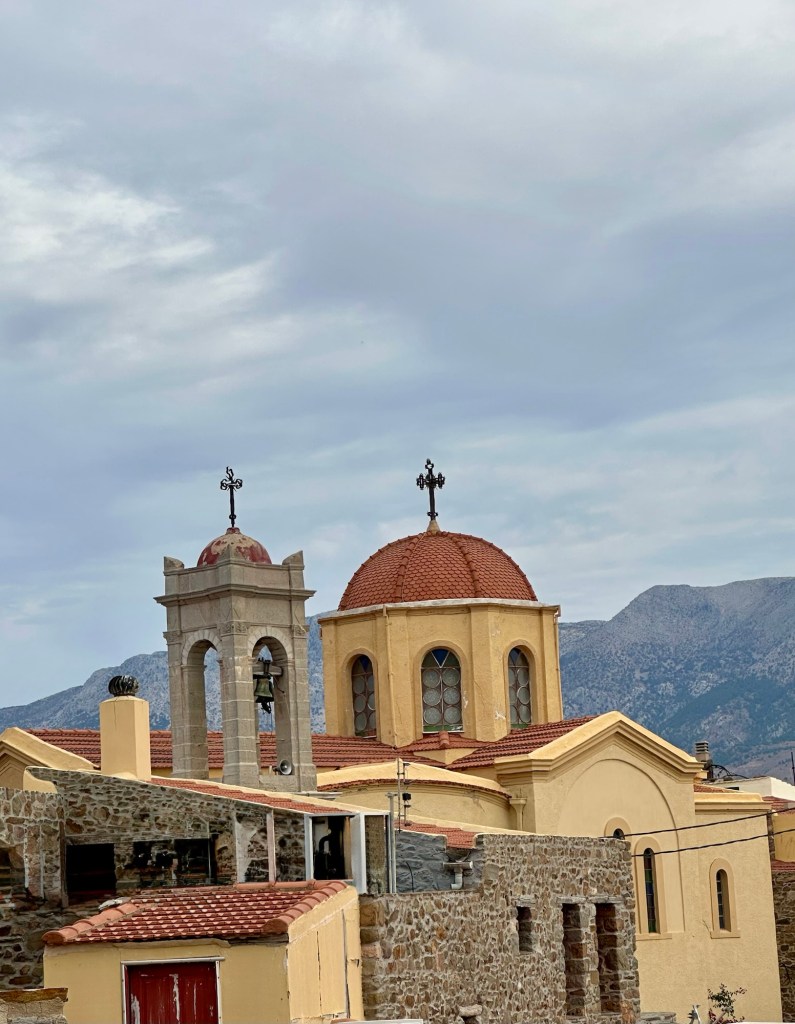
Our first stop was Volissos, a hilltop village of narrow lanes and a crumbling Byzantine tower from the 11th century. The wildfires of June and August had left their mark: blackened hillsides, the scent of ash still lingering. The tower though was something out of Game of Thrones; after a few visits from the dragons. The buildings close to the castle were damaged, but here and there, we saw some buildings escaped from the flames.
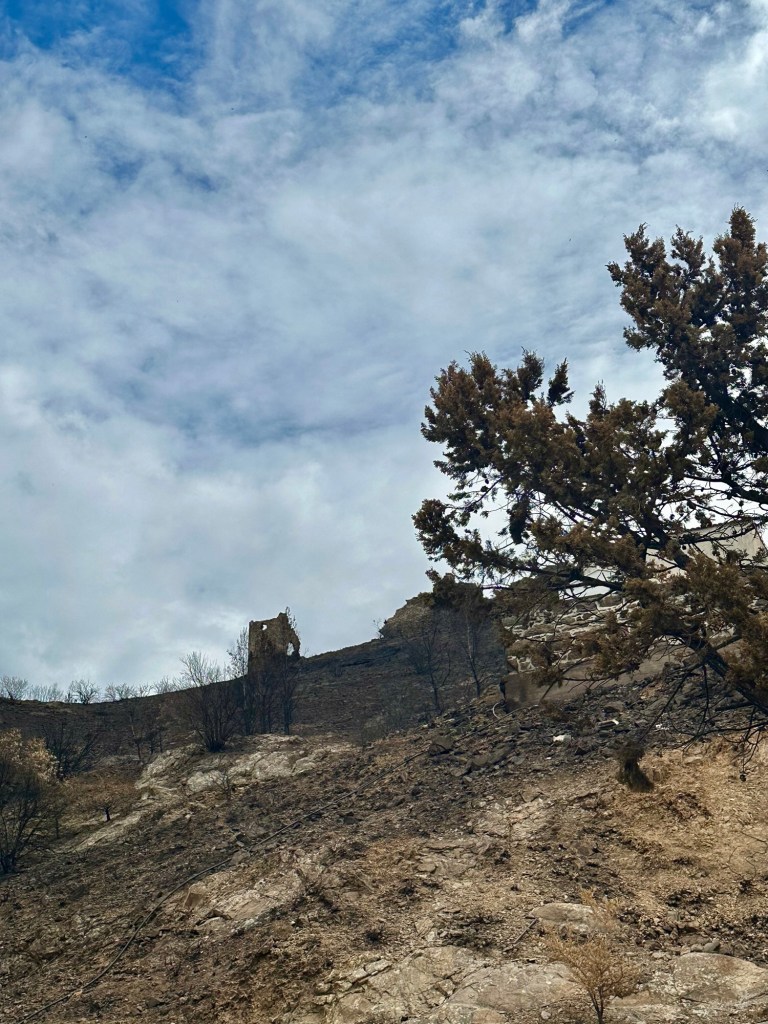
Volissos felt quiet, almost somber that Sunday, with most places closed, so we moved on.
Legend says Homer was from Chios, though some claim Smyrna (İzmir) or Ios. Scholars place him somewhere between the 8th and 9th centuries BCE — or perhaps earlier, closer to the Trojan War itself. Who knows, and honestly, who cares? What’s important is he lived and wrote The Iliad and The Odyssey , which are among the oldest stories we still read, epic poems that speak of heroism, fate, longing, and the search for home. They shaped how we think about courage and human nature, and their influence runs through everything from novels to movies.
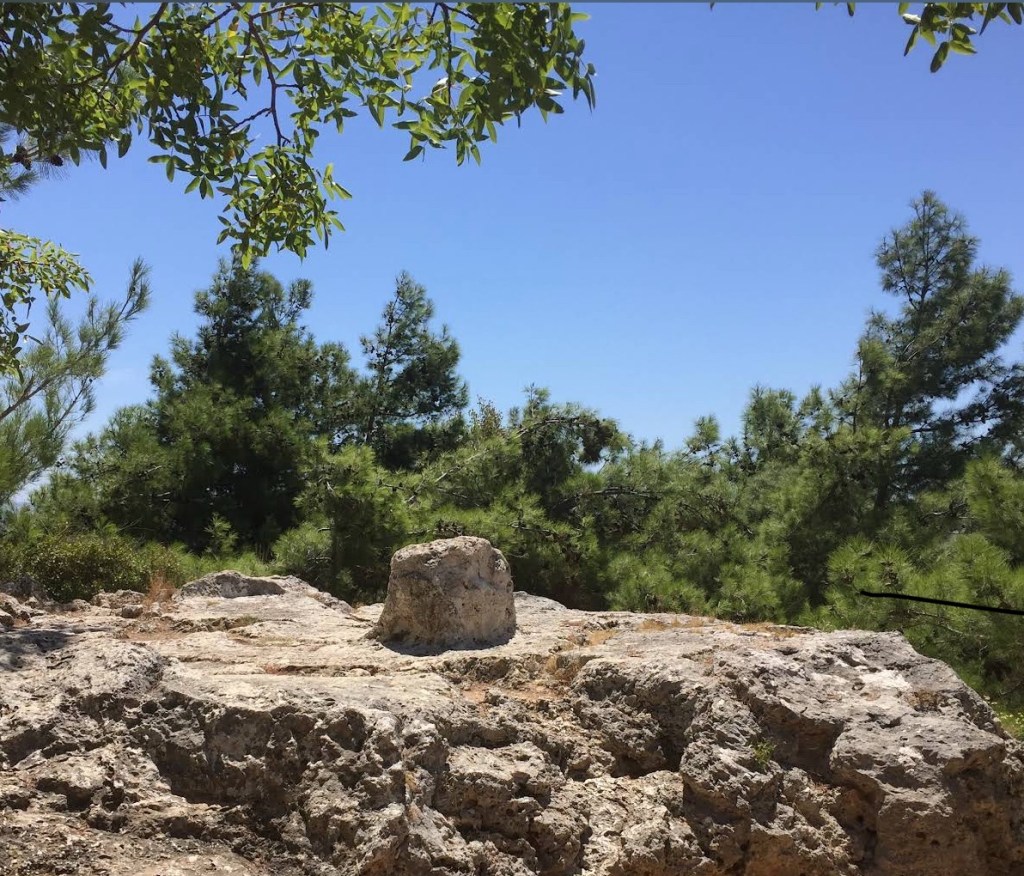
Since we were in Chios, we chose to believe he once walked these same hills near Volissos, gazing at the shifting blues of the Aegean, dreaming of capricious gods and long voyages. At Daskalopetra — the “Teacher’s Stone” — people still visit the rock where he is said to have taught. Myth or memory, the island keeps him close.
(On a personal note, can’t wait to watch Christopher Nolan’s interpretation of The Odyssey. After all, he was my favourite king in The Iliad. )
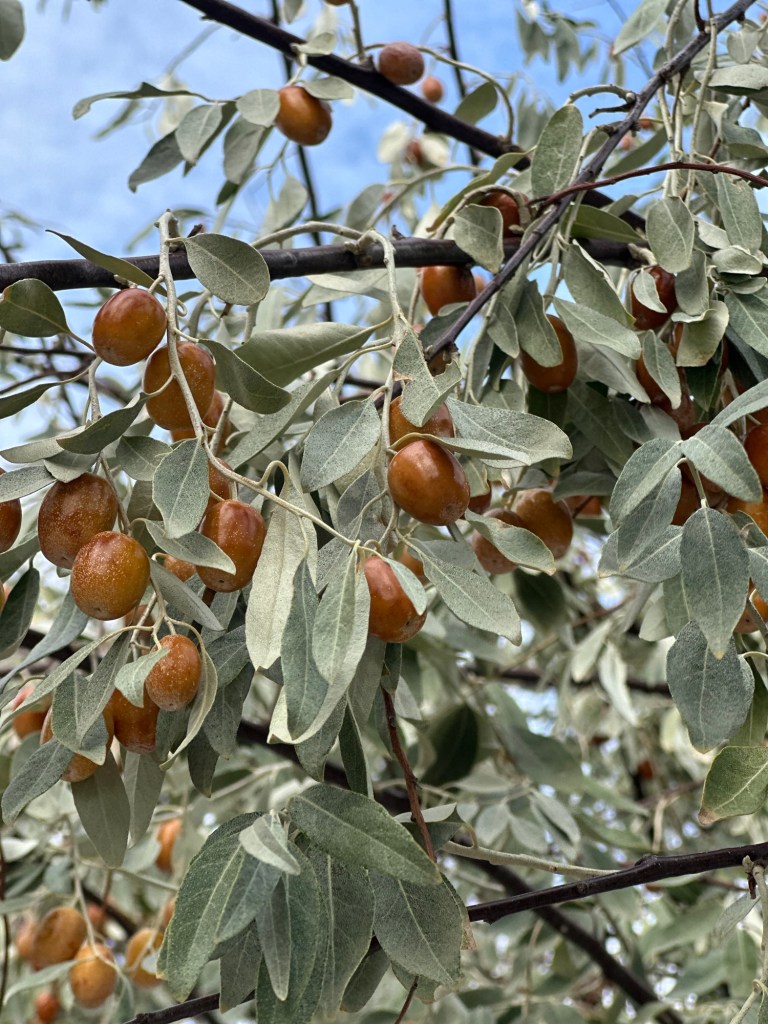
To the east we found Lagkada — once a fishing village, now a small, easygoing seaside hub. We stopped for coffee under a tree heavy with silverberries (iğde), watched the fishing boats bob, and watch the children play. The ouzeries by the water were already full with laughter, clinking glasses and buzzing bees, with waiters rushing with cups of burned coffee to chase them away.
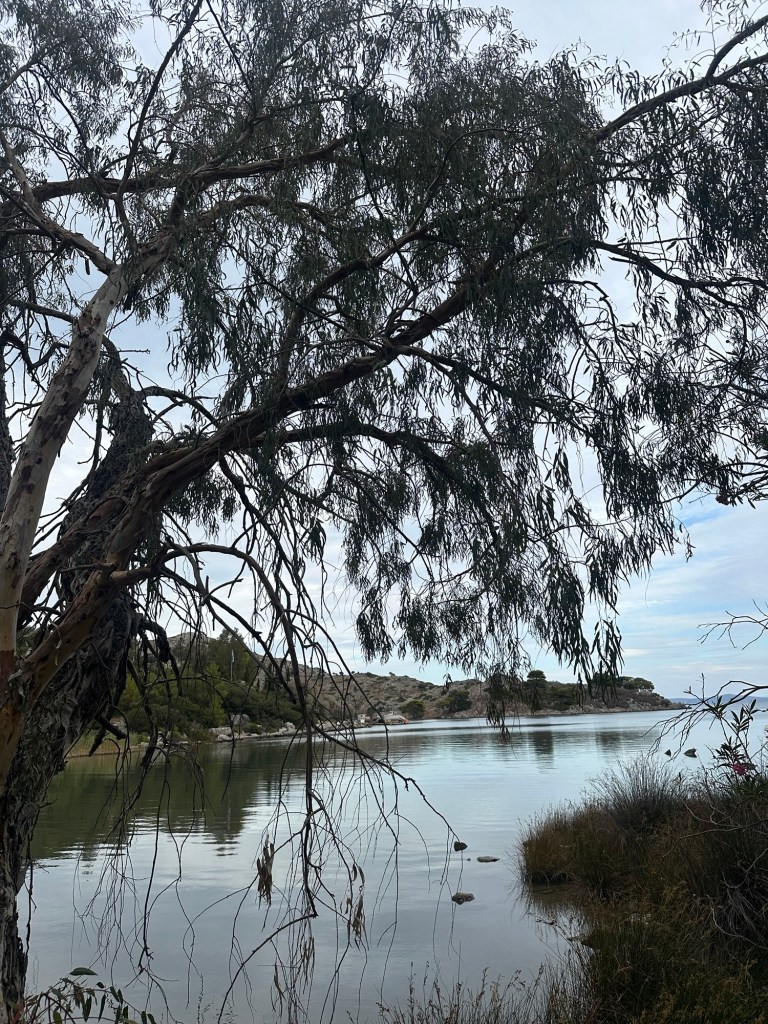
One of the best taverns -O Passas -is here and reservations are a must, even on slower seasons.
A quick note about taverns: Google Maps is reliable for directions, but not for opening hours. Time at Chios, is flexible. Call before you go — and always have a Plan B. Thanks to that rule, we stumbled upon some of our most memorable meals entirely by accident.

Driving south we came upon Pantoukios, a dot on the map with one tavern, one coffeeshop, one tiny pier. Locals chatted lazily under the sun, and we joined them for a while, doing nothing, and enjoying everything.
Dinner that night was at O Molos in Katarraktis — an ouzerie right by the water. Fresh fish, simple plates, no pretension. When our waiter translated our compliments, the cook beamed, came out, and shook our hands. It doesn’t get more authentic than that.
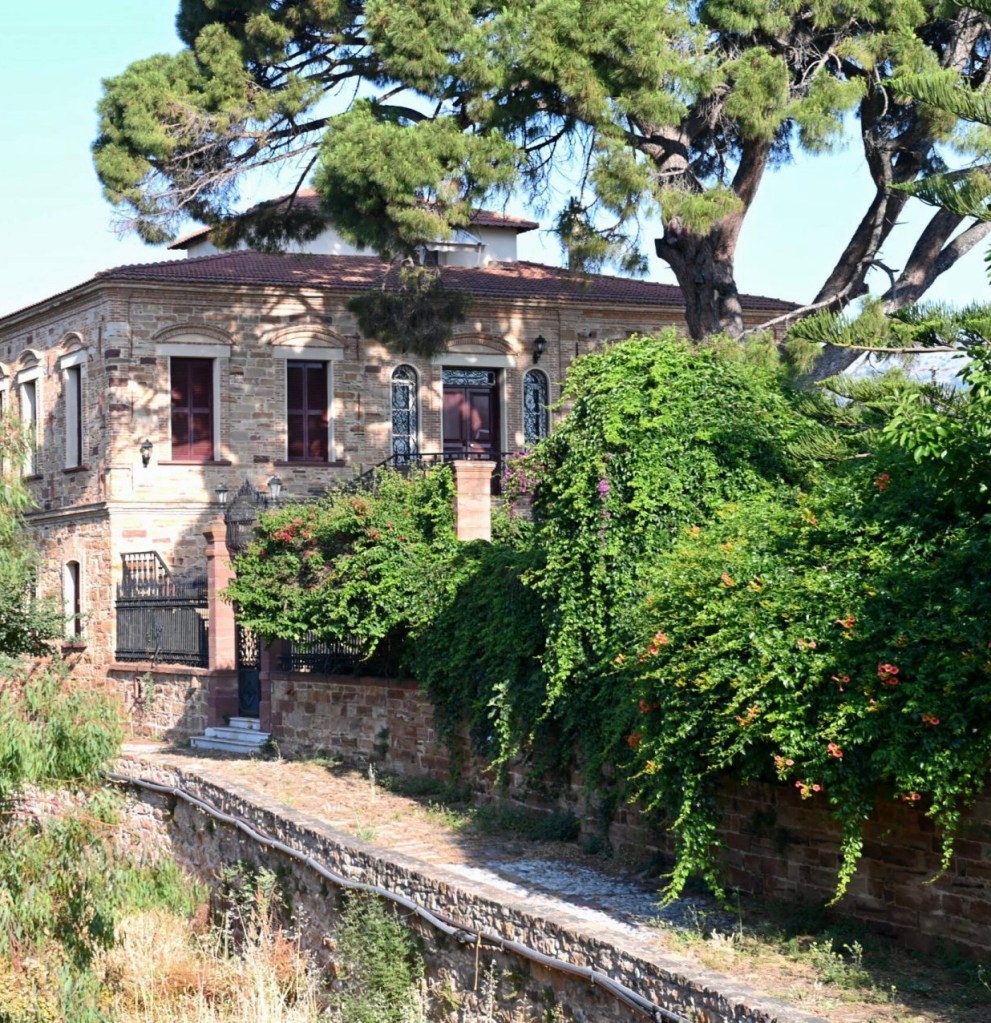
The next morning we drove through Kampos, the fertile plain south of town. Here, old stone mansions and gardens full of orange and olive trees tell the story of Chios’s golden past.
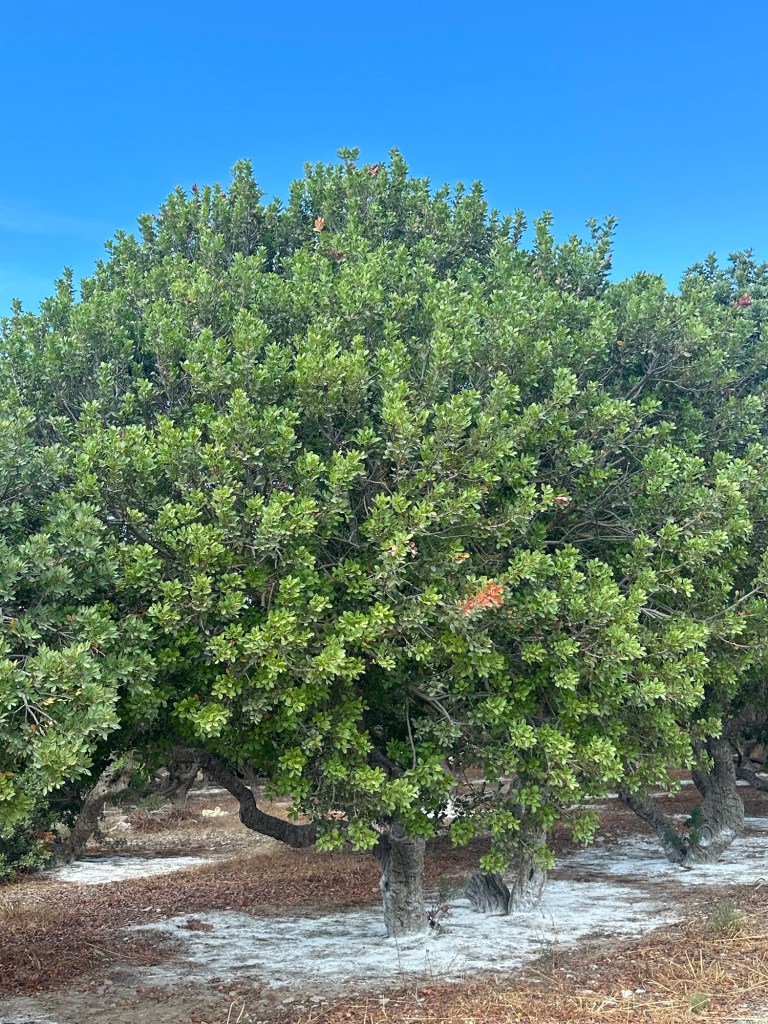
For centuries, the island’s wealth flowed from mastic — the aromatic resin produced only in the southern villages, the Mastichochoria. Prized for its uses in medicine, hygiene, perfume making and cooking, mastic became the lifeblood of Chios’s economy.
The Genoese began trading it in the 16th century, building a global monopoly. When the Ottomans took over, they protected the trade, granting privileges to the mastic growers.
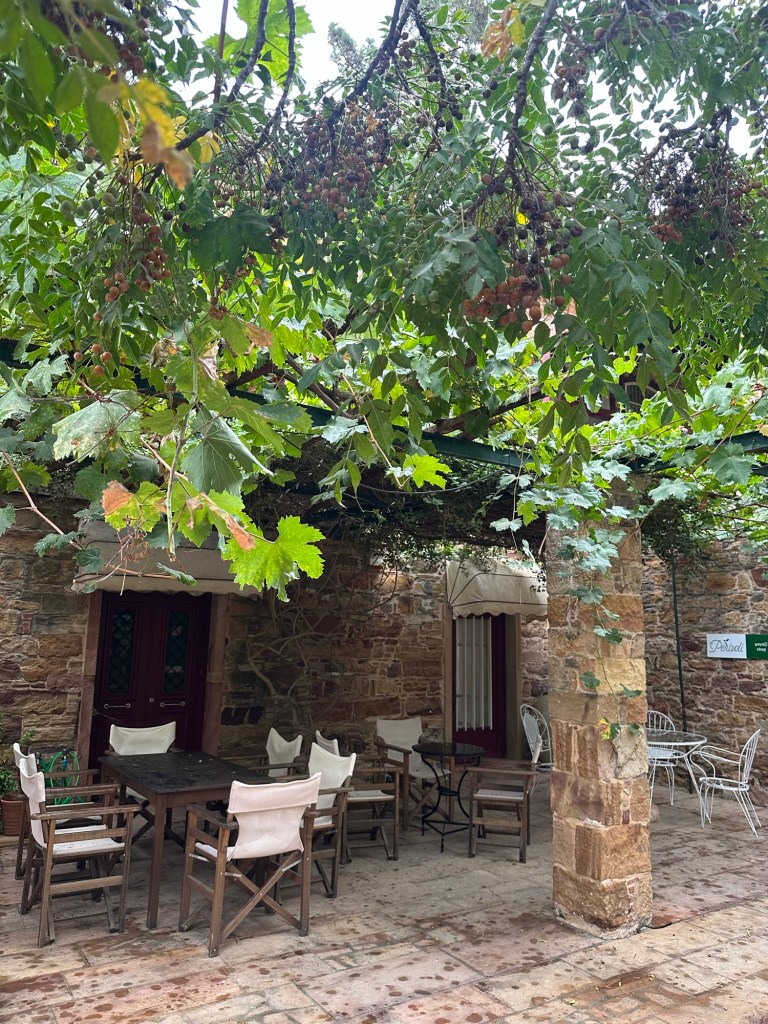
Kampos, halfway between Chios Town and the mastic villages, was home to the Chiot merchant families — powerful dynasties who, from the Middle Ages to the 19th century, built vast trading networks stretching from Constantinople to Odessa and London. They only trusted family ties, made stronger by marriages, turning love and loyalty into business strategy.
Their fall came with both technology and tragedy — the easy spread of information that eroded their family monopolies, and the Ottomans, in an attempt to quell the island’s independence dreams, destroyed villages and lives.
The Citrus Museum, housed in an 18th-century villa, tells their story. In its gardens, Perivoli Café is a delight — shaded by citrus groves, serving excellent coffee, cakes, and cocktails. In summer, they even host open-air movie nights.

Further south lie the Mastichochoria — around twenty medieval villages built during the Genoese period (14th–16th centuries) to protect both the mastic trees and those who worked them. Each was a fortified labyrinth of narrow lanes and joined stone houses, with a central tower for defense. From the outside, they looked like miniature fortresses rising from the dry hills.
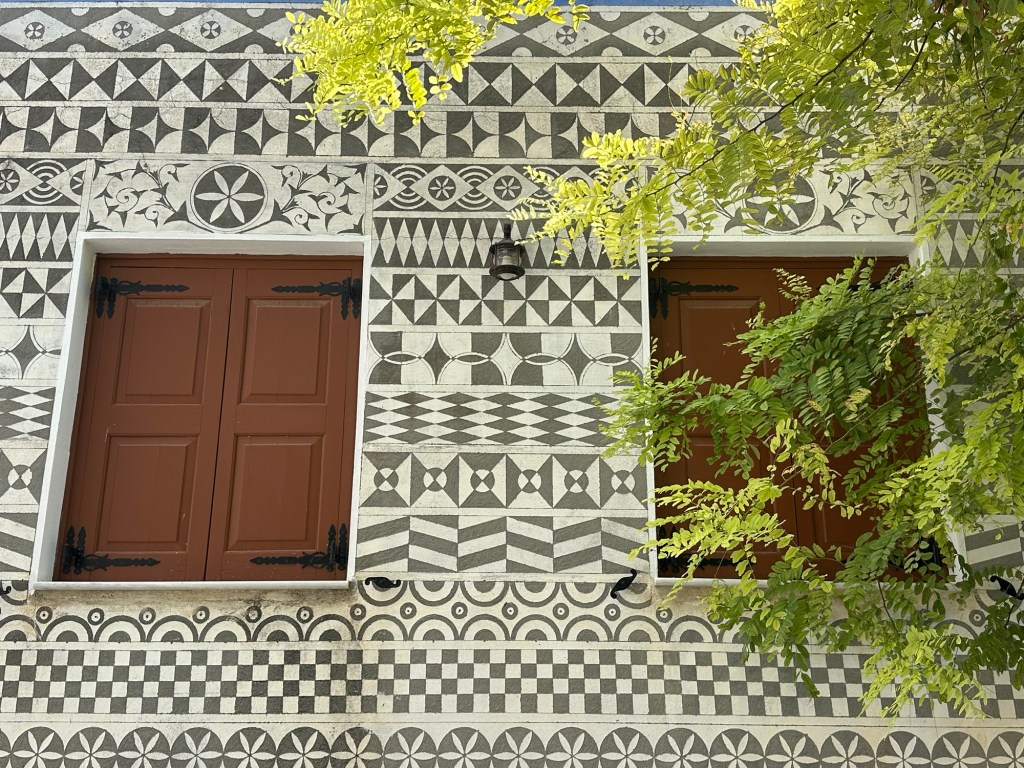
Pyrgi, known as the “painted village,” is perhaps the most photogenic . Its black-and-white geometric façades — xysta — are created by scratching patterns into layers of plaster to reveal dark volcanic sand beneath. Circles, diamonds, and flowers repeat across entire streets, turning the village into an open-air exhibition— a blend of Byzantine, Genoese, and local creativity.
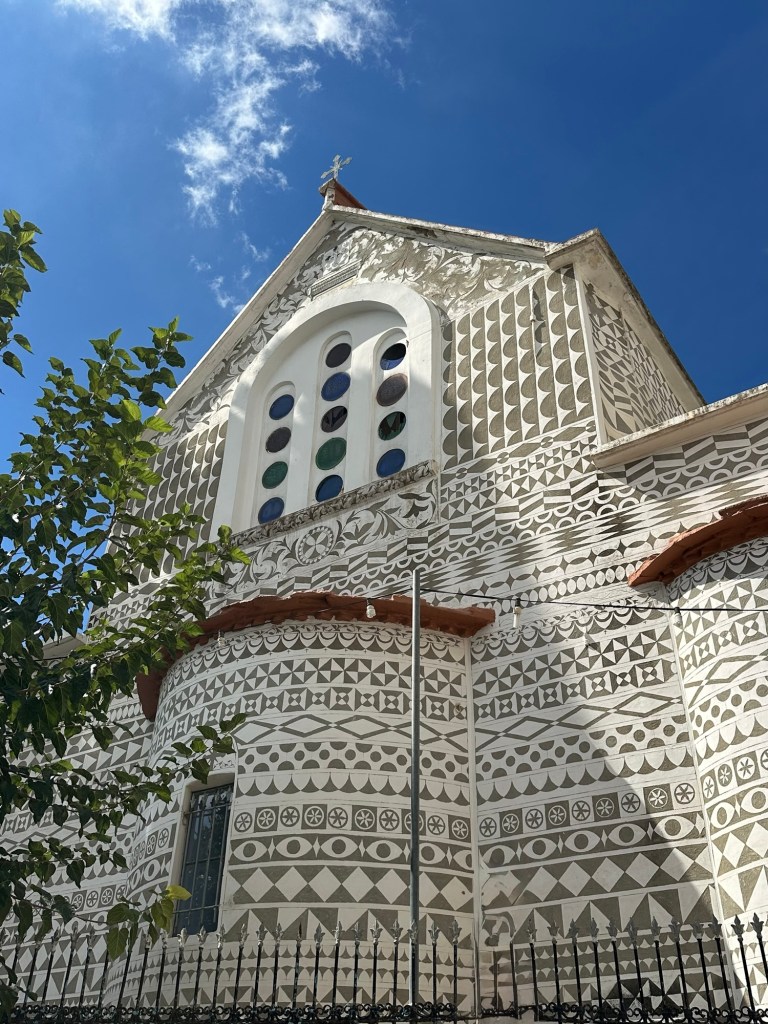
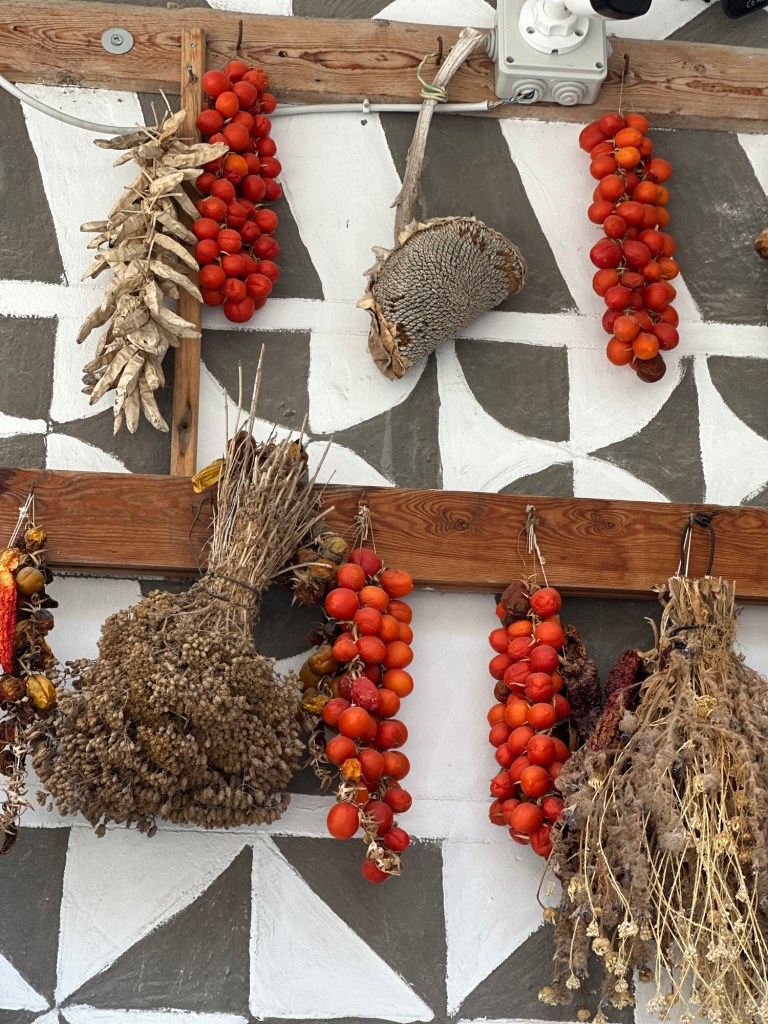
My favorite is Mesta , which feels like stepping into another time. Tucked in the southern hills of Chios, it’s one of the best-preserved medieval villages on the island — a true labyrinth of narrow stone alleys, arches, and hidden courtyards. Everything feels both very old and timeless.
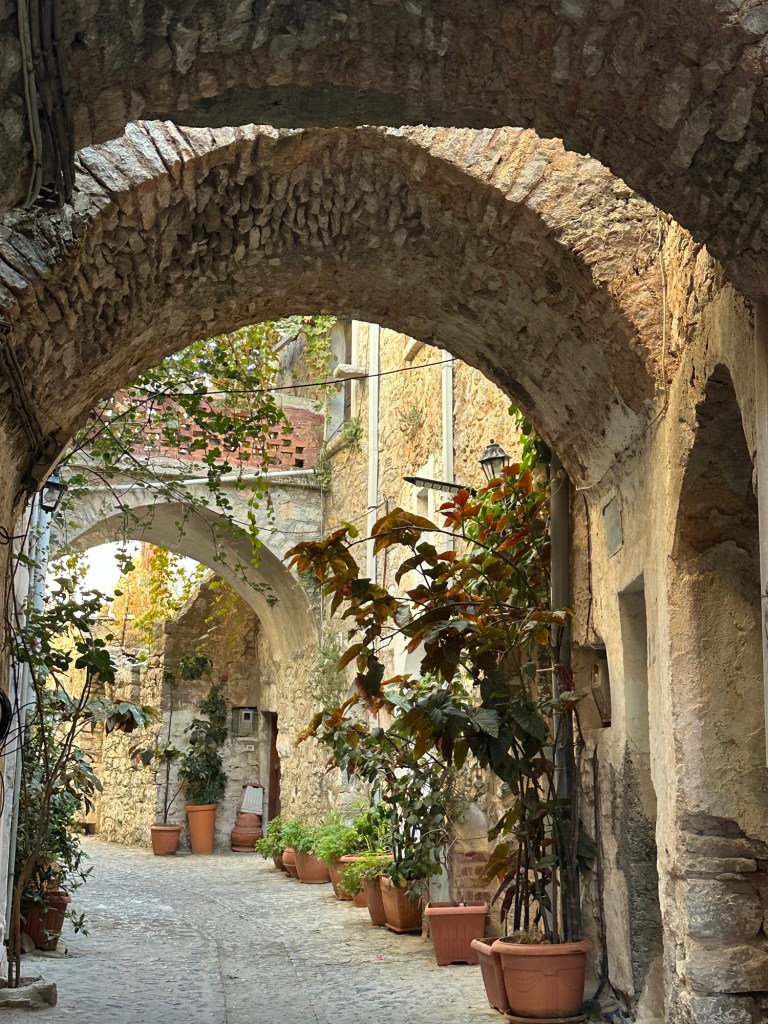
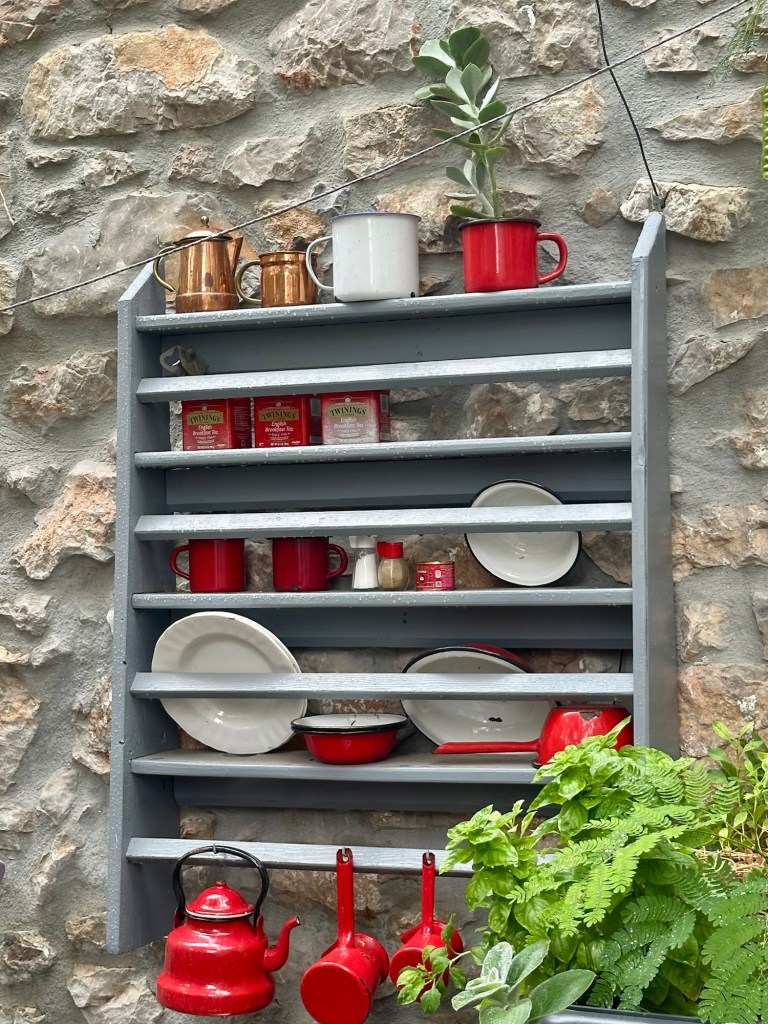
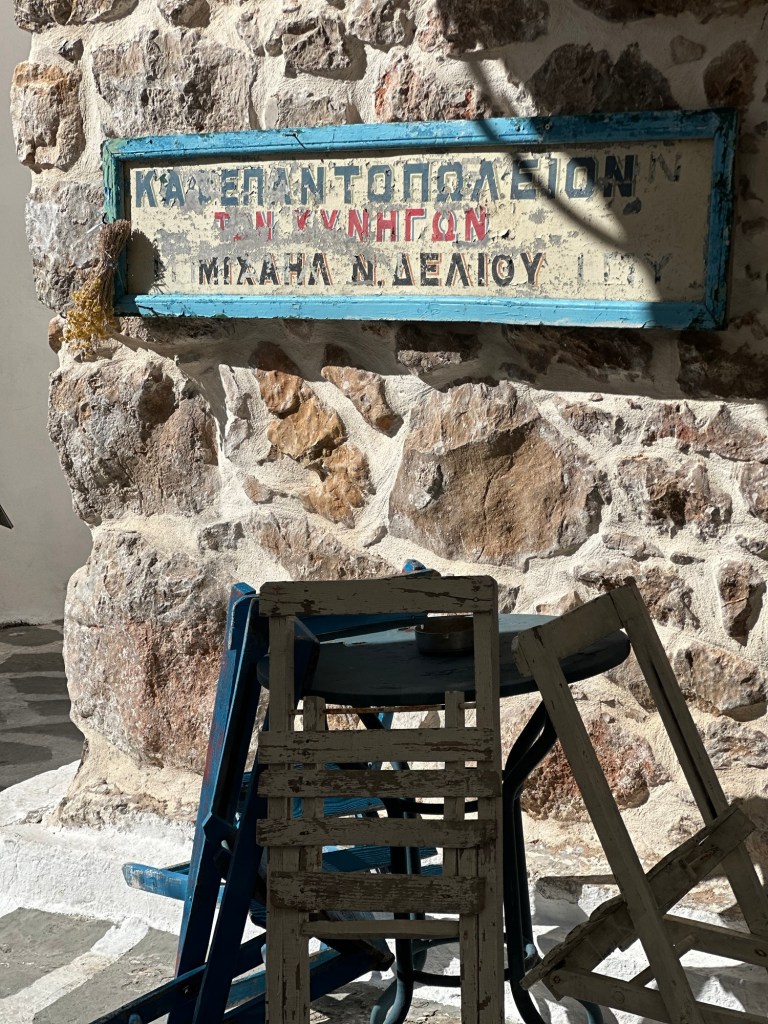
At the heart of Mesta is a small square shaded by trees, where you can sit with a coffee or a glass of mastic liqueur and watch life stop still. We sat at Café Monastiriakon , a family owned cafe and ordered portokalopita, which the owner served with yoghurt ice cream, explaining how the tartness balanced the sweetness. It wasn’t the best dessert I’ve ever had, but it’s one I’ll remember.

In the village church, we met two women who told us the story of Saint Markela, a 14th century Chiot martyr, much revered in the island and even her icon is believed to be miraculous. Their English was as limited as my Greek, but their warmth made the story come alive. It was important for them that I should understand and be impressed. I was. By their good will and patience.
Lunch was meant to be in Olympi, but the place was closed, so we followed Plan B again — to Elata, a village of 200 people tucked among mastic groves. We sat at the only tavern on the square and had one of our best meals: souvlaki, cheese balls, crisp white wine.
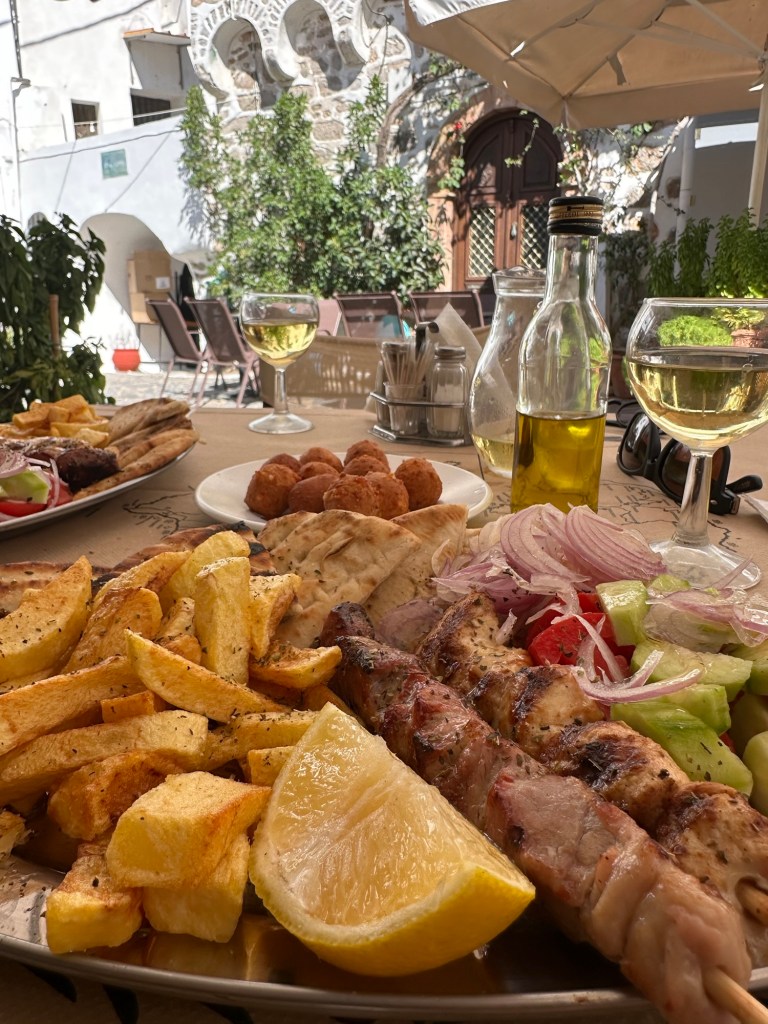
The owner brought homemade mastic liqueur with our coffee and proudly told us about her village. In summer, she said, the population grows to 500, as descendants from mainland Greece and America return to their ancestral homes. She herself had grown up in Chicago but moved back in the 1980s.
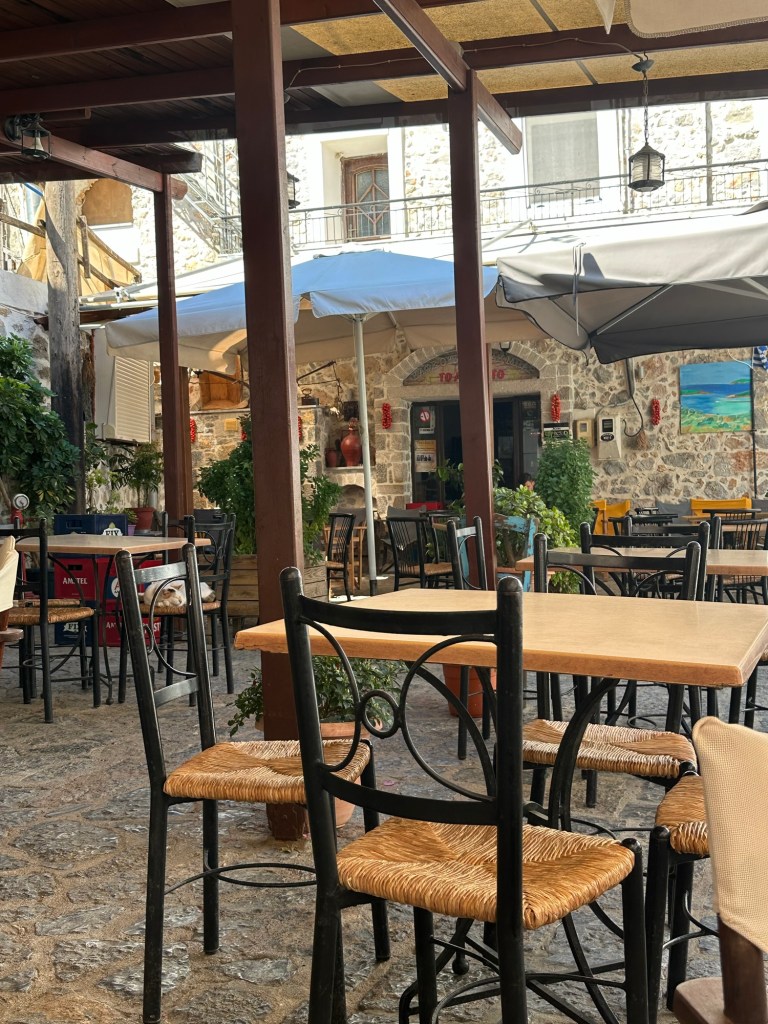
“We used to buy the girls’ wedding dresses from İzmir,” she said, pointing to our young waitress. “Now everything’s expensive — everywhere.”
Another day we drove west to Avgonima, another stone village built on the hills. The wildfire’s devastation was very visible, but here and there, life was already returning, green shoots stubbornly pushing through.

Later, at To Asteri, we had what might’ve been our best meal on the island — everything fresh, full of flavor, served with a warm smile. “Next time,” we said, “we’ll come here at sunset.”
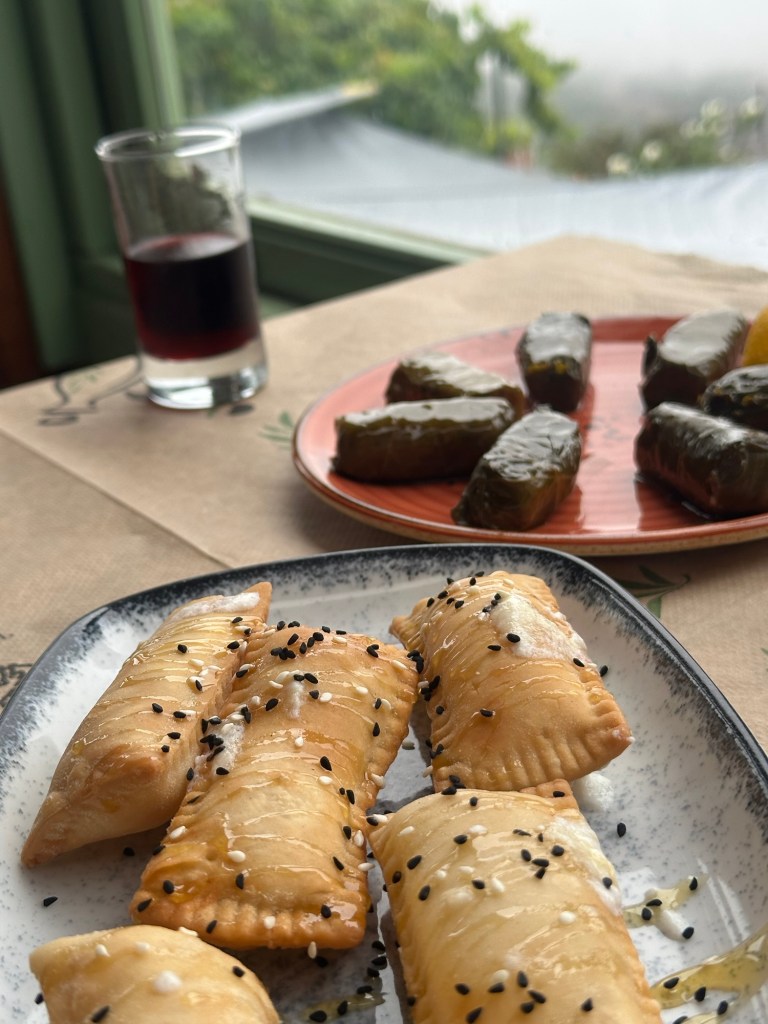
We ended our trip at the Mastic Museum, learning trivia about the resin that shaped this island’s history. Even if you skip the exhibits, go for the café — the view over the mastic groves is reason enough.

“It was so easy. We have to do this again,” we said on the ferry back. There were so many places left unseen — beaches, silent villages, tucked-away ouzeries.
Chios is an island that has to be enjoyed slowly. And, hopefully, we’ll make the time.

 CherryPicks
As a local, I have to say this is an amazing travel guide! I came here to read your post about Chios, but I ended up exploring so many of your wonderful articles! You truly took me on a journey, even as a local, I learned new things about my island. Thank you for sharing your beautiful travels!
LikeLiked by 1 person
Thanks 🥰 . You are kind as usual.
LikeLike