
Have you ever seen an ancient city come back to life, like a phoenix rising from its ashes? We have — together with fellow sailors, and of course the archaeologists — watching it return, stone by stone, year after year.

About twenty nautical miles east of Bodrum, at the wide, open mouth of mighty Gökova, lies a bay called Alakışla / Kissebükü. Broad enough to host a hundred boats and sheltered enough to offer safe anchorage, it has long been a favorite stop of ours.
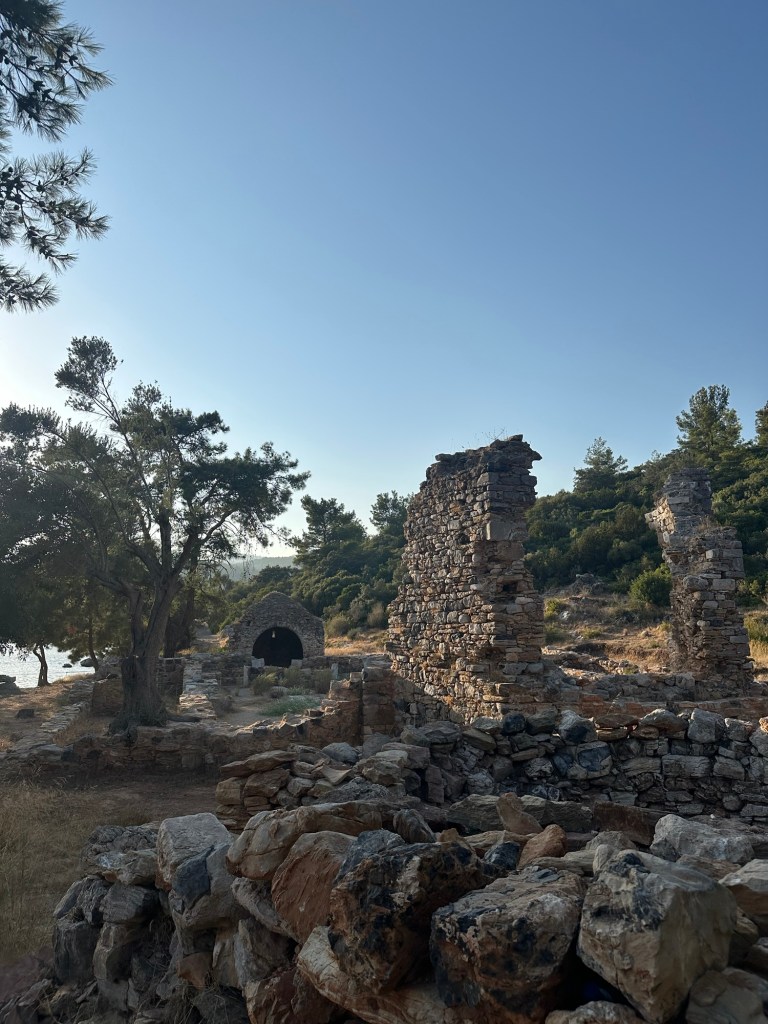
Each summer we return to Kissebükü, not just for its pine-fringed waters but for the strange feeling that time folds here. You drop anchor, dive in, and within a few strokes you find yourself among the ruins of a forgotten Byzantine town.
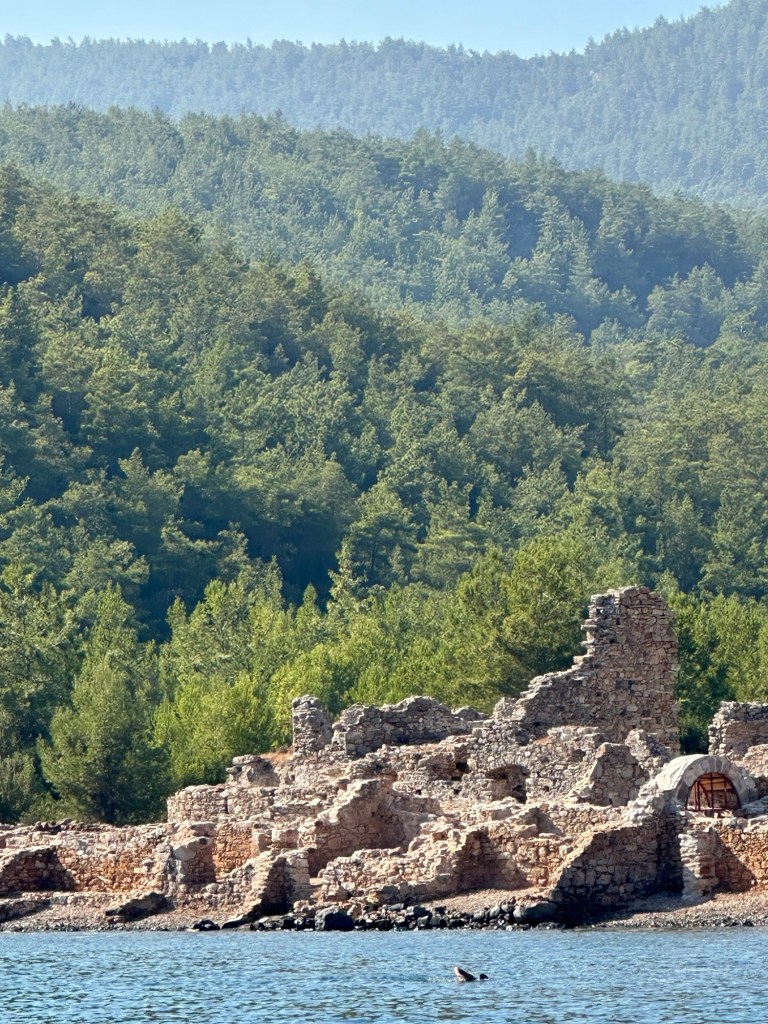
When we first came years ago, we noticed curious shapes on the shore — walls and arches, half-hidden among bushes and hills. Our amateur explorations revealed the ruins of some ancient settlement, though back then it was little more than stones in the grass.

Now, in Turkey, as in Italy or Greece, such ruins hardly raise an eyebrow. Our lands are steeped in history and unknown columns and weathered walls appear at almost every turn. So, it’s fair to say, we are spoiled when it comes to this sort of stuff.
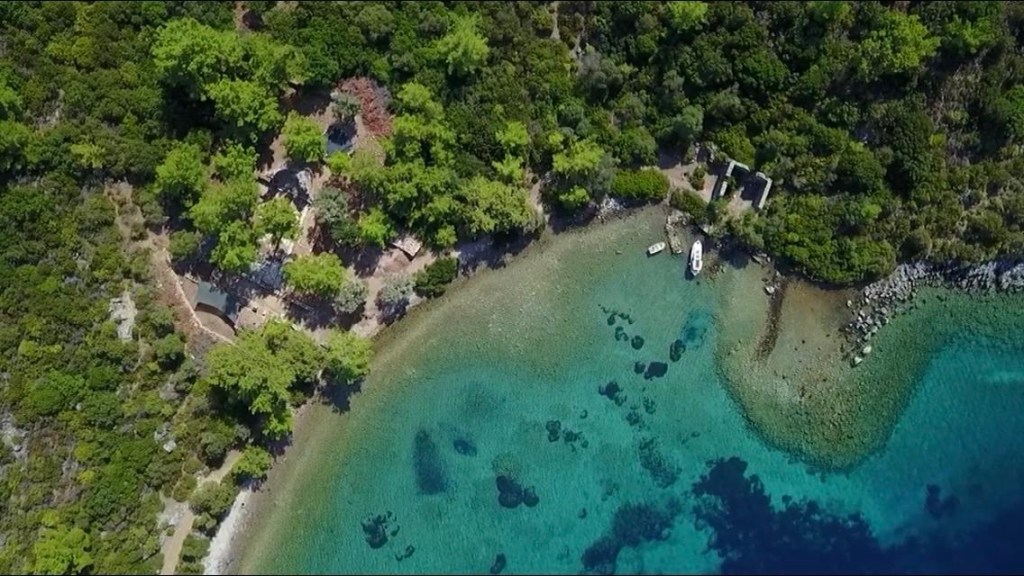
Yet as time passed, especially after the pandemic, we began to notice change: more structures cleared of bush, and the occasional information board identifying the place as Anastasiapolis, a Byzantine town founded in the 5th century. To our surprise and delight, excavations had begun.
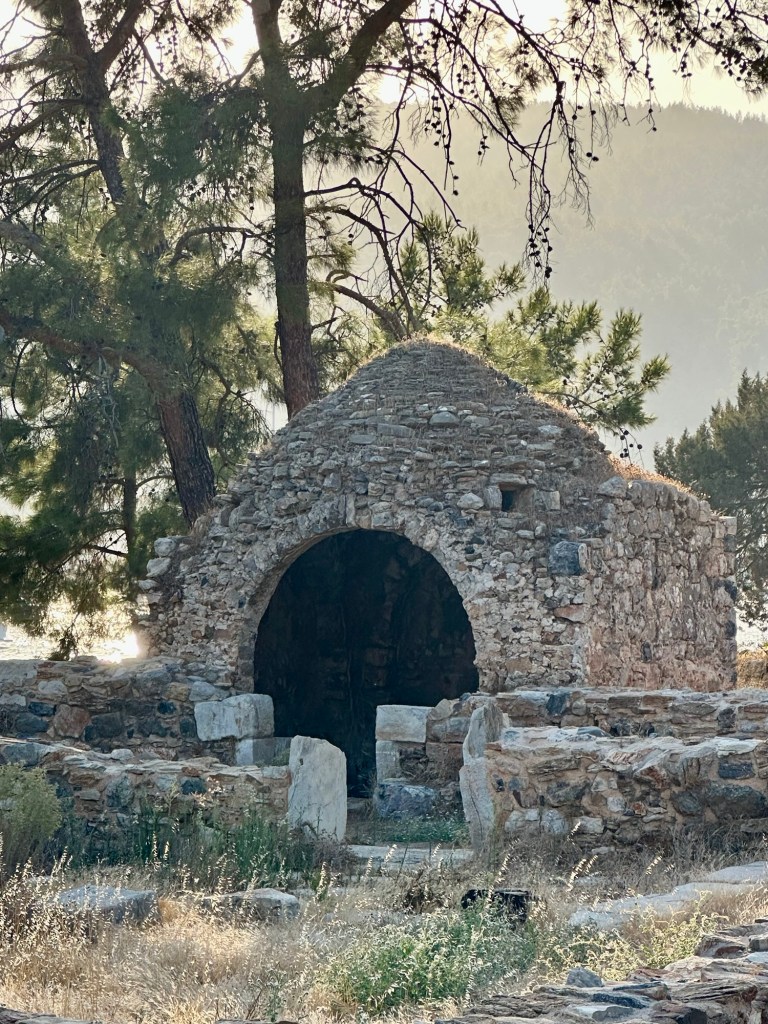
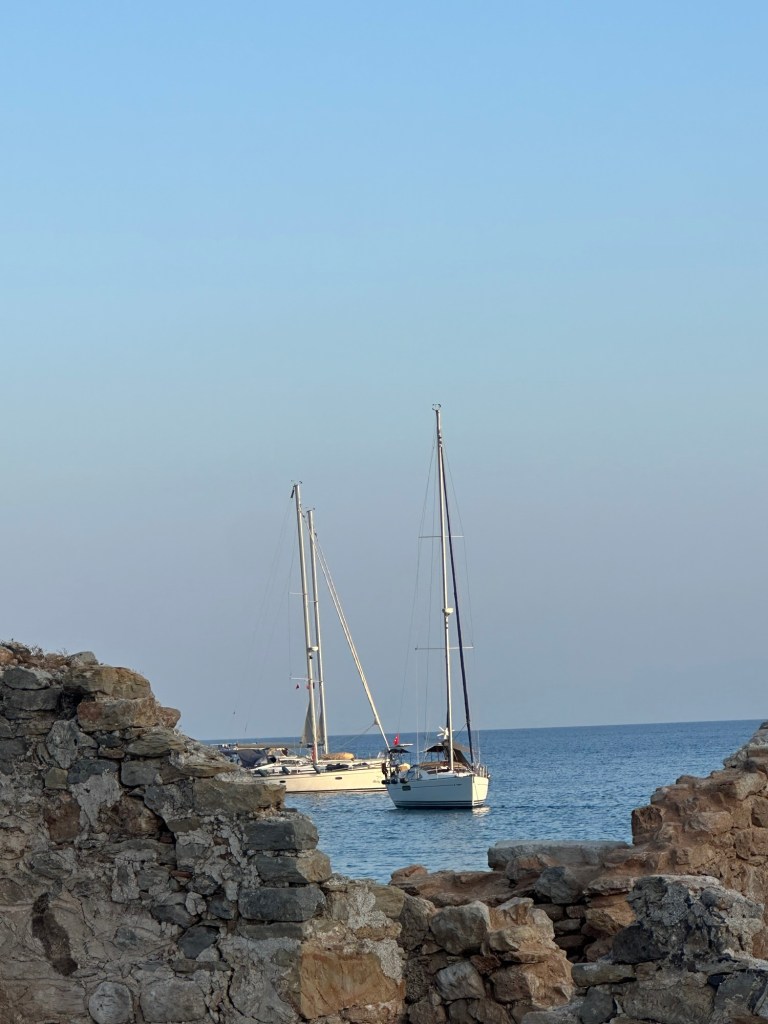
This year, when we sailed into the bay and dropped anchor before the ancient harbour, we were stunned. An entire city had begun to emerge from the earth — a city you could swim to and then wander among its streets. Which, of course, we did.
It was both wonderous and haunting: to swim through the clear water, step onto the stones, and find ourselves walking through the bones of a forgotten city.
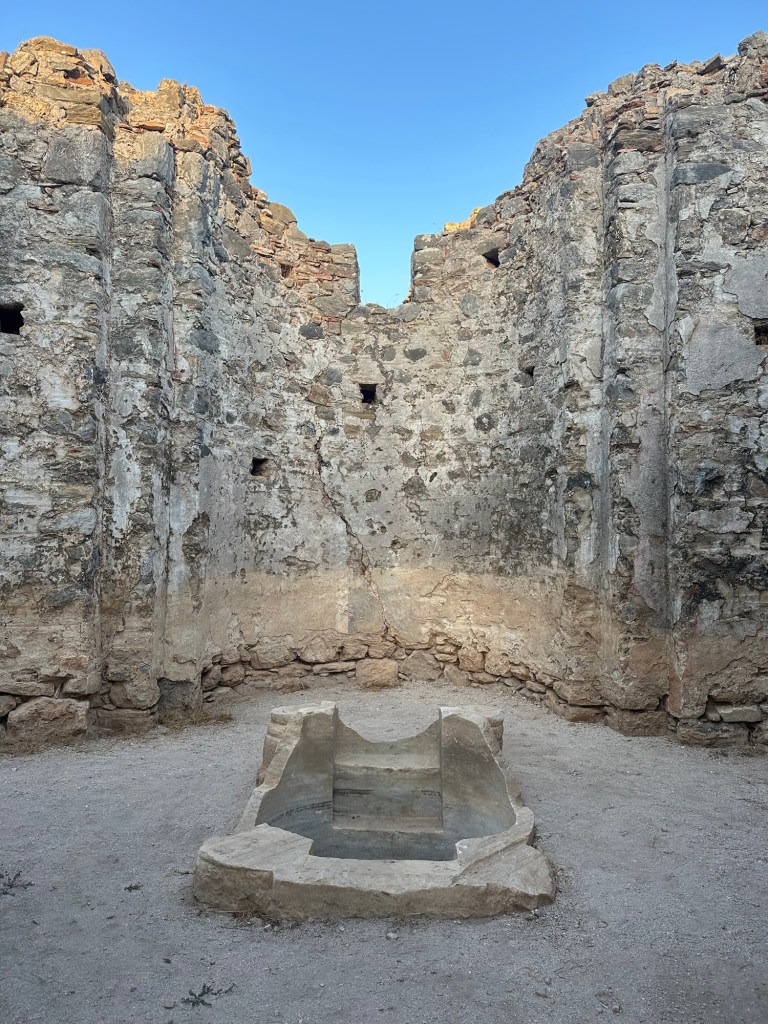
The dreamer in me could not resist imagining the bustle of daily life here — the calls of fishermen and traders in the harbour, the murmur of the agora, the incense drifting from basilicas, voices rising in prayer.
Among the ruins we recognized the outlines of a harbour, several churches, a bath, and even a baptistery. Mosaics have surfaced, and faint wall paintings too — some lifted away for restoration, others still open to the elements.
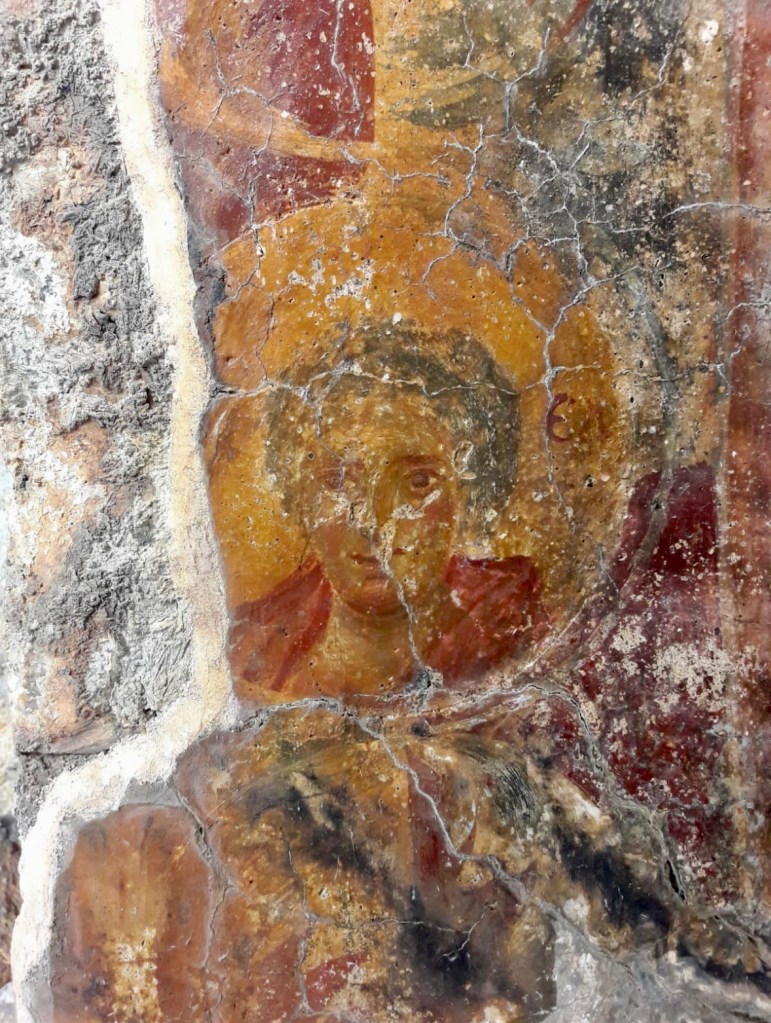
Thanks to the excavation efforts led by Assoc. Prof. Hatice Özyurt Özcan of Muğla Sıtkı Koçman University’s Department of Archaeology, Anastasiapolis is slowly reclaiming its history.
It seems the site’s story stretches from the 7th century BCE to the 7th century AD. Long before Byzantines built their harbour town, the place was settled by the Lelegians, an Anatolian tribe remembered more in myth than in fact. Homer himself names them in the Iliad, fighting on the Trojan side. Archaeologists have traced their presence here in the double walls of the acropolis above the bay.
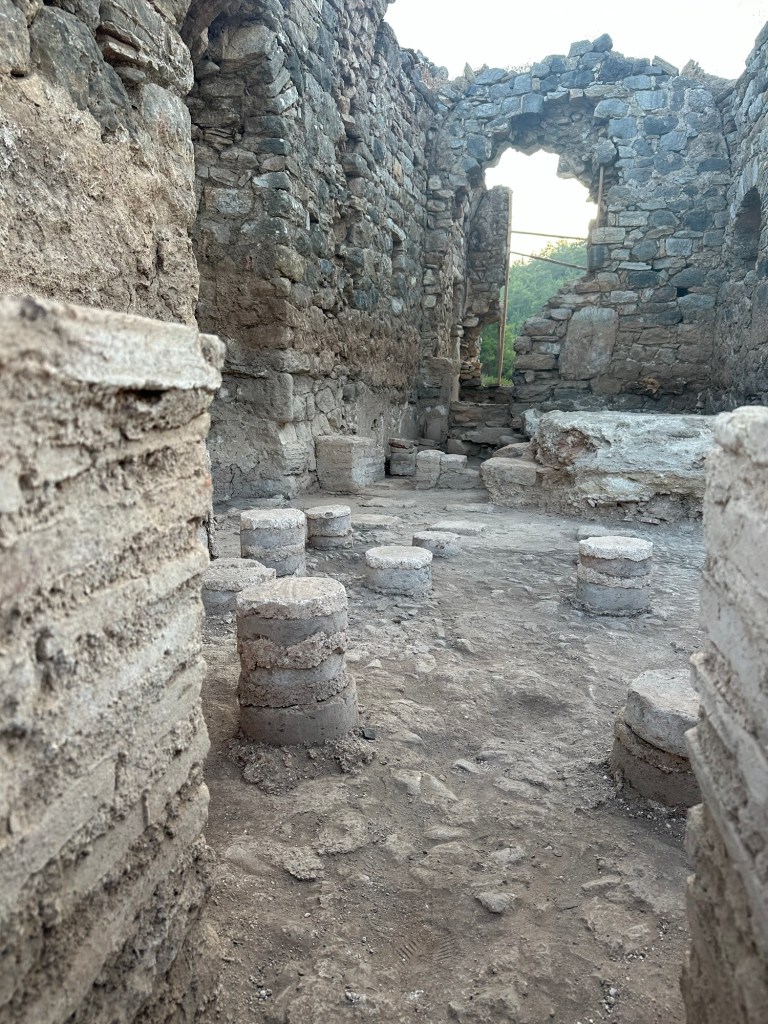
But Anastasiapolis truly thrived in the 5th–6th centuries AD, when the Byzantines, recognizing its strategic location along the sea-lanes between Caria, Rhodes, and the Dodecanese, built a harbour town and religious centre. The remains of three basilicas, cisterns, and dwellings still stand as witness to its life. Unlike many other coastal settlements, it appears to have been laid out as a purpose-built Byzantine city.
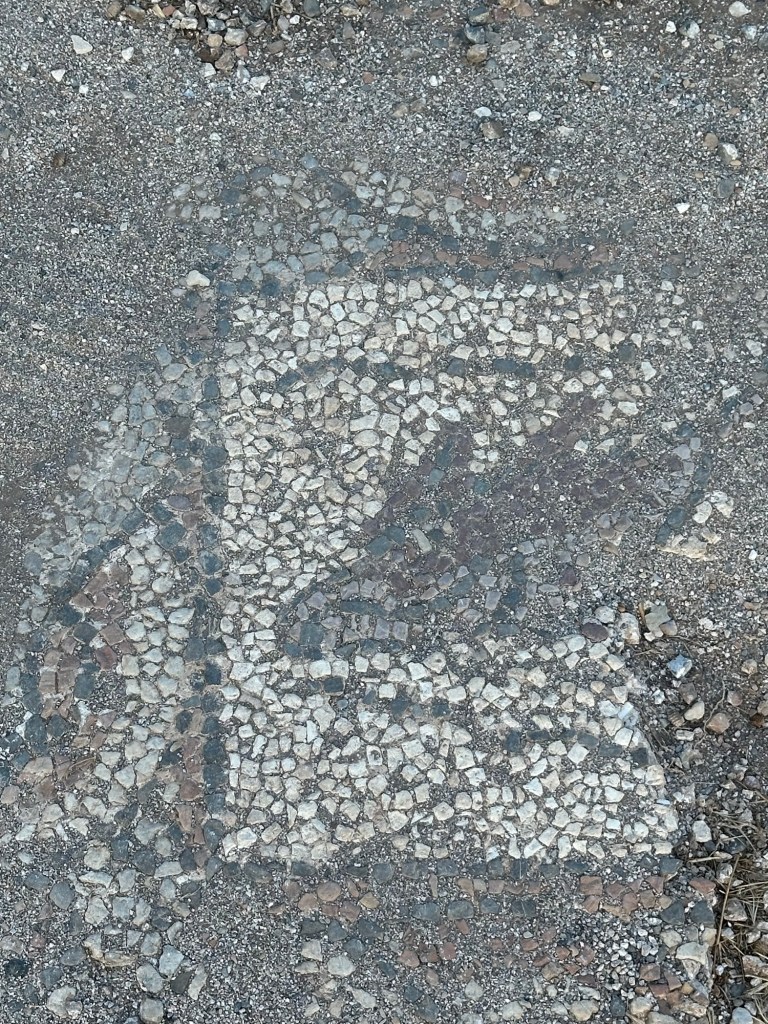
Then came the Arab raids of the 7th–9th centuries. Like much of coastal Caria, Anastasiapolis was vulnerable. As attacks grew fiercer, coastal towns and monasteries gave way to more defensible inland strongholds. By the Middle Byzantine period (9th–11th centuries), the city was largely abandoned, with only faint signs of later, occasional use — a place for herders, perhaps, or a seasonal anchorage.
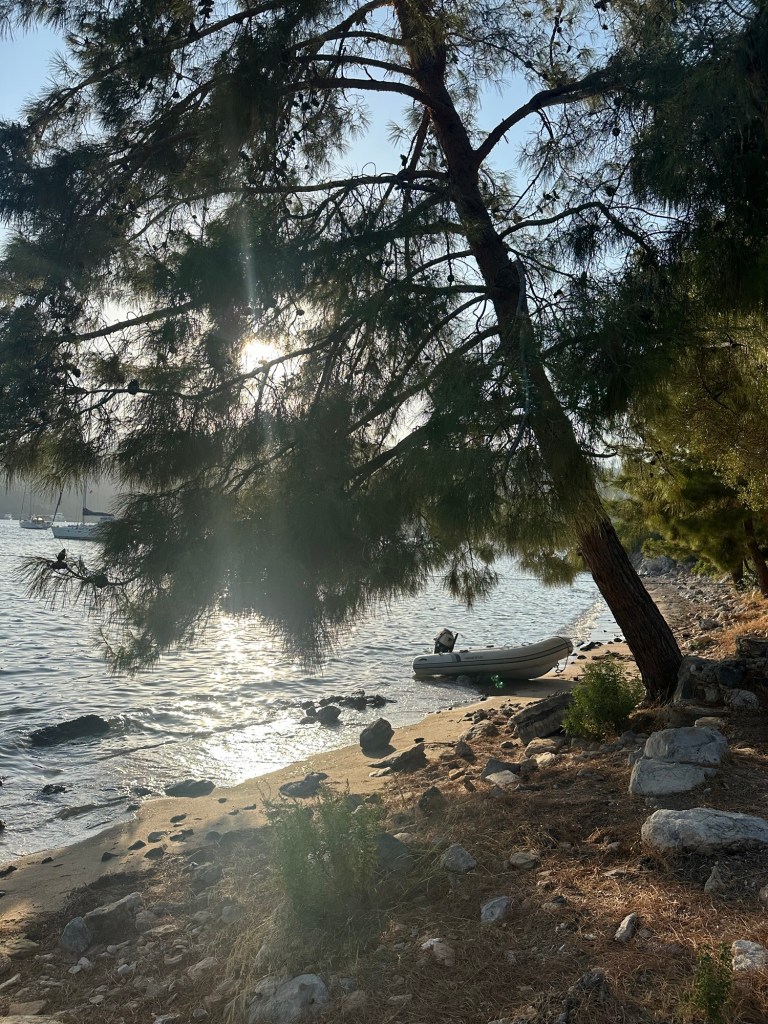
Today, Kissebükü is a place of profound peace. The bay lies cradled by pine-clad mountains, its waters a brilliant Aegean blue, with the ruins of Anastasiapolis scattered along the shore. It is still better known to sailors and hikers than to mainstream tourists — a lost Byzantine city on the edge of the sea.
I wonder what it will look like a decade from now. Will more of the city rise from the earth? Or will it remain as it is today: a secret shered by those who sail into Gökova ?
 CherryPicks