
Some islands steal your breath the moment you arrive. Others, like Leros, take their time—working their way into your heart little by little. By the time you leave, you realize you’re hooked. Leros is that kind of island.
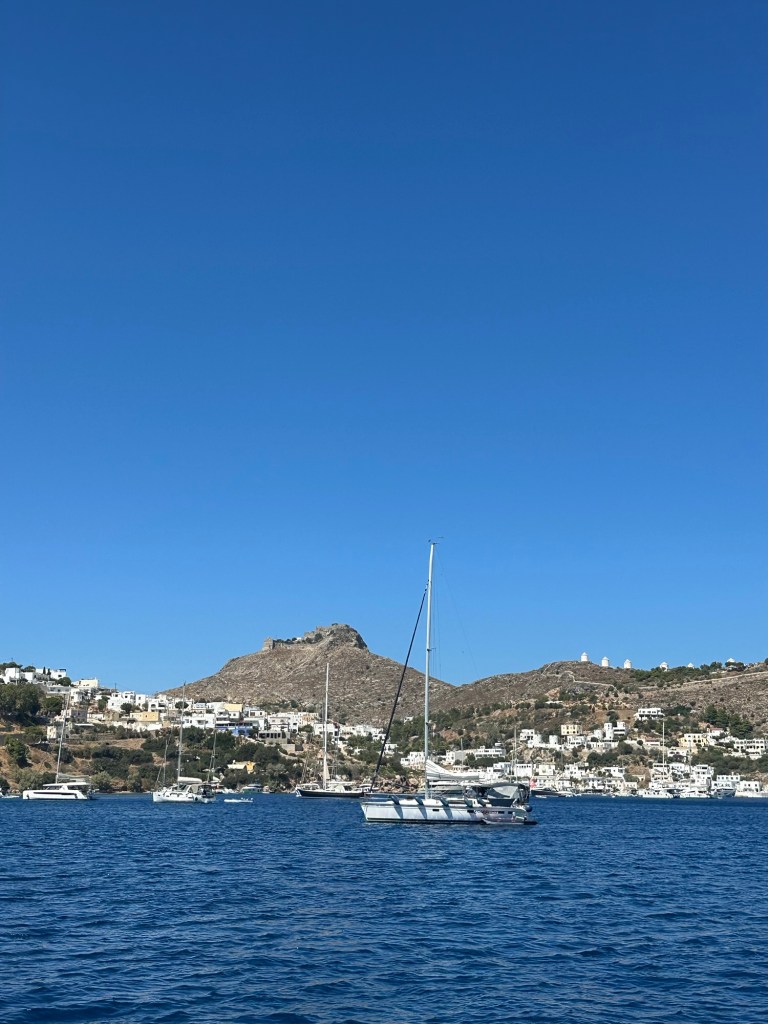
August in the Aegean can be super windy, and this season was one of the harshest I’ve seen. We weathered three or four storms tucked safely into Leros’s anchorages, using the island as our base to explore nearby islands.
Our first stop was Panteli, perhaps the very soul of the island. A large, well-sheltered bay, it’s long been a favorite among sailors.
To one side lies a little boat shelter where fishing boats bob gently in the water. Along the beach, tavernas line up side by side—sunbeds by day, white wooden tables by night. There’s a small patisserie serving fresh loukoumades in the evenings, and a decent bar if you’re after a nightcap.

Climb the narrow alleys up the hill to the other side and you’ll find a couple of wonderful restaurants with sweeping views.
We spent more than a few evenings in Panteli’s tavernas, sharing mezes and grilled seafood, sipping ouzo, and watching the anchored boats sway—falling into the timeless rhythm of island life.
Panteli has just one street running parallel to the sea, lined with small boutiques and another patisserie where we always stopped for homemade ice cream.
South of the bay, a small hill opens onto Vromolithos beach, with plenty of moorings scattered around—one reason Panteli is so popular.
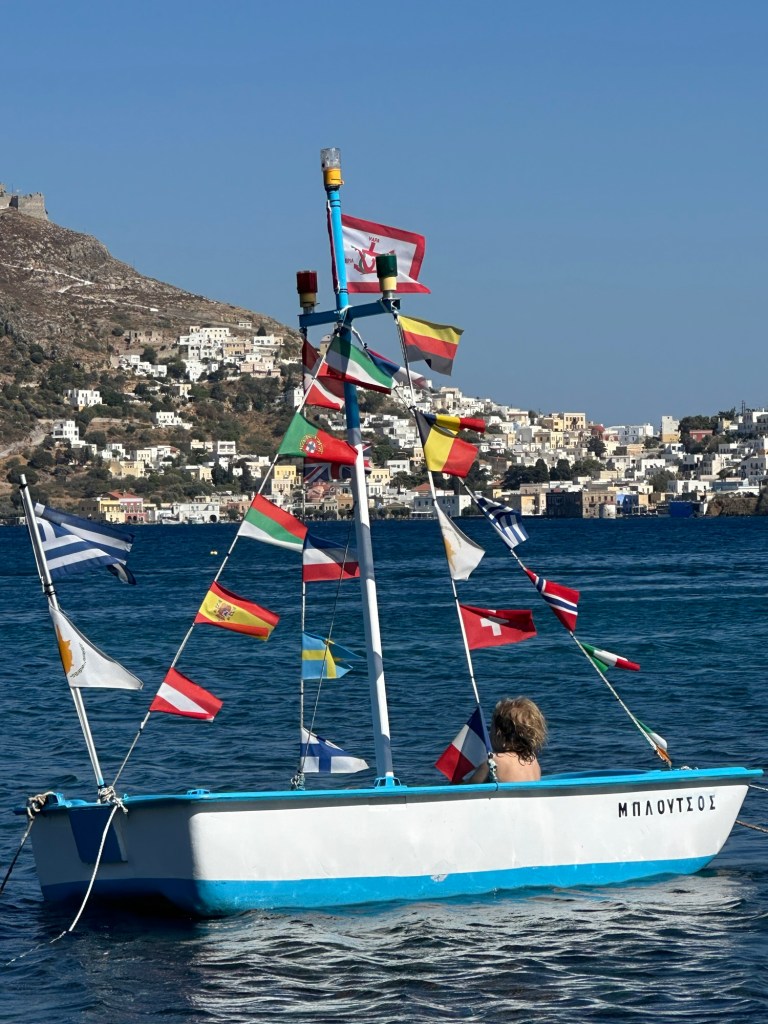
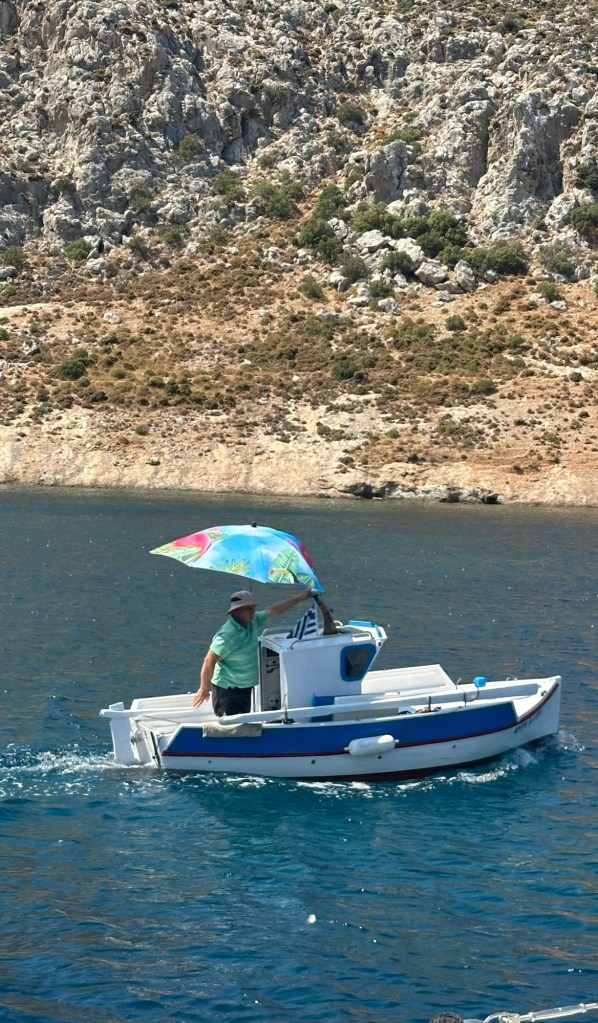
The moorings are managed by Lefteridis, a man with a green rowboat and a will of iron. Whether you’re captain of a modest sailboat or a luxury motor yacht, you do as he says—he knows his bay and his moorings. He technically has a phone and VHF, but chances are he won’t answer. Best to just show up and hope for the best. That’s what we did, and voilà—he gave us the perfect line, right by the beach. (It’s €2 per meter per day, and yes, you can even pay by card.)
Just outside the main beach, there’s another good anchorage if you prefer to be on your own.

One day, we rented a car in Panteli and drove up to the Castle of Leros, a Byzantine fortress from the 11th century perched on Apitiki Hill, about 150 meters above sea level. The views from the top are unforgettable—villages spilling down the hillsides, the Aegean stretching endlessly, and the neighboring islets scattered in the blue.
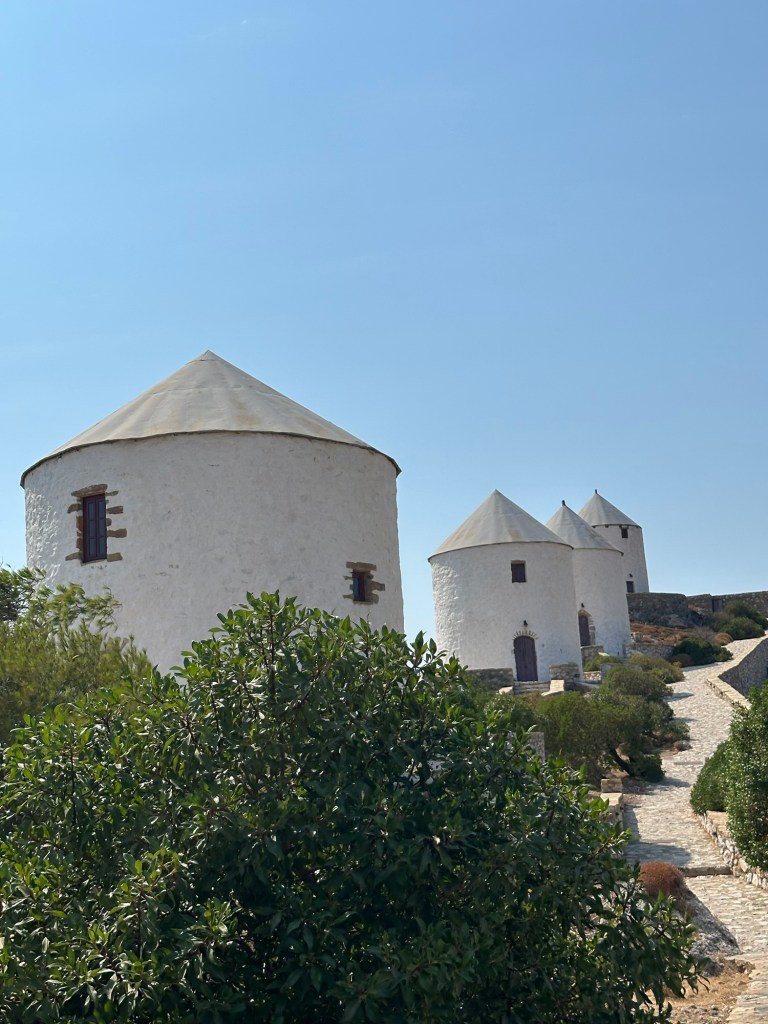
On the way down, the restored windmills came into view—iconic, glowing in the sun like something from a postcard. Right nearby is Harris, maybe the best bar in the Dodecanese, the perfect spot for a sundowner with killer views and cocktails.

To the north lies Agia Marina, a graceful harbor town with pastel-painted neoclassical mansions fronting the sea. Cafés spill onto the quay, the waves lapping at our toes.
Next comes Alinda, almost one long continuous beach, dotted with seaside hotels and tavernas—a place built for lazy swims and long lunches.
At the southern tip lies Xirokampos, a fjord-like anchorage with a completely different mood. It’s a gathering place for long-distance travelers, and the beach tavernas are modest, budget-friendly, and deliciously authentic.
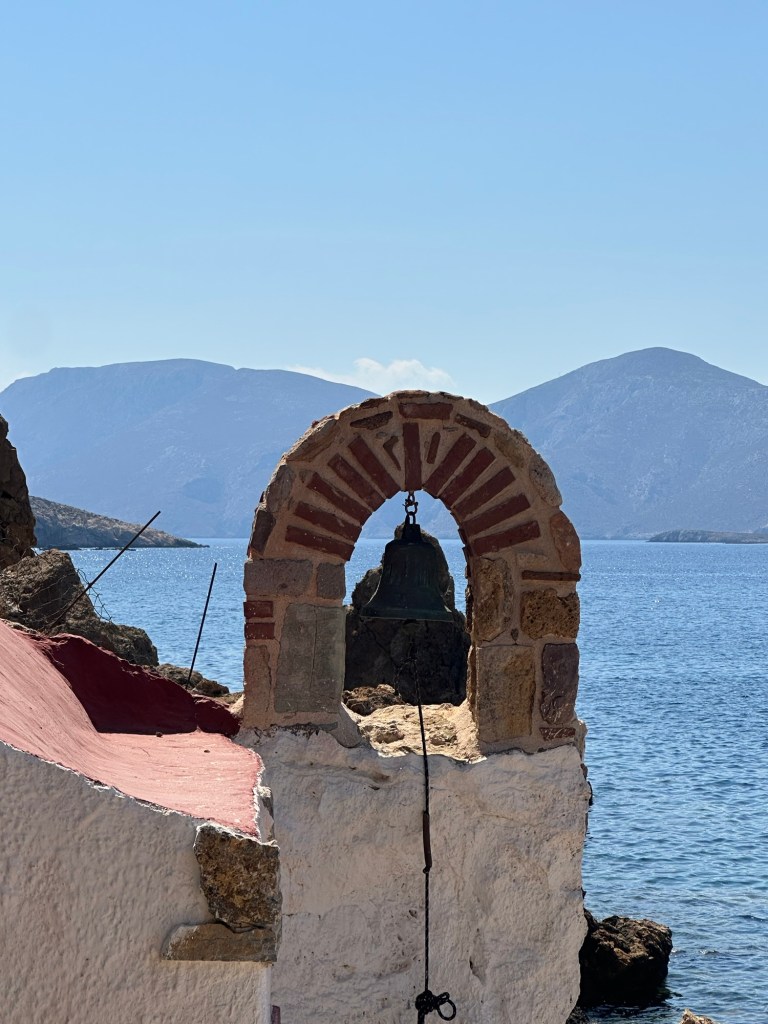
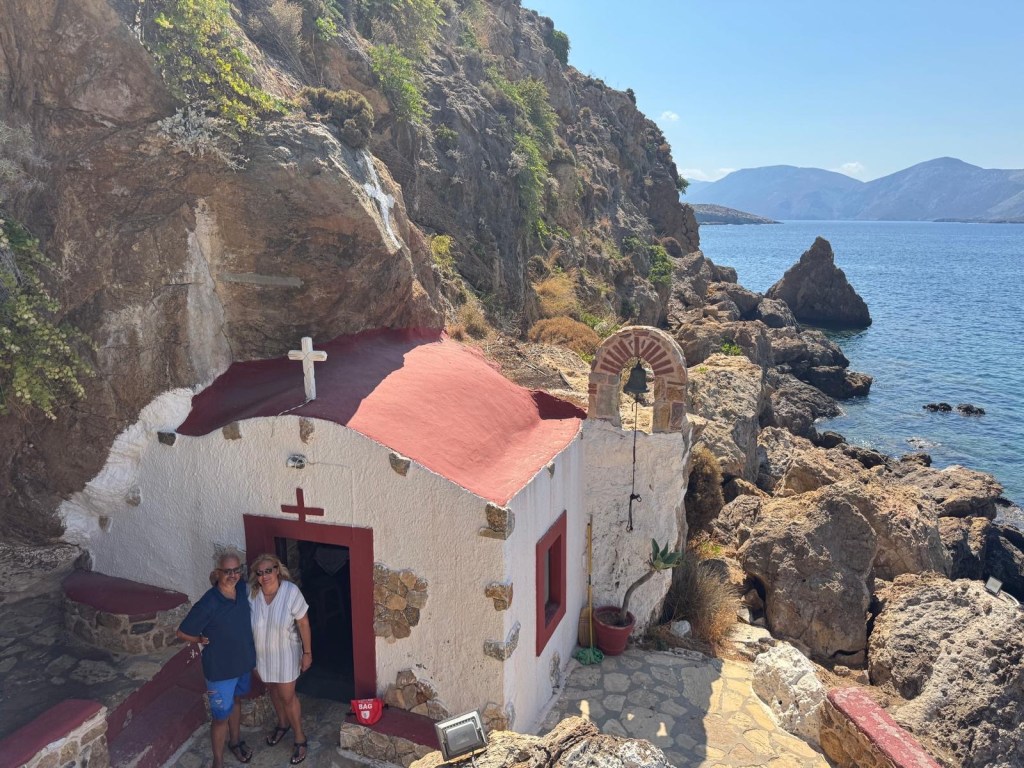
At the entrance to the bay is a tiny whitewashed chapel, tucked into a rocky cleft—Panagia Kavouradaina, “Our Lady of the Crabs.” You can hike to it from the village, or—like us—edge your dinghy into a narrow opening by the rocks and climb up.
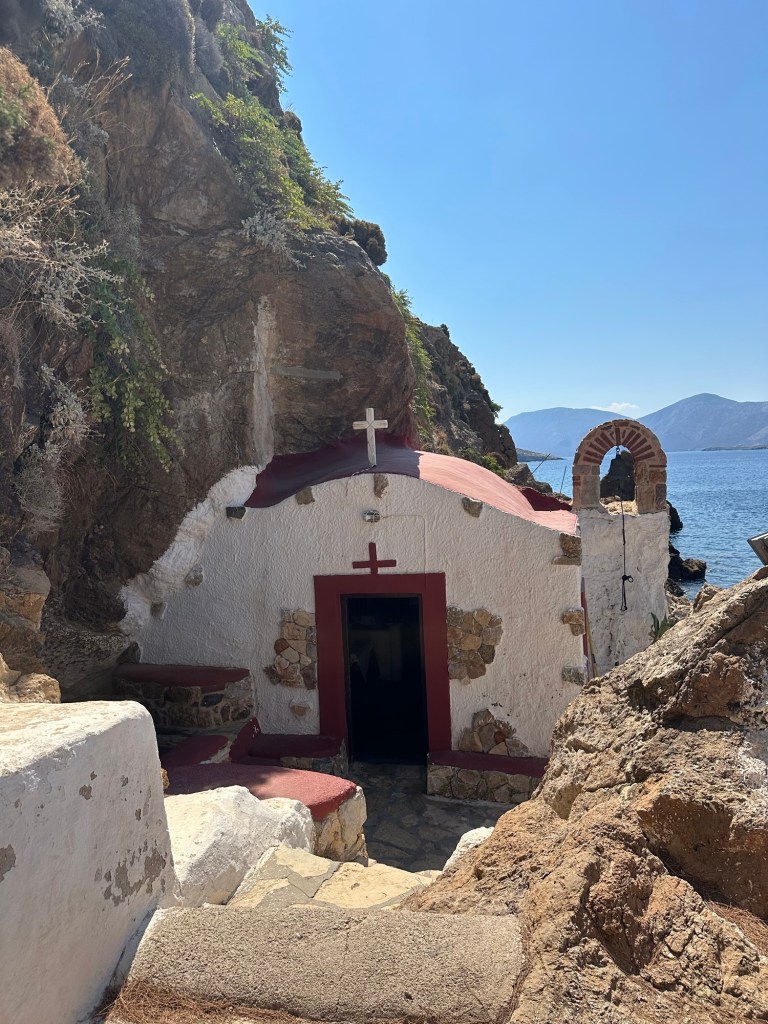
The chapel has its share of legends:
• One tells of a fisherman bitten by a crab while collecting shells, who found an icon of the Virgin Mary. After praying, his wound healed. That night, he dreamt of a woman in black asking him to return the icon. When he did, the icon miraculously reappeared, and the chapel was built on the spot.
• Another says two fishermen from Kalymnos survived a storm by clinging to a piece of driftwood, which turned out to be the icon of the Virgin. After recurring dreams, they returned the icon to Xirokampos, where locals built the chapel in her honor.

Then there is Lakki, the largest natural bay in the Eastern Mediterranean—a vast, protected anchorage where both of the island’s marinas are located.
But the first time you see it, something feels out of place. Wide boulevards, stark rectangles, art-deco lines. Lakki was designed in the 1930s by the Italians, who dreamed of creating a model Fascist town and a major naval base to dominate the Eastern Med.
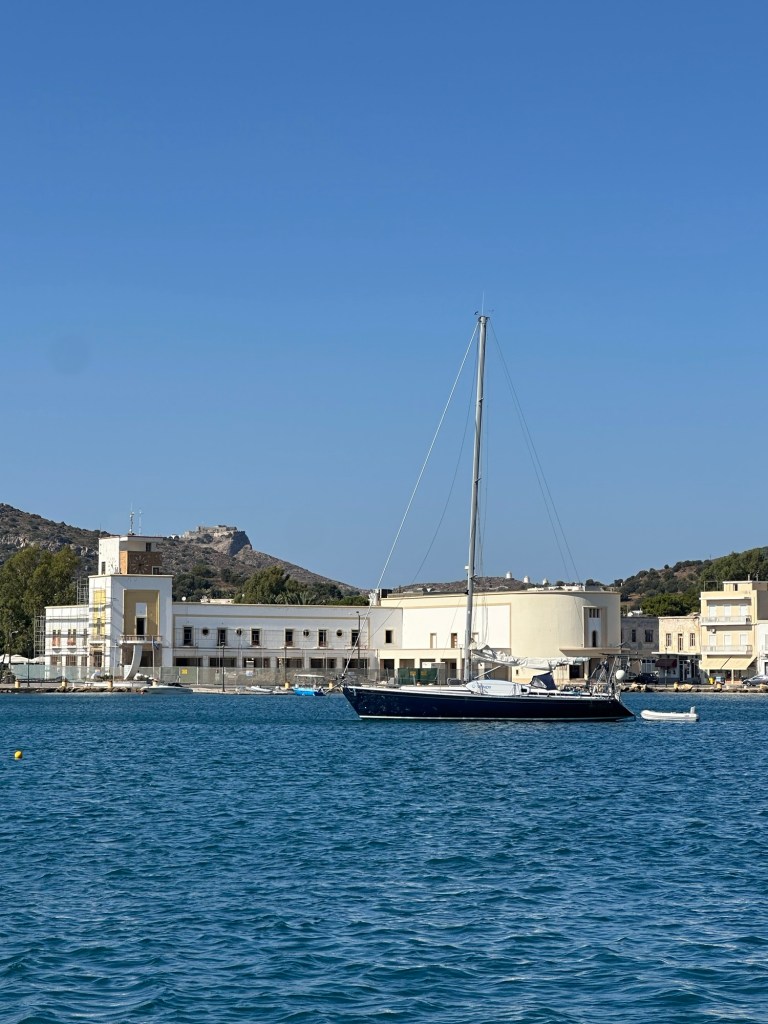
Many of the buildings were bombed by the Greek air force at the end of WWII. Some buildings around the center have been renovated , and if restoration continues, the town could become an architectural curiosity worth visiting. For now, it feels strangely cinematic—half Greek village, half wartime film set.
Lakki is also the main ferry port, connecting the island to other Greek islands. The Lakki anchorage, normally safe and quiet, feels like the interior of a washing machine each time one of these giants come.
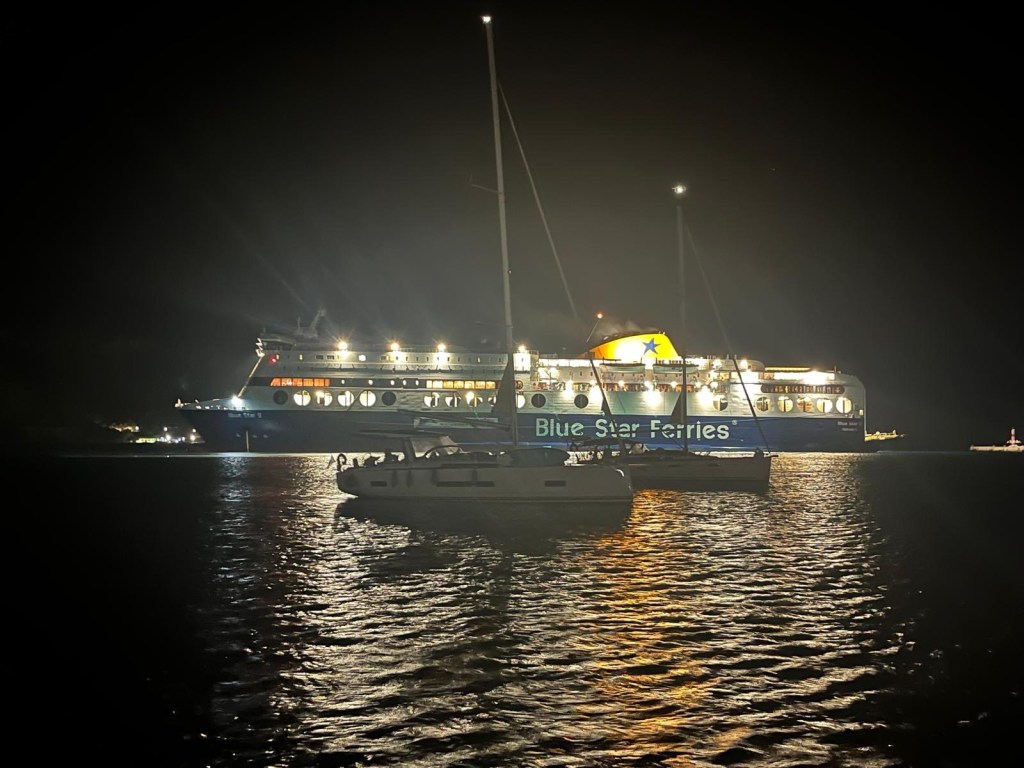
A three-day storm was on its way, and we were lucky to find a berth at Lakki Marina—the smaller of Leros’s two marinas—thanks to the Navily app. It turned out to be the perfect refuge, with reliable shelter, fresh water, and electricity.
Lakki is a quite port town, catering mostly to locals and domestic visitors. It’s not as charming as Agia Marina or Panteli, but more essential. Plus, it’s the place to shop for provisions: two well-stocked ship chandlers, an excellent butcher, a fishmonger, a couple of groceries, good patisseries, and a supermarket. Everything we bought there was fresh, top quality, and budget friendly. Some of the shops were there from the 1920s.
While the winds howled outside, we spent our days wandering around Lakki—stopping at its cafés, tavernas, and nearby beaches. We grew fond of the quiet seaside promenade, lined with simple, down-to-earth cafés.
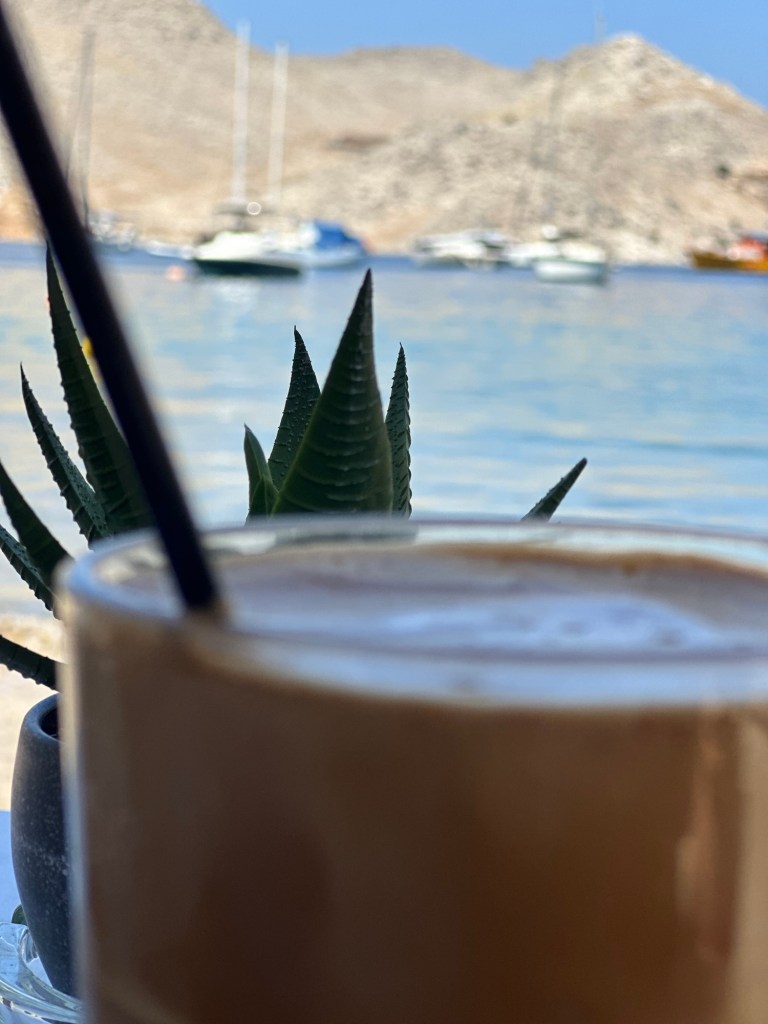
The food scene on Leros is simply wonderful. Some of the Dodecanese’s most beloved tavernas are scattered across its bays. Most of the places we tried were excellent—you can find my notes on Google Maps.
The wines are straightforward but perfectly paired: crisp mainland whites, a glass of Malagouzia or Assyrtiko—cool and sharp against the salty breeze. In one of the taverns we tried a sweet version of Malagouzia as dessert wine, and it was seriously one of the best I’ve ever tried.
Dessert was often ice cream, or portokalopita—an orange pie made with crumpled phyllo soaked in syrup. Simple, but addictive.
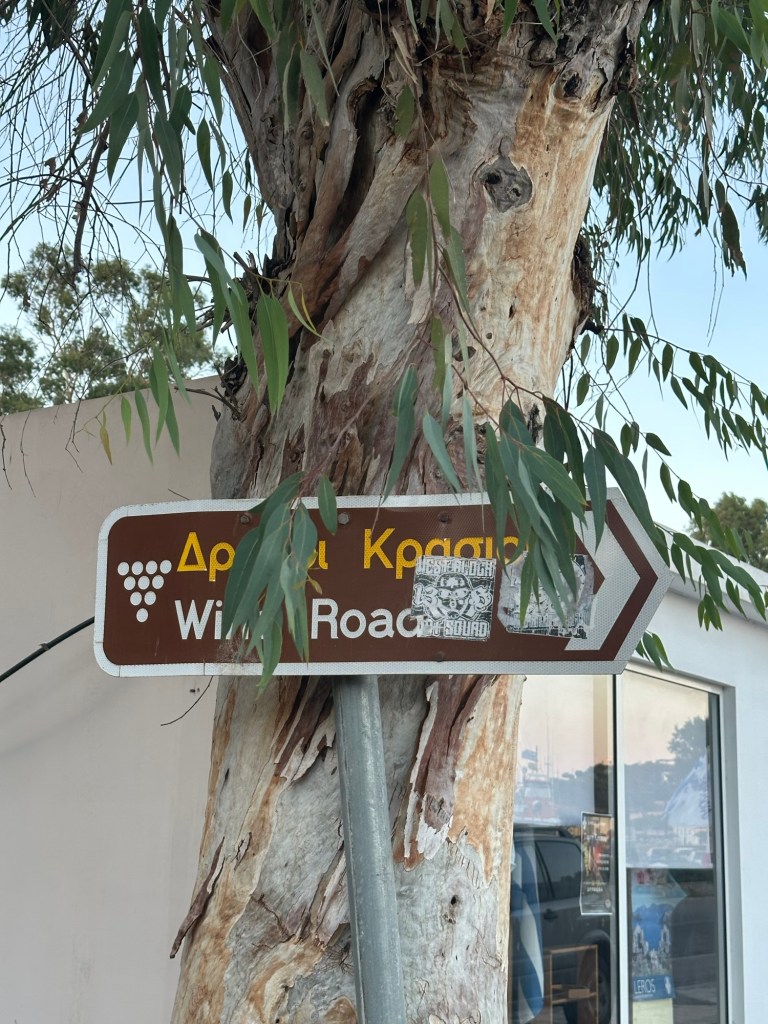
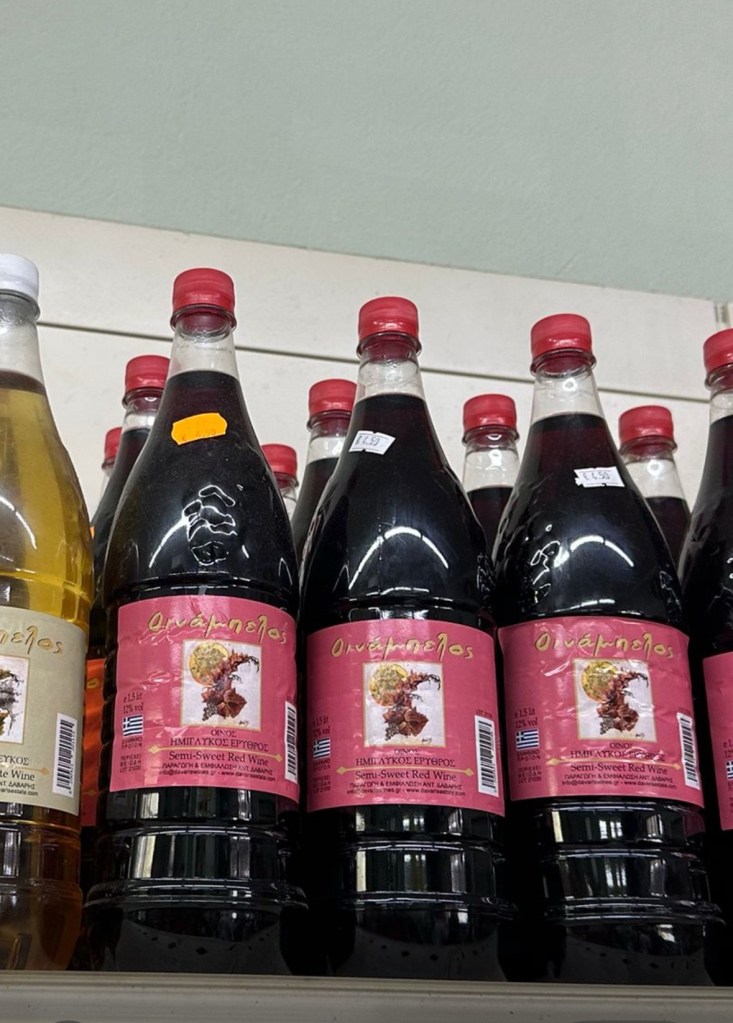
The wine route led us up into the hills, though we never actually stumbled upon any vineyards. What we did find were local wines sold in large plastic bottles—tempting, but we didn’t quite have the courage to try them. Some things, we decided, are best admired from a safe distance.
What lingers most from Leros isn’t just the beauty or the history, but the small, everyday details of life. Leros doesn’t feel like it’s performing for visitors—it feels lived in and authentic.
It’s an island of contrasts: tranquil coves and stormy history, windmills and Fascist boulevards, simple tavernas and Byzantine castles.
Leros doesn’t dazzle at first sight—it unfolds slowly, gently, until you realize it has found a place in your heart. And that, I think, is its greatest charm.
 CherryPicks