
Nestled along Turkey’s Aegean coast, Ephesus is not just a UNESCO World Heritage Site—it’s one of my all-time favorite places. As one of the best-preserved ancient cities in the Mediterranean, it stands as a living chronicle of civilizations.
Whenever I wander through ancient ruins, I try to picture them at their most vibrant—alive with voices, movement, and daily life. What was it like to live, love, and work there? Were they content with whoever ruled over them? Which plays filled the seats of that vast 25,000-seat Great Theatre?
The questions are endless, and Ephesus is the perfect place for such daydreaming.
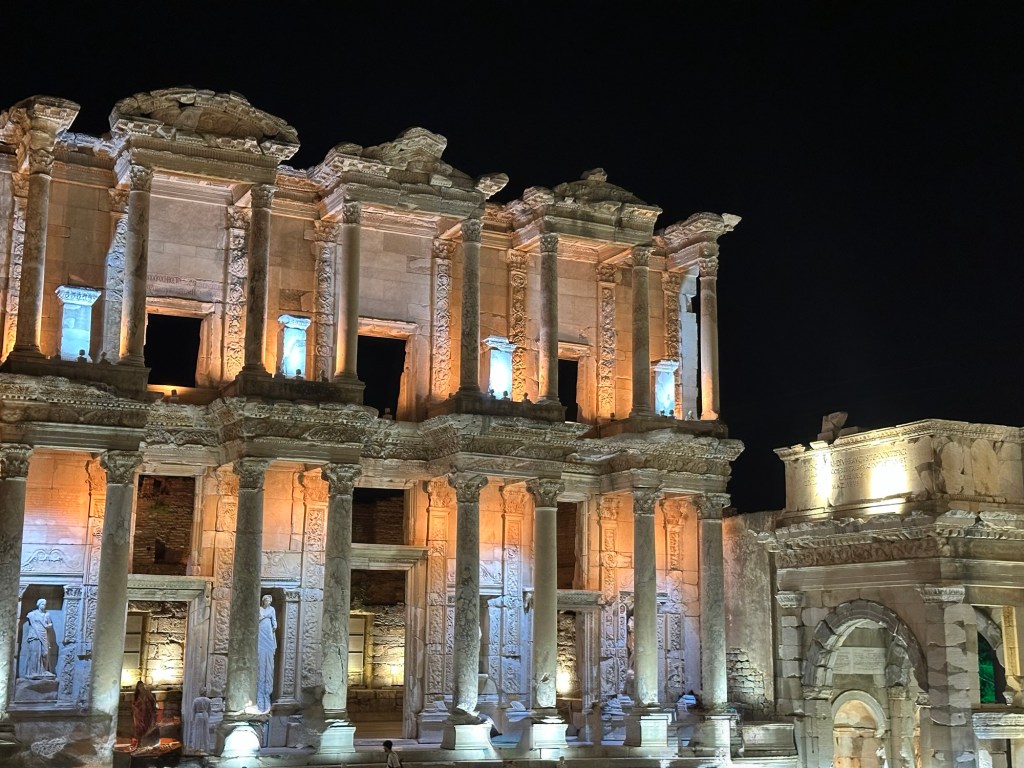
According to myth, Ephesus was originally founded by Amazons; the fearless women warriors of antiquity. Many ancient Greek philosophers talk about a city ‘Apasa of the Amazons’.
History tells us, it was founded by Ionian Greeks around the 10th century BCE, the city was home to Lydians, Persians, and above all the Romans—each leaving their mark in marble and myth.
Its golden age arrived in the 1st and 2nd centuries CE, when Ephesus became the Roman capital of Asia Minor and a vital port connecting East and West. At its peak, it boasted over 250,000 inhabitants—a bustling metropolis of grand avenues, terrace houses, bath complexes, and public squares echoing with the footsteps of philosophers, merchants, prostitutes, and priests.
Ephesus’s decline began with the massive earthquake of 262 CE, which severely damaged its harbor, streets, and public buildings. This disaster coincided with a Gothic raid that plundered what remained.

The harbor had already been silting up for centuries, but the earthquake dealt a critical blow to its infrastructure, hastening its decline as a maritime center. Though the Romans rebuilt parts of the city in the 3rd and 4th centuries, it never regained its former grandeur.
Between the 4th and 6th centuries, Ephesus enjoyed a new prominence under Byzantine rule, becoming sacred ground for Christianity. The city is mentioned in the New Testament, and nearby lies the House of the Virgin Mary, traditionally believed to be her final earthly home.
More earthquakes and raids followed, this time from Arab forces. After the 12th century, two Turkish empires ruled the region—first the Selçuks, then the Ottomans. Both chose to settle around Ayasuluk, modern-day Selçuk, just 3 kilometers away. By then, Ephesus had lost its ancient splendor, its grand avenues buried under centuries of silt and earth.
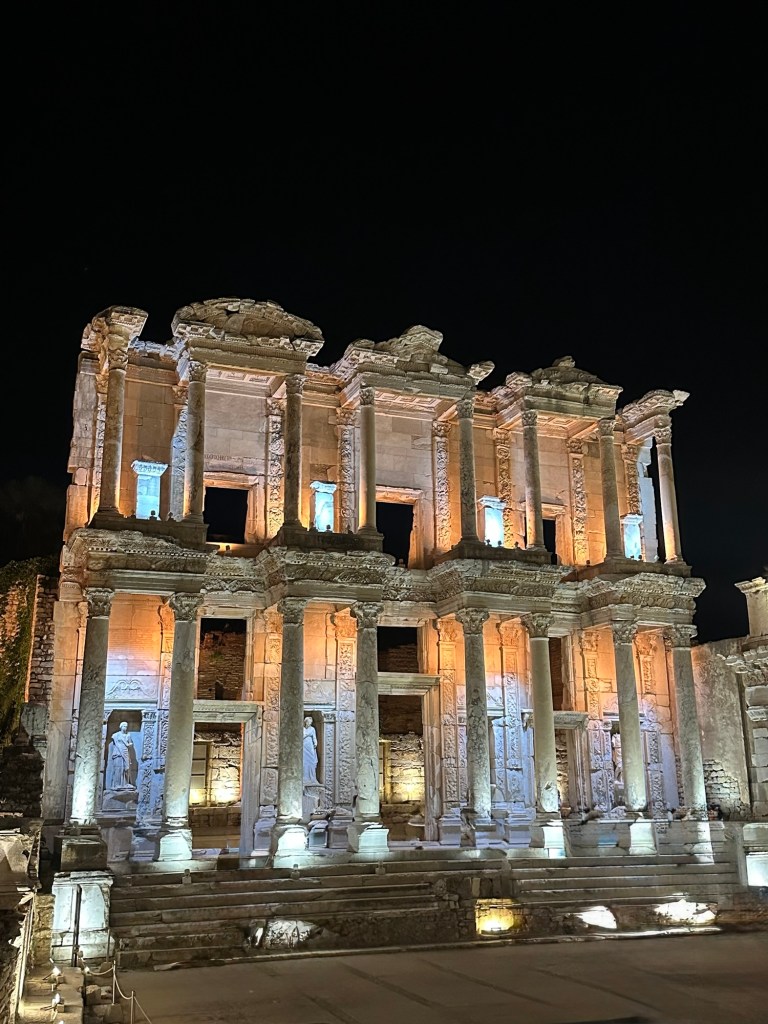
Local villagers sometimes reused ancient stones to build homes and walls, repurposing the remnants of long-gone empires. Yet even in decay, the ruins drew curious travelers and scholars who marveled at crumbling temples, silent theaters, and the hauntingly beautiful façade of the Celsus Library.
Today, standing among the marble streets of Ephesus, you’re not just in a Roman city. You’re on a layered landscape where Hittite kings, Luwian goddesses, Greek colonists, Roman emperors, Christian saints, and Ottoman travelers all left their mark.
European travelers and antiquarians of the 18th and 19th centuries left vivid accounts of exploring Ephesus’s weathered stones. Their fascination—and a broader surge in archaeological interest—led to the first systematic excavations in 1863, which continue to this day.
Current projects aim to excavate the Koressos Gate, revive Port Street and its bathhouse, restore public spaces like Domitian Square, and conserve key monuments and residences. The rumor is, most will be opened to public sometime this year.
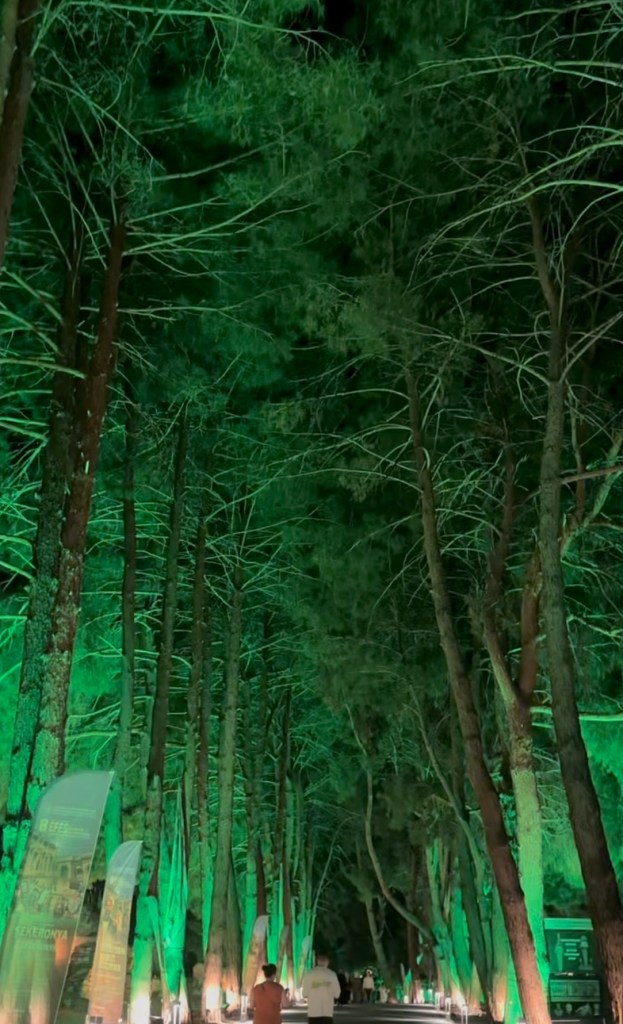
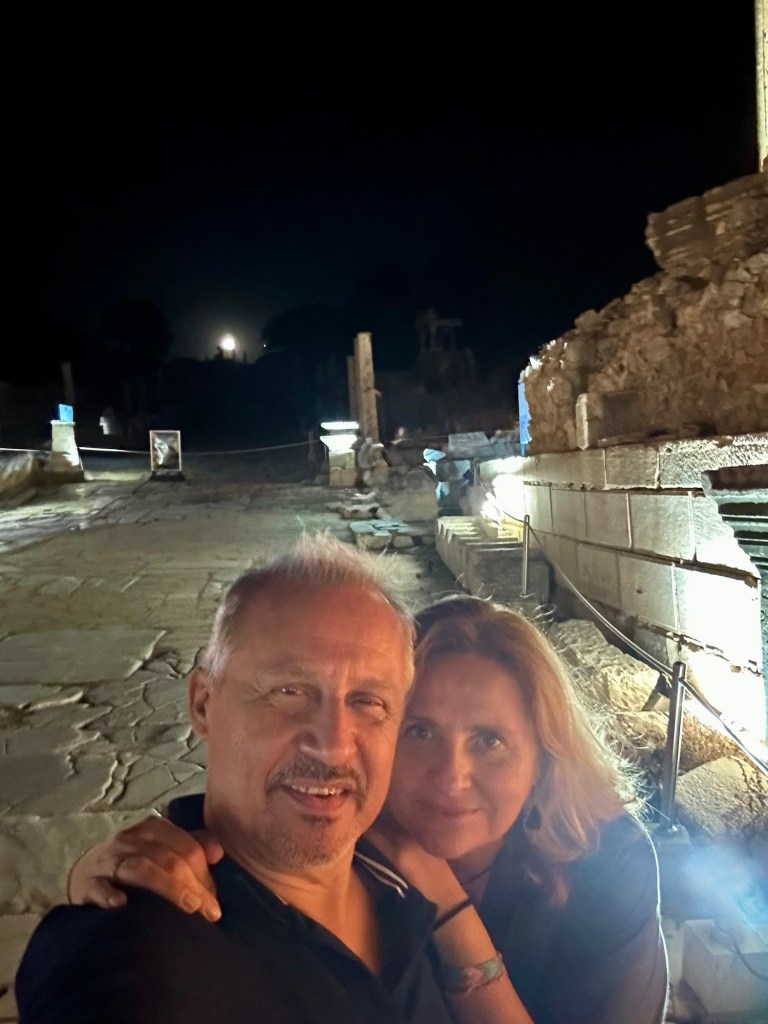
Recently, Ephesus opened its gates to night visitors, so we decided to have a stopover there; which turned out to be an unforgettable experience.
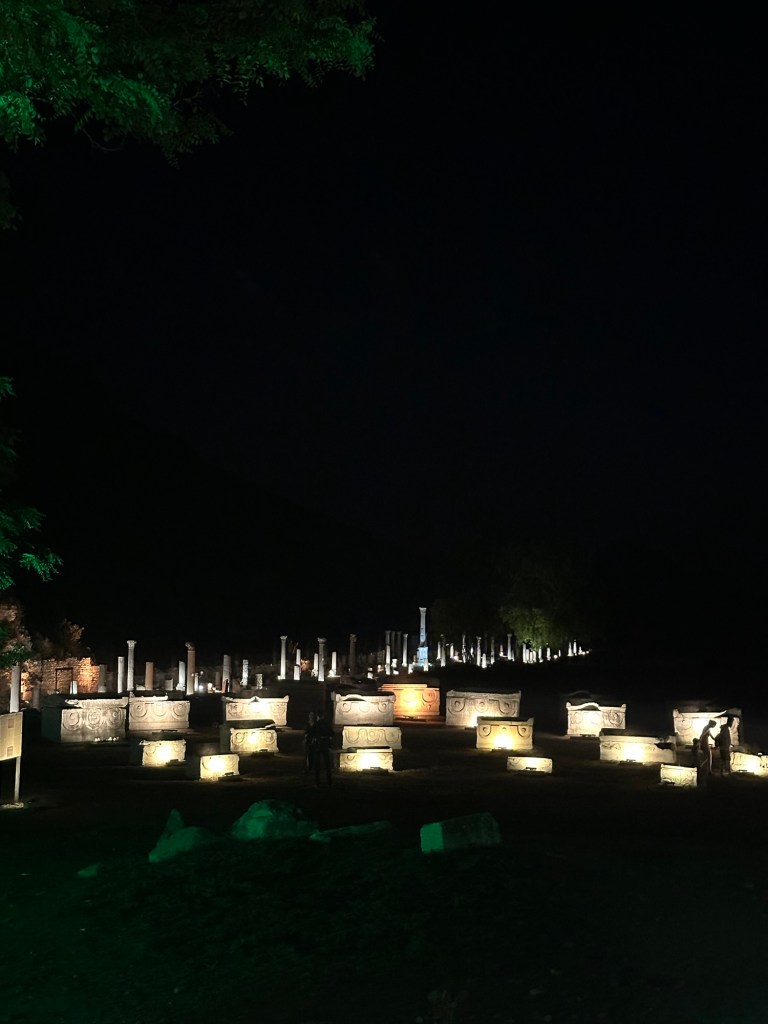
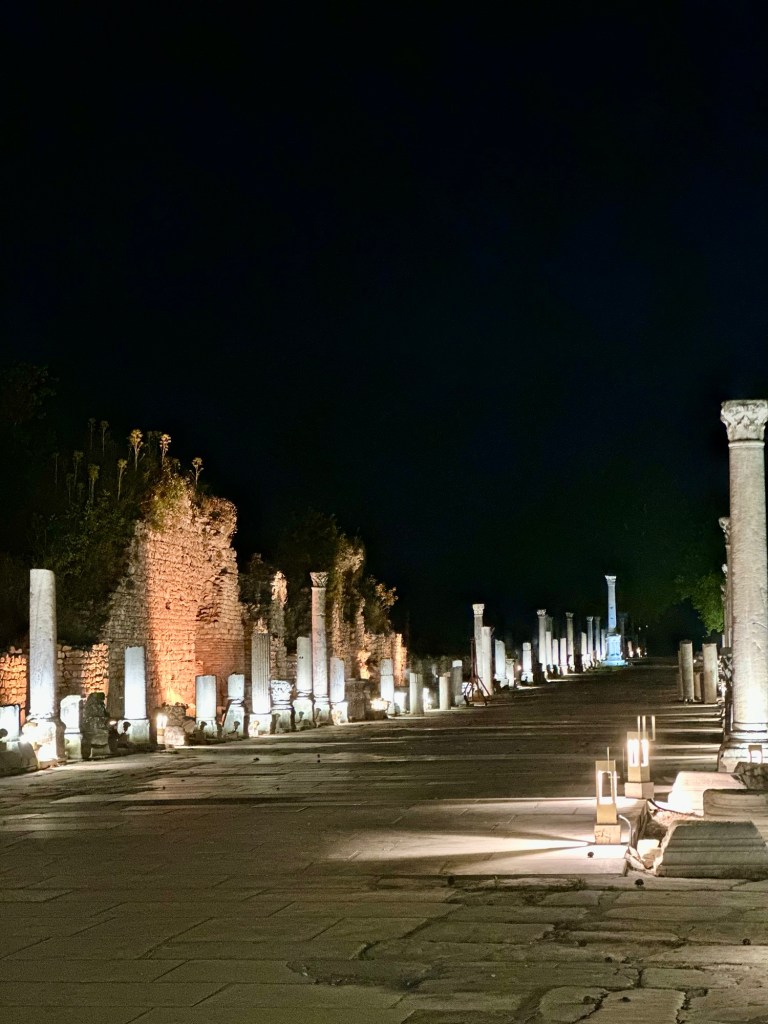
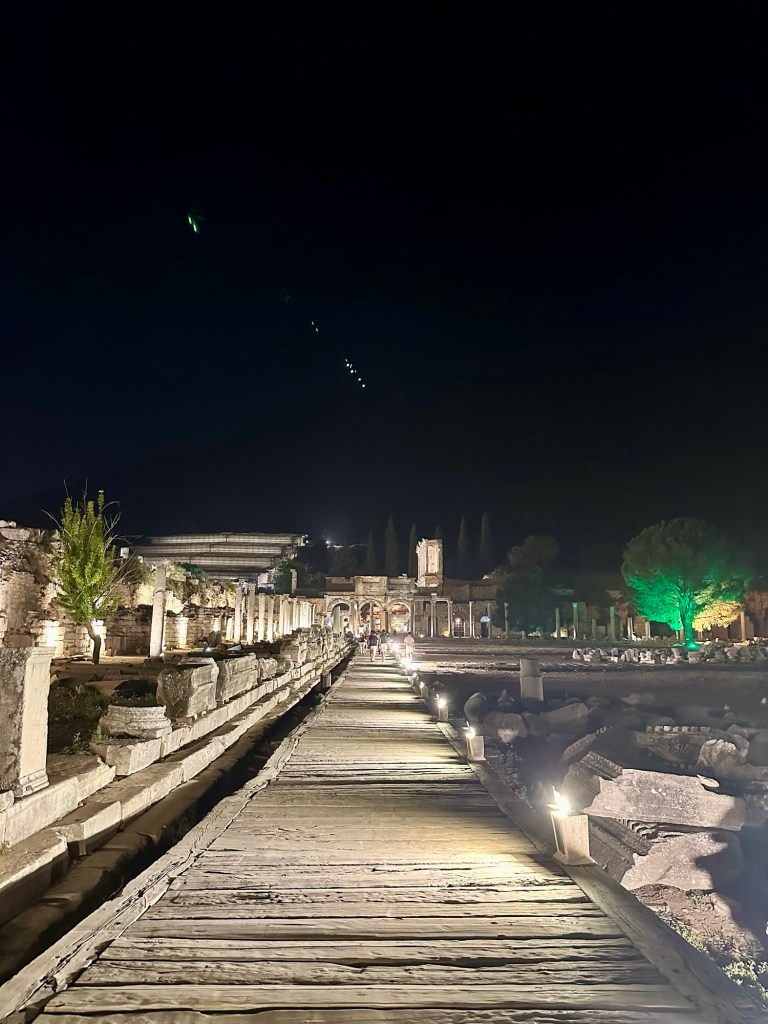
At night, the ancient city lied bathed in soft light. The marble streets, often crowded and scorching hot by day, become quieter at night—sometimes the only sound is your own footsteps, lending the ruins a magical, almost sacred atmosphere.
The highlight was the Celcus Library, its every stone stand out in crisp, magnificent detail. The intricate carvings seemed to glow against the dark sky, their elegance undiminished by centuries.
As an added bonus, it was far less crowded, allowing us to truly appreciate its beauty and grandeur.
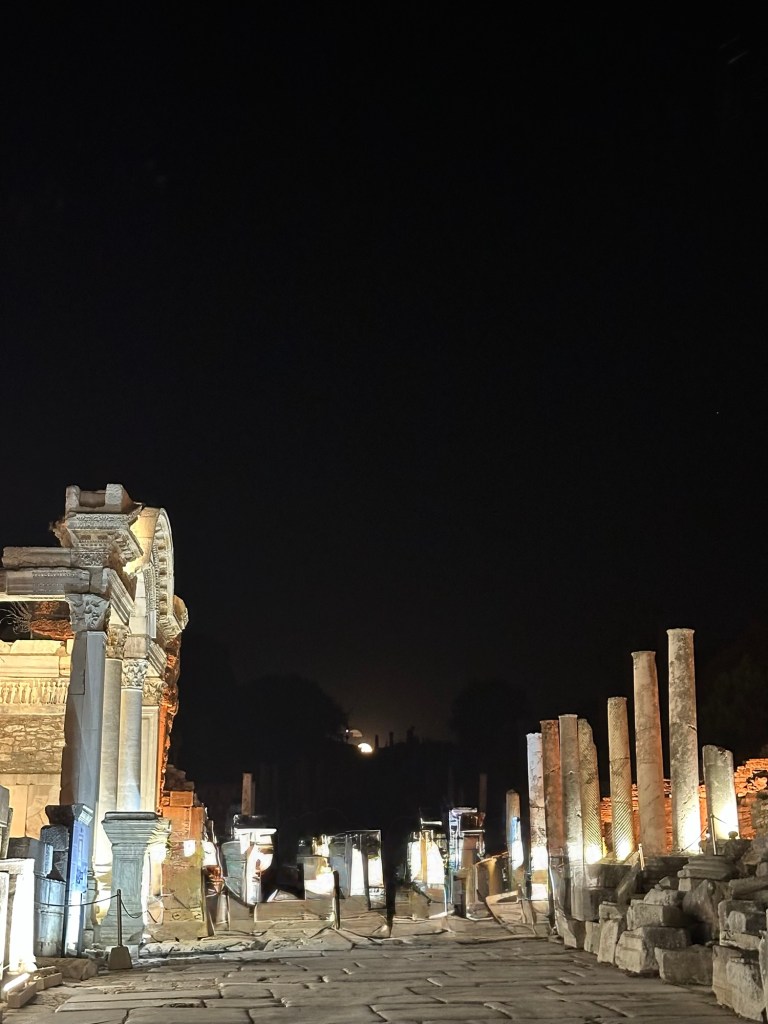
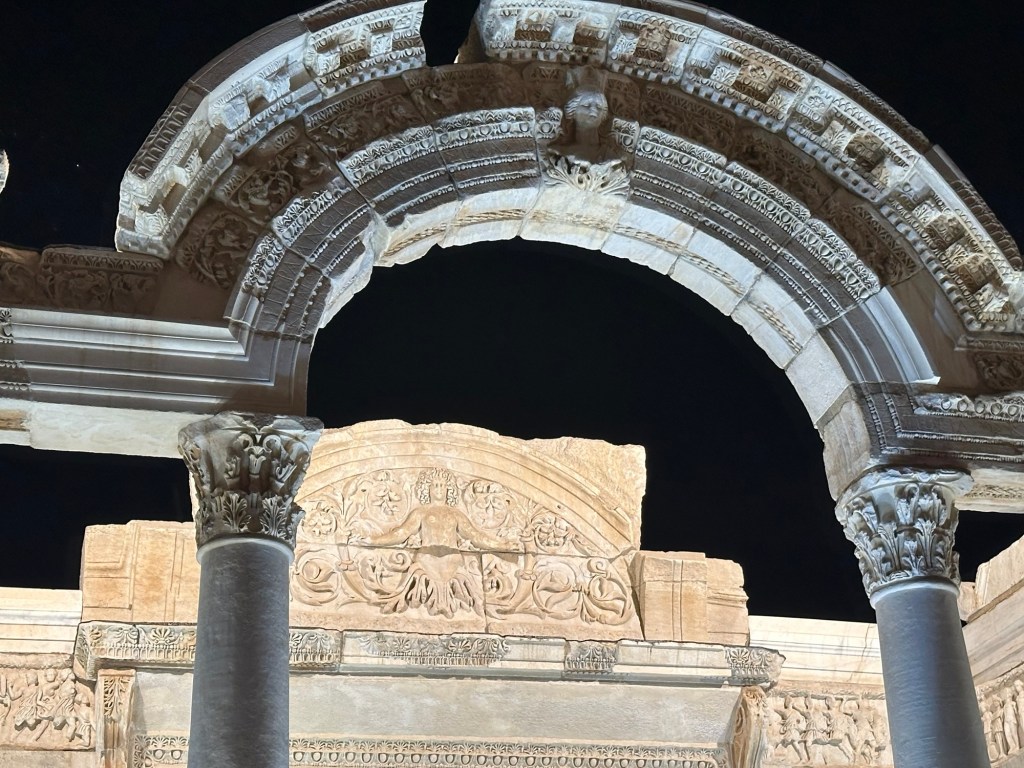
By chance, there was a full moon that night, rising from the Hercules Gates, its light shining through the Curetes Street and the Hadrian’s Gate. We sat on the steps of the Terrace Houses and breathed in the magic of it all.
And of course, I immediately started to imagine about the lavish parties that were held at those houses; where the seven most wealthy families of 1st century Ephesus lived, loved and partied.
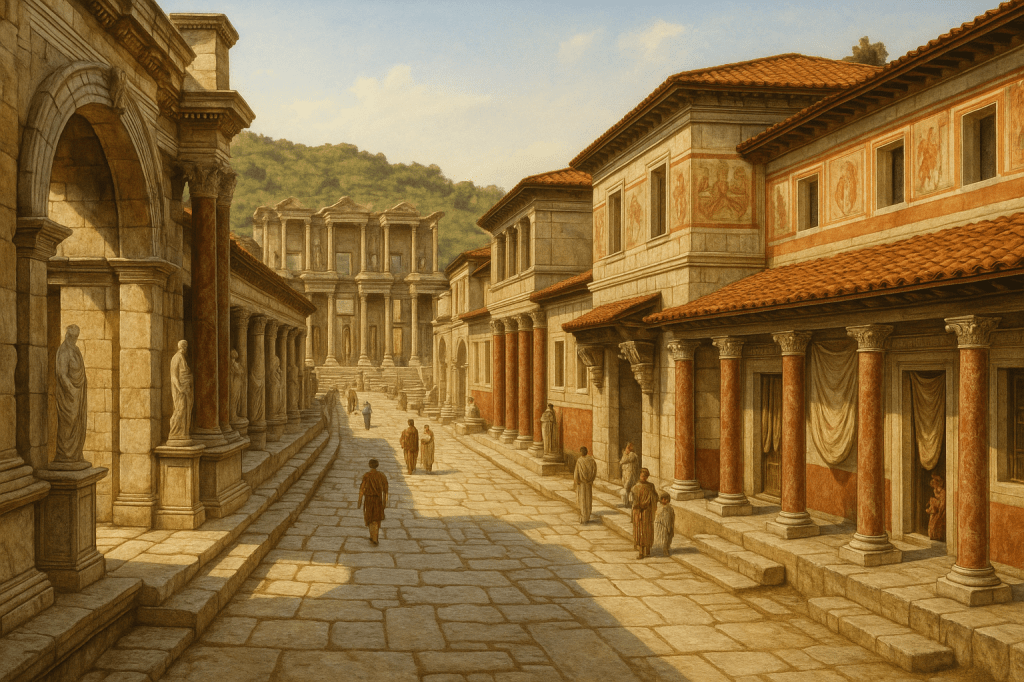
For me, Ephesus is more than ruins. It’s a place where time folds in on itself—where myths, emperors, apostles, and artisans seem to linger just beneath the sun-warmed stone. A walk through its colonnaded streets isn’t just a journey through history; it’s a quiet conversation with a city that survived empires and still keeps secrets to unveil.
Ephesus was home to seven empires, so there are lots to see at the antique city and the surrounding areas :
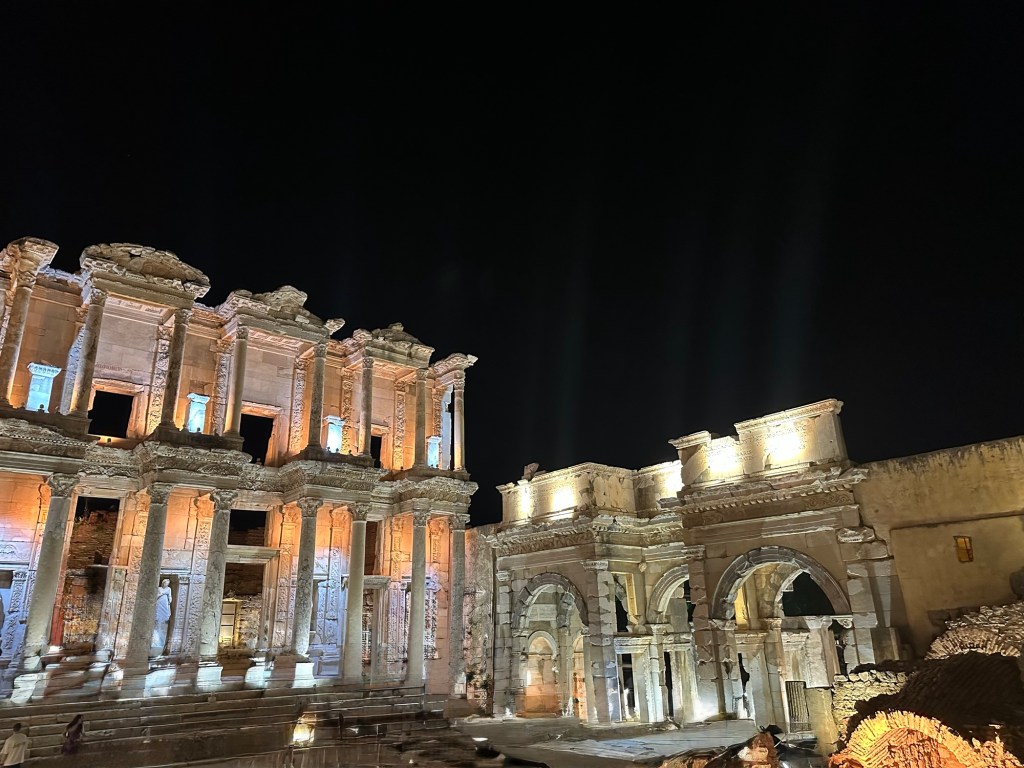
Celsus Library & Gate of Mazeus and Mithridates.
My highlights:
The Library of Celsus: A stunning two-story façade built in 117 CE that once housed thousands of scrolls, symbolizing ancient knowledge and architectural grace.
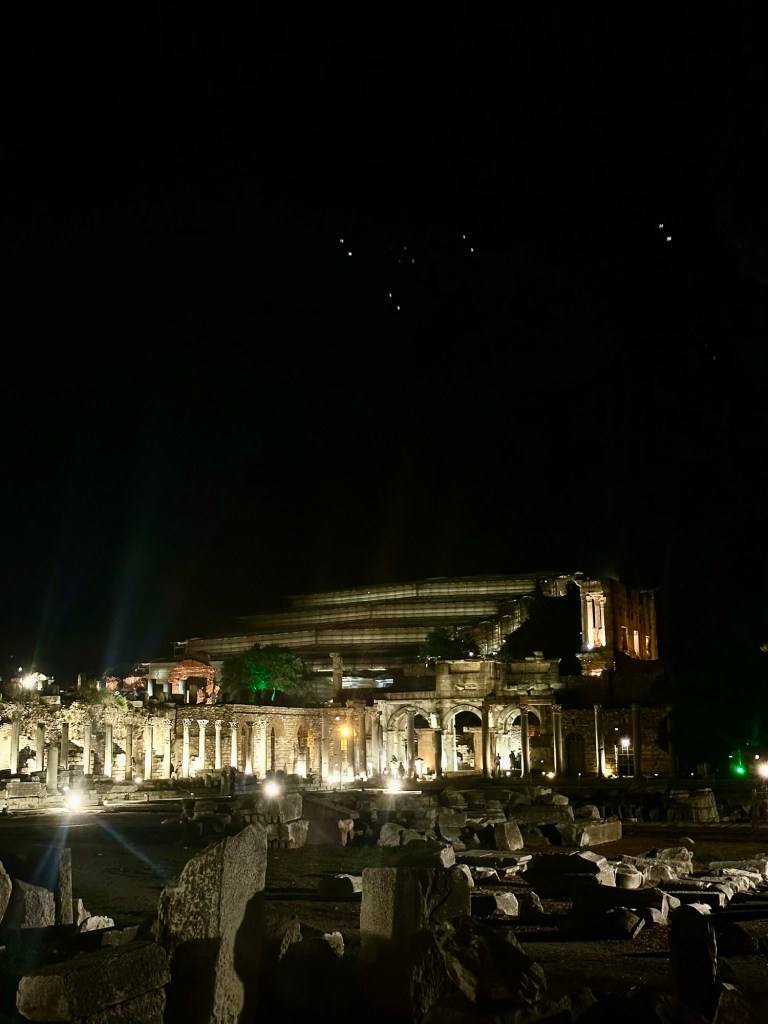
The Great Theatre: Carved into Mount Pion, it seated 25,000 and hosted everything from Greek tragedies to early Christian sermons—legend holds that Saint Paul once preached here.
I was lucky enough to attend concerts at the Great Theater, watching it come alive again and again, with music and light.
International Ephesus Opera and Ballet Festival has a busy schedule for 2025. Be sure to check it out before planning a visit to the area.
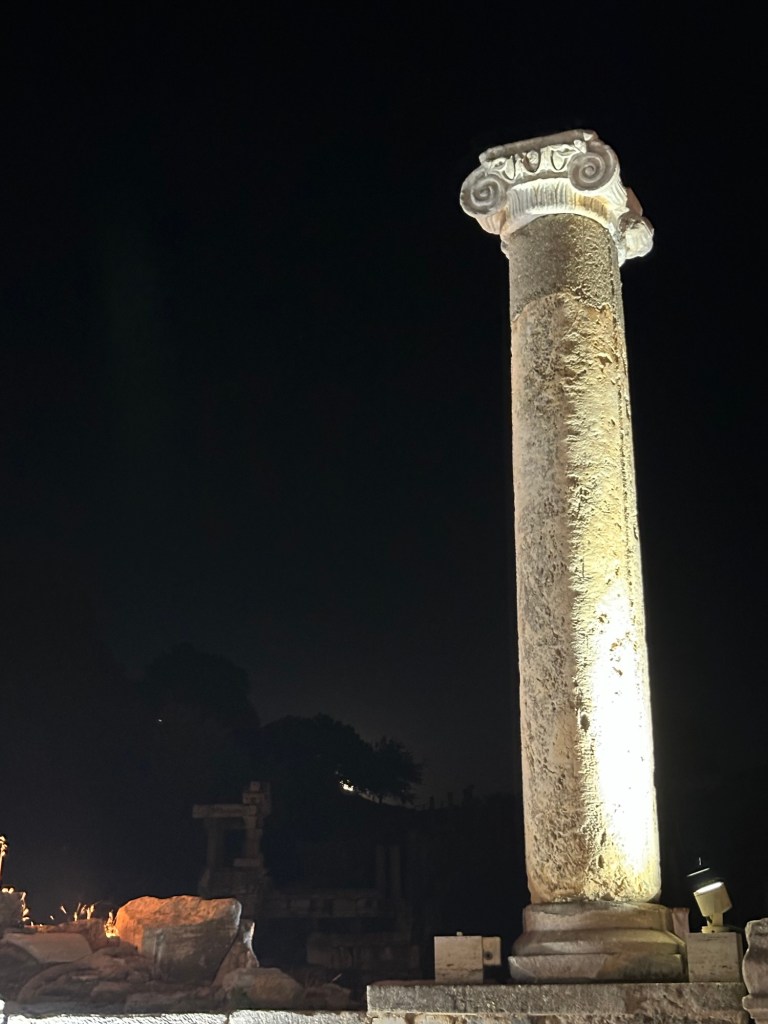
The Temple of Artemis: Once one of the Seven Wonders of the Ancient World, now reduced to a solitary column—but still.
The Marble Road was a ceremonial and commercial thoroughfare, paved with large polished marble slabs worn smooth by centuries of use. It was built to connect key monuments, making it one of the most famous and scenic streets of the city.
The Terrace Houses: Adorned with intricate mosaics and frescoes, offering a glimpse into how the other half lived in antiquity .
They can only be visited during the day, so we only admired them from the outside, remembering the last time I’ve been inside them. I remember that some of the restored mosaics might strike today’s more conservative viewers as downright risqué. It raises an interesting question: have we become more tolerant over the centuries, or more restrained? (Don’t answer that :-))
Just outside the ruins of ancient Ephesus lies the Cave of the Seven Sleepers, a site steeped in legend and spiritual significance. According to Christian and Islamic tradition, this cave sheltered seven young men who fled persecution during the reign of the Roman Emperor Decius in the 3rd century CE. Seeking refuge, they fell into a miraculous sleep that lasted for centuries, awakening only when Christianity had become accepted.
Another site close-by is the Gladiators’ Cemetery. Excavated in the late 1990s, this burial site dates mainly to the 2nd and 3rd centuries CE and revealed more than sixty graves believed to belong to professional gladiators. The tombstones are striking: many are engraved with reliefs of gladiatorial equipment—helmets, swords, and shields—or scenes of combat, proudly advertising the profession of the deceased. Inscriptions sometimes include nicknames, fighting styles, or victories, underscoring the public celebrity status these men could achieve, even as they fought brutal, often fatal matches.
Perched in the quiet hills above Ephesus lies The House of the Virgin Mary (Meryem Ana Evi)—a serene, deeply spiritual site venerated by both Christians and Muslims. According to tradition, this small stone house is believed to be where Mary, the mother of Jesus, spent her final years, brought to Ephesus under the care of the Apostle John. It’s also one of the most peaceful places ever.
The Ephesus Museum in Selçuk is a must-visit complement to the ancient city itself. Among its most famous pieces are the beautifully preserved statues of Artemis, the city’s protector goddess, depicted in striking detail with her many symbolic attributes. You’ll also find mosaics, frescoes, coins, jewelry, medical tools, and items excavated from the Terrace Houses, giving vivid insight into the lives of Ephesus’s wealthy elite. Another highlight is the reconstruction of the famous Ephesus Gladiator Tombs, complete with engraved memorial steles.
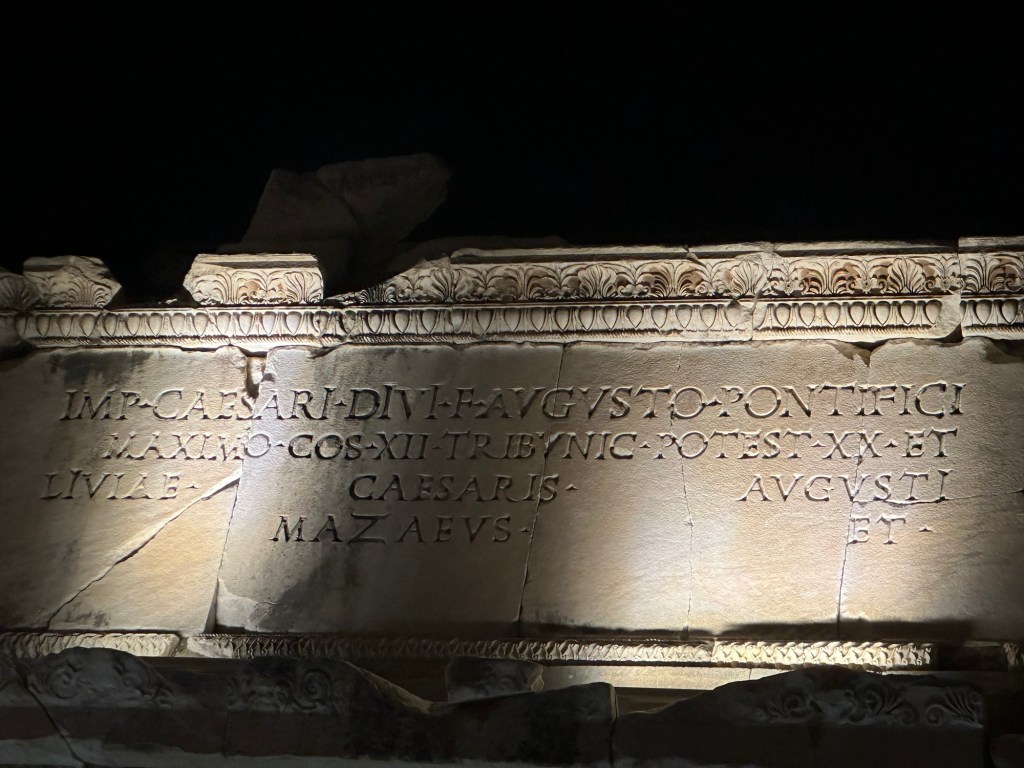
For the highlights of the Seljuk & Ottoman area, there’s the İsa Bey Mosque- a 14th century marvel; and the Ayasuluk Fortress, crowning over the town of Selçuk.
How to go:
Ephesus is open daily until 18:15.
For night visits, it’s open Wednesday to Saturday between 19:00 and 23:00.
Even at night, and with most areas closed, it’s vast—bring water.
It’s one of the top tourist destinations in the world. The fastest and cheapest way to enter is the Museum Card, though for night visits you’ll still need to queue and pay an extra 100 TL.
Where to stay:
Ephesus is 3 km from Selçuk, 8 km from Şirince, and 50 km from İzmir.
This time we stayed at Güllü Konakları at Şirince, a hillside village just 15 minutes drive away.
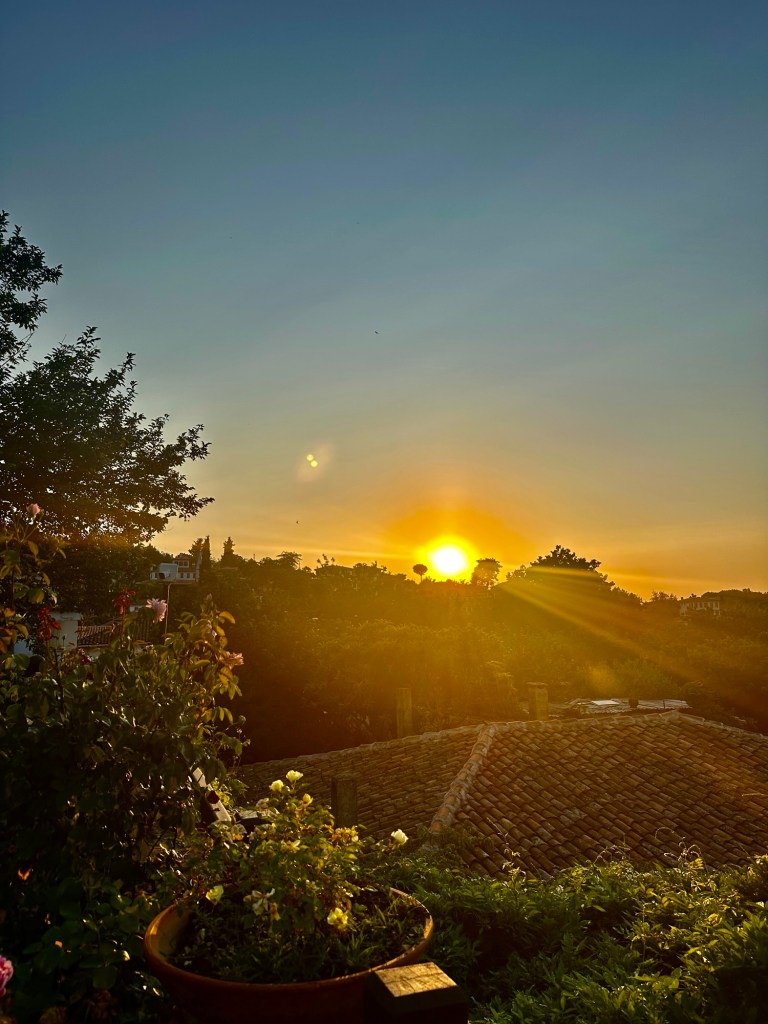
Famous for its stone houses with red-tiled roofs, narrow cobbled streets, and lush vineyards, Şirince was once a Greek settlement and has preserved a unique, timeless atmosphere. Cozy inns, artisan shops, and cafés serving local wines and fruit liqueurs add to its charm—though it can get crowded and touristy during holidays.
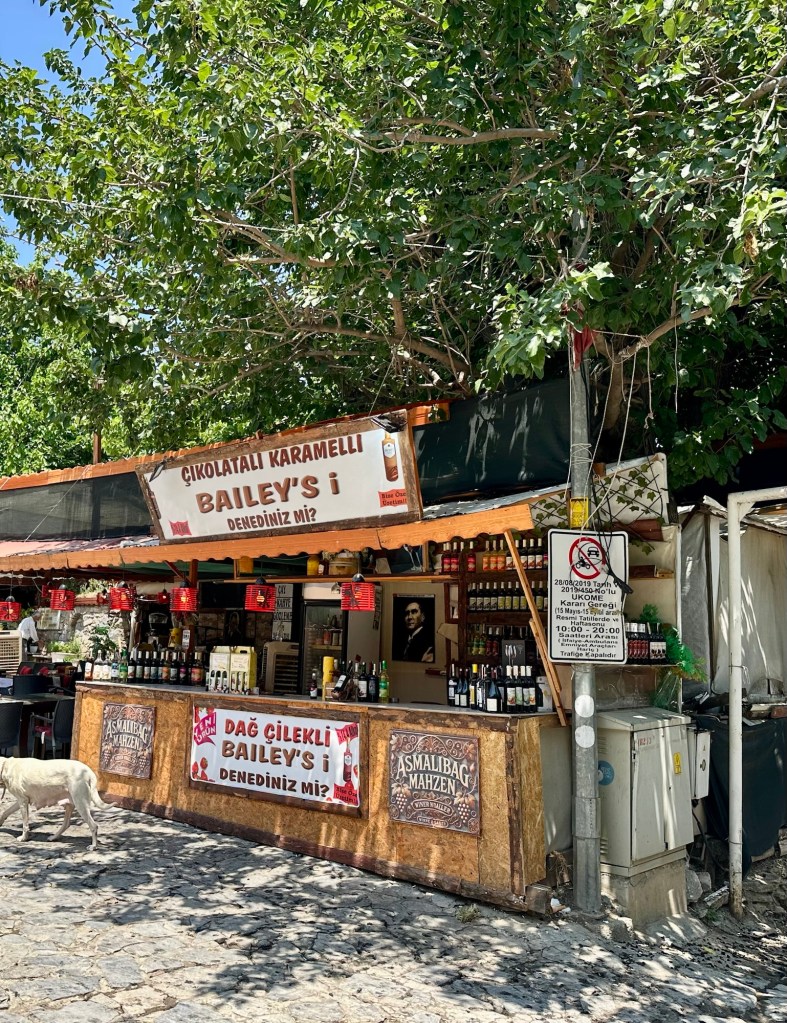
Try wine tasting in one of shops around the square. The wines are not especially great, but the imagination and creativity of the wine makers make the experience fun.
We loved our stay at Güllü Konakları, a century-old mansion surrounded by vineyards, lavender fields, and olive groves, restored with timeless elegance. It was a joy to relax at the terrace overlooking the hills, with a glass of ice cold Narince at the end of the day.
A few notes:
It saddens me to see that, apart from some beautiful corners, Selçuk is growing with little thought for aesthetics—a shame given the area’s extraordinary historical and natural beauty, not to mention the hundreds of thousands of tourists that pass through there each year.
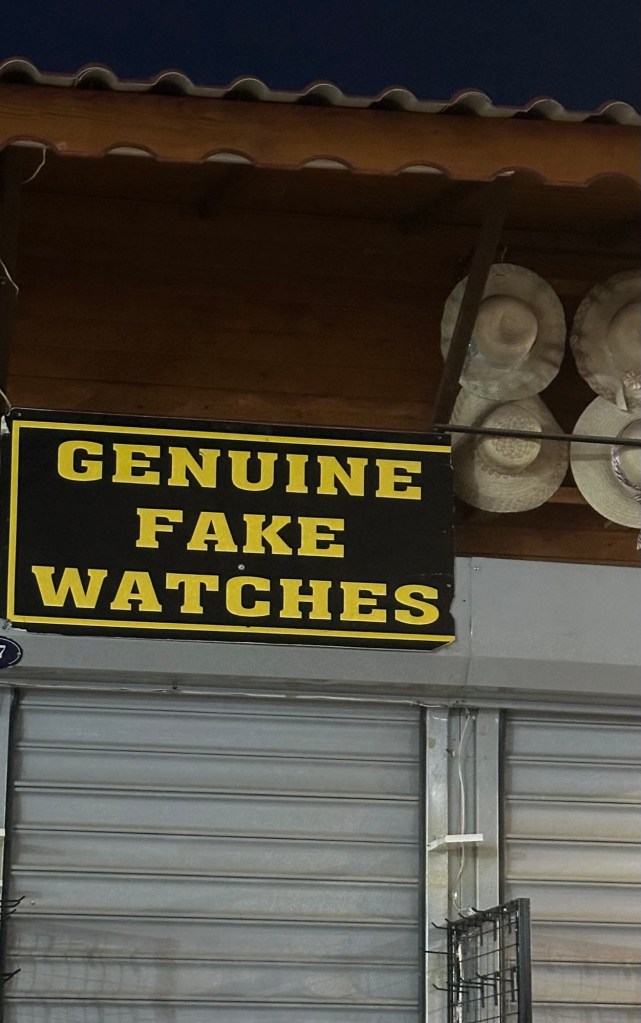
The entrance to the Ephesus site is lined with shops and cafés selling everything from souvenirs, ice cream, and water to Ottoman-style fezzes and faux designer bags. Even by day, they’re not particularly charming—but at night, with their shutters down, they look downright depressing. Of course they need to be there, but couldn’t they be more attractive?
Just asking.
 CherryPicks