
Last year, I’ve spent an incredible month in island hopping the Pacific Islands with my husband and a group of friends. We have started at Tahiti and ended up in Fiji, cruising and sailing most of the 3400 km in between.
We’ve visited beautiful islands, met lovely people who left their marks on our journey, and made unforgettable memories. The nature and the culture awed us all.
Among all, for me the best part might be the time we’ve spent at Bora Bora.
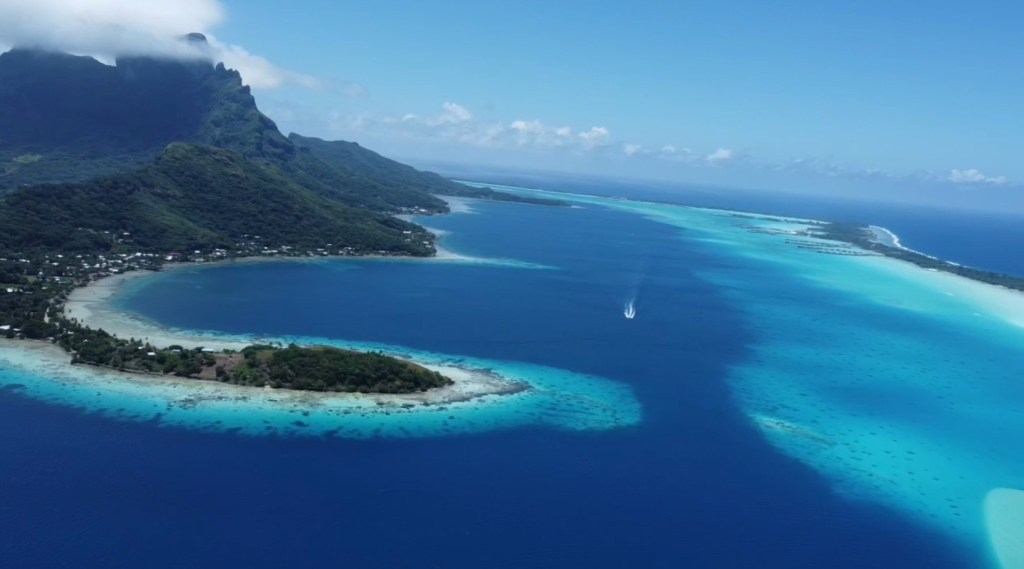
We have rented a 42 feet catamaran – the Vaihea, meaning Misty Waters in Polynesian – from the Moorings base at Raiatea and sailed to Bora Bora.

The distance between Raiatea and Bora Bora is about 25 knots or just above 3 hours. The weather was overcast that day, the aft winds and ocean swells helping our passage. The waves were about 1.5 – 2.0 meters, which is normal for the Pacific.
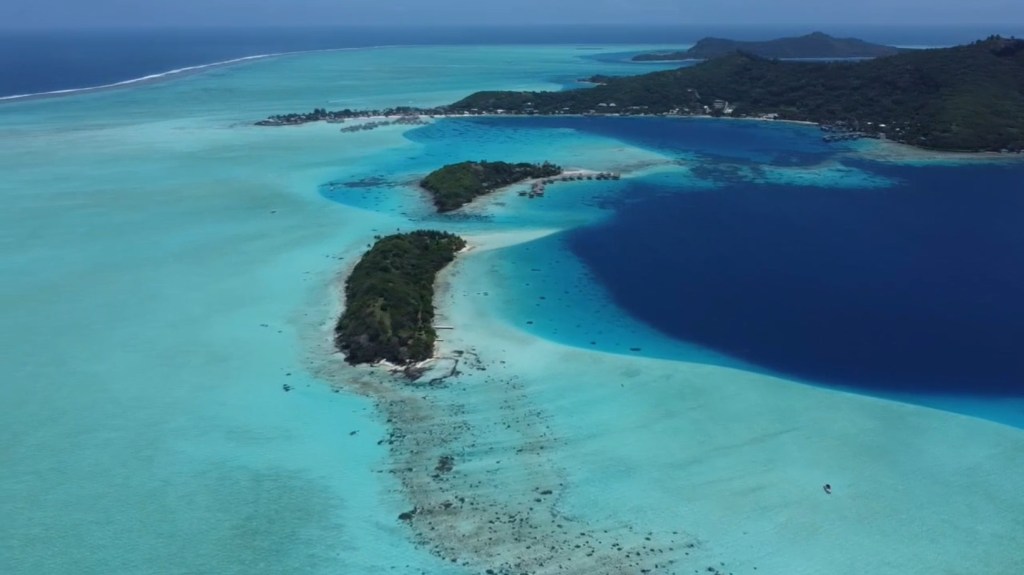
Bora Bora is a natural fortress. The island is encircled by a lagoon, which is itself protected by a barrier reef. This natural formation creates a turquoise haven ideal for sailing and snorkeling, but makes the approach to the island somewhat tricky.
Navigating the reef requires attention. But the reward is unforgettable: you’re sailing in an enormous natural aquarium, with the island and motus rising like emeralds from the sea.
Some navigation tips :
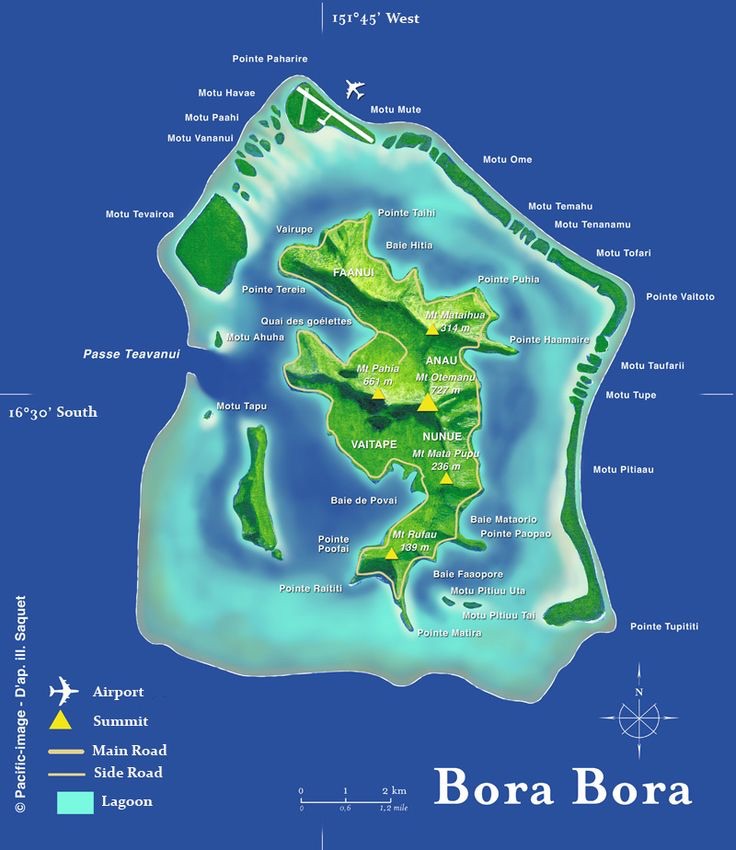
– Teavanui Pass, the sole navigable entry point through the barrier reef is located on the island’s western side near Vaitape. There are small islands formed along the reef, that are called the motu.
– The pass is well-marked with red and green channel markers. Red to port, green to starboard when entering the lagoon. Red markers also indicate landward side and green markers indicate seaward.
– Inside the lagoon, numerous coral heads, – bommies in local lingo – rise from the seafloor—some just beneath the surface. Keep an eye for them, especially at shallow anchorages.
– Anchoring is restricted to smaller vessels, around designated areas. All boats over 10 meters are required to use mooring buoys.
– Mooring buoys can be booked via local services like Bora Bora Mooring Services (BMS). We got a 30% discount for booking in advance and paid 4,000 XPF per night. (1 USD = 107 XPF) . The BMS also collect garbage from the boats, free of charge up to 30lt.
– In the islands, cash is king. Even in Tahiti, most places, even some airbnbs prefer cash to credit cards. The trouble is, they don’t tell you that when you’re making the reservation, but save it as a surprise for your check-in. There are many ATMs around, but they have daily withdrawal limits. So, we made a point of having some extra XPF , just in case.
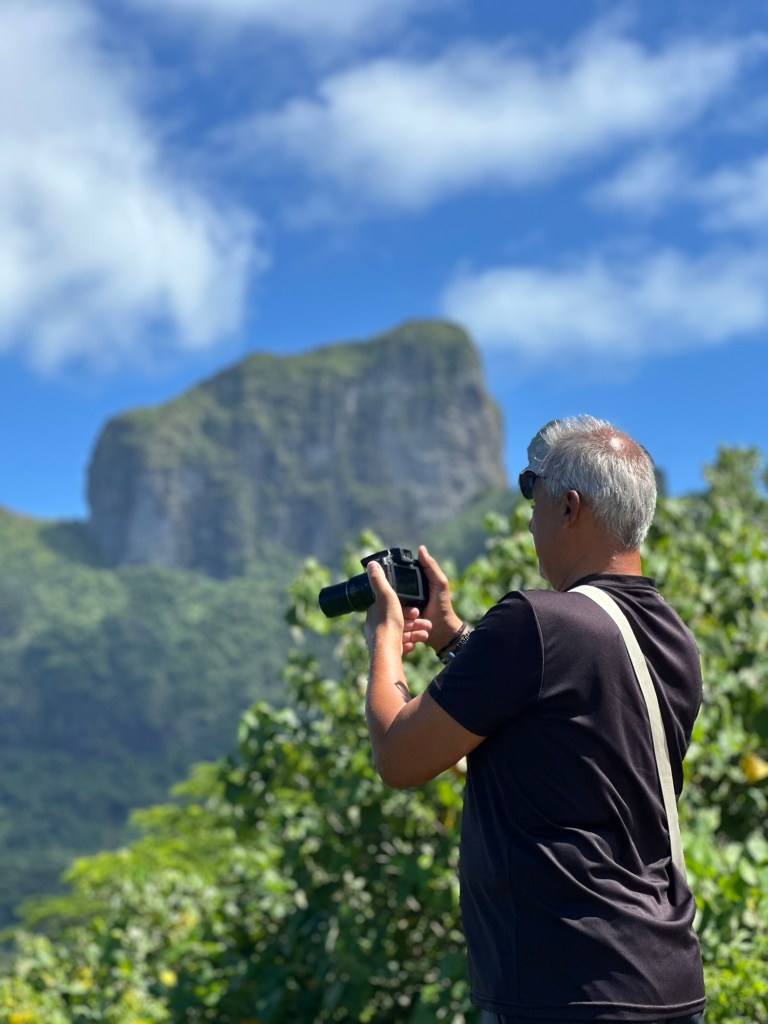
The island was first known as Pora Pora, which translates to “first born.” Bora Bora is said to have been the first island pulled from the waters by the god Ta’aroa after Raiatea was created. Additionally, we’ve been told that there is no equivalent to the “B” sound in Tahitian. So when Captain James Cook and early settlers came to the island, they misheard the words of the natives, which eventually led to the rest of the world referring to it as Bora Bora.
The first Europen to lay eyes on the island was a Dutch explorer, although he didn’t land on Bora Bora. That honor went to James Cook, who first visited the island at 1760.
Bora Bora became a French protectorate in the 19th century and is now part of French Polynesia. It reflects on the language, the culture and the cuisine. Mix a bit of French joie de vivre with the Polynesians’ deep connection with nature, and you get a culture that feels both joyful and grounded—where life’s simple pleasures are savored slowly, and everything moves in tune with the sea, the land, and the warm, easy smile of the islanders.
Bora Bora might feel like the ultimate peaceful escape today, but during World War II, it played a surprisingly strategic role. In 1942, the United States selected the island as a South Pacific military supply base, codenamed “Operation Bobcat.” Over 5,000 American troops were stationed on the island—more than the local population at the time. The U.S. military also built an airstrip , which is still in use today at Motu Mute Airport and they’ve dredged and extended the Teavanui Pass.
Though Bora Bora never saw combat, it was a vital refueling and supply hub. Locals often recall stories passed down about the American soldiers, who brought jazz music, canned goods, and Coca-Cola to this remote outpost.
If you haven’t already read it, I strongly suggest James Michener’s delicious book; Tales of the South Pacific . It tells the story of the Pacific islands and its people during WW2 through the eyes of American soldiers; it’s not a book on war but how two very different cultures meet and connect – through shared stories, exchanged songs, and quiet gestures that bridged oceans of difference and changed both for the better. It’s a great read, with touching anecdotes and a deep respect for those lands.
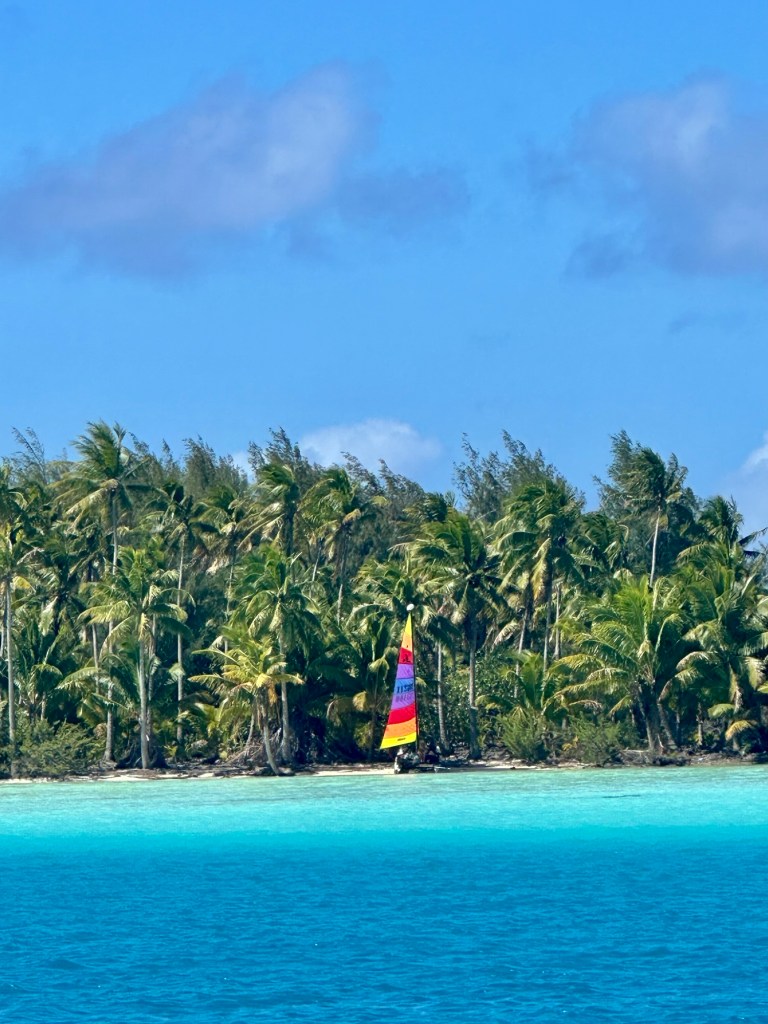
Some places bring an image to mind; exotic, beautiful, somewhat unreachable. Just thinking about the name of the place excites. Bora Bora has always been one of those places for me. Spending a few days there, I understood why. Bora Bora is a combination of magic and tranquility. It’s not just another tropical island that you cross over on a bucket list.
Its raw beauty is really something else. It’s all about the nature: the misty mountain, the brilliant shimmering lagoon, the vanilla scent that hits you almost everywhere, the incredibly rich underwater. I dream about it everytime I feel down.
They say Bora Bora was the firstborn of the gods. That when Ta’aroa, the great creator, shaped the world from the void, this island rose from the sea before all others—sacred, perfect, and powerful.
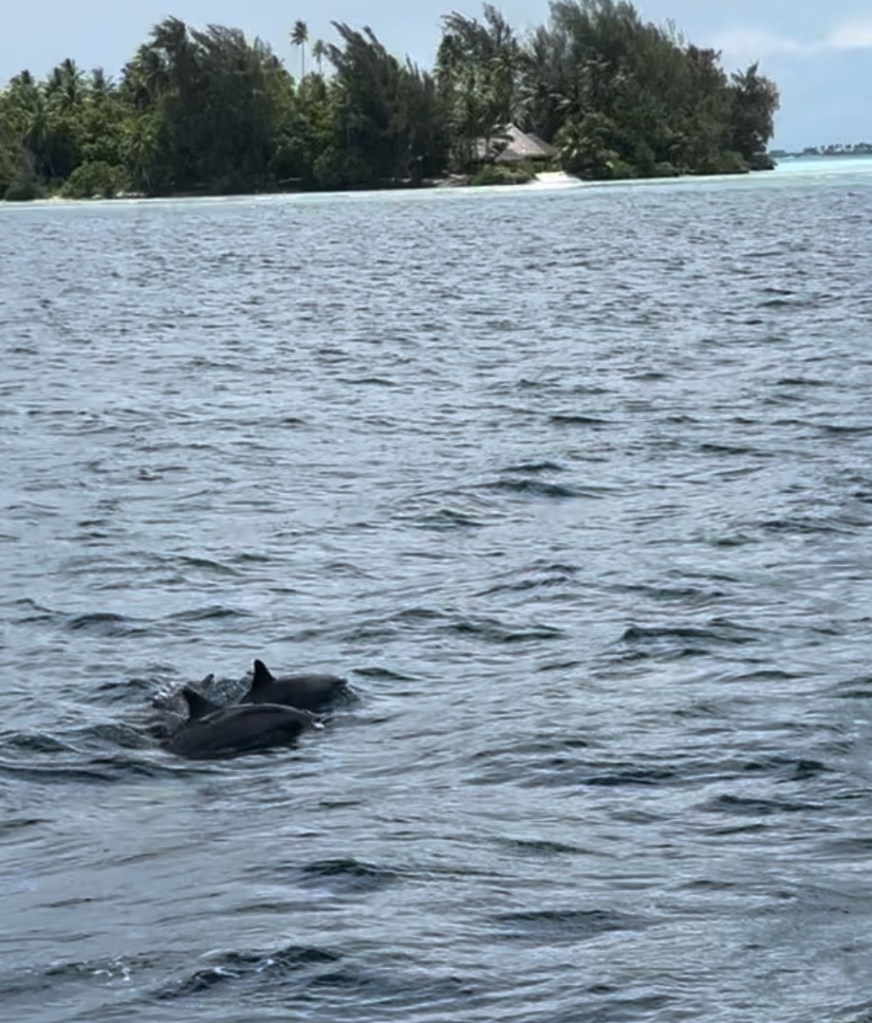
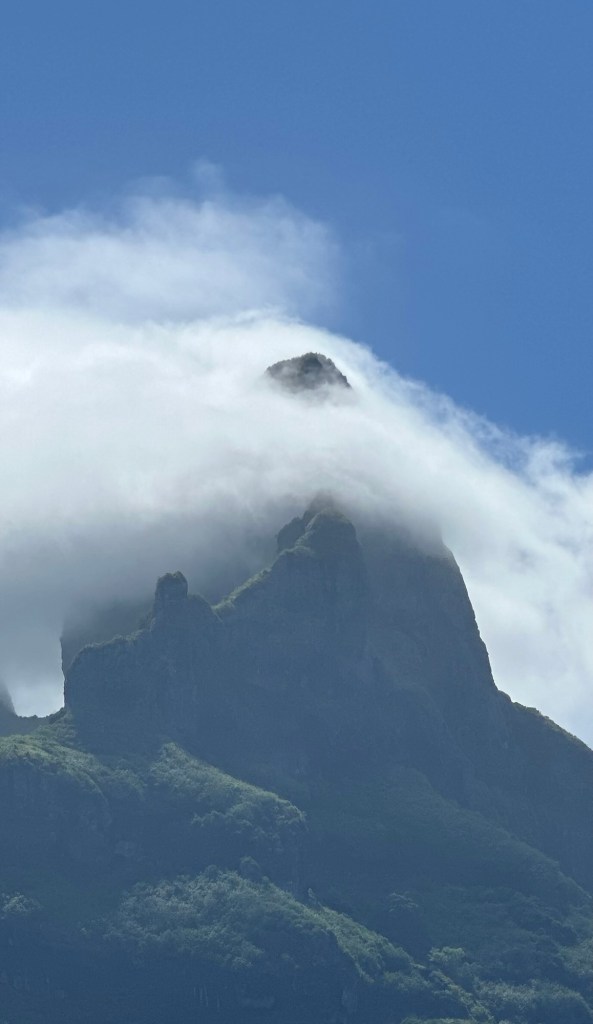
As our catamaran slipped through Teavanui Pass, Bora Bora greeted us with dolphins leaping joyfully at our bow – nature’s own way of saying ‘Welcome’. Everything around me started to remind me of that legend. The magical welcome that the island just offered us, the beauty of the lagoon, the color of the sea. And there, rising from the center like guardians stood Mount Otemanu, flanked by her twin, Mount Pahia; forever watching and protecting.
The mountain , the remnant of the ancient volcano that formed the island millions of years ago, is a shapeshifter. It changes, according to the light and according to the angle, fueling many legends. The giant warrior turned to stone, or twin spirits—lovers—frozen forever by the gods. I spent hours looking at its different sides, memorizing its many facets in different hours of the day.
According to another legend, certain parts of Otemanu were tapu (sacred & forbidden) and only high-ranking priests or chiefs could approach them. These areas were believed to contain mana—spiritual energy. One still could feel this energy, especially during the early hours of the morning.
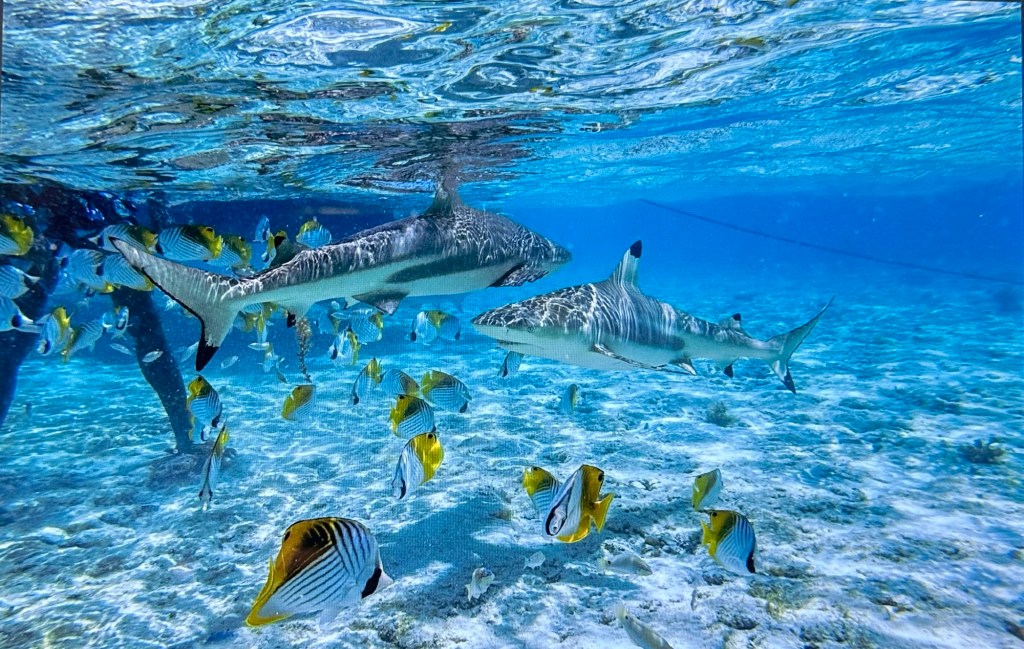
We took our first mooring at Baia Tehou. After a light lunch, we went snorkeling, and discovered schools of moorish idols, butterfly fish, black tip sharks , trigger fish and brain corals just under our boat. It was heaven.
The next day we went grocery shopping at Vaitape, the main village, where we found a supermarket named China Lee. We have done our main shopping at Raiatea – which deserves its own blog post- ; so we just needed bread, fruit and wine. The first two items were ok, but when we came to the cashier, we learned that it was forbidden to sell alcoholic beverages after noon on Sundays. Which came as a bit of a surprise, especially since we weren’t even aware that it was a Sunday. Yeah, anyway.
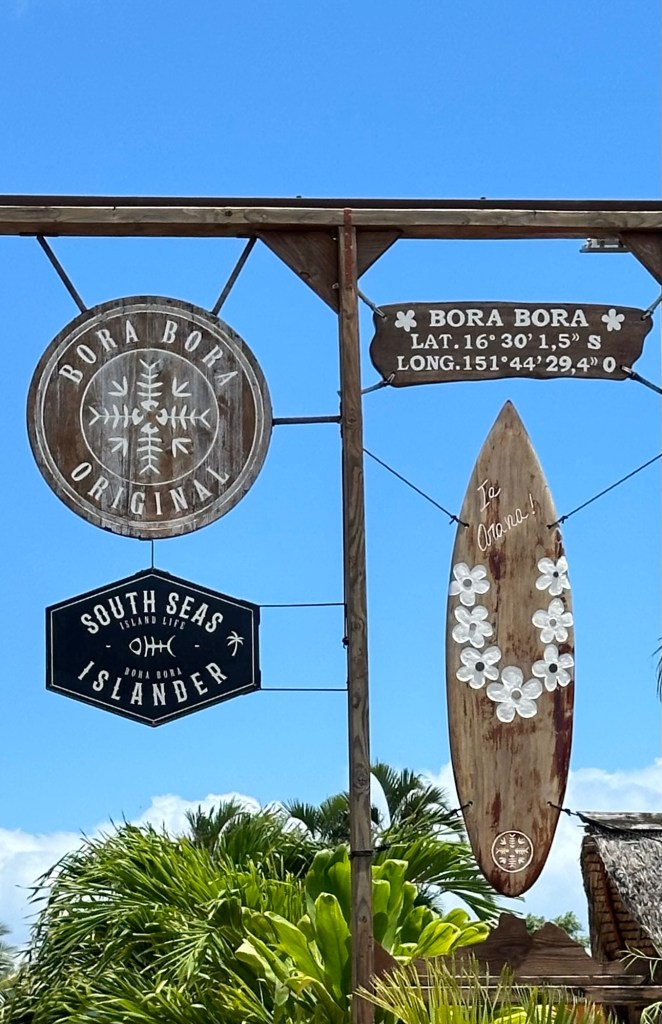
We visited Vaitape again on a weekday, and it turned out to be a charming place. Along the single street, there’s a bank, a wooden church, a couple of nice boutiques, art galleries, cafes and the inevitable Pearl boutiques. (Again, wait for my next blog for that).
We stumbled upon Bora Art Upstairs, a large studio on the second floor of a building. The owner, who was an artist in her own right, explained us different methods used by the local artists, often utilizing natural elements like tree barks, coconut husks, and shells. She also explained that, these aren’t just artwork or souvenirs; they’re expressions of mana—spiritual power—tied to land, lineage, and tradition.
One of the most striking traditional crafts is tapa making, where the inner bark of the mulberry tree is soaked, beaten, and stretched into thin sheets. It’s then decorated with natural dyes made from roots, charcoal, and clay, often stamped or painted with geometric patterns and motifs representing gods or nature.
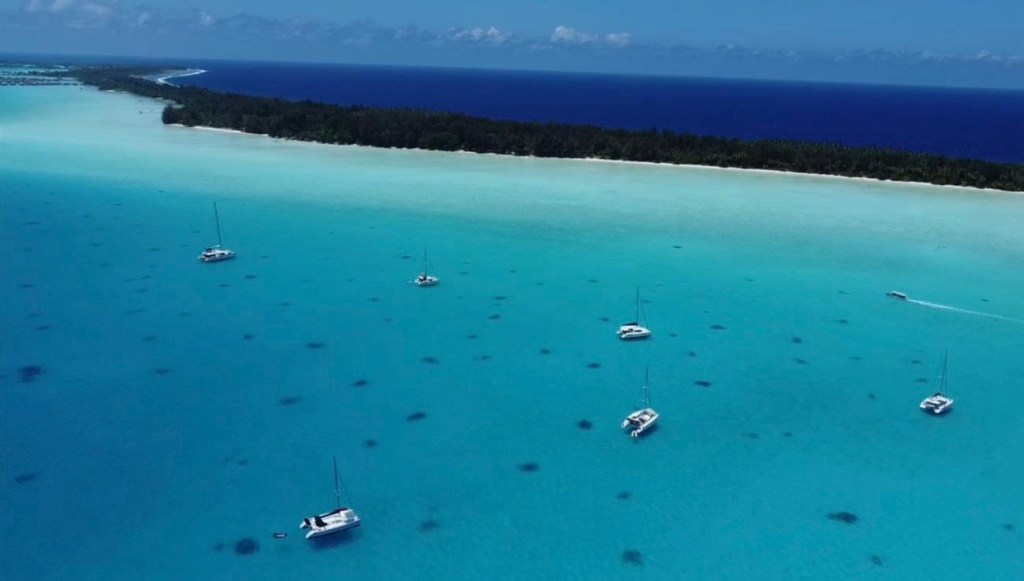
Another day, we sailed to the other side of the lagoon, and took a mooring at Taurere just in front of Piti Aau. En route we passed the luxury hotels that made Bara Bora the playground of the rich.
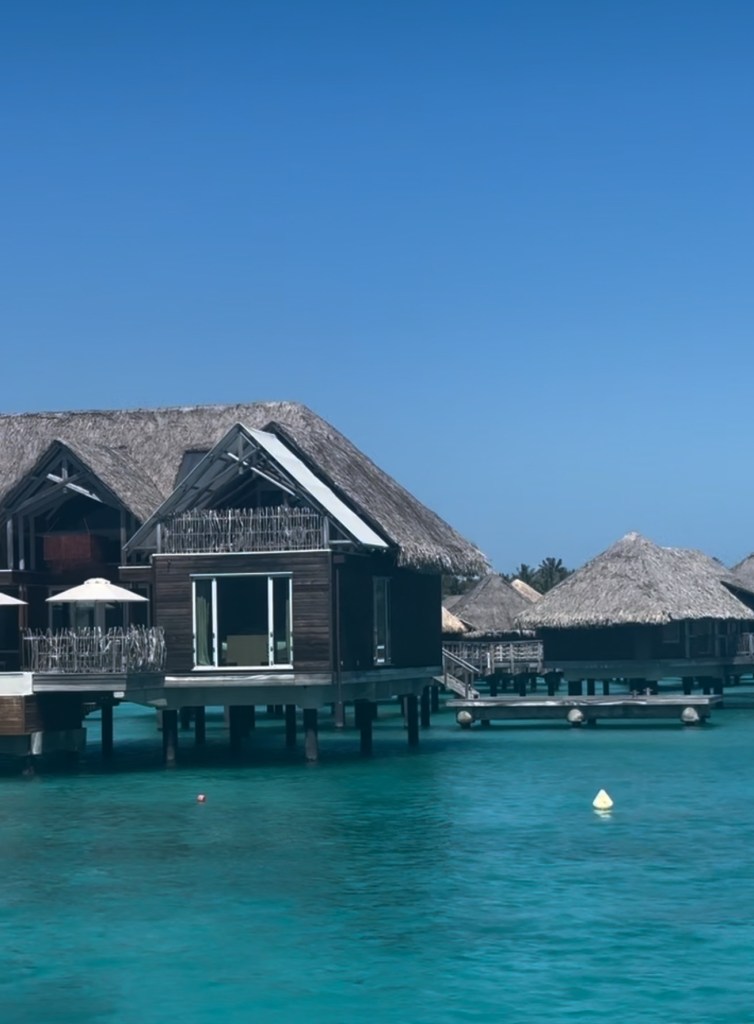
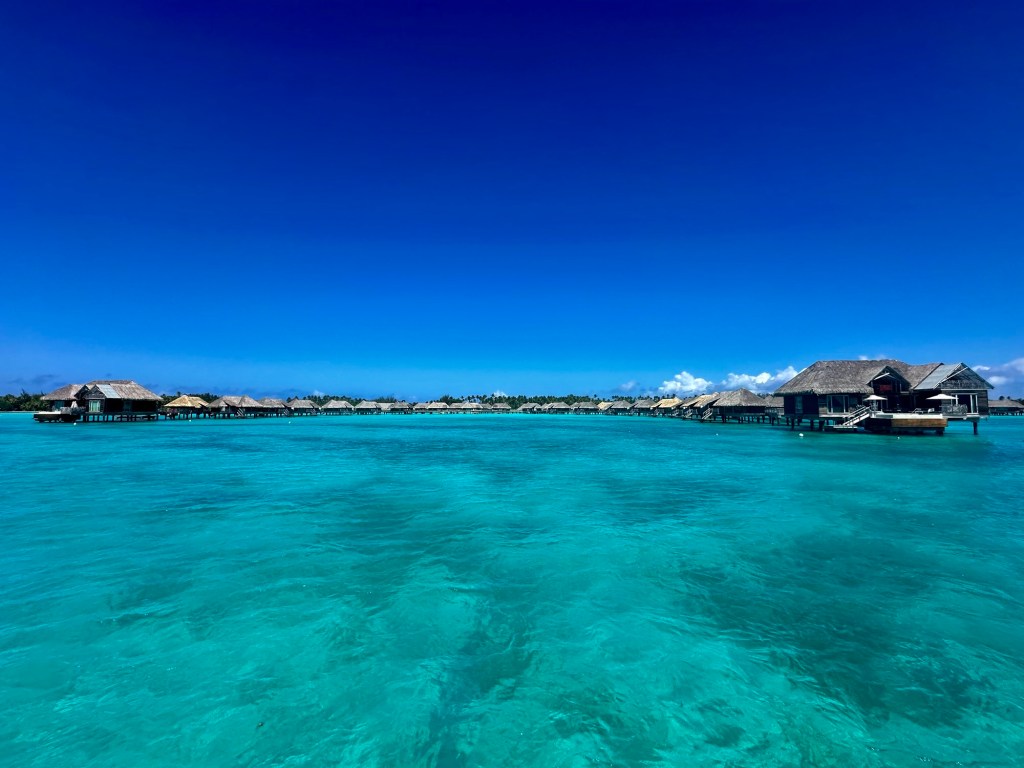
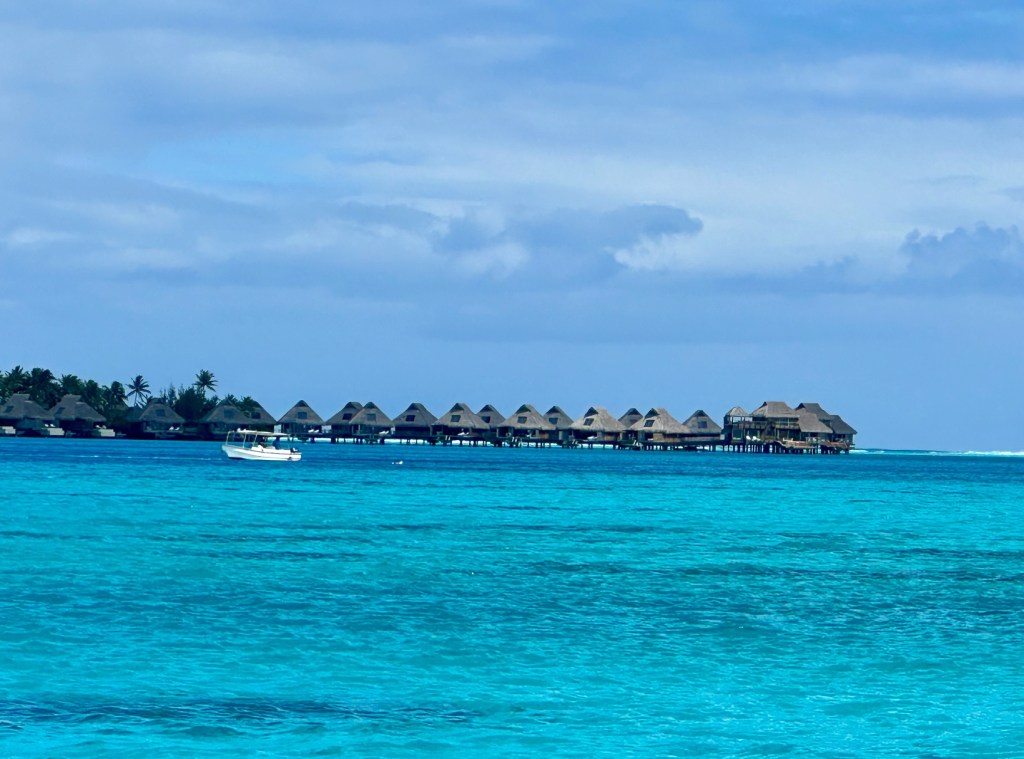
Bora Bora is home to some of the most luxurious hotels in the world, where thatched-roof overwater bungalows stretch out over turquoise lagoons and offer direct access to the sea. These resorts blend Polynesian style with five-star amenities, from private plunge pools and glass floors to world-class spas and fine dining with sunset views of Mount Otemanu. Of course, the experience they offer comes with a hefty price tag. Escape to paradise ain’t cheap.
That night, we had a unique dining experience at a family owned barbecue / restaurant called Arii Motu Grill on the small beach of Piti Aau. We were the only guests there, and loved the experience.
Piti Aau means ‘Double Roots’ in Polynesian. It is the perfect name for this lovely family, who owns a coconut farm on the motu; and recently opened a small restaurant that they built themselves, just a few miles away from Michelin-star cuisines of the large hotels.
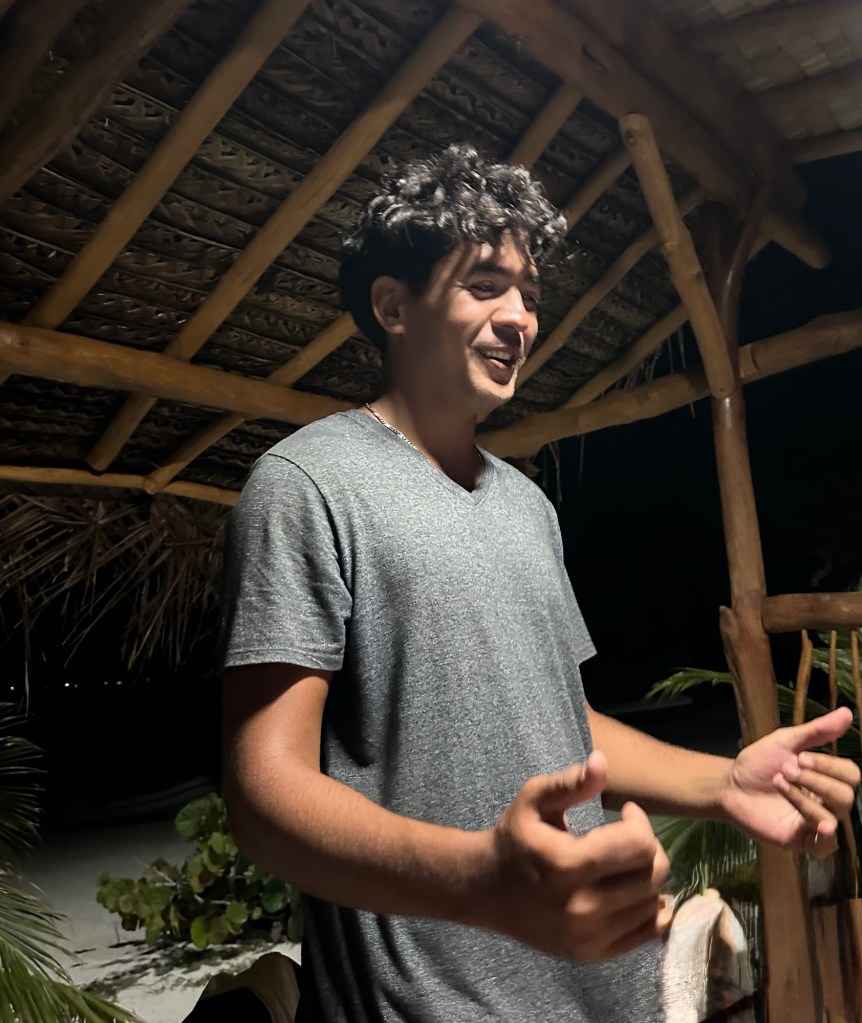
The father cooked our food while the youngest son, Arii told us the story of his family and their hopes for the future. He was studying, but came back to help with the family business. Very proud of his island and his heritage, his dream was to travel to Canada. Why Canada, we asked. He told us that he wanted to experience something as different as possible. Plus, he was curious about the cold weather.
That night we dined on very generous portions of Poisson Cru, veggie rice, mahi mahi steaks and barbecued chicken. They were all to die for, especially the Poisson Cru and the mahi mahi steaks. The desert was po’o, a delicious combination of banana and tapioca starch, served with coconut milk. We went for second helpings of everything.
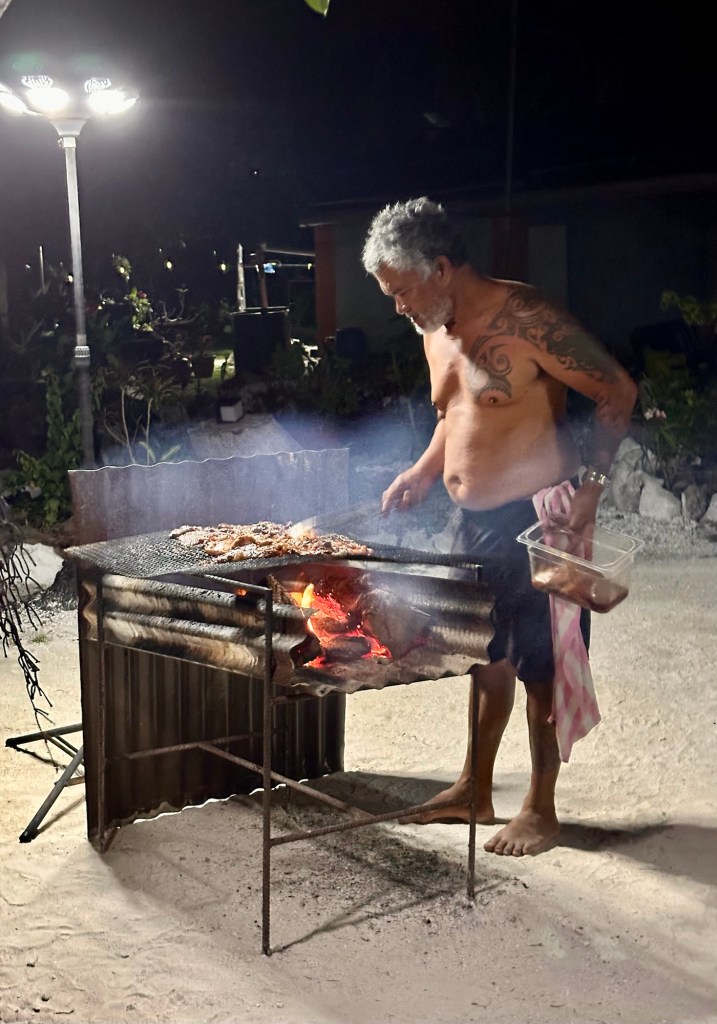
It was a dinner to remember, under the Southern skies with warm sands beneath our feet. With rum punch and wine, it was 10,000 XPF per person, well worth the money.
I liked Arii and his family, for daring to create such a place for sailors and dreaming about a better future for their family. I wish them all the success in the world.
The next day we went snorkeling at the Aquarium and Coral Garden. We left early on our dinghy and had the place just for us almost all morning.
When I slipped into the warm, crystal-blue water just off Bora Bora’s famed Coral Garden, I felt the world slow down around me. Sunlight was dancing through the surface, painting the reef below in an otherworldly tapestry of living color. There were corals of different colors and types. And the fish : moray eels half hidden among the corals, moorish idols dancing, tangs, mini damsels surrounding mushroom corals and schools of other tropical fish. And of course, the black tipped sharks, swimming with graceful movements, coming directly at me and turning with a sudden movement of their tails.
I’ve dived and snorkeled at many places before. This was one of the best experiences.
The return trip to our catamaran was somewhat adventurous. The motor of our dinghy decided to play tricks on us, and we had to find a makeshift solution. It was a very slow and wet trip.
Later, we sailed back to our first mooring site, at Baia Tehou and had a surprise visitor on the way; a Va’a paddler. He was riding our wake, making around 6 knots. His skill and concentration impressed us all.
We later learned that Va’a paddling is deeply tied to Polynesian culture and heritage. It’s not just a sport but a continuation of ancient navigation and seafaring traditions that helped early Polynesians explore and settle vast areas of the Pacific and even reach Hawaii. He was probably preparing for the Hawaiki Nui Va’a, one of the most iconic and prestigious outrigger canoe races in the South Pacific. It covers four islands – Huahine , Raiatea , Taha’a and Bora Bora ; crossing open ocean for almost 120 km.
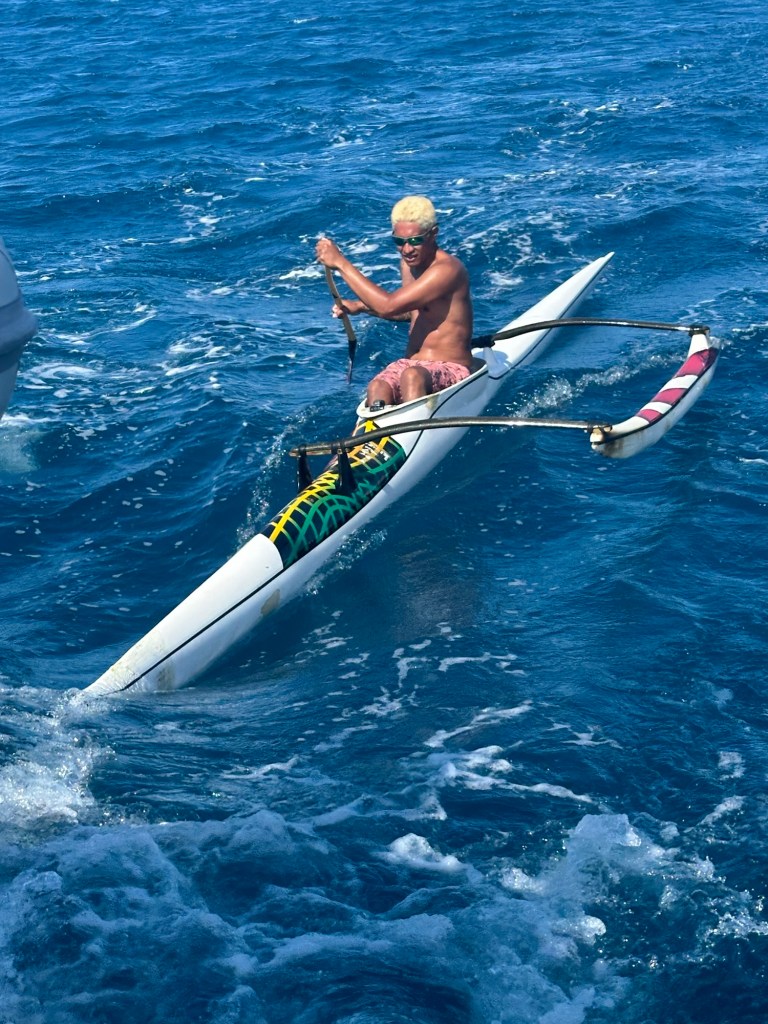
Va‘a paddlers have a kind of courage that’s deeply inspiring. Watching them glide across the ocean—strong, focused, and in sync with the waves—you see more than just skill. You see heart, tradition, and a deep respect for the sea. It takes real courage to face open waters with nothing but a paddle and teamwork, but I guess that’s what makes the Va‘a so special for these people: it’s not just a sport, it’s a way of life carried forward with strength and soul.
After such a full day, dinner was on board that night, with fish cakes, potato salad and chilled Sauvignon Blanc. The real treat were the reef sharks and stingrays that came to the underwater lights of our boat.
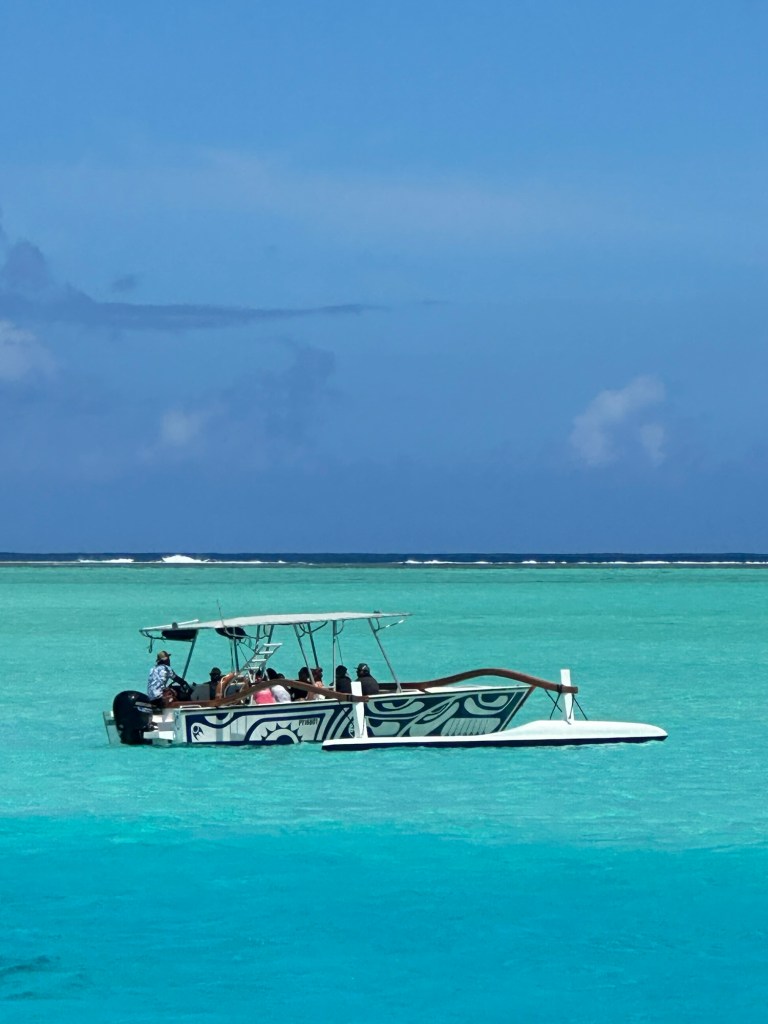
The next day brought us spotted eagle rays. We set out chasing them, following the canoes of the hotels —and stumbled into an underwater spectacle that felt straight out of a dream. Nearly ninety of them appeared, soaring through the blue seas, moving with powerful, effortless grace.
At the helm were two leaders, swimming slightly above the rest and signaling the turns, and the whole formation responding like a well-trained fleet. It was a dance of instinct and precision—wild, beautiful, and completely mesmerizing.
We hovered above them for long breathless minutes, almost in a trance, unable to look away.
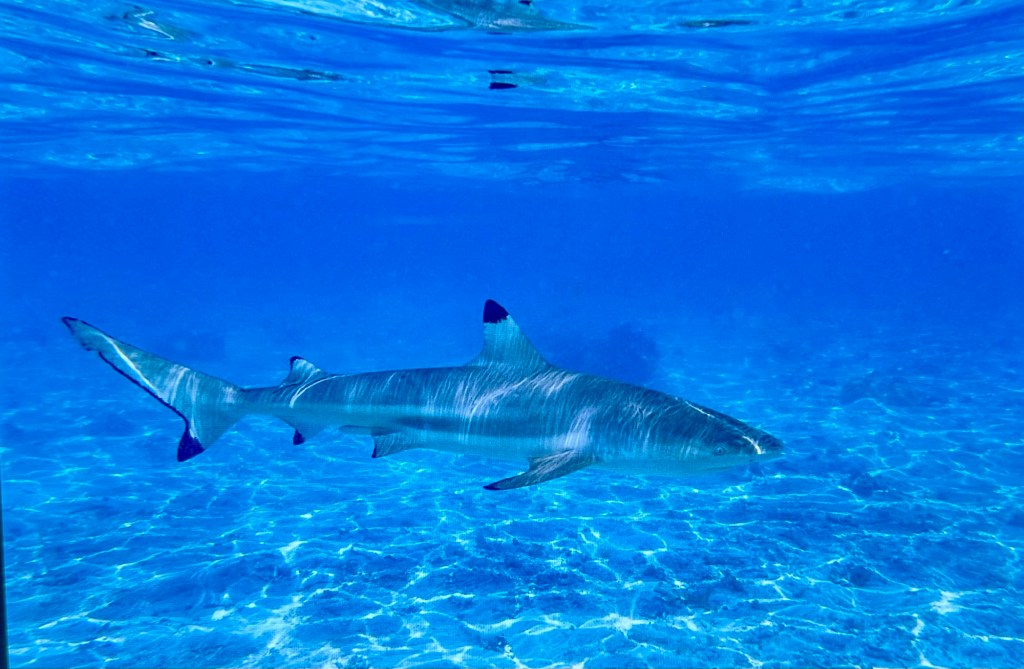
And just when we thought the day couldn’t get any better, we plunged into another thrill—swimming side by side with sleek reef sharks and ghost-like stingrays, the ocean pulsing with life and raw energy.
Back on board, we fed giant triggers and butterfly fish with bread. Even some curious reef sharks came to see what the fuss was about.
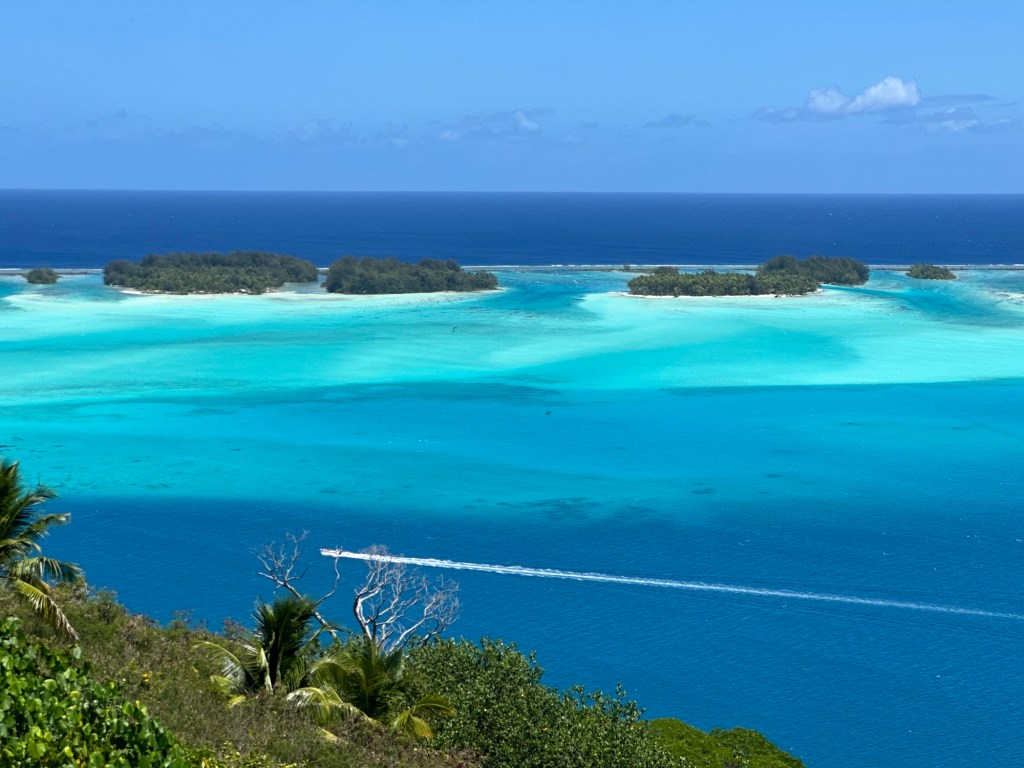
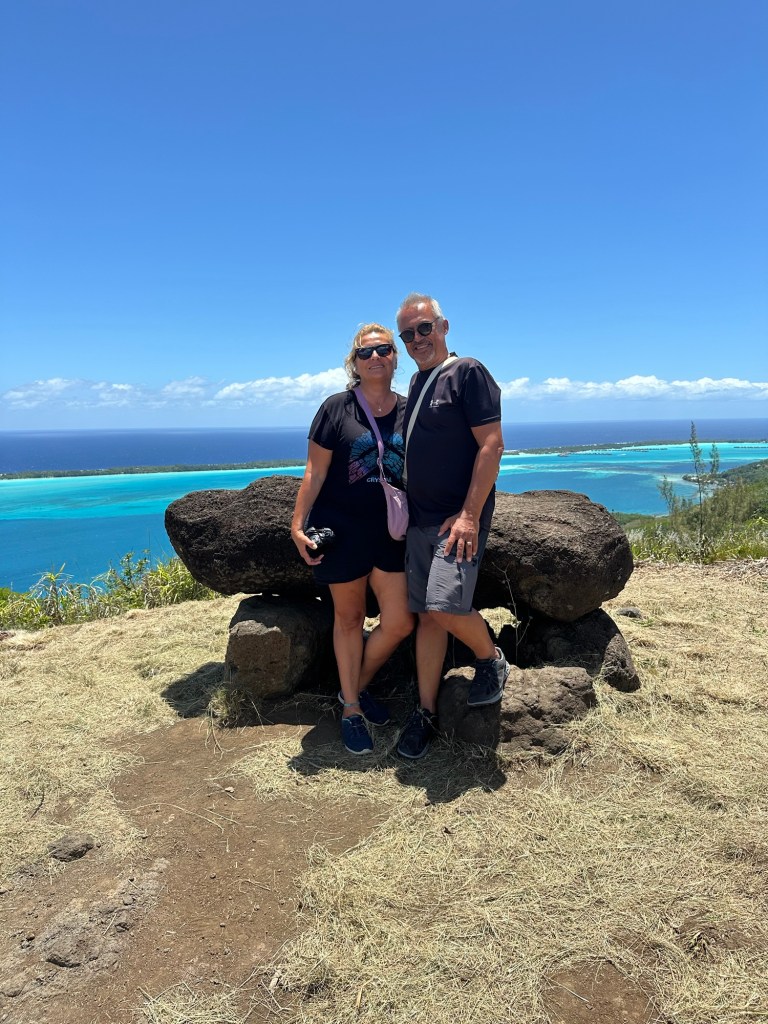
Our Bora Bora adventure kicked into high gear with a rugged jeep safari around Bora Bora’s untamed interior. Bouncing up red dirt trails and weaving through lush jungle, we ascended the steep slopes of Mount Otemanu, the island’s ancient volcanic peak. The climb was exhilarating—part off-road thrill, part primal trek. At the top, the view hit us like a wave: a sweeping panorama of the turquoise lagoon, coral reefs like brushstrokes in the sea, and motus scattered like pearls on the horizon.
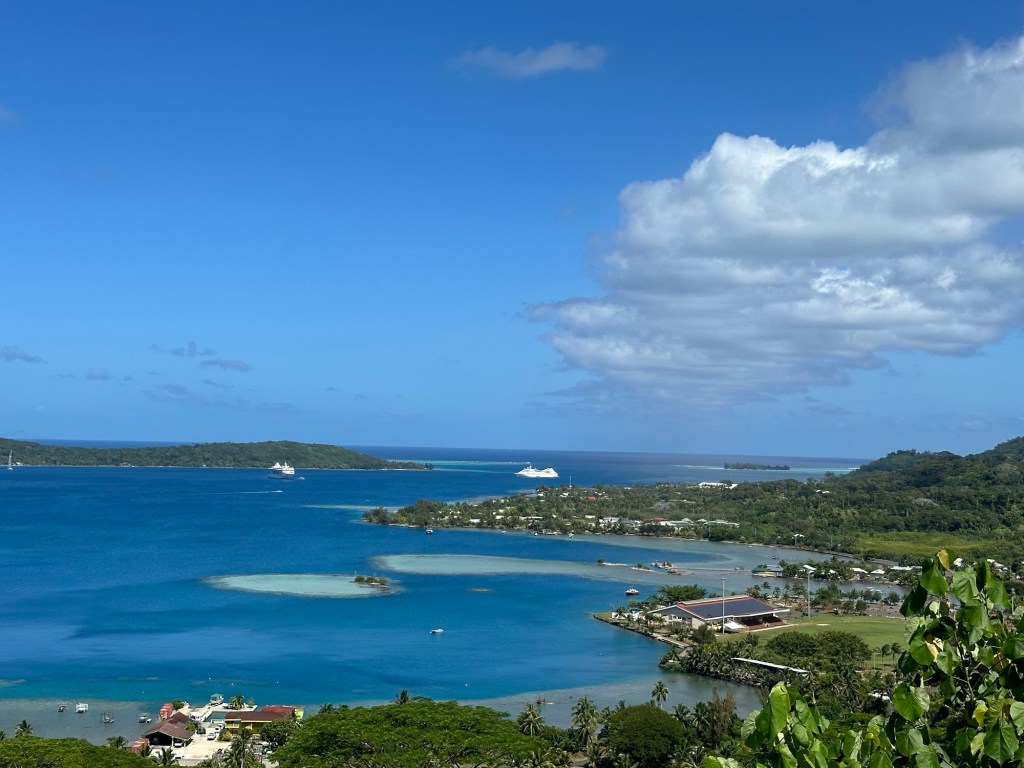
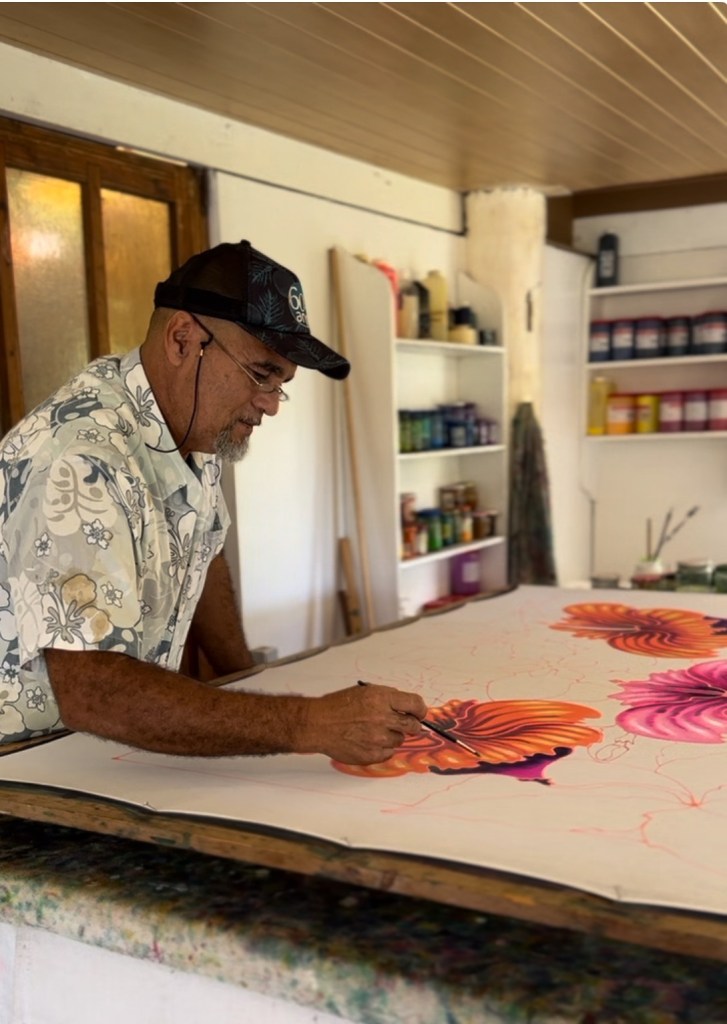
After a very steep descent, we slipped into a slower rhythm, visiting a local pareo studio tucked among the palms. There, we watched artists bring vibrant fabrics to life, hand-painting each piece with bold island colors and traditional Polynesian patterns—a beautiful blend of creativity and culture.
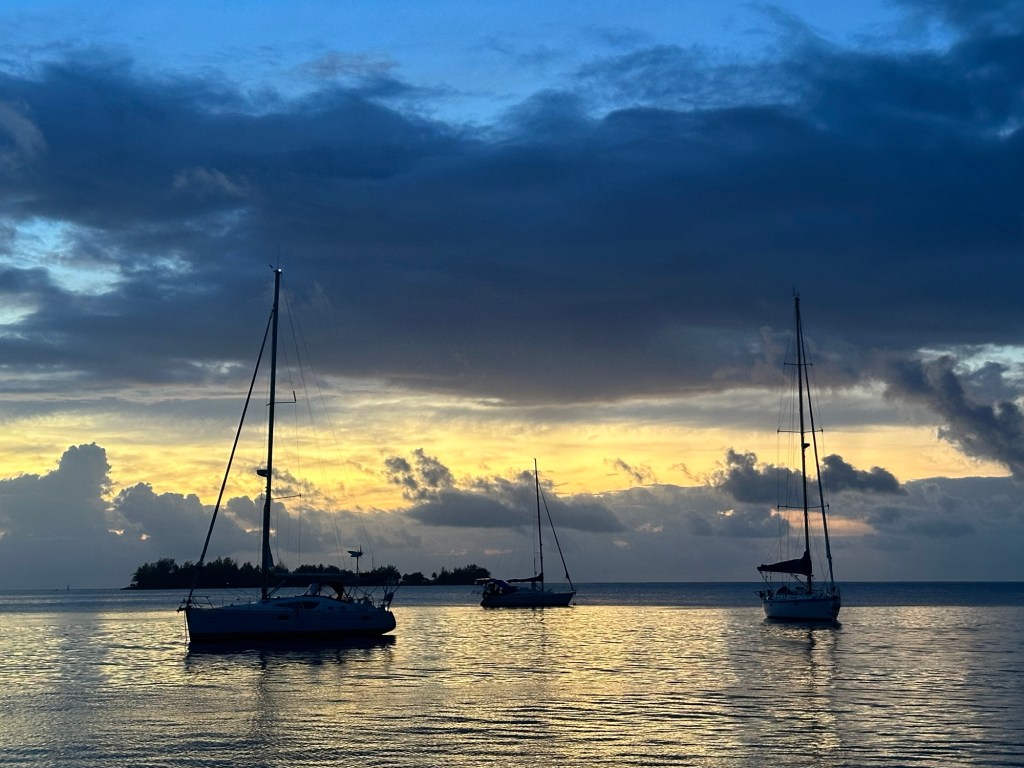
For our last dinner at Bora Bora, we motored over to the Bora Bora Yacht Club and picked up a mooring ball—one of about twenty available. It’s a popular anchorage, so we arrived around quite early and had no trouble finding a spot. The atmosphere was laid-back, with slow but ultimately decent service. While the food wasn’t especially inventive, it was still satisfying, and the wine and cocktails more than made up for it. That evening, there was a Polynesian dance show. We enjoyed it more than we’ve ever expected.
Polynesian dances are a vibrant expression of storytelling, history, and spiritual connection. With rhythmic drumbeats and fluid, powerful movements, dancers use their hands, hips, and facial expressions to convey legends of gods, nature, love, and warriors.
We also met the owner and manager of the Club, a fellow Turkish gentleman. Meeting a compatriot this far away from home made the night more memorable.
The next day found us sailing back to Raiatea.
Captivated by its raw energy, lush nature, vibrant underwater world, and rich Polynesian culture, I found my spirit renewed by this magical island.
I know I left a piece of my heart in Bora Bora—carrying its magic with me—and I’m counting the days until I can return.

 CherryPicks