
I said it before. Jordan is a land of layers and it’s a pleasure to uncover its secrets one by one. Please check my earlier post for practical information and cuisine of Jordan.
The country, shaped like a bird in flight on the east coast of the Jordan river is not large; in fact it’s pretty small with few natural resources, but it has always played a pivotal role in the struggle for power and riches in the region.
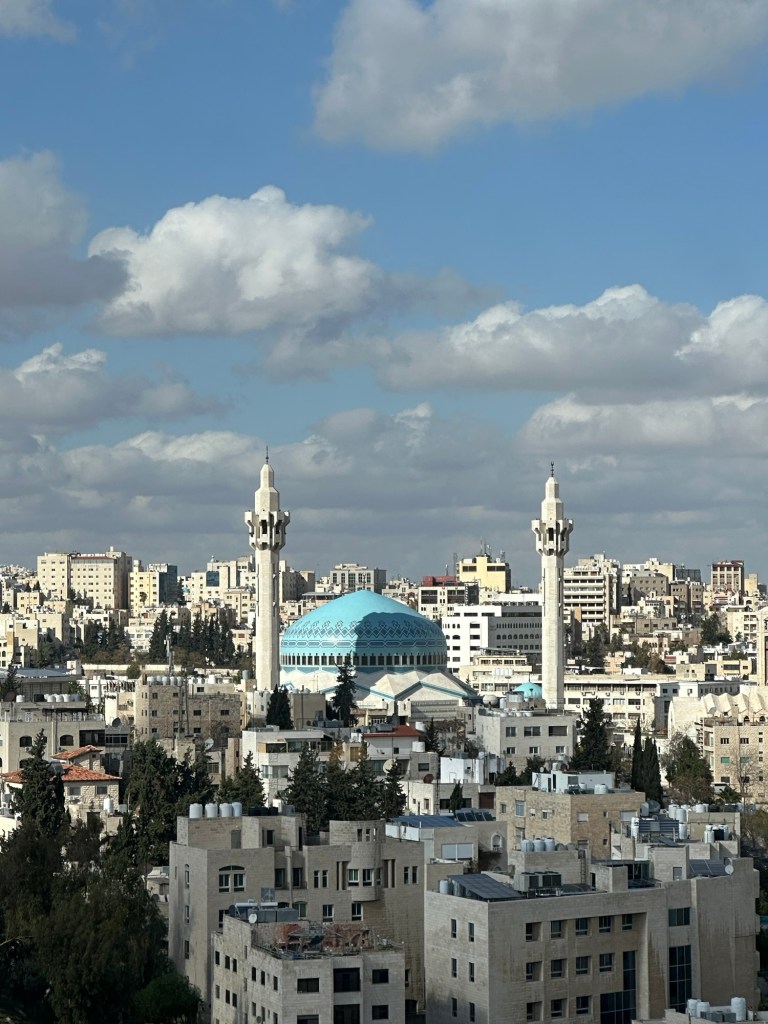
People were living in those lands for millions of years. The old Arab Kingdoms, Alexander the Great, Romans, early Islam Caliphates, Crusaders and Ottomans controlled these lands one after the other. As a result, there’re a lot of places to visit, ancient civilizations to discover.
We started our tour at the capital city, Amman; a modern and lively city, boasting a rich tapestry of history that spans to 8th millennium BC. Just a few kilometers away from Amman, some of the world’s oldest human statues were discovered at a site called Ain Ghazal or Spring of Gazelles. Great name for a settlement, n’est ce pas ?
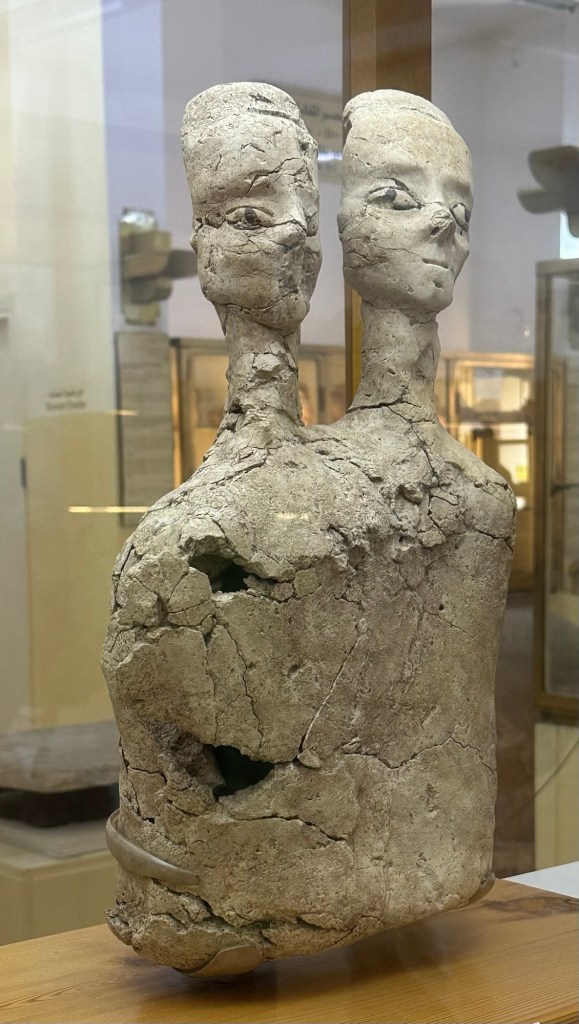
I like to imagine them as the chieftain’s sons, themselves best hunter-gatherers of the tribe, always in competition, but similar in essence. Maybe they posed for one of world’s earliest artists during a celebration to some forgotten deity.
Another great name for a settlement is Philadelphia, which was Amman’s name in 3rd century BC. Following the conquests of Alexander the Great, the region came under the control of King Ptolemy II Philadelphus. He renamed the city Philadelphia, meaning “brotherly love,” in honor of himself. Very full of himself, old King Ptolemy was.

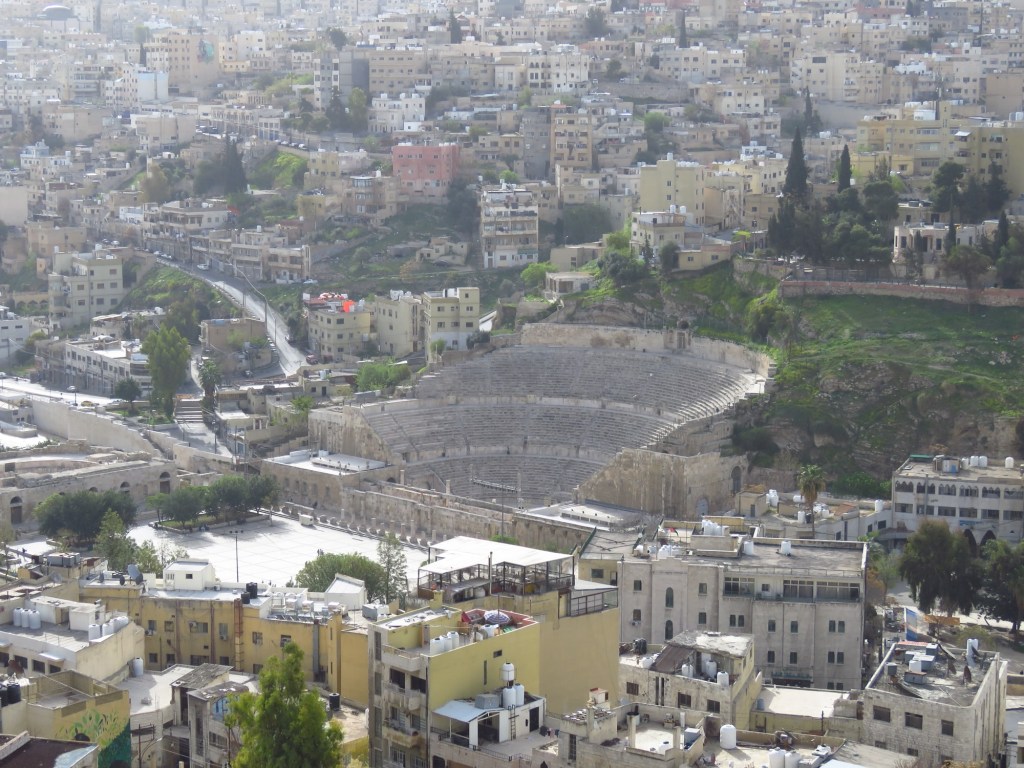
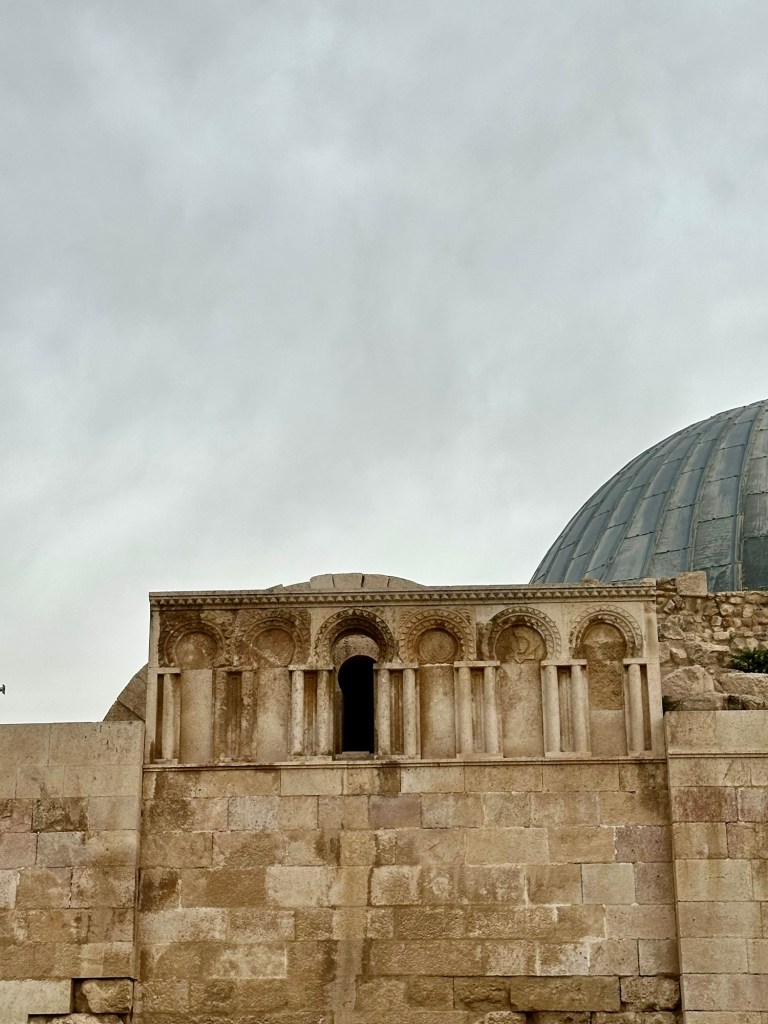
The Citadel of Amman is a must see. Temple of Hercules, Umayyad (Emevi) Palace and Byzantine Church are all built on the same hilltop, as well as the Archaeological Museum ; providing a very interesting and complete panorama of the city’s history. Speaking of panoramic views, the Citadel overlooks the modern city, with all its beautiful and chaotic architecture.
One of the most viral places in Amman is the Rainbow Street, with its cafes, shops and open market. Only go there if you have a lot of time. There are some interesting shops to wander around, but the waiters and shop attendants are constantly trying to grab you and sell you something you’ll never need.
Otherwise, Amman is full of quality accommodation and restaurants. One recommendation is Fakhr El Din, where the food and service are both top notch.
From there, we travelled east to visit the Qasrs, the fortified desert castles.
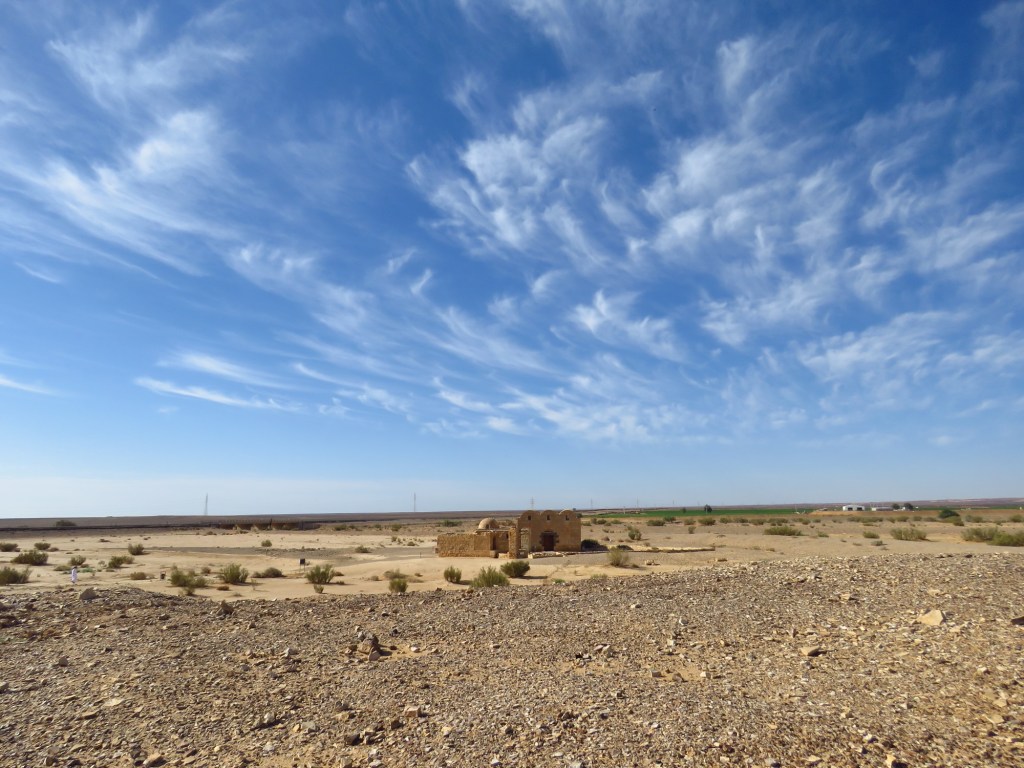
It was the first day of the Eid and while passing the villages, we saw many women and children, wearing their best, en route to visit their elders and family. What striked me were the many street vendors selling nothing but large crates of water, and local cars stopping to buy them. Later, when we passed a cemetery I understood. They were buying water to freshen up the burial places of their loved ones, a common practice in Islam.
Our first stop was the Qasr Amra, one of Jordan’s hidden gems—a small desert castle with a big historical and artistic punch. Built in the 8th century by the Ummayad Caliphate, it’s a UNESCO World Heritage Site and an exceptional example of early Islamic architecture and art.
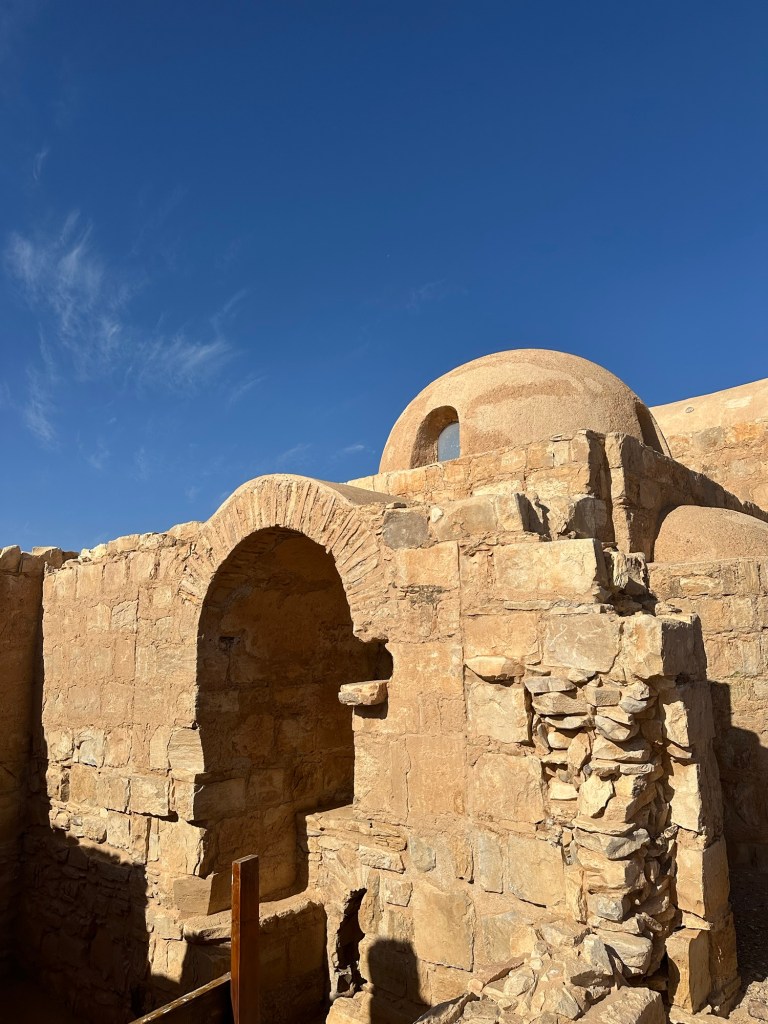
Unlike the more fortified desert castles, Qasr Amra was actually a royal retreat and pleasure palace. It included a reception hall, bathhouse (hammam), and living quarters. The hammam, with its warm room, hot room, and steam room and with an ingenious underfloor heating system is quite spectacular, especially in the middle of a desert.
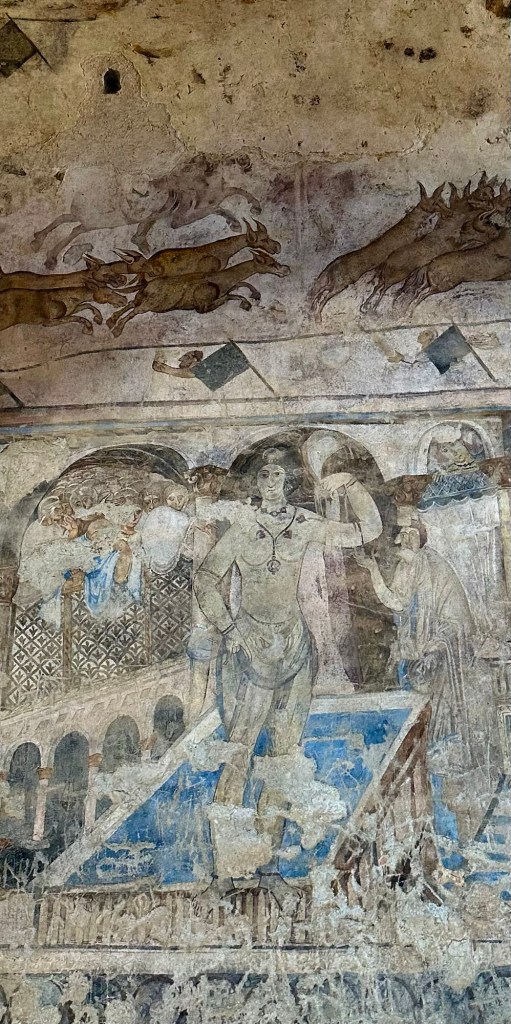
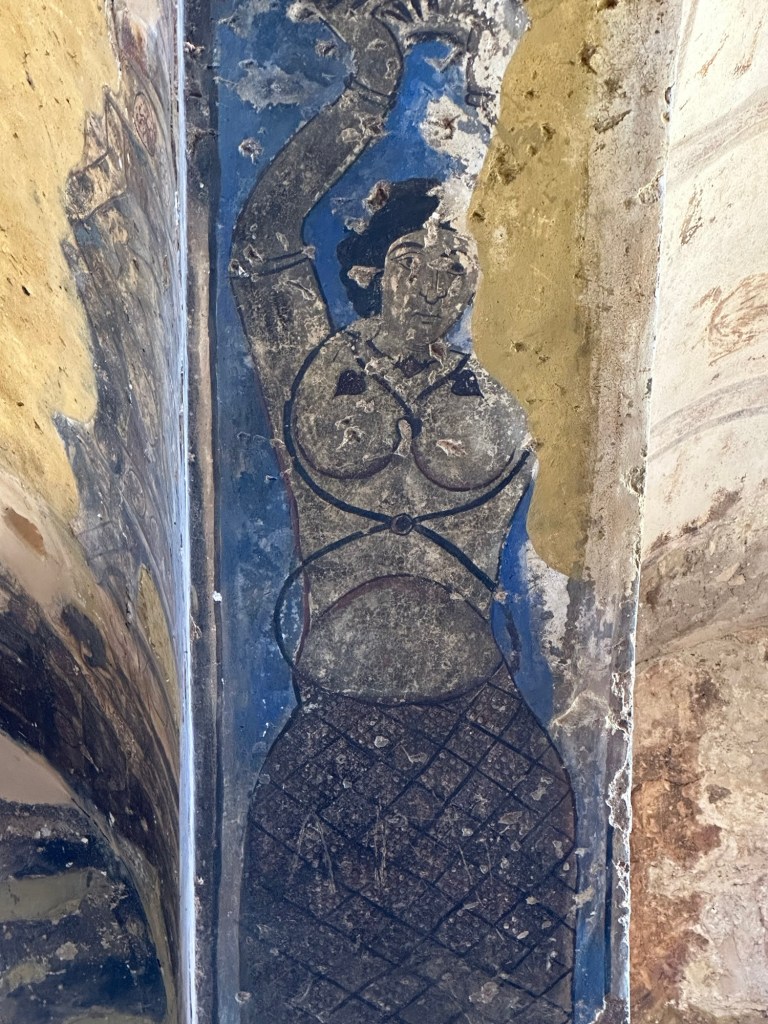
What makes Qasr Amra special are the frescos depicting naked women, musicians, hunting scenes. The dome of the hot room is painted with a celestial map—possibly the oldest known representation of the night sky on a dome.
Qasr Amra shows a rare glimpse into the daily life and luxury of early Islamic elites. Think of it as a kind of early 8th-century luxury spa and getaway spot for hunting trips and entertainment for the rich, where rules of religion can be bent when no one is looking.
Another stop was at Qasr Kharana, a two-story square structure with thick walls and corner towers. It looks like a castle but feels more like a mysterious, abandoned mansion in the desert. Its dozens of rooms were arranged around a central courtyard, making it eerily beautiful and perfect for taking cool photos.

It was probably used as a caravanserai , sort of a bed and breakfast for traders, where they park their animals at the ground floor for additional heat and protection.

Although we didn’t have the time to go, another place to visit is the Qasr al-Azraq, which was built by Romans and expanded by every other ruler to control the desert trade routes and the nearby oasis. The nearby Azraq Wetland Reserve provides a much needed greenery and bird life in the desert. T.E. Lawrence aka Lawrence of Arabia used Qasr al-Azraq as his winter headquarters during the 1917 Arab Revolt against the Ottomans.
Located just 50 km north of Amman is Jerash, one of the best-preserved Greco-Roman cities outside of Italy, often called the “Pompeii of the East.” It’s a must-see if you’re into history, archaeology, or just enjoy wandering through ancient ruins that feel like a movie set.

Jerash, or Gerasa as Romans used to call it, was founded around the 4th century BCE and was part of the Decapolis—a group of 10 important Roman cities in the eastern empire. It was buried under sand for centuries, which helped preserve it remarkably well. A German traveller happened upon some of its ruins at 1806 and the excavations started at 1925. They are still ongoing.
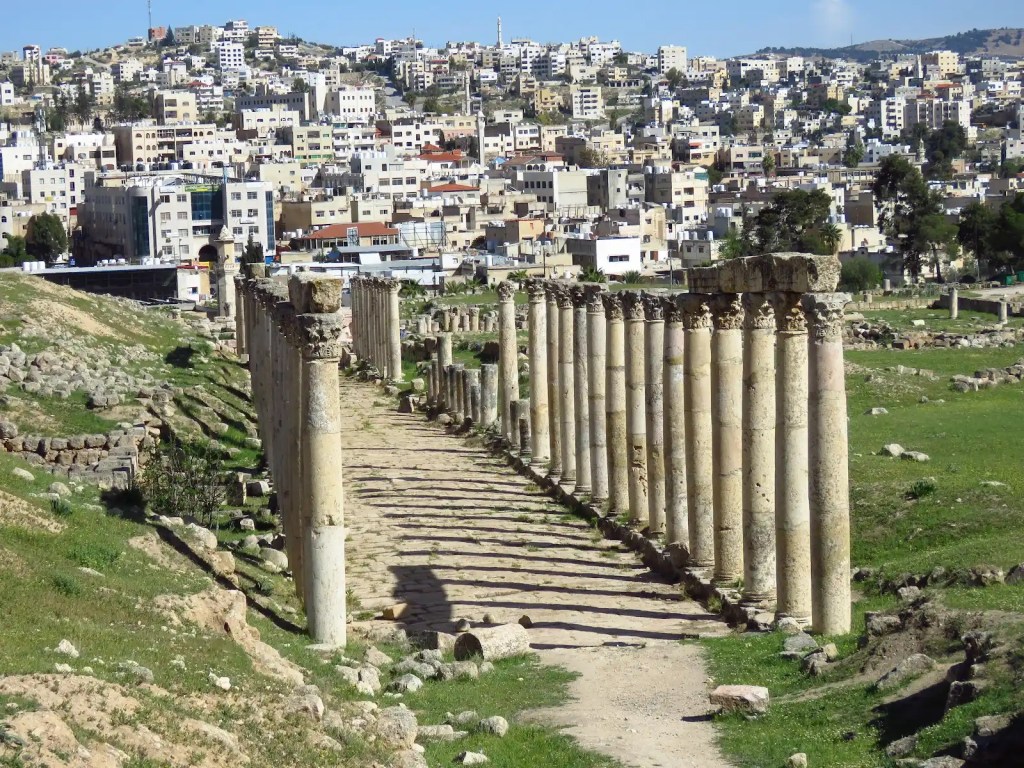
As ancient cities go, Jerash is quite impressive. Entrance to the city is through Hadrian’s Arch, a massive triumphal arch built to honor Emperor Hadrian’s visit. It’s the grand entrance and a perfect selfie spot.
Then you find yourself at the Hippodrome, which once hosted chariot races and gladiator shows to 15,000 spectators. Imagine watching the daring chariot drivers and their horses race for seven laps around a 2,000 foot-long sand track, where they hit top speeds of close to 40 miles per hour on the straightaways and jostled wheel-to-wheel as they hurtled around hairpin turns. When the winning charioteer finally crossed the finish line, his victory was announced with the blast of a trumpet, and he ascended to the judges’ box, where he received a palm branch, a wreath and prize money.
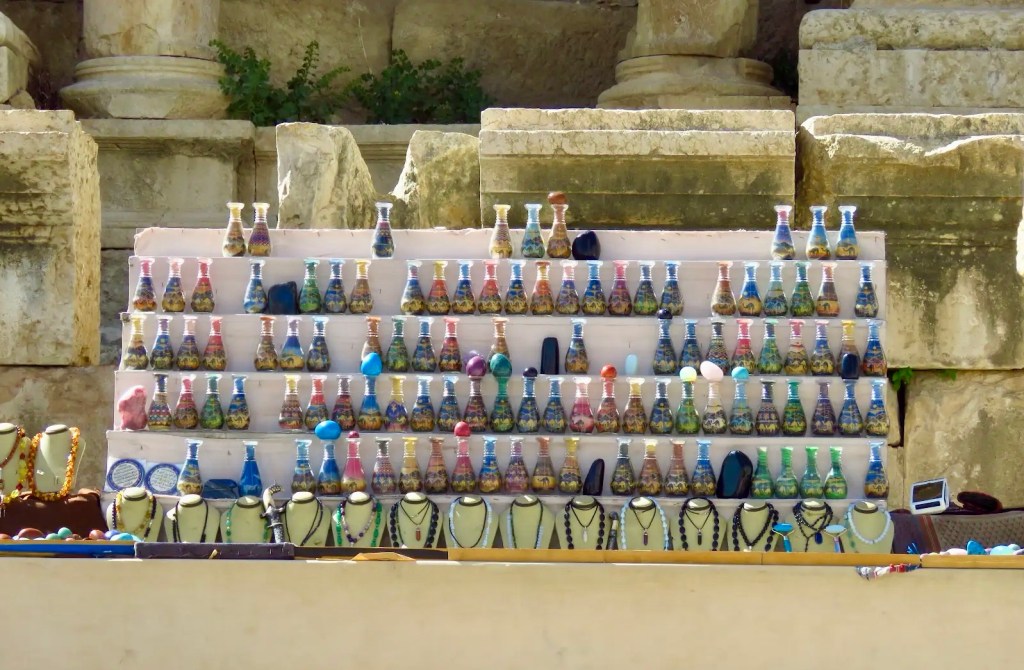
The Romans knew the importance of entertainment to control and rule the masses. So apart from the hippodrome, they built two theaters, a big one to the south and a smaller one to the north of the City. Make the people vent their frustration on something, have a drink or two, maybe a little bet on the side, and they might forget how bad things are.
We now have zillion TV channels and social media for this, so we don’t have to leave our homes. The civilization has really reached new heights.
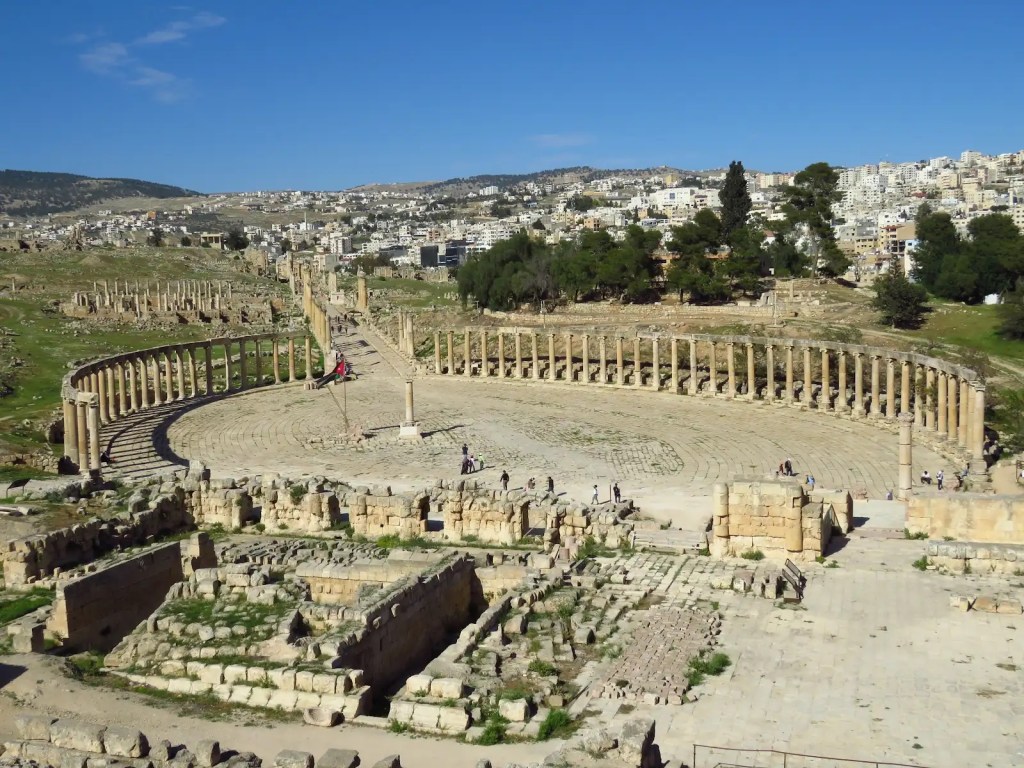
The Forum is iconic with its oval shape and 56 ionic columns. One can easily imagine the people haggling at the macellum- the porticoed market or grab a bite at the thermopoliums- restos and bars. With the Zeus temple perched over the Forum, it was once the heart of the city.
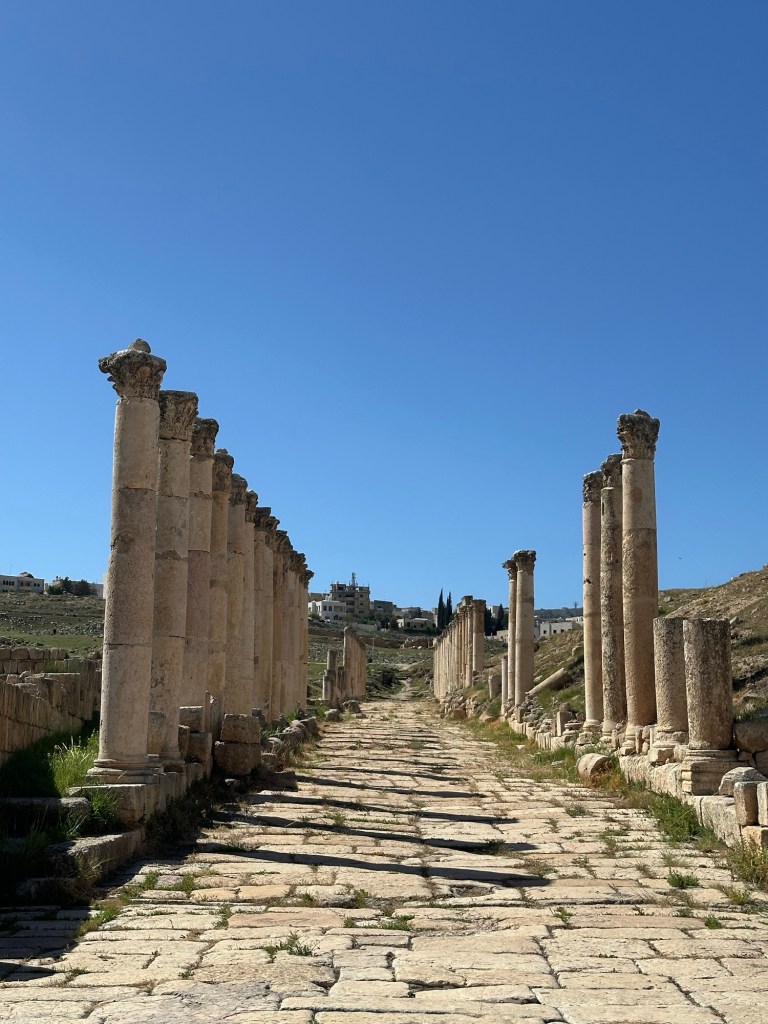
When you start walking the Cardo Maximus, the main north-south street, lined with columns and still paved with the original Roman stones, look for chariot wheel ruts and manhole covers from ancient drainage systems.
At the opposite end of the Zeus Temple, there’s the Temple of Artemis. Dedicated to the city’s patron goddess, its massive Corinthian columns are still standing.
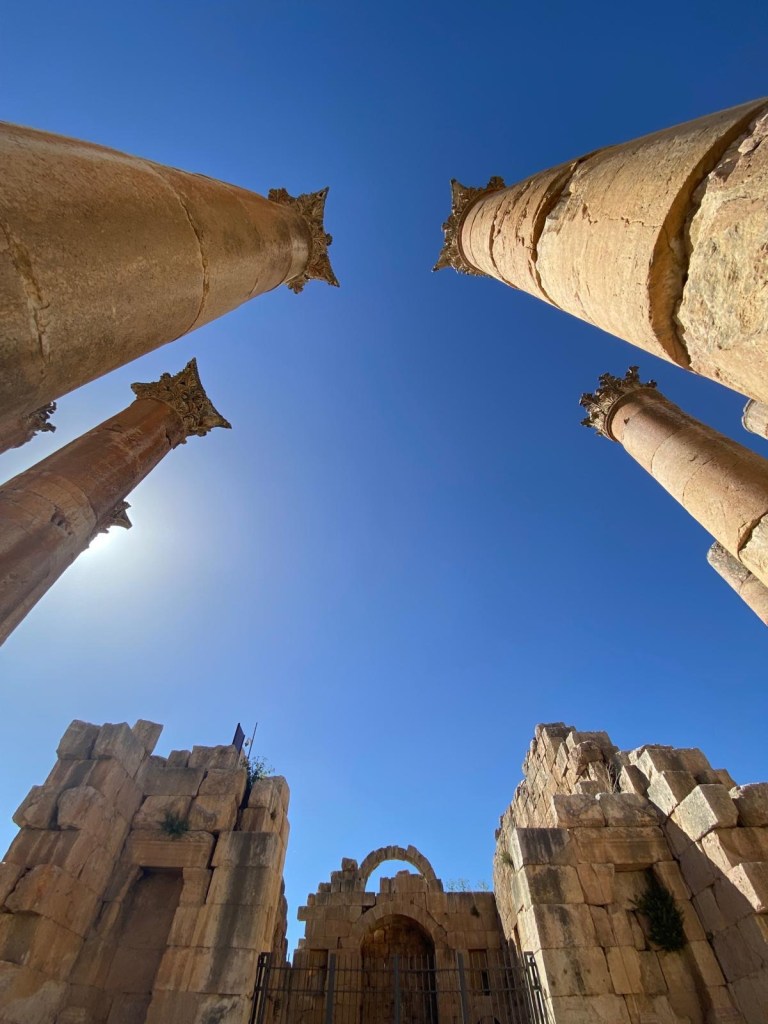
One note on temples : In ancient times, they were both places of worship, elite learning centers and trusted banks, and the priests and priestesses were playing a major role in the society.
In the Holy Bible, it was mentioned that Jesus Christ passed through Jerash, and performed a miraculous exorcism on a man possessed by demons. There are a couple of old churches with beautifully preserved mosaics depicting the miracle.
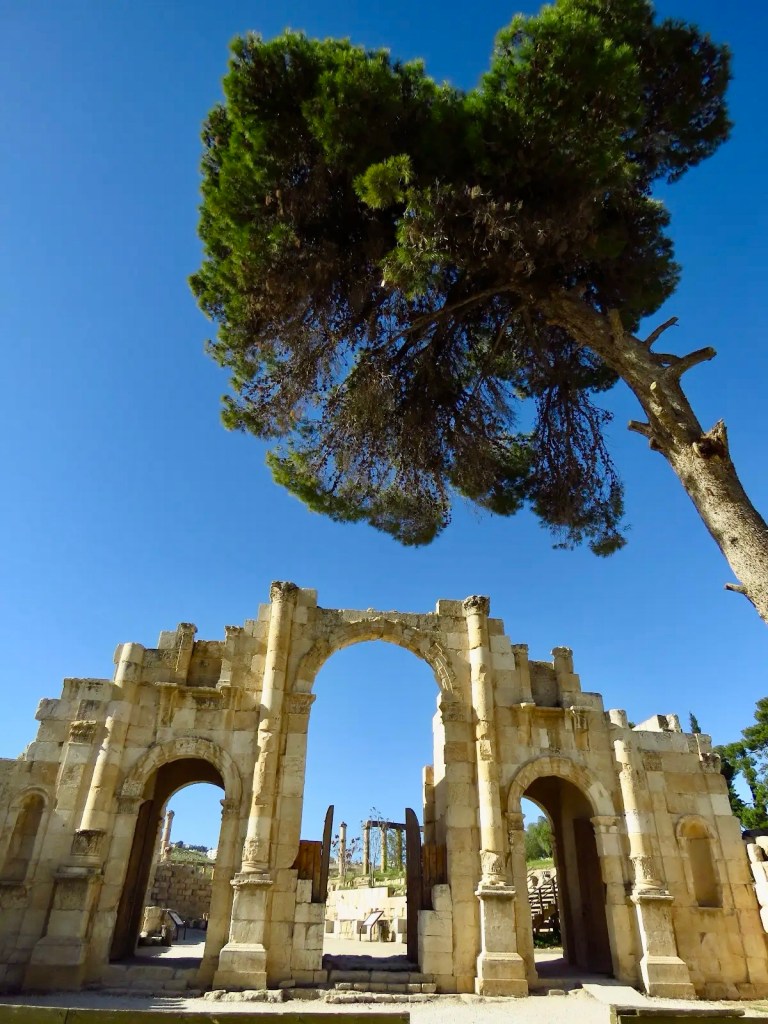
When visiting Jerash, it’s a good idea to carry water and sun protection. It takes around 2-3 hours to visit the ancient ruins for the city is quite large and built on hills. There are small shops that sell food and drinks before entering the old city, as well as any other thing that you won’t ever need.
Onwards, we continued to Madaba, a charming town in central Jordan known as the “City of Mosaics.” It’s famous for its stunning Byzantine and Umayyad mosaics, great food, and a relaxed, small-town vibe.
The must visits are :
St. George’s Church & the Madaba Map – a 19th-century Greek Orthodox church built over a 6th-century mosaic map of the Holy Land. The Madaba Map is the oldest known geographic mosaic map of Jerusalem and biblical lands and a major stop for the modern day pilgrims.
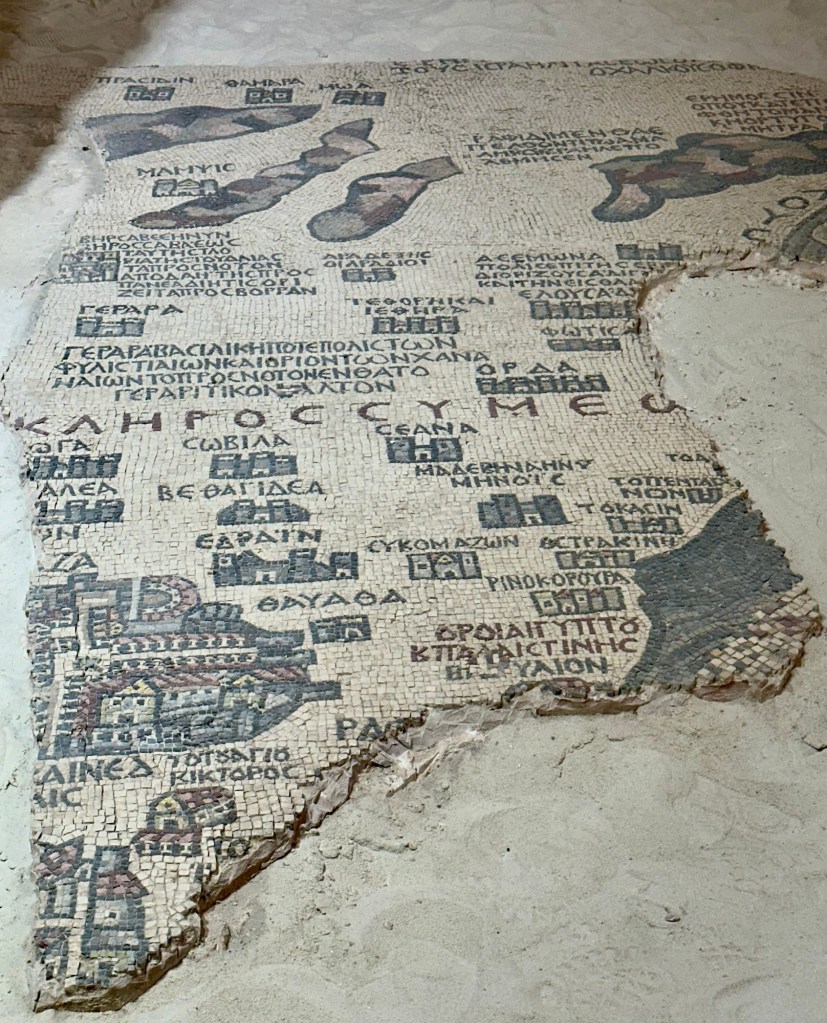
Before visiting Madaba, I had no idea that the floors of the early Christian churches were decorated with gorgeous mosaics.
Church of the Apostles is home to a massive mosaic floor from 568 CE, showing the sea, flora, and mythical creatures. It features a beautiful medallion with a female figure “Thalassa” – the sea, colors are best seen when the attendant pours water on it in exchange for a little baqshish. Money well spent.

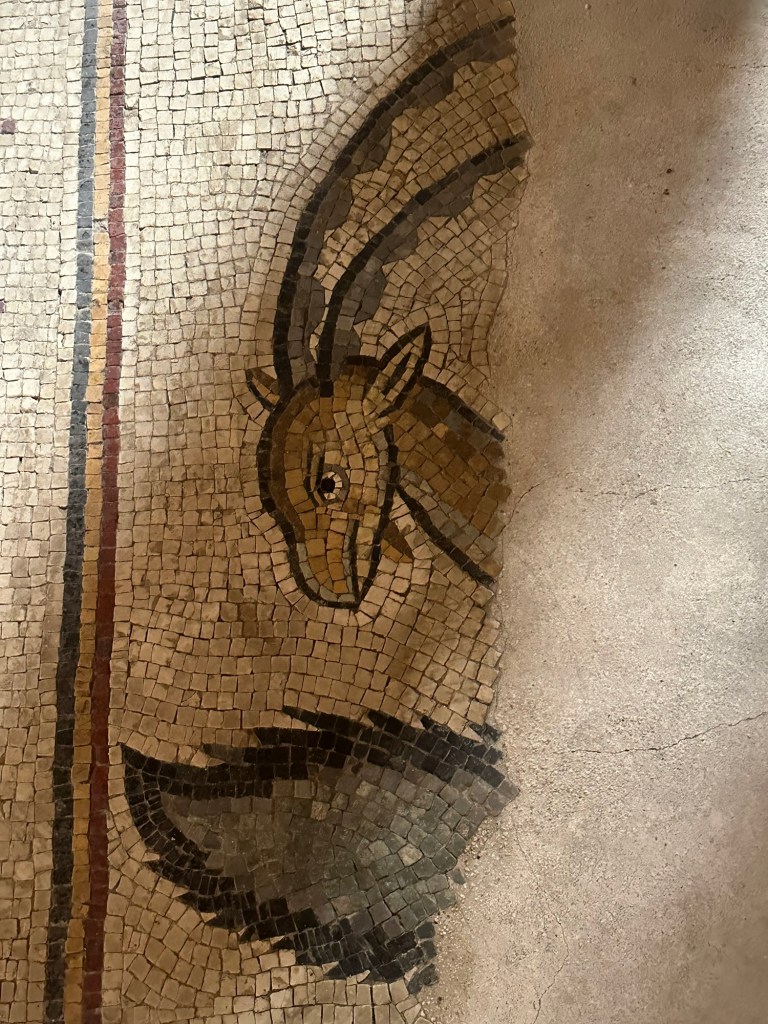
Burnt Palace, a ruined mansion destroyed by fire, was hauntingly impressive with its mosaic floors still intact. There was one that I particularly liked, a beautiful mosaic of the bull fighting the lion, two animals that have huge symbolism in almost all cultures and even religions. Strength, courage, fertility, dominance etc.
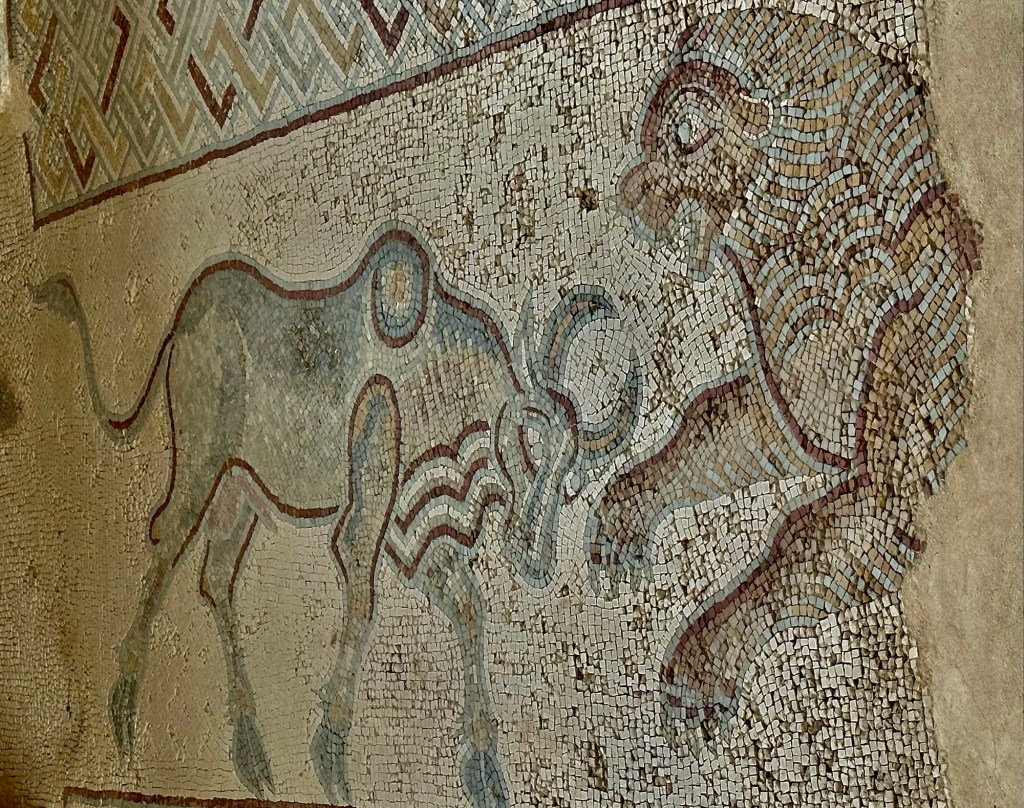
Since this was the home of an elite and rich Roman, the explanation that spoke to me most, that it was a visual metaphor for the eternal contest between order and chaos, life and death. Just as nature contains both nurturing and destructive elements, the depiction of combat between these two animals could symbolize the constant balance that Rome (and its gods) was believed to maintain.
Madaba has a large Christian population compared to the rest of Jordan, which gives it a relaxed vibe. Most importantly, the best wine makers of Jordan are located around there. My personal favorites were the Chardonnay and Muscat, both very crisp and dry. They went perfectly with the spicy Jordanian cuisine. In contrast, I found the local reds a bit too bland.
There are many family run cafes, restaurants and shops. We stopped for lunch at the Haret Jdoudna Restaurant, with its charming courtyard. The food was super tasty and the portions were huge. The waiters had no idea about the wine they were serving, insisting the red Shiraz was in fact, white. All in all, it was a memorable lunch.
Just 10 km west of Madaba is Mount Nebo, which is the site where God allowed Moses to see the Promised Land, but not to enter. Because, God works in mysterious ways I suppose. Moses had died there, though his burial site is not marked.
Afterwards, Joshua crossed the Jordan river with the Israelites to the Promised Lands.
There are two statues, both created by Italian artists, both impressive and modern.

At the entrance of the site, there is an inspiring memorial monument “The Book of Love among People”. The monument celebrates the close spiritual union between the Jewish Torah, the Muslim Koran, and the Christian Gospel. On the base of the statue, the phrase “God is love” is carved in Greek, Arabic, and Latin.
The other is the serpentine cross sculpture atop the mountain overlooking Jerusalem. It is symbolic of the miracle of the bronze serpent invoked by Moses in the wilderness and the cross upon which Jesus was crucified.
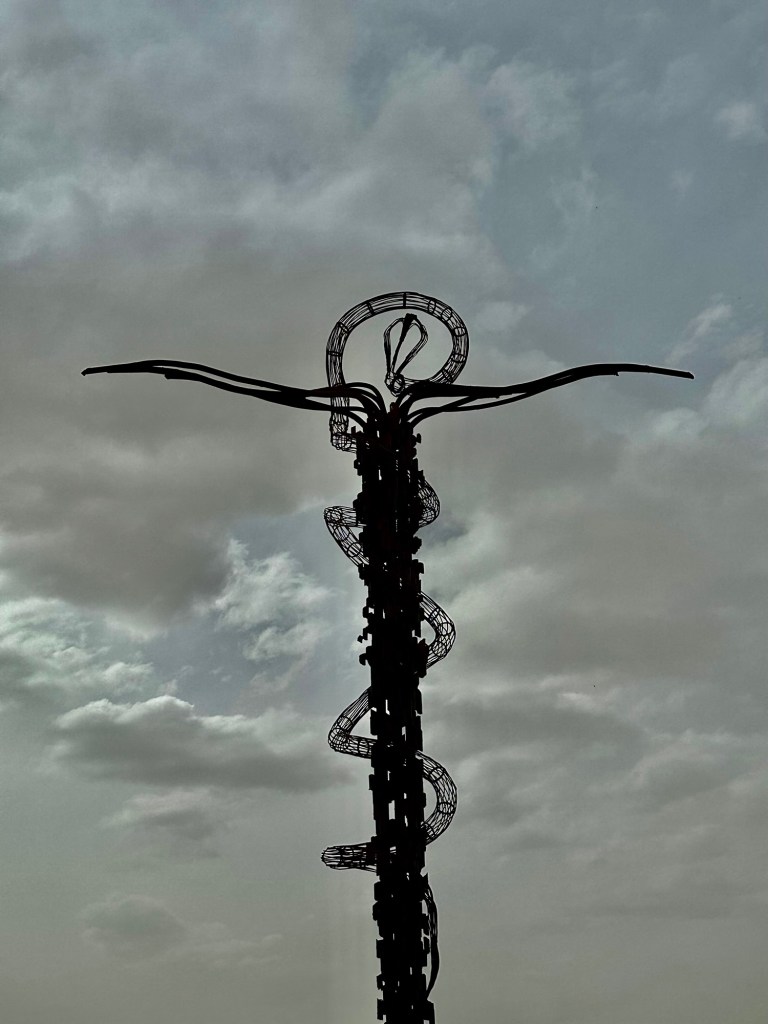
It seems that God and Moses were in constant communication in those days. In the Book of Exodus, God commands Moses to throw his staff on the ground, transforming it into a serpent. Later, when the Israelites are afflicted by venomous snakes, God instructs Moses to make a bronze serpent and set it on a pole. Those who look upon it are healed from their snake bites.
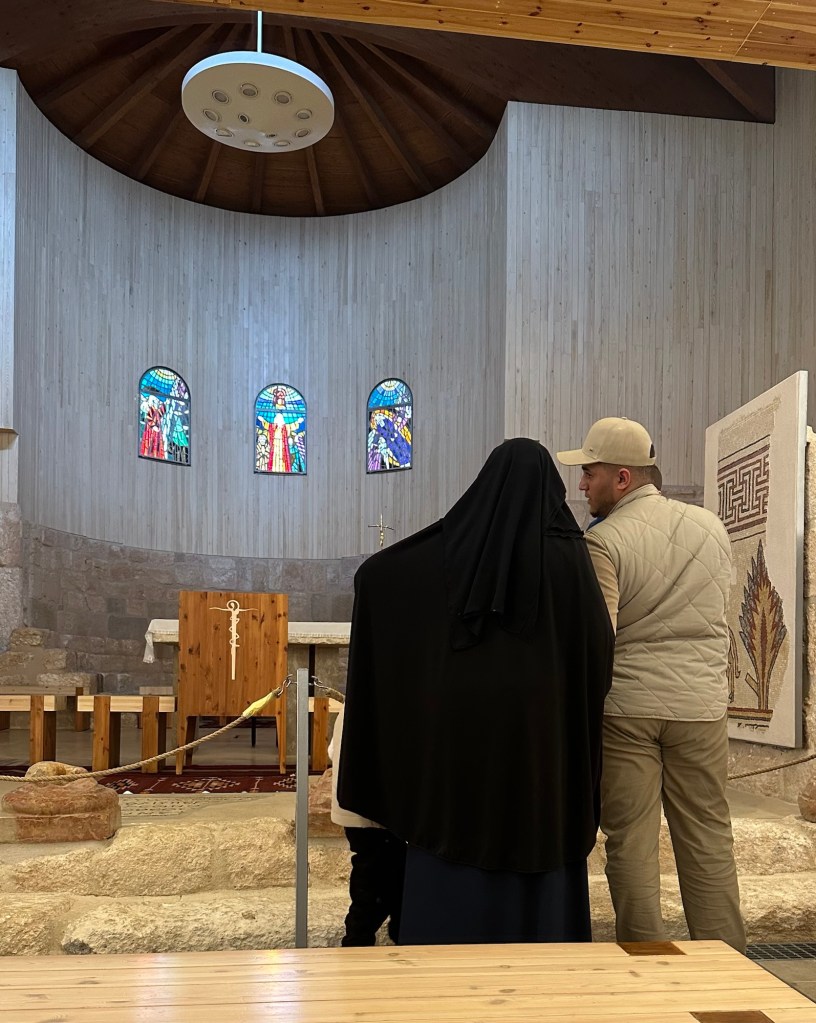
A small Franciscan church shelters the ancient mosaic floors from a 4th century Byzantine Church, under a striking contemporary roof. It is more of a little museum than a place of worship.
Apart from the obvious biblical significance, Mount Nebo is a beautiful and calm place with stunning views of Jericho, the Jordan Valley, and even Jerusalem on clear days.
Another stop at the pilgrim route is Bethany beyond the Jordan (Al‑Maghtas). It is an archaeological and pilgrimage site on the east bank of the Jordan River, reputed to be where Jesus was baptized by John the Baptist. It was inscribed as a UNESCO World Heritage Site in 2015. Pope Francis visited the site afterwards, driven by the King himself.
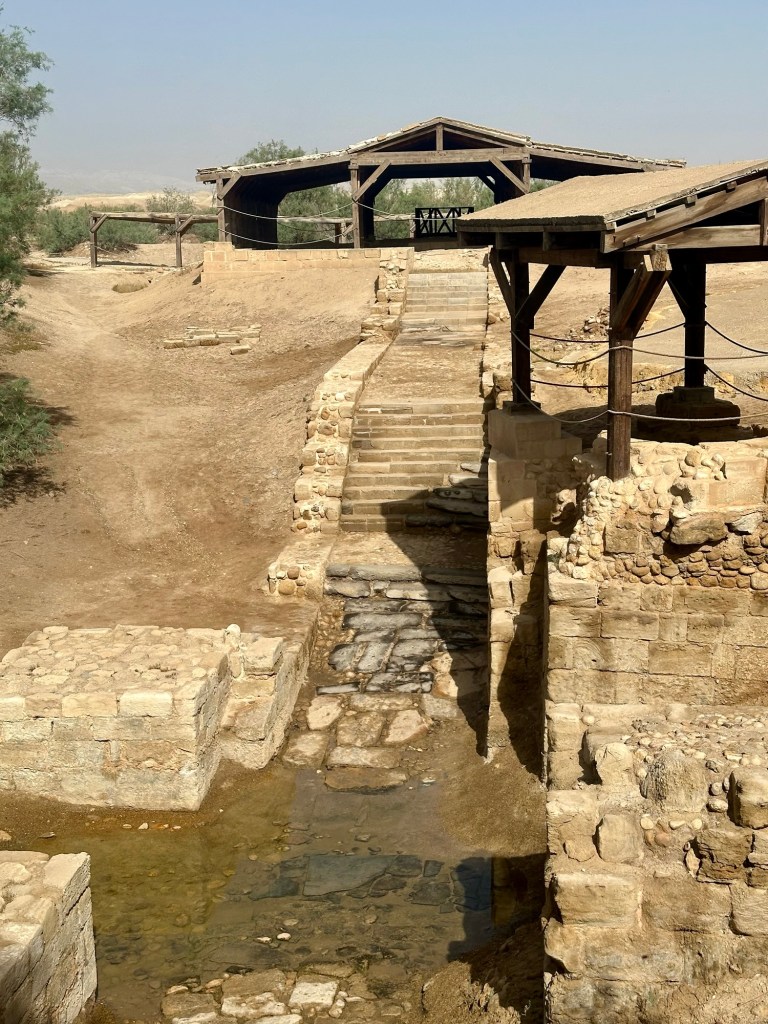
I found the baptism site a bit dreary, but maybe it looked more inspiring 2000 years ago.
On the west bank, just a stone’s throw away lies Israel. Ancient tradition holds that Joshua led the Israelites across the Jordan here into the Promised Land.
We watched an old man in white robes being baptized at the Israel side of the Jordan river. There was no ceremony, just a few people helping an older man immersing himself in shallow waters, symbolically washing his sins off and into the river Jordan.
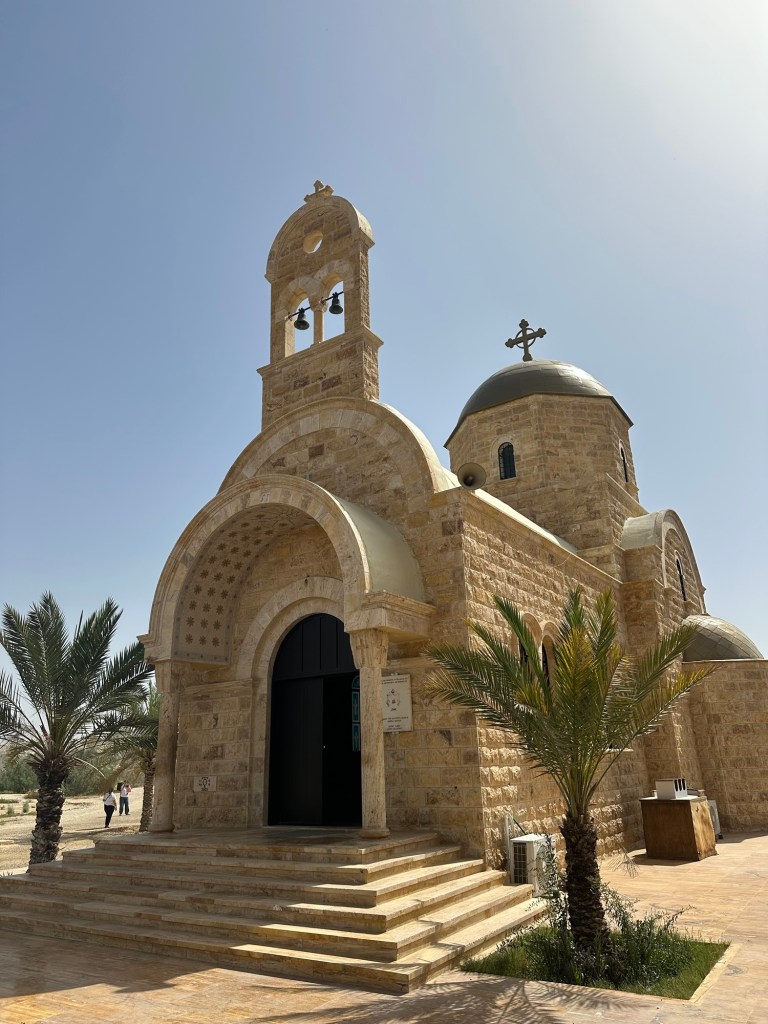
Orthodox Church of St. John the Baptist,
The magic is somewhat lost when I later learned that you can buy baptism tours on the web.
There’s a little church, quite recently built, with stunning frescos and lots of light.
Jordan is full of places with biblical legends. There’s a natural rock formation near the Dead Sea in that locals and pilgrims refer to as “Lot’s Wife”.

One fine day in the Book of Genesis, God in all his wisdom, decided to destroy the sinful cities of Sodom and Gomorrah, but he liked Lot, who was a cousin of Abraham. So, he and his family were warned by angels and told to flee the city. They were given one specific command: Do not look back. But of course, being a woman, Lot’s wife was curious. She turned back one last time, and turned into a pillar of salt.
I really love (!) how the three Abrahamic religions, Judaism, Christianity and Islam treat women.
After that, we followed the Crusaders to two ancient castles; Kerak and Shobak. The first of the two, Kerak Castle and it’s surrounding lands are quite impressive.

Originally built to oversee trade routes between Damascus and Egypt, the castle was formidable stronghold in the Crusader kingdom.
If you watch the movie ‘The Kingdom of Heaven’, featuring a young and dashing Orlando Bloom, you might remember Kerak Castle as one of the locations of battle between Crusaders and armies of Saladin.
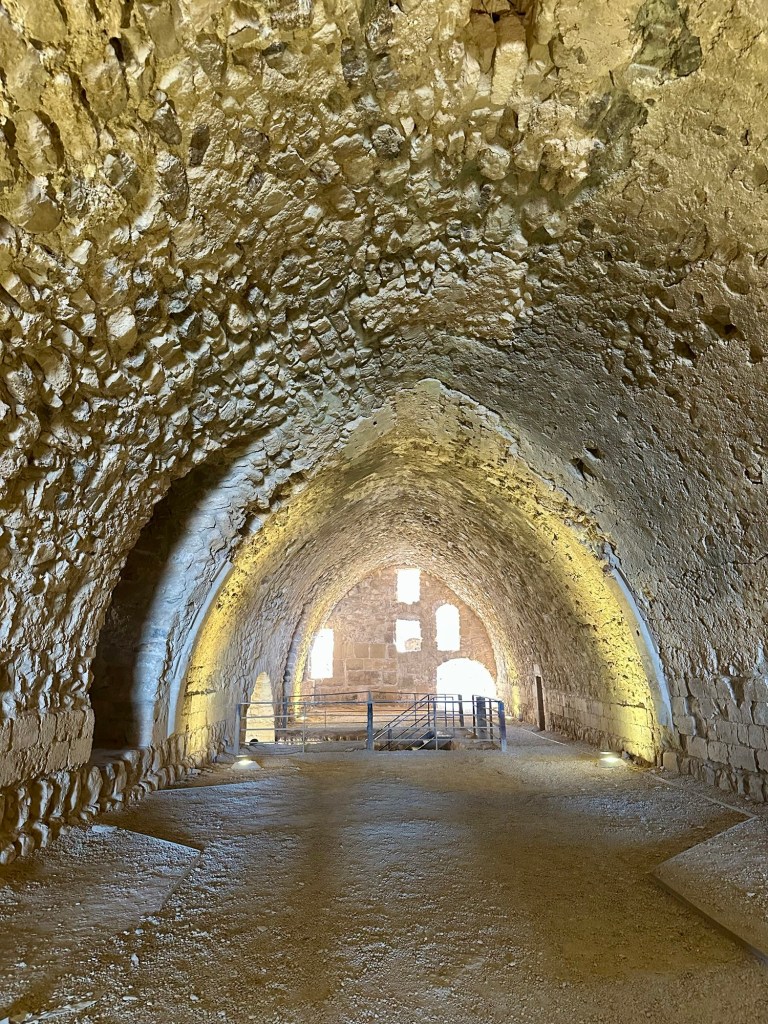
Kerak is a huge castle and there are lots to see if you like medieval military architecture and history. The views from the top turrets are quite impressive, for this region is very fertile and green. There are various restaurants and cafes surrounding the castle, but none I can recommend. We instead went to a local restaurant, Azaim Deeritna some 30 minutes away and had a lovely feast of Mansaf, prepared just for us.
Although Kerak was an ancient castle that was captured first by the Crusaders and then by Saladin, Shobak Castle was built by King Baldwin I of Jerusalem at the time of the first crusade. Constructed on a conical hill, its design reflects typical Crusader military architecture, adapted to the local topography.
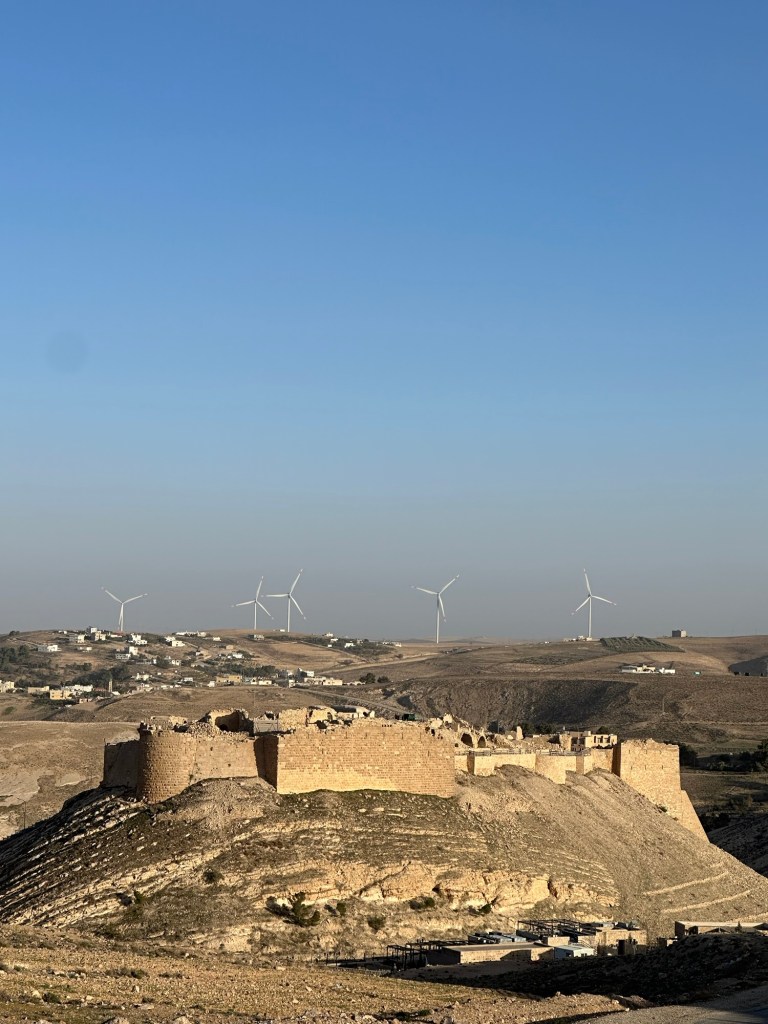
It was originally named Montreal” or “Mons Regalis,” meaning “Royal Mountain. The name was later changed by the Arab rulers, marking the end of Crusader presence in the region.
The otherworldly atmosphere of Jordan makes it a perfect setting for movies. Some of my favorites are Dune (Part 1 &2), The Martian ; Star Wars, Indiana Jones and the Last Crusade; Aladdin and of course, Kingdom of Heaven.
I always try to read a few books before visiting a new place, and I can recommend two.
One is the Leap of Faith memoirs of Queen Noor; the last wife of the previous King. I find it relevant and informative.
And the other is The Petra Paradox, a romance – action novel that reads like a modern day Indiana Jones. I liked them both.
From Amman’s ancient past to Jerash, Crusaders and Petra, Jordan left an imprint on my memories – a reminder that some places are more than destinations; they are experiences that will stay with me always.
 CherryPicks