
Jordan is a country of layers. Although the Hashemite Kingdom of Jordan is relatively young, gaining her independence in 1946, people were living in those lands since the Paleolithic ages. Old Arab Kingdoms, Alexander the Great, Romans, Islamic Caliphates, Crusaders and Ottomans controlled these lands one after the other.

The name of the Kingdom indicates that the ruling family are the direct descendants of Prophet Muhammed, so they are, in a way, Muslim Royalty in the real sense. They are much loved, we are told, and their pictures are everywhere, even in small cafes and shops.
The country is a major stop in the modern pilgrimage route, boasting of several sites like Mount Nebo where Moses died overlooking Jerusalem, Madaba with its 6th century churches and Bethany beyond the Jordan where Jesus was baptized by John the Baptist.
- The best months to visit Jordan are March- April and October- November.
- When packing, think layers. The average temperatures vary between 7-30 degrees Celsius and the desert nights could be quite cold.
- Very comfortable shoes are a must. Prepare to walk a lot.
- Although Jordanians are very tolerant towards tourists, it’s still a country where majority of people are Muslims. So dress sensibly, especially when visiting mosques.
- The currency is the Jordanian Dinar and 1 JOD equals around 1.42 USD. USD and credit cards are accepted almost everywhere.
- The taxi costs between the Amman airport to the city center are fixed to JOD 22.5 and there’s a small charge if you prefer to pay by credit card.
- The internet coverage overall is quite decent. All hotels that we stayed had good wifi connectivity. We also had e-sims = airalo– which worked perfectly .
- As a rule, negotiate when shopping, especially in more touristic areas.
- Jordan is a safe country with excellent relations with its neighbors including Israel as well as the West. Nevertheless, it’s in the Middle East, which means heightened security and checkpoints. If you are a solo traveller with a limited timeframe, working with a local travel guide can be a good idea. We travelled with a tour agency from Istanbul – Antonina – and with the help of our very knowledgeable guide, everything went like clockwork.
- We didn’t bother with the tickets, but if you’re traveling alone, book them online.
Some basics :
There are a lot of things to do and see in Jordan, and we’ve covered quite a few. So I will divide my Jordan blog to two parts, and start with the reason we travelled there: Petra.
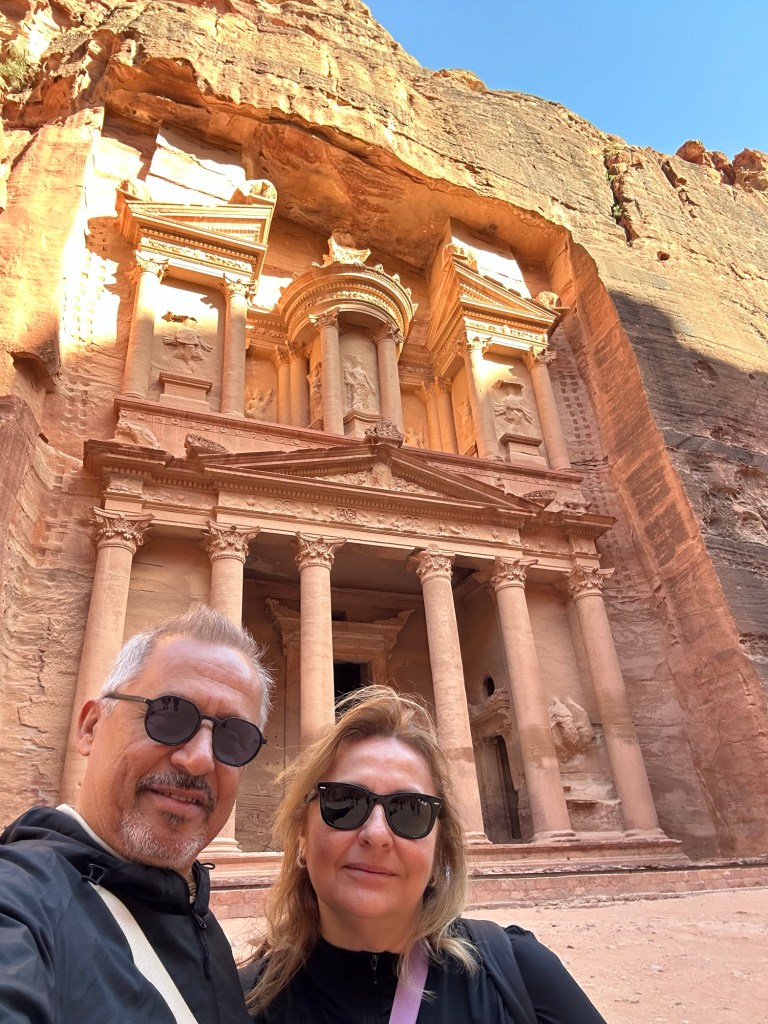
Petra, often called the “Rose-Red City”, is one of the most iconic archaeological sites in the world and Jordan’s top tourist attraction. It was once the thriving capital of the Nabataean Kingdom, flourishing from the 4th century BCE until its annexation by the Romans in 106 CE.
The Nabataean Kingdom was a wealthy and influential Arab kingdom that thrived from the 4th century BCE to the 1st century CE. Its capital was the legendary city of Petra, carved into rose-colored sandstone cliffs in southern Jordan.

The Nabataeans were a nomadic Arab tribe who settled in the area around Petra and gradually built a powerful and wealthy kingdom. They were skilled traders, known for controlling the major incense and spice routes across the Arabian desert, connecting the Arabian Peninsula with the Mediterranean and the Levant. Petra wasn’t just beautiful, it was strategically located at the intersection of major caravan routes.
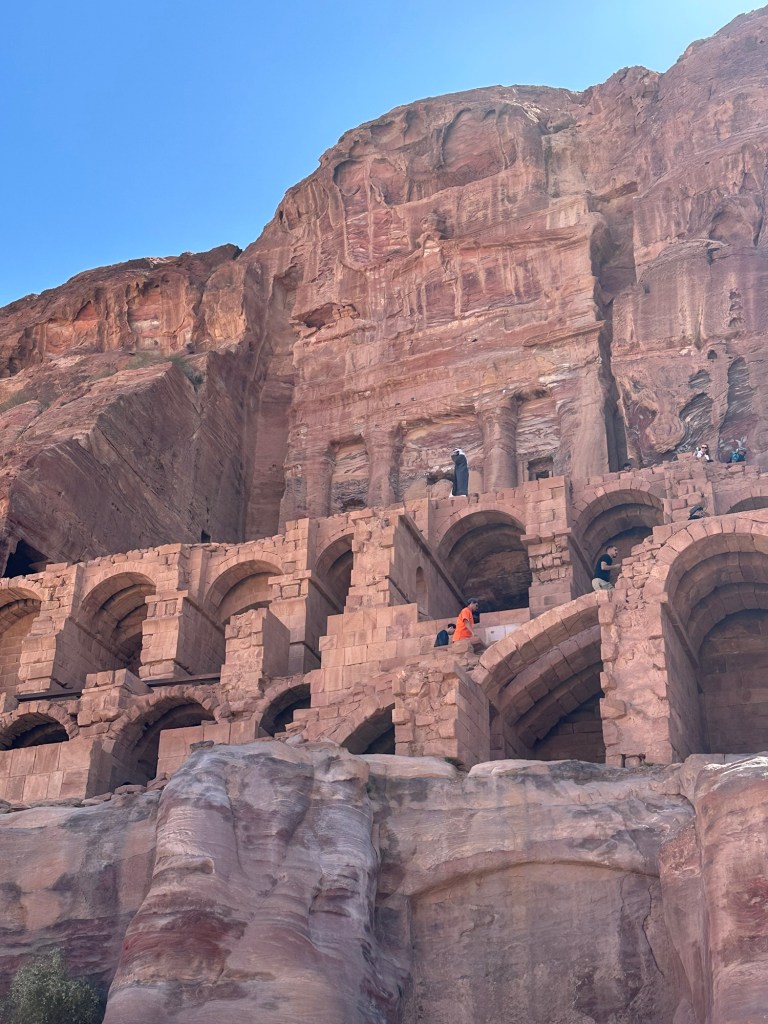
The Nabataeans were masters of water engineering. They built dams, cisterns, and underground reservoirs to conserve water in the harsh desert. They were also very adaptable. Their architecture -carving entire buildings into rock faces- shows a unique mix of Hellenistic, Mesopotamian, and local Arab influences.
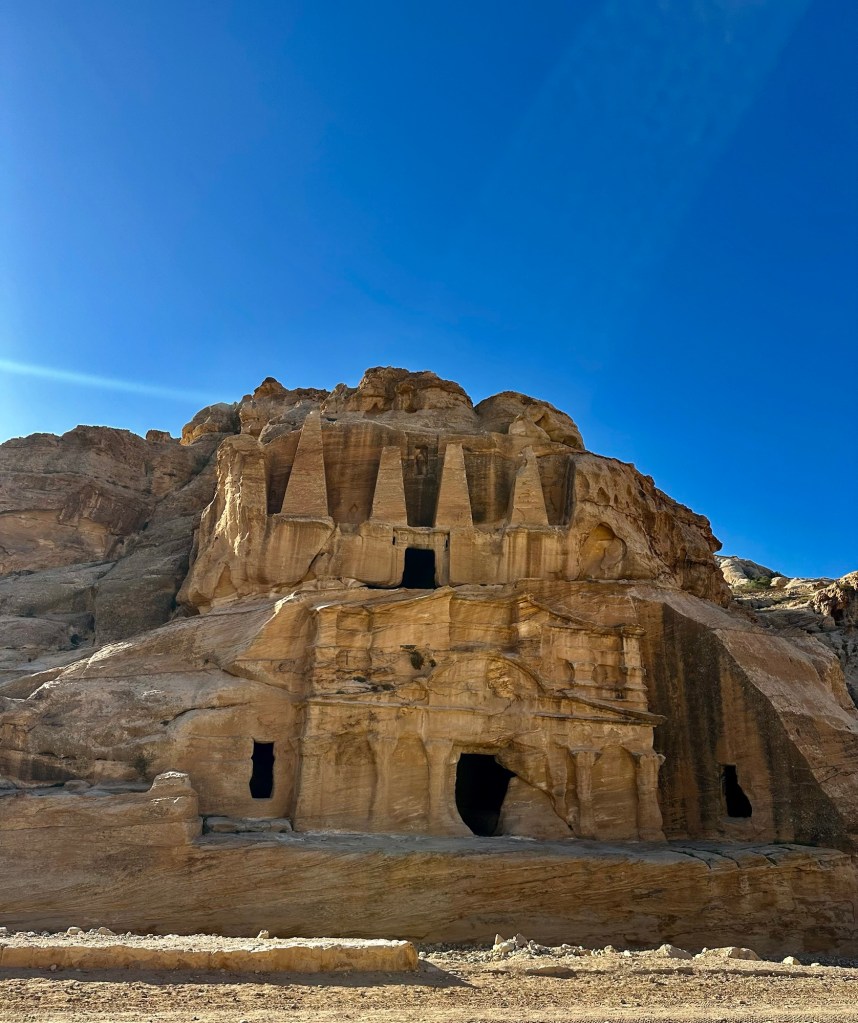
They spoke a dialect of Aramaic and developed their own script, which later influenced Arabic. Their art and religion reflected a blend of cultures: they worshipped Arab gods like Dushara and Al-’Uzza, but also incorporated Greek and Roman elements like exquisitely carved Corinthian pillars. They buried their dead in elaborate rock-cut tombs and left behind inscriptions in temples, tombs, and trade posts.
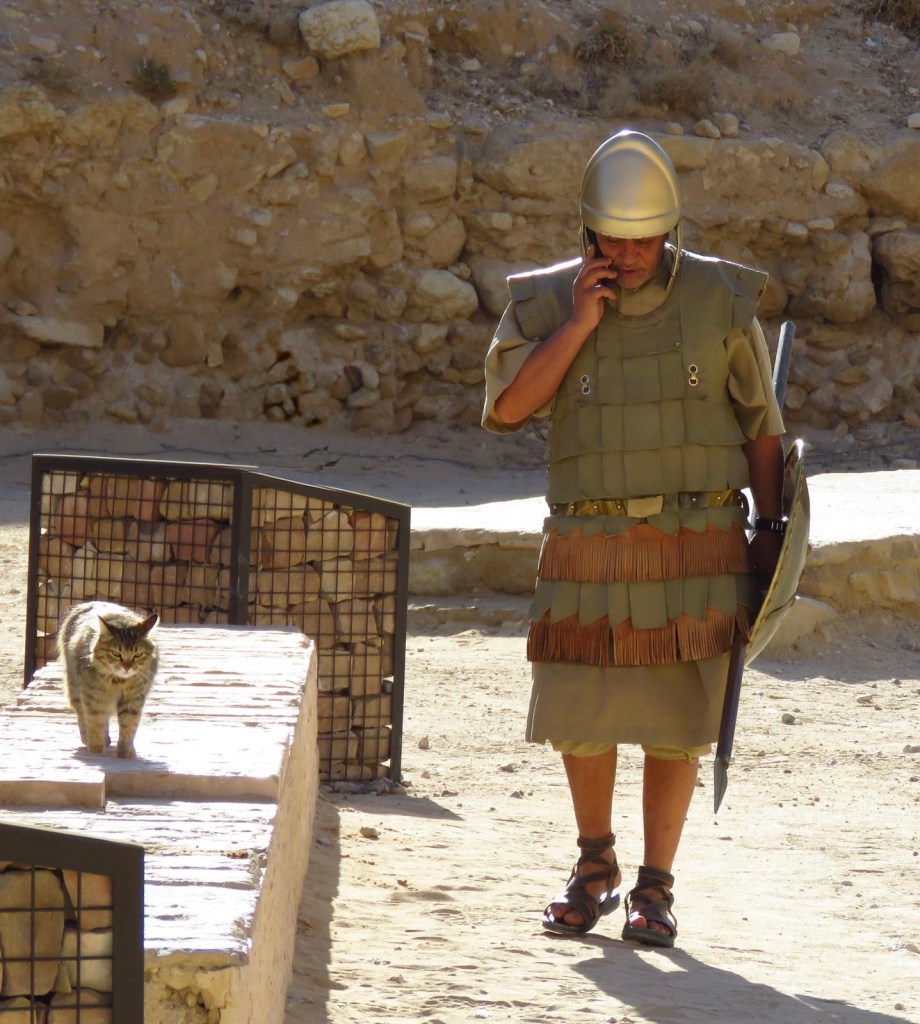
By the 1st century BCE, the Nabataean Kingdom had grown very wealthy—so much so that the Romans took interest. In 106 CE, under Emperor Trajan, the kingdom was annexed into the Roman Empire and became the province of Arabia Petraea.
Petra continued to thrive under Roman rule for a while, but it gradually declined due to changes in trade routes and major earthquakes. As trade routes shifted and populations moved, Petra was abandoned and forgotten by all but the local Bedouin tribes, who guarded the secret closely.
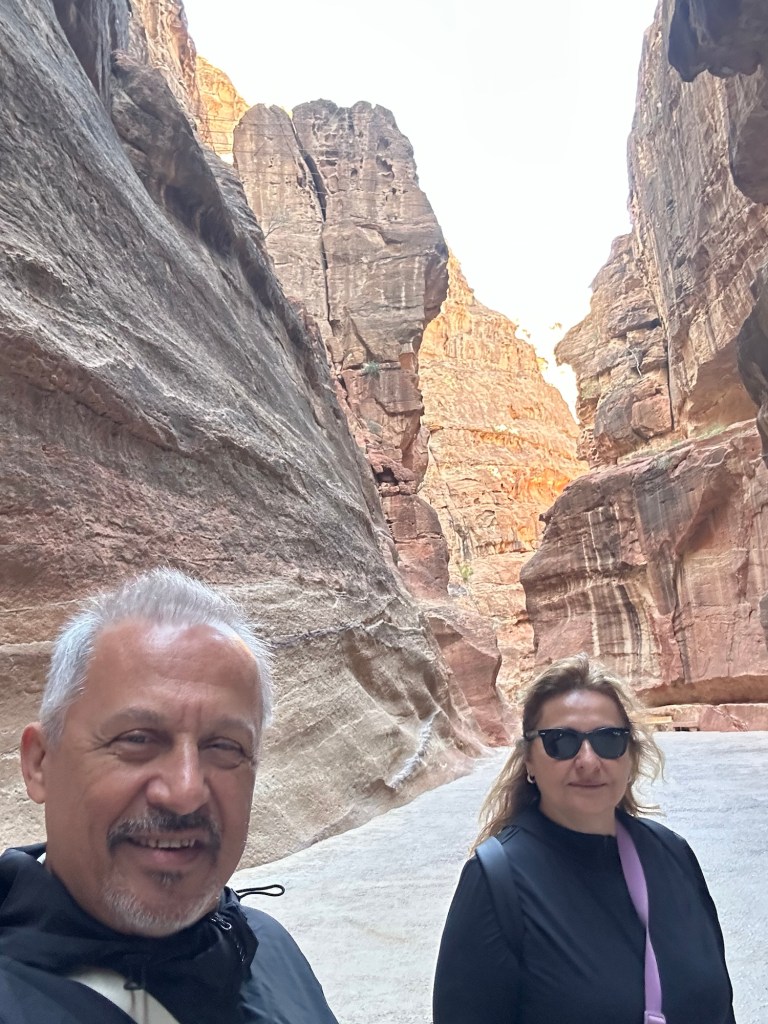
The rediscovery of Petra is nothing short than a real-life Indiana Jones movie. Hidden from the Western world for centuries, Petra remained a mystery until it was dramatically rediscovered in 1812 by a Swiss explorer and scholar named Johann Ludwig Burckhardt, who was traveling the Middle East disguised as a Muslim. He was fluent in Arabic and well versed in the Islamic culture.
While in Jordan, Burckhardt heard rumors from locals about ancient ruins hidden in the mountains near Wadi Musa. To gain access without arousing suspicion, he pretended he wanted to offer a sacrifice at a tomb within the ruins—specifically, what we now call Al-Khazneh (The Treasury). A local guide led him through the narrow Siq to Petra. Though he couldn’t explore in detail, Burckhardt made careful notes and drawings.
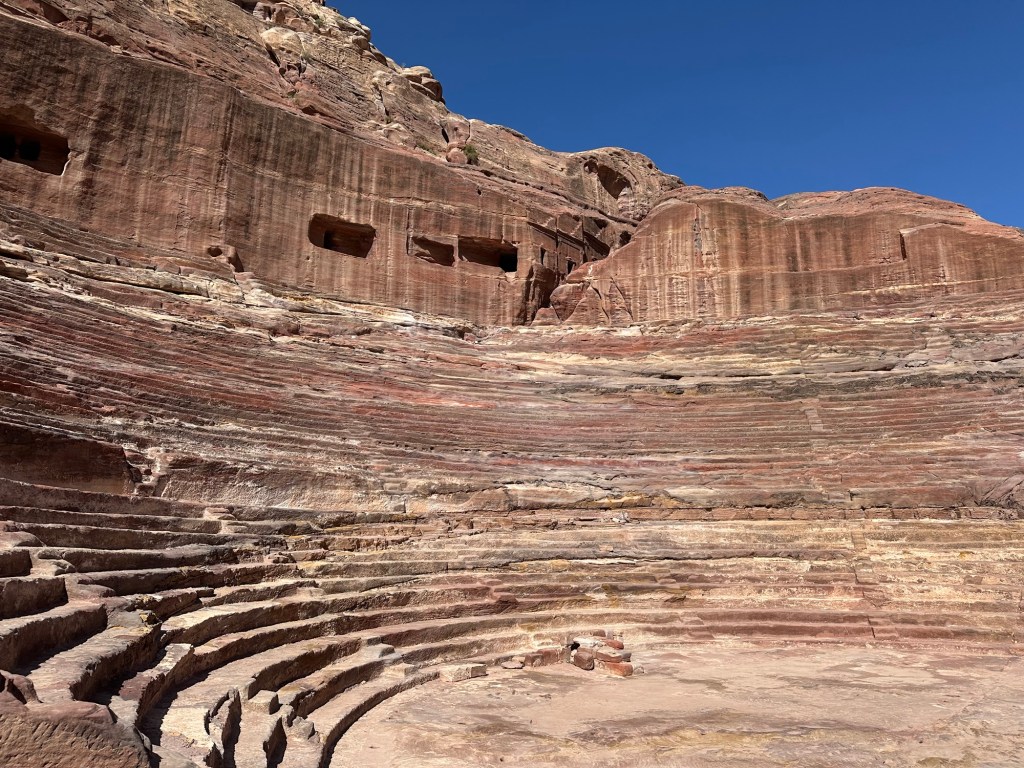
Burckhardt’s findings were published posthumously in his 1819 travelogue, which ignited interest among European scholars and adventurers. Over the 19th and 20th centuries, archaeologists began excavating and documenting the site, rediscovering a lost empire.
Petra slowly emerged as one of the most important archaeological discoveries of the modern era and became a UNESCO World Heritage Site in 1985, and was named one of the New Seven Wonders of the World in 2007.

Petra is huge, built on an area of 250km squares. The main route, which is around 8 kilometers is only the half of the story. There are Royal Tombs to discover, some 800 steps to climb to the Monastery, churches, theaters and temples to wander around.
Luckily there are shops within that you can buy water, food or fresh fruit juices, clean toilets, coffee huts to sit and examine the ancient buildings and influencers who desperately try to get the best shot, and locals offering mule rides to sites that are hard to reach. Most importantly, there are electric cars between Treasury and the main gates which are a Godsend after wandering for hours in the sun. Best 15 JOD I’ve ever spent.
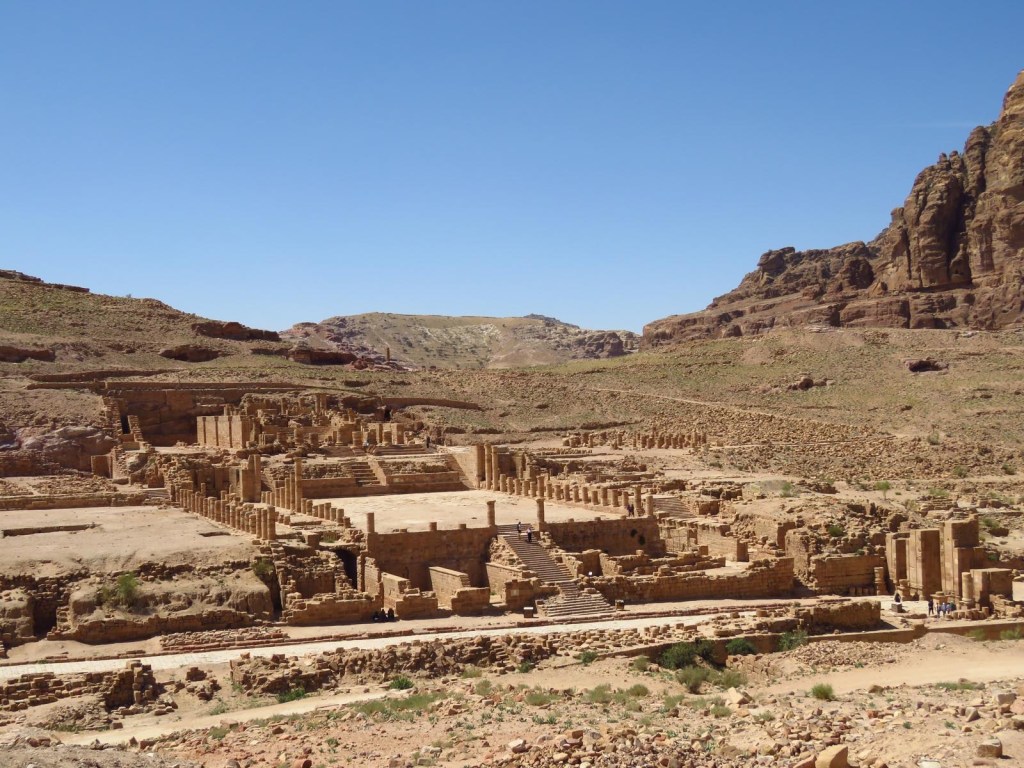
The musts :
Al-Khazneh (The Treasury) : Perhaps the most famous structure in Petra, this monumental façade carved from pink sandstone was originally a tomb, not a treasury. It’s the first major sight you see after walking through the narrow gorge, the Siq.
The Siq : A stunning natural gorge about 1.2 km long that serves as the main entrance to Petra, lined with ancient aqueducts, niches, and carvings.
The Monastery (Ad-Deir) : Larger than the Treasury and perched high in the hills, this structure is reached by climbing 800+ rock-cut steps. Plus, if you manage to climb there, you get the bragging rights.
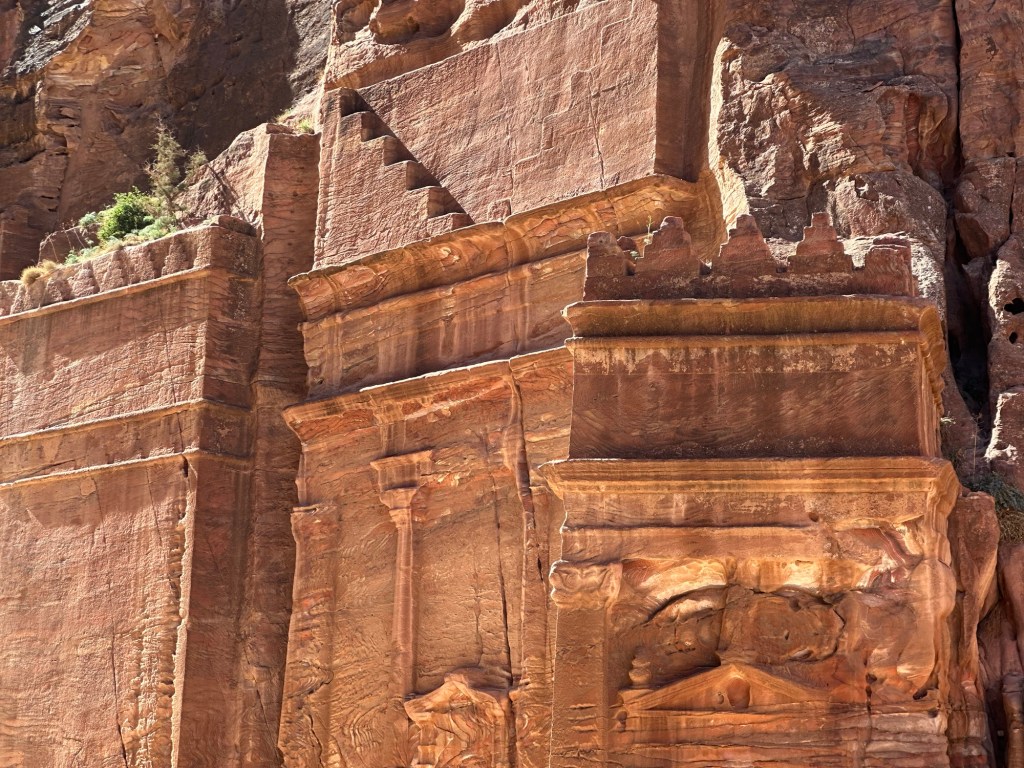
The Royal Tombs : Around 620 ornate burial places, including the Urn Tomb and the Silk Tomb, carved into the cliffs, they show off the Nabataeans’ incredible rock-carving skill. Not only the Royals but wealthy traders commissioned those tombs in the rocks.
The Great Temple and Colonnaded Street : Evidence of Petra’s grandeur as a city, featuring Roman influence after their annexation.
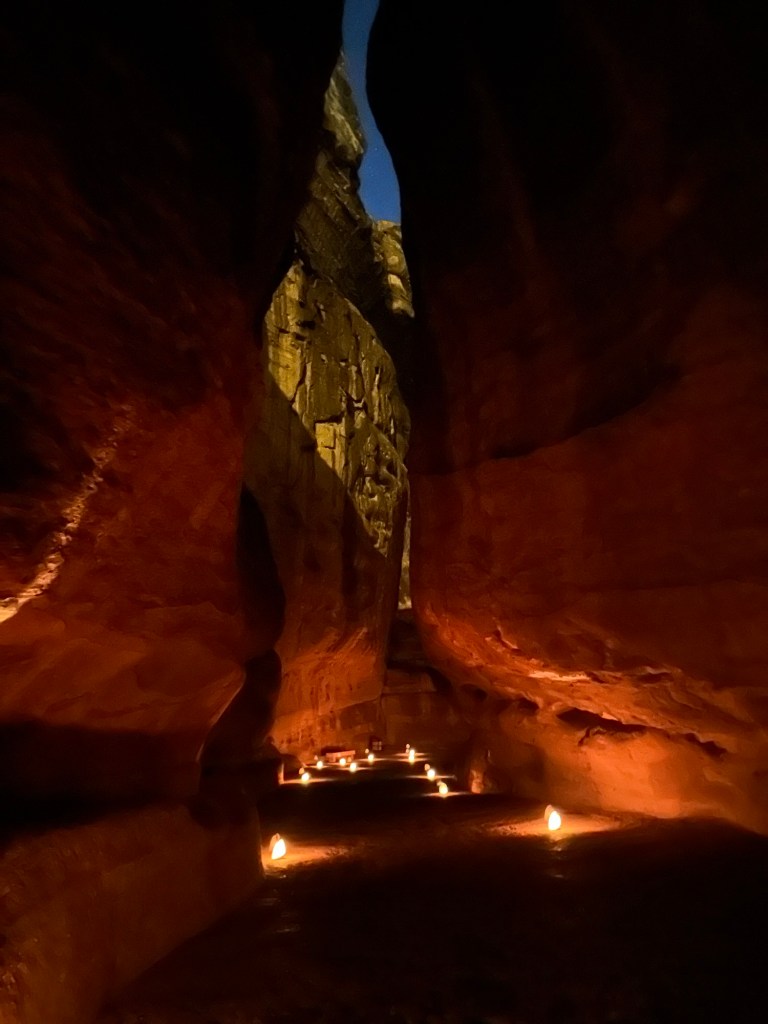
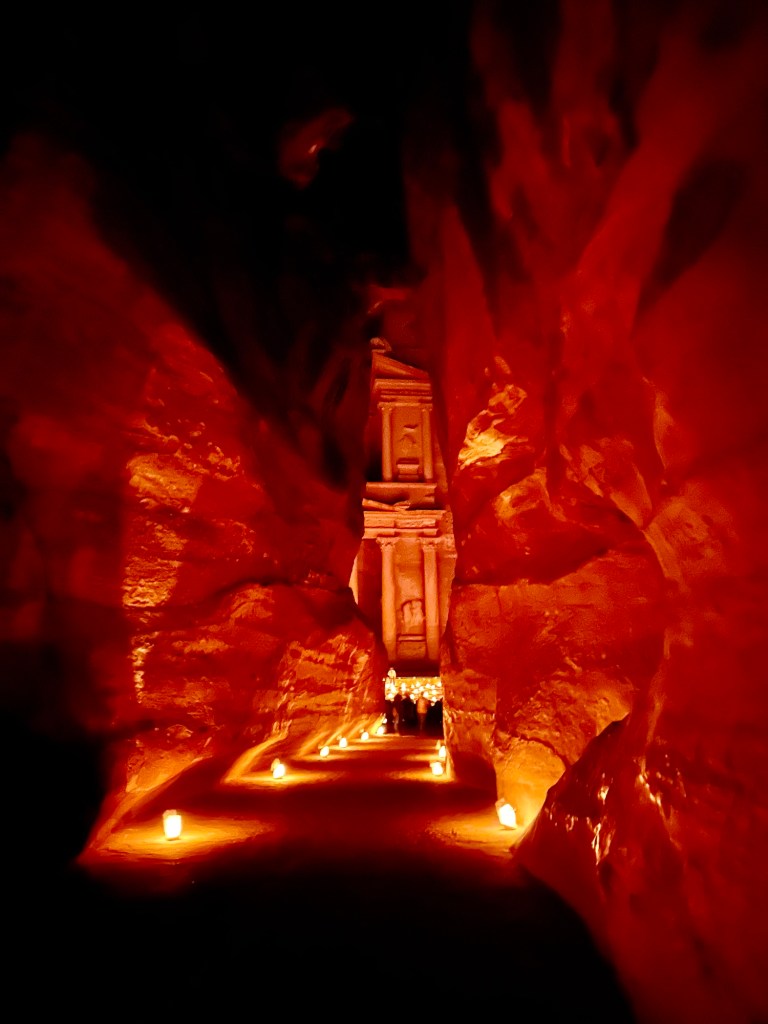
Another must is to attend Petra by Night. They organize it on three days a week, Monday, Wednesday and Thursday. The route from the entrance through the Siq and the Treasury is lighted by 1500 candles, and there’s a light and sound show in front of the Treasury. There are carpets to lie on and hot, sweet cups of tea to help with the cold desert night. The lights, the atmosphere, the eerie sensation when you walk around 6000 year old ruins, the music , in fact everything is breathtaking. Can’t recommend it enough.
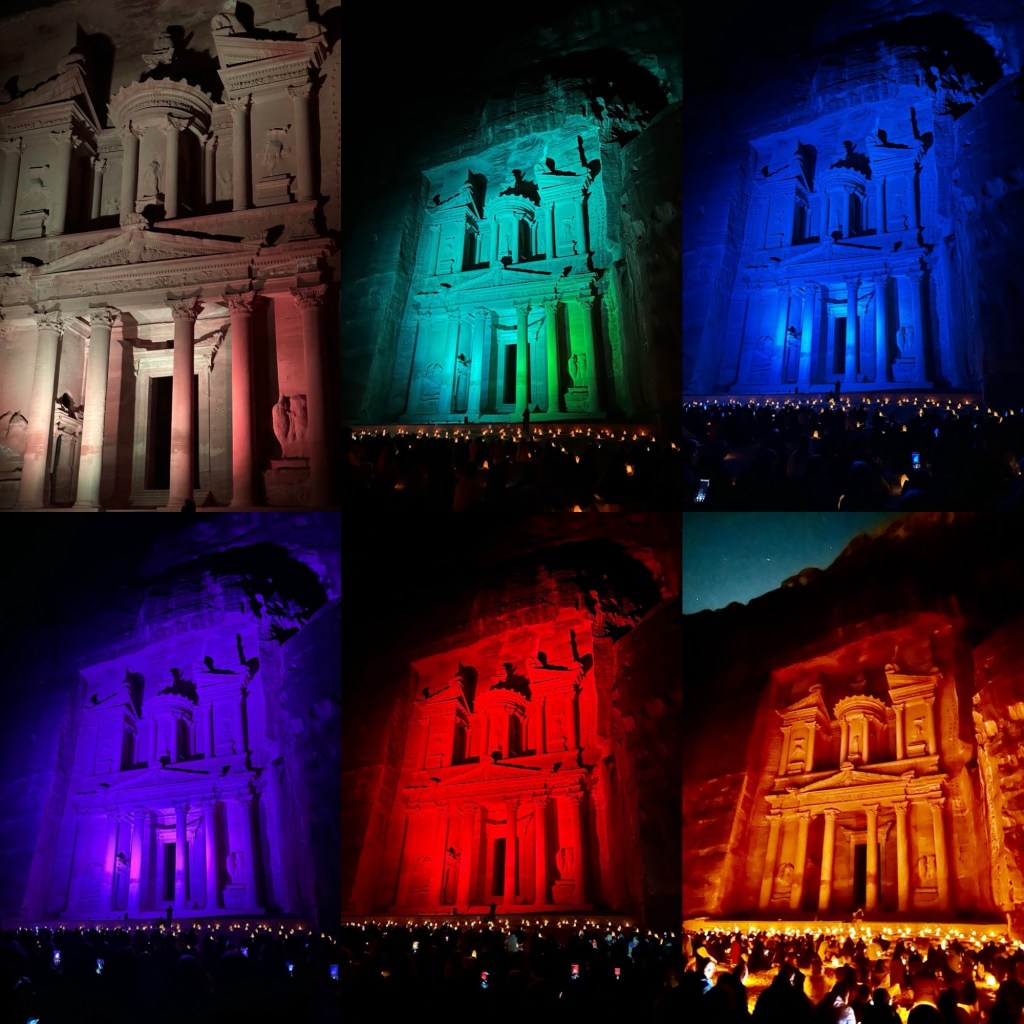
Don’t miss the Petra Museum on the way out. It has interactive displays about everything about the Nabataeans and it’s free of charge.
We stayed at Movenpick which turn out to a wise choice. It was just across from the entrance to the ancient Petra. After walking for hours, it was a Godsend to go to the hotel to relax. Plus the food was really fantastic, and their ice cream was as good as I remembered.
After Petra, there’s only one place to visit and it’s the Wadi Rum, with its otherworldly atmosphere, red sand dunes, vast open spaces, and towering cliffs.
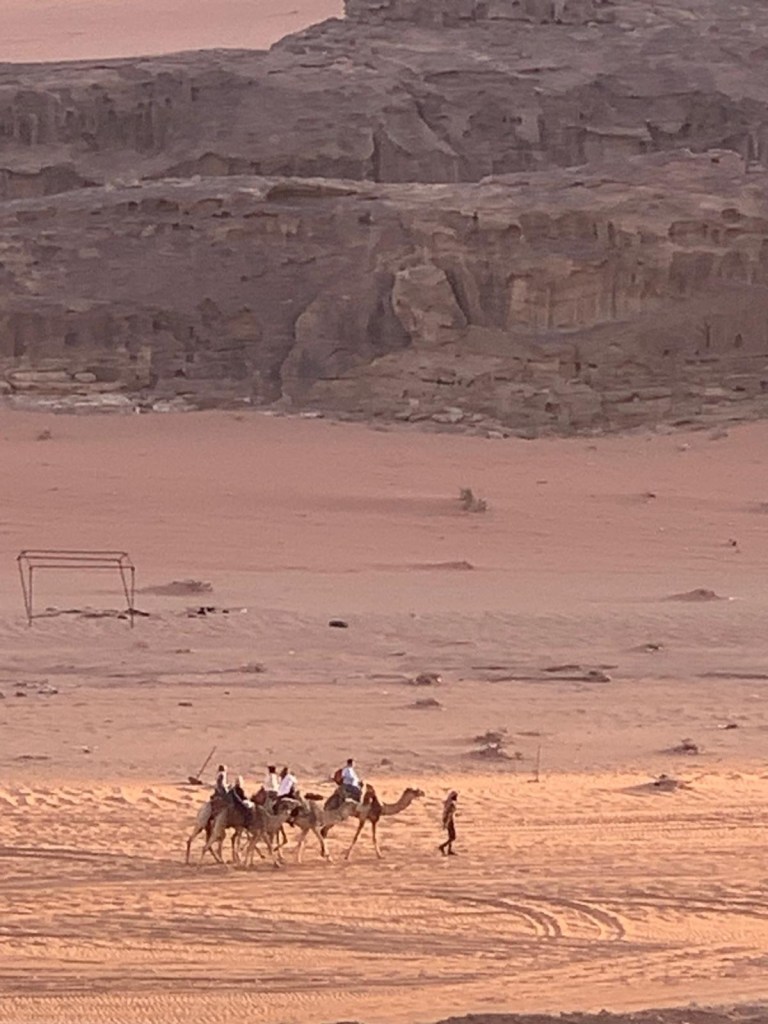
Wadi Rum, also known as the Valley of the Moon, is a protected desert wilderness located in southern Jordan, near the Saudi Arabian border. It’s famous for its stunning landscape, characterized by dramatic sandstone mountains, narrow canyons, and unique rock formations. The area has been a UNESCO World Heritage Site since 2011 due to its natural beauty and cultural significance.
In addition to its natural beauty, Wadi Rum has a rich history. The area has been inhabited by various groups for thousands of years, including the Nabateans, who left behind petroglyphs and inscriptions. Bedouin tribes still live in the region and earn their living from tourism.

Wadi Rum is incredibly ancient, dating back to the Precambrian period, before most complex life appeared. The oldest rocks in Wadi Rum are Precambrian granites ( the towering red and pink cliffs ). They are estimated to be around 600–800 million years old, possibly older. Crazy to put into context.
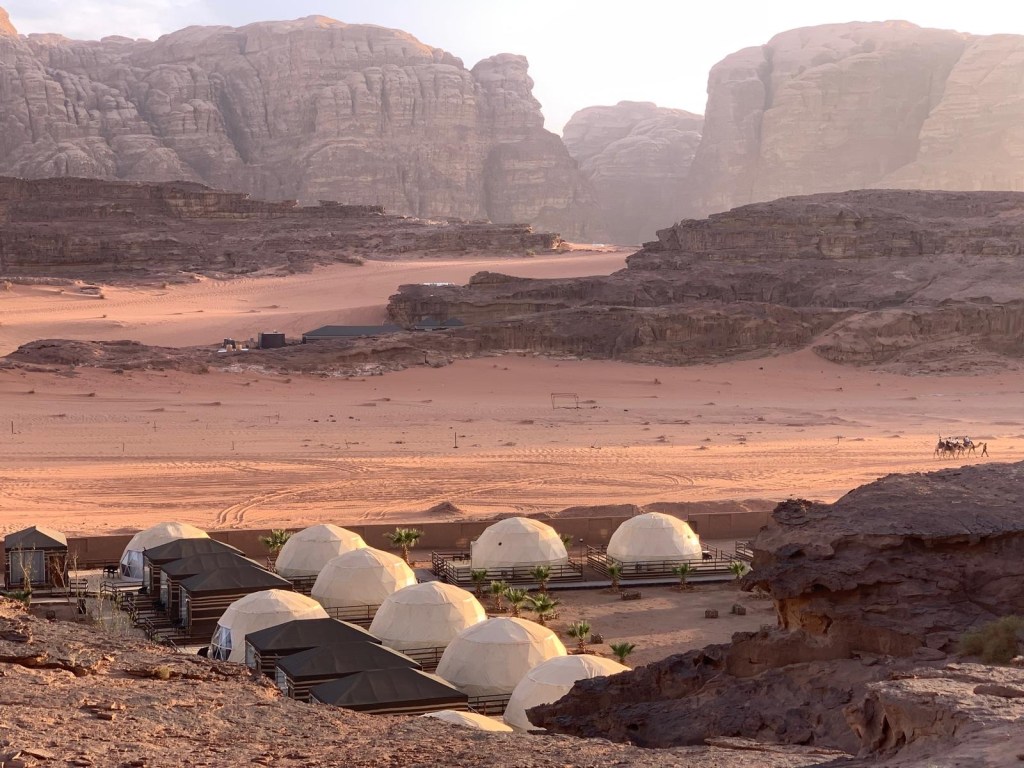
Tourism in Wadi Rum involves jeep tours, camel rides, rock climbing, and stargazing. The clear skies make it an excellent place to experience the night sky. There are many ‘Luxury Camps’ to stay, with traditional Bedouin-style and plastic bubble Mars-style cabins. We stayed at the Oasis, in one of the Martian cabins. Very comfortable and spacious room with a slightly weird smell of burnt plastic in desert heat. But, who’s complaining?
Wadi Rum is forever linked to one famous British soldier and spy, T.E. Lawrence or Lawrence of Arabia.
Fluent in Arabic and deeply respectful of Arab culture, he became a trusted advisor to Prince Faisal ibn Hussein, a leader of the Arab Revolt and played a crucial role in uniting Arab tribes against the Ottoman Empire during World War I.
Lawrence spent significant time in Wadi Rum, using it as a base for planning guerrilla attacks, including the famous assault on Aqaba in 1917. He admired its vast, silent beauty and called it “vast, echoing and God-like” in his book, Seven Pillars of Wisdom, which chronicles his experiences.
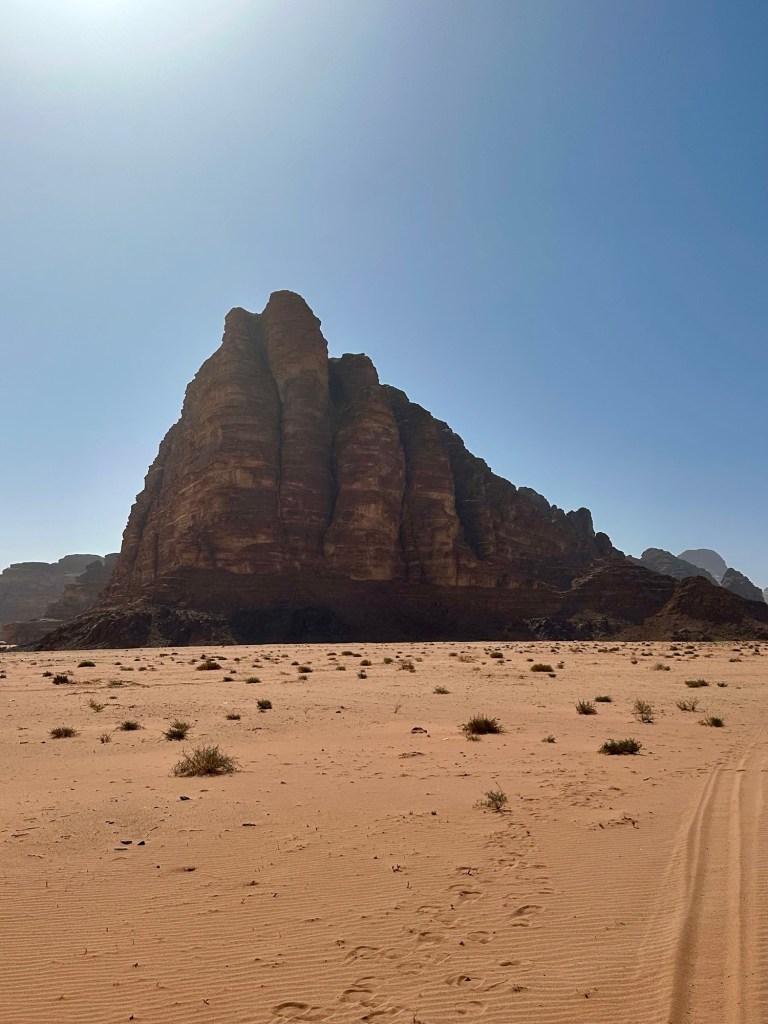
Today, several landmarks in Wadi Rum are named after him.
• Lawrence’s House: The remains of a Nabataean structure he may have used as shelter.
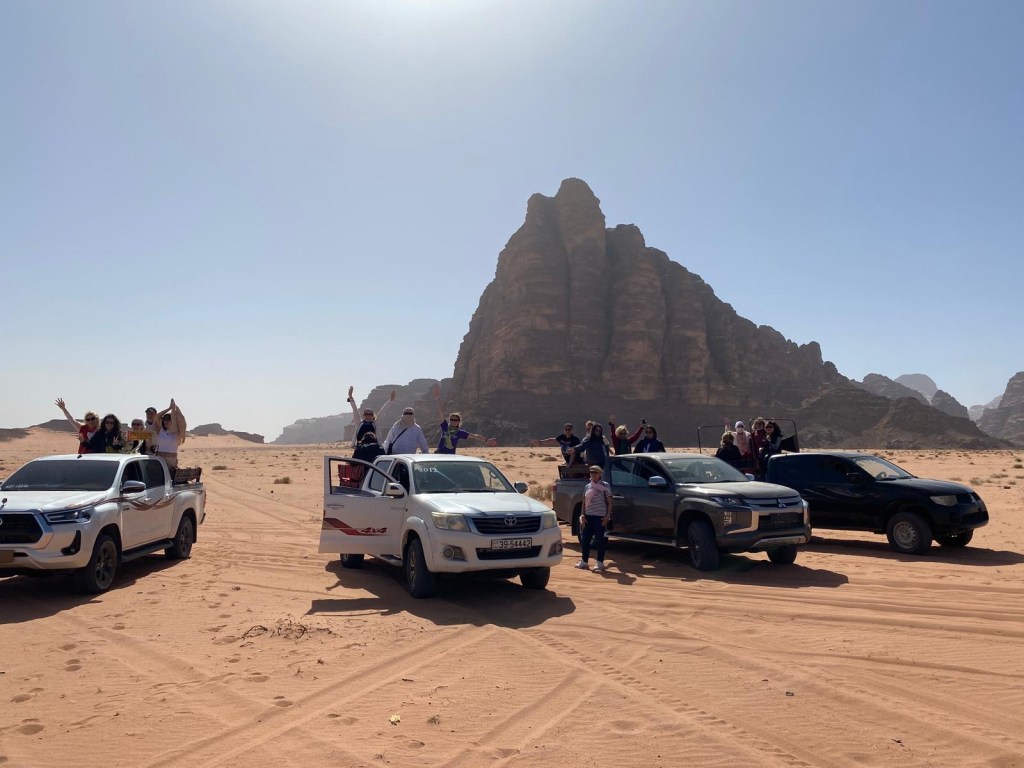
• The Seven Pillars of Wisdom: A towering rock formation near the visitor center.
The otherworldly atmosphere of Petra and Wadi Rum makes them a perfect setting for movies. Some of my favorites are Dune (Part 1 &2), The Martian ; Star Wars, Indiana Jones and the Last Crusade; Aladdin and of course, Lawrence of Arabia.
I always try to read a few books before visiting a new place, and I can recommend two.
One is the Leap of Faith memoirs of Queen Noor; the last wife of the previous King. I find it relevant and informative. And the other is The Petra Paradox, a romance – action novel that reads like a modern day Indiana Jones. I liked them both.
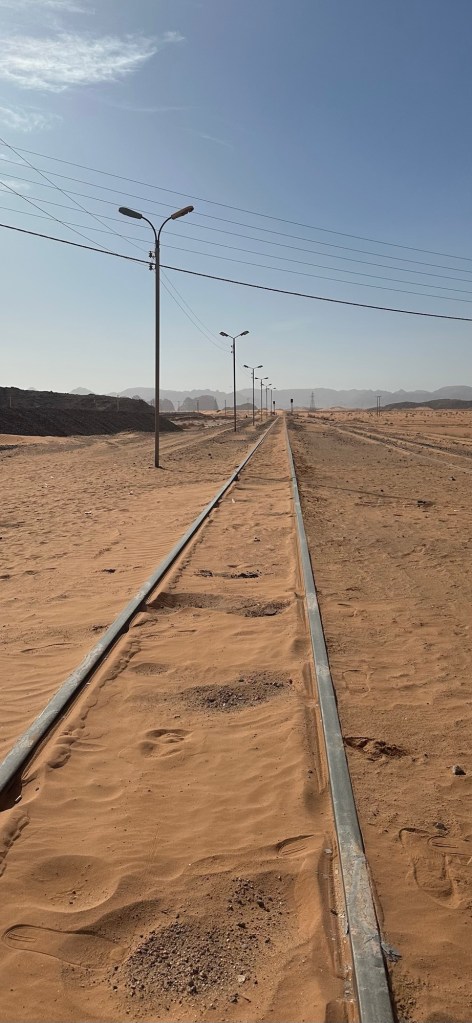
On the way back from Wadi Rum, you’ll see some old train locomotives and trucks on unused tracks. These belong to the Hicaz Railway, that connected Istanbul to the Holy Places in Mecca and Medina.
Initiated around 1900, the railway was part of the Ottoman Empire’s effort to modernize, strengthen its control over its vast territories, and serve the Muslim pilgrims, making the journey to the holy cities safer and quicker. During World War I, the Hicaz Railway had become a critical supply line for the Ottoman forces operating in the region. Lawrence of Arabia, worked with Arab forces managed to sabotage the railway, marking a turning point in the struggle for Arab independence.
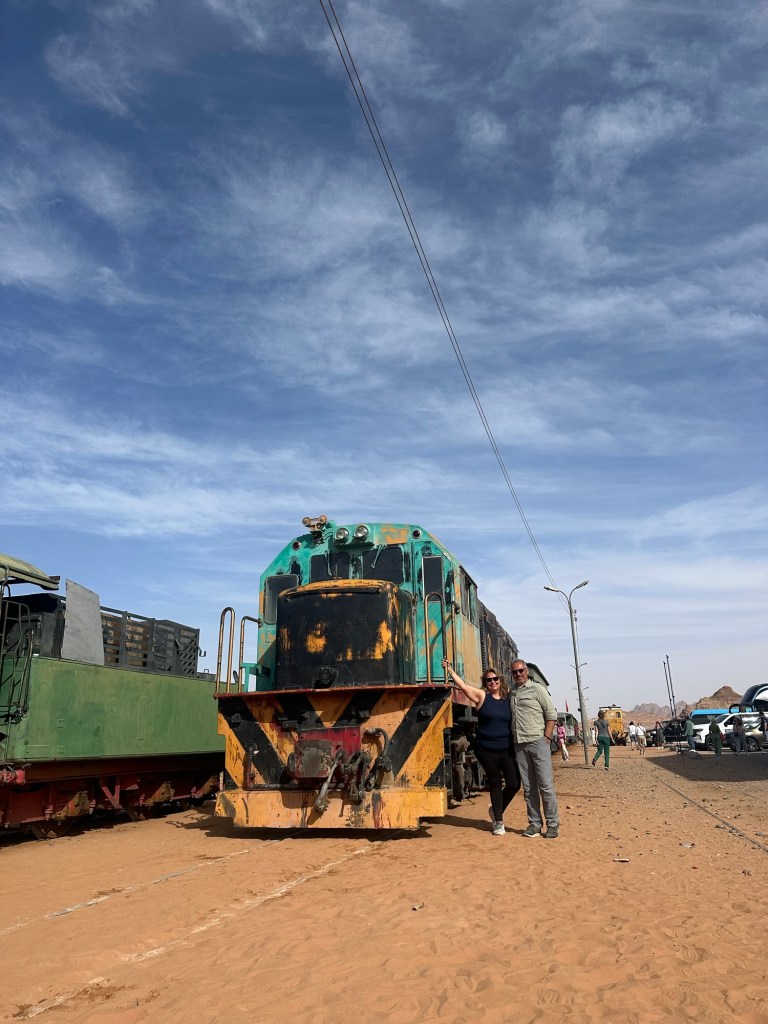
Although Sultan Abdulhamid the Second originally wished for a total Ottoman project, funded and constructed only by his people, the local civil engineering school was founded only sixteen years ago, and the Ottoman engineers were not up to par with some of the challenges that were put in their way by the harsh nature. So, German engineers were called. Somewhere along the route close to Amman, an Austrian scholar among them realized that the railway had to pass through some ancient walls, that was once a large palace then ruined, but the magnificent facade was largely intact. The Bedouins called the spot “Mshatta“, meaning “winter camp” and used it during harsh winter months.
The scholar alerted a colleague in Berlin who contacted the Emperor William the Second who in turn called upon the Sultan. Abdulhamid the Second resolved the situation without further ado by presenting the entire facade as a gift to his friend William. It was shipped to Berlin in 422 crates and a section measuring 32 metres wide by 5 metres high was erected in the museum. Now, the Mshatta Facade attracts thousands of tourists to the Pergamon Museum in Berlin.
The railway was used until 1960s. Today, it’s another tourist attraction.
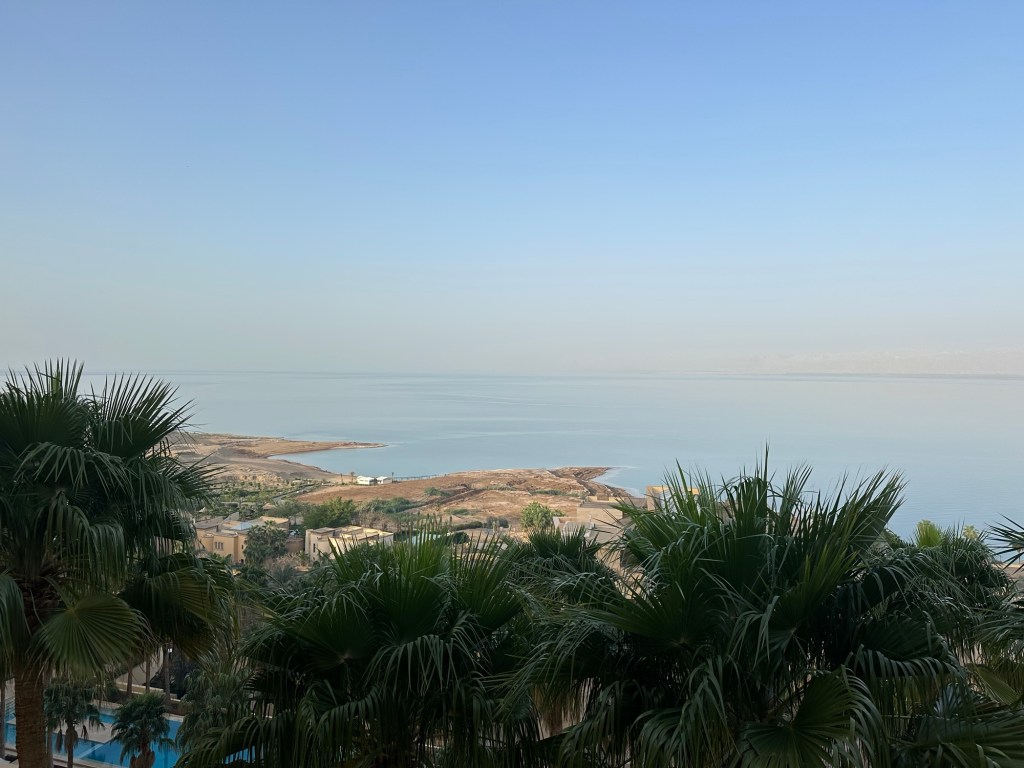
After all the walking, the best way to relax is to go to Dead Sea, have a mud bath and just float around. It is heaven.

Situated in the Jordan Rift Valley, the Dead Sea lies at the lowest land-based elevation on Earth, at around 440 meters below sea level. With a salinity of around 34.2%, the Dead Sea is nearly ten times saltier than typical ocean water and nothing lives in it. Hence the name Dead Sea.
There are a lot of hotels and access points to Dead Sea, for it’s a favorite destination for locals and tourists alike. We stayed at Kempinski, which I highly recommend. The room, the pools, the food, the service, even the entertainment were incredible. I really wished I could stay there a few days more.
The nice attendants there explained the Dead Sea ritual :
First cover yourself in mud (which, luckily for me, doesn’t have any bad smell), then go to Dead Sea and just float around. Don’t try to swim, don’t move a lot and whatever you do, don’t allow any drops of water in your eyes. If you do, don’t try to clean them with your hands.
Afterwards, scrub yourself with salts and take a shower.
I did all that, with only a teeny tiny drop of water in my eyes. And yes, it burned like hell for a few minutes. When it was all over, I felt incredibly rested. And my skin never felt smoother.
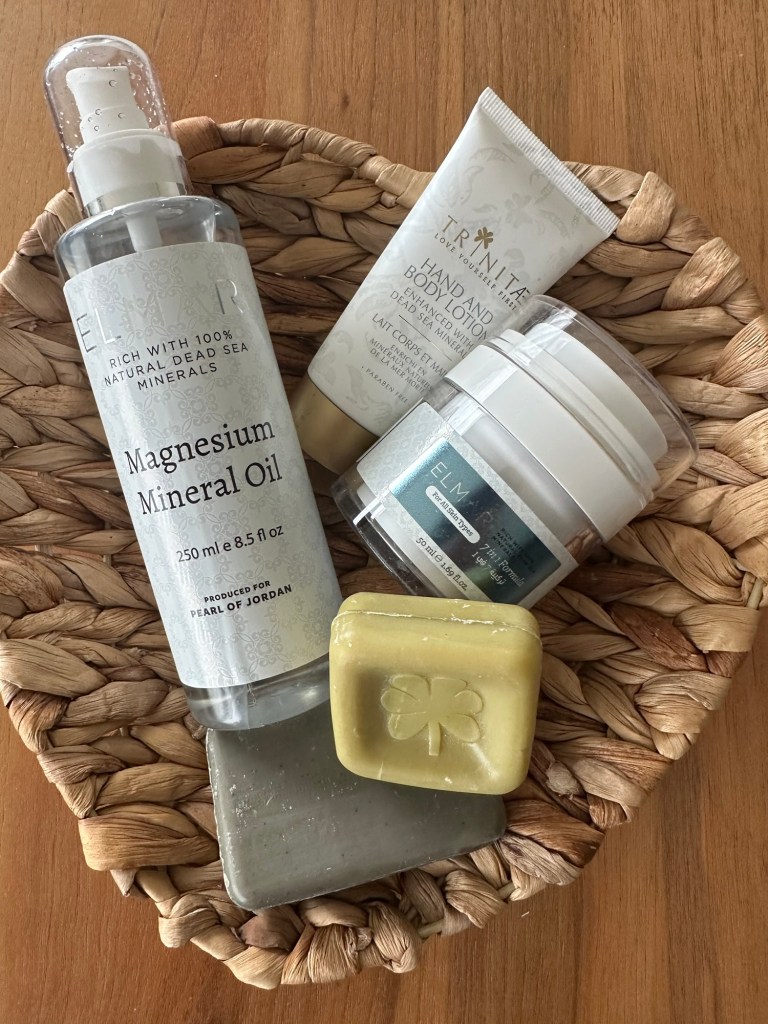
Next stop : Anywhere that sells quality Dead Sea products.
No blog is complete without the really yummy Jordanian cuisine. If you like spice, you’re in the right part of the world. They have a large variety of mezes, salads and deserts that are really delicious. The main dishes are usually lamb and chicken served with rice and grilled veggies, although we happened upon a seafood buffet one night and every dish we tried were excellent, especially the huge green-lipped mussels.
My favorites are :
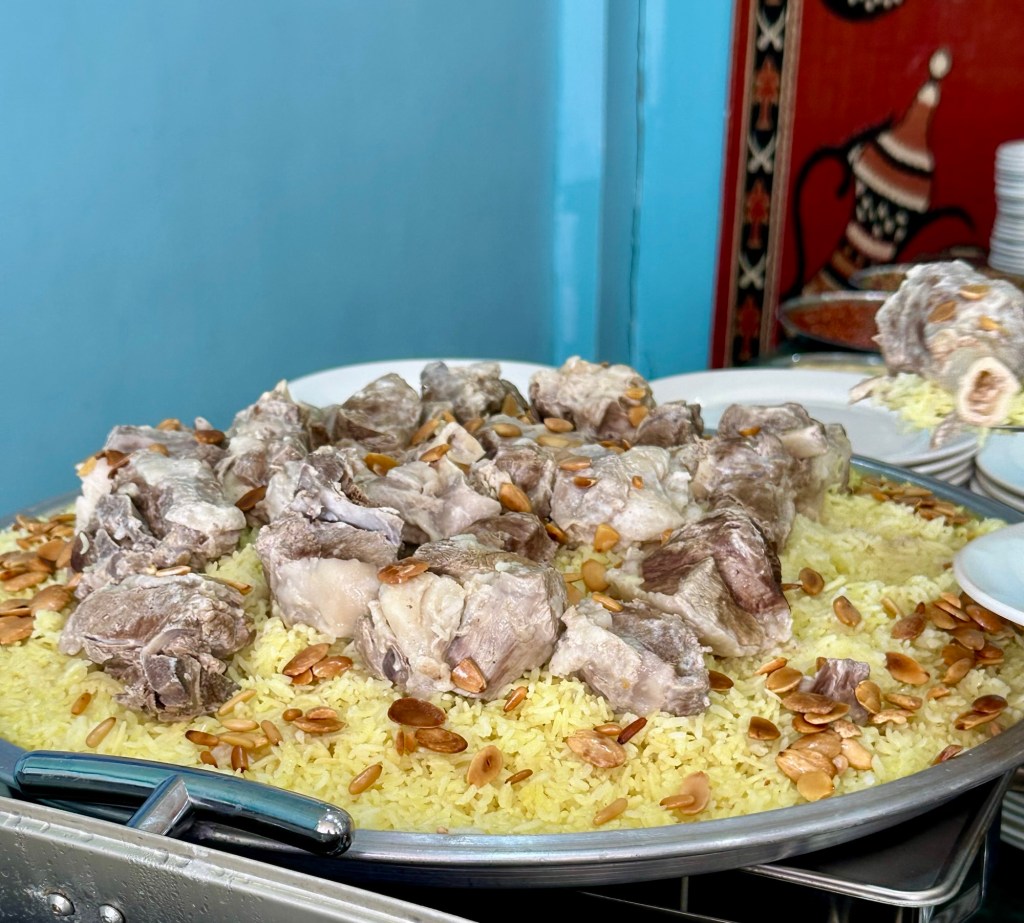
Mansaf – Lamb cooked in jameed (a tangy dried yogurt sauce), served over rice. The rice was incredible with turmeric, toasted nuts and just a hint of cardamom.
We tried it at Azaim Deeritna Restaurant, a family run establishment somewhere near the Kerak Castle. The cook was a genius, who also prepared fried eggplants served with a light sauce of tahini, lemon and a bit of red pepper. Yummy !
I’ll try to cook both as soon as possible.
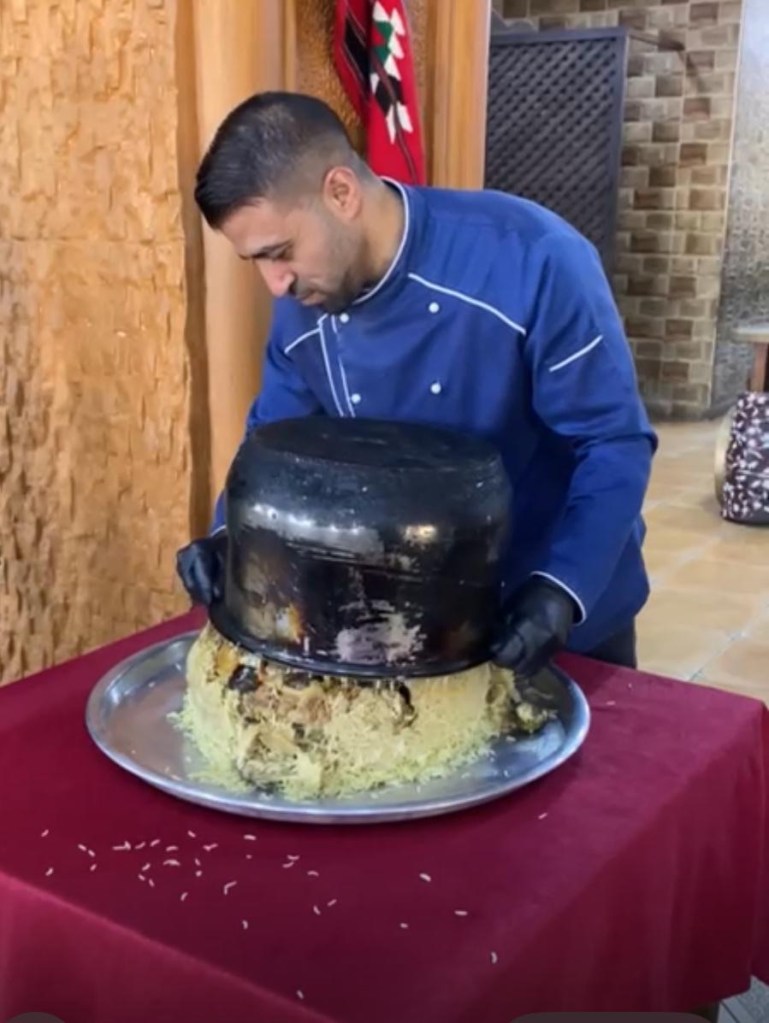
Maqluba – Literally means “upside-down.” A layered dish of rice, meat (usually chicken or lamb), eggplant, and cauliflower cooked in a pot and flipped upside down to serve.
We tried it at the Artemis Restaurant near Jerash and went for second helpings.
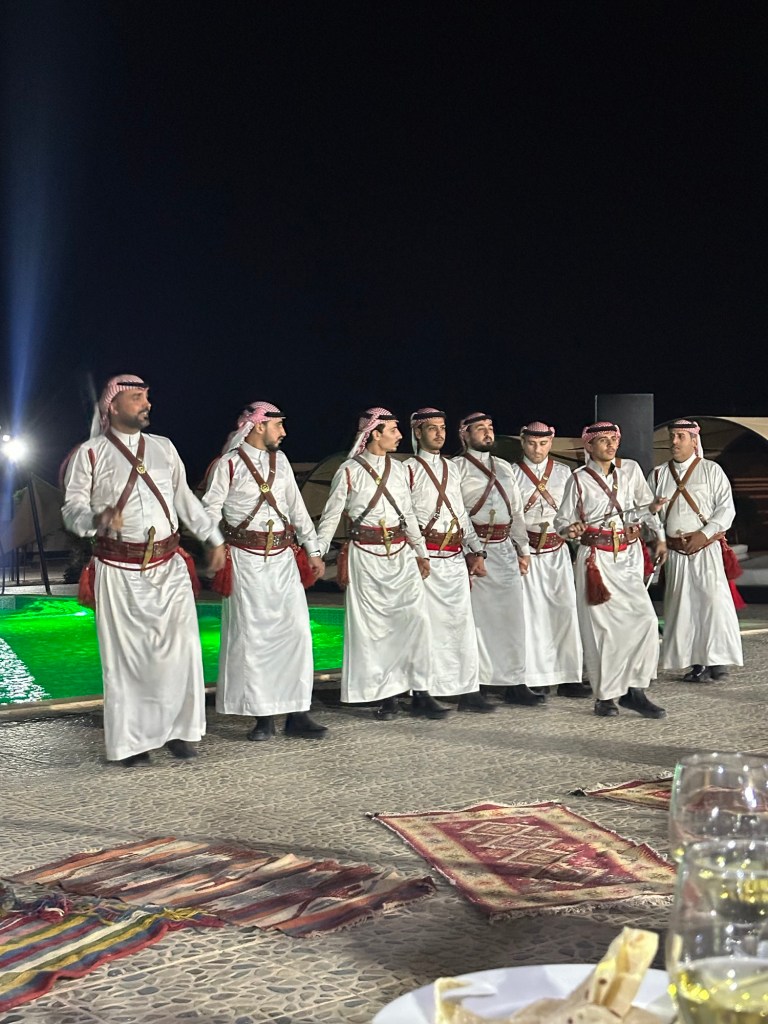
Zarb – a Bedouin barbecue cooked underground in a sand oven. They put layers of marinated meat, vegetables, and rice and cook them slowly for smoky tenderness. The opening of the underground oven is quite a show. We tried it at Wadi Rum.
Falafel and Hummus – Who doesn’t love them with warm pita bread ? We had them at almost every meal with pickles and salads.
The deserts -baklava, kadayif, red velvet cakes …- were all very tasty , but apart from some Umm Ali , I mostly reserved my sweet calories for the ma’amoul – small cookies filled with dates and pistachios or covered in sesame. Heaven.
There are two drinks that you can’t escape from. The first is the Arabic coffee, often flavored with cardamom, it’s served in small cups as ikram when you enter any building. The second is the Bedouin tea, a strong black tea infused with leaves of fresh mint. They serve it everywhere as an alternative to Arabic coffee. It’s great for hydration and digestion.
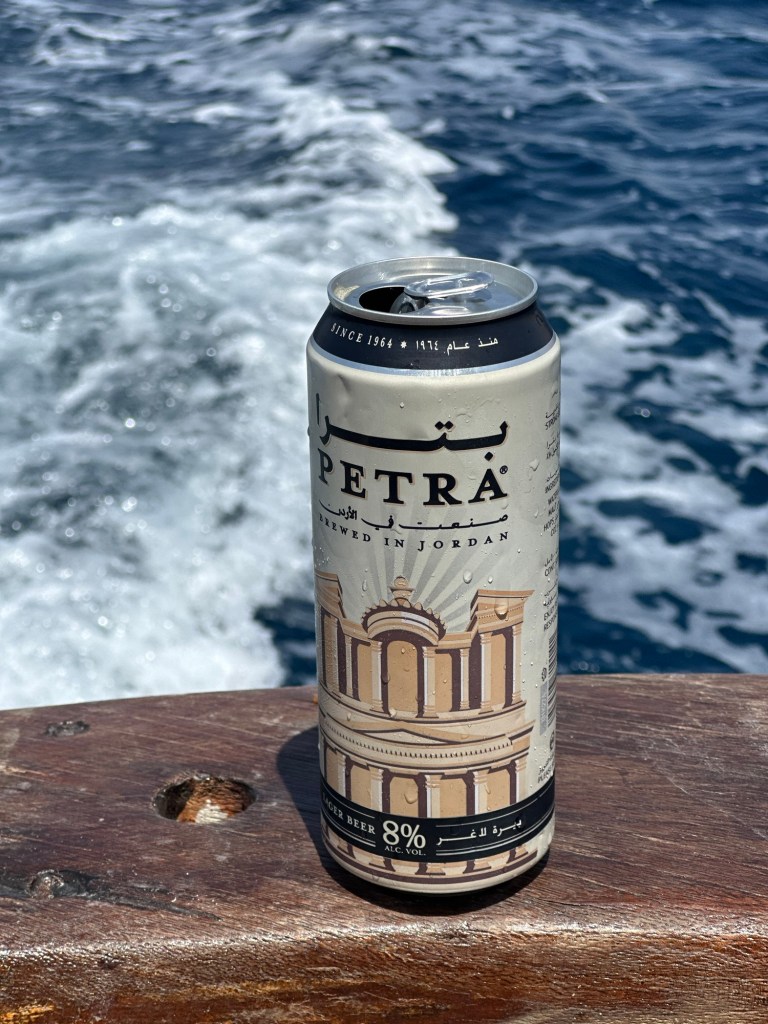
Jordan has a surprisingly rich and growing wine culture, despite its small size and predominantly Muslim population. The country’s wine production dates back thousands of years — the Nabataeans were known to cultivate vineyards.
We tried wines from two estates; Saint George Wines and JR Wines. I found the reds robust and earthy, with Cabernet Sauvignon and Syrah leading the way.
My favorite is the Saint George Chardonnay, a crips wine that compliments the spicy Jordanian mezes perfectly.
Thank heavens for the thousands of steps we took daily.
Please don’t forget to check out my next blog post, for more on Jordan.
Some of the links in this blog are affiliate links, which means I may earn a small commission—at no cost to you—if you decide to buy something. I only recommend what I love and actually use.”


 CherryPicks
Thank you for sharing your experience with us; I enjoyed reading your blog and learned so much about Jordan. It has been on our list of places to go and it just moved up a few spots.
LikeLiked by 1 person
🥰 glad to be of asslstance
LikeLiked by 1 person