
One of the best things about Tahiti is its sister island, Moorea. Not only it provides a beautiful backdrop to the gorgeous Tahitian sunsets, it is also one of the most stunning islands I have ever been.
Going there is easy, there are several ferry companies that make the 11 mile crossing several times a day. They differ in price and speed. You don’t have to reserve in advance if you don’t have a car. Just go to the ferry terminal and pick a ferry.
But a car will help you enjoy this little island immensely, so rent one in Moorea. There are several companies at the ferry terminal in Moorea, and this time I strongly suggest to reserve in advance.
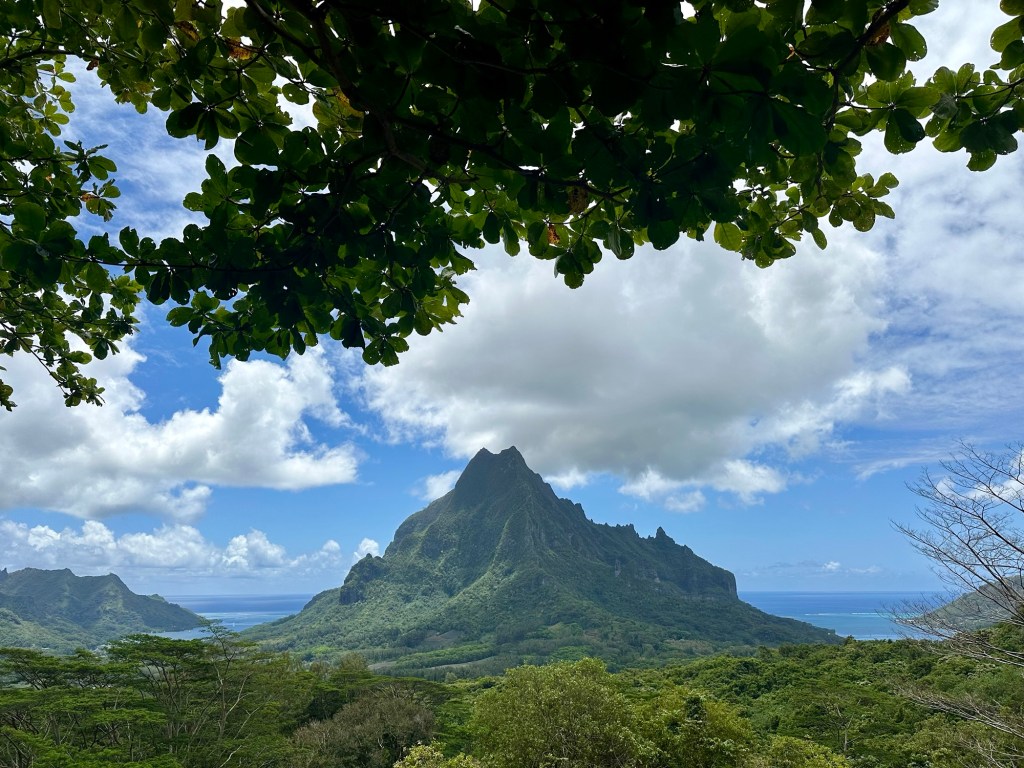
The island was formed as a volcano 1.5 to 2.5 million years ago. As is with all volcanic islands, it’s lush and wild. There are two small, nearly symmetrical bays on the north shore, the Opunohu and the Cook Bays, divided and dominated by the majestic Mount Tohivea. The views from the hills are spectacular.
Captain James Cook was the first European to land at Moorea on September 30, 1777, during his third and final voyage to the Pacific. The island was spotted and noted by other European explorers before, however they never landed.
Cook had already been to South Pacific, having two successful expeditions to Tahiti, Fiji and New Zealand. He was considered the greatest explorer of the eighteenth century. He was the person who confirmed to Europeans who long for a primitive ideal that Tahiti was real and it was indeed a primitive paradise.
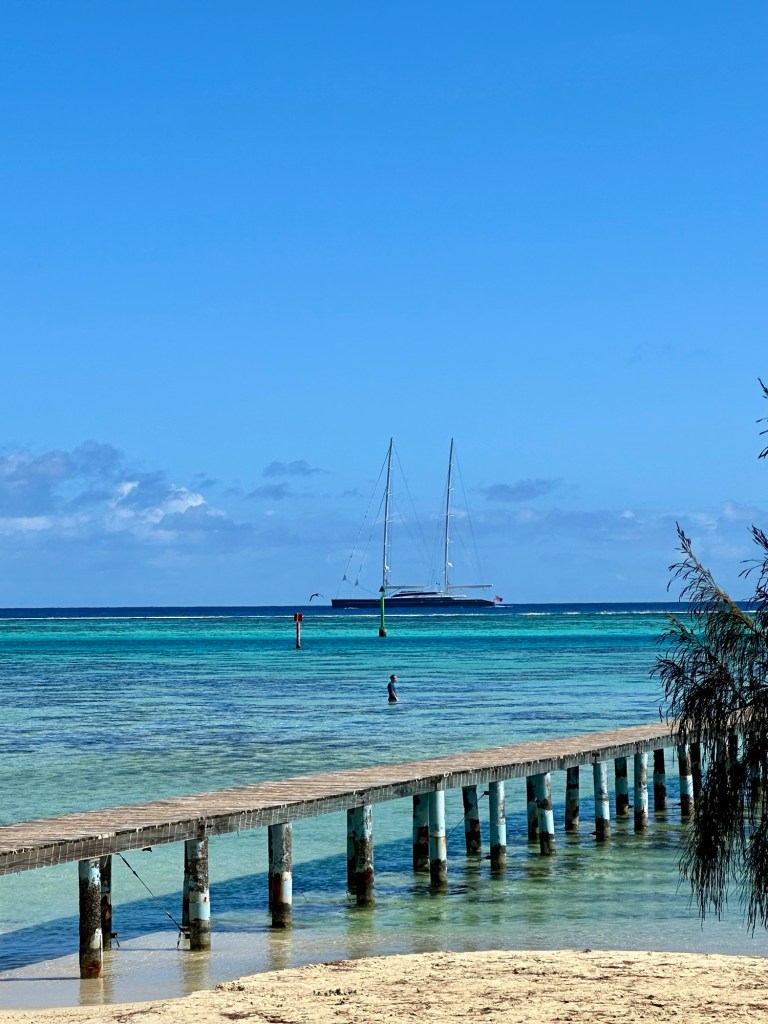
He moored his ships, the HMS Resolution and the Discovery, in Opunohu Bay, and later visited Pao Poa Bay by land. Cook later named that bay after himself. It is a great anchorage and constantly filled with boats of all sizes and shapes.
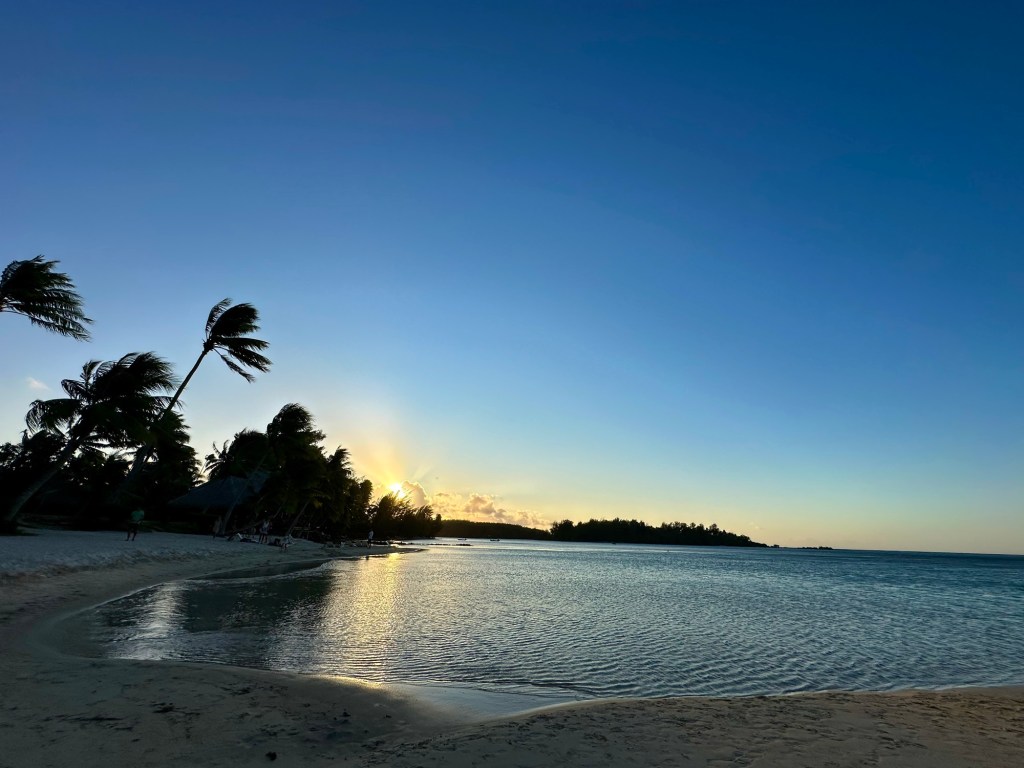
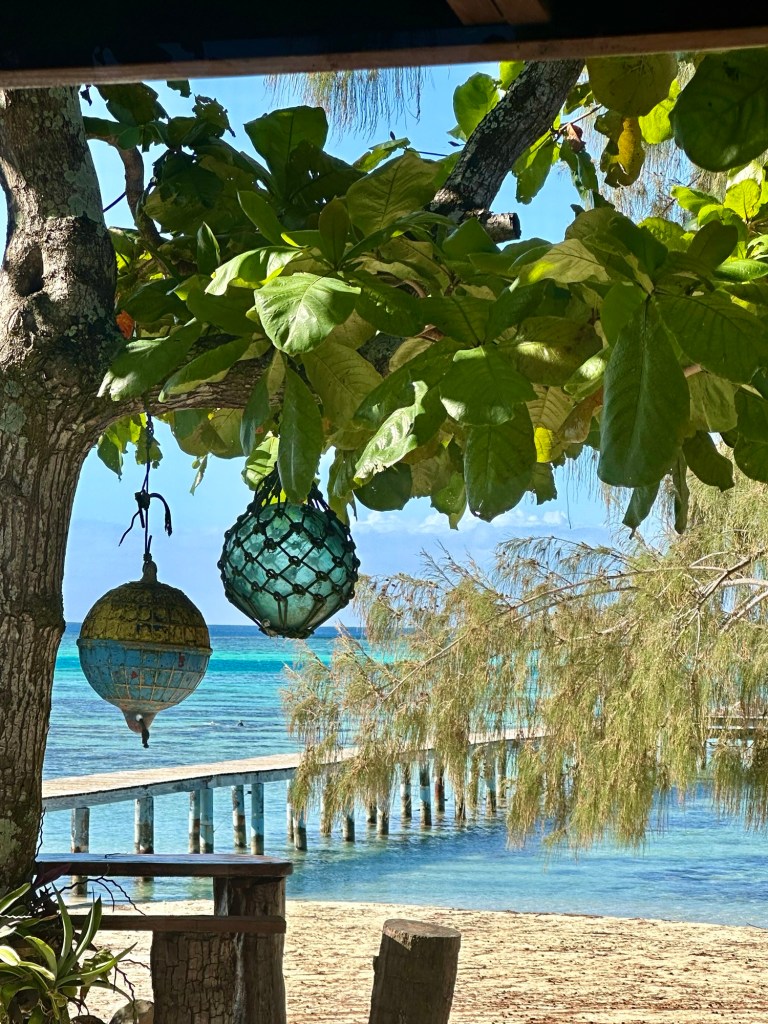
We stayed at a rental house at the Plage des Tipaniers, the best beach at Moorea. Our house was a bit old but very comfortable and the location, right on the Plage des Tipaniers, was incredible.
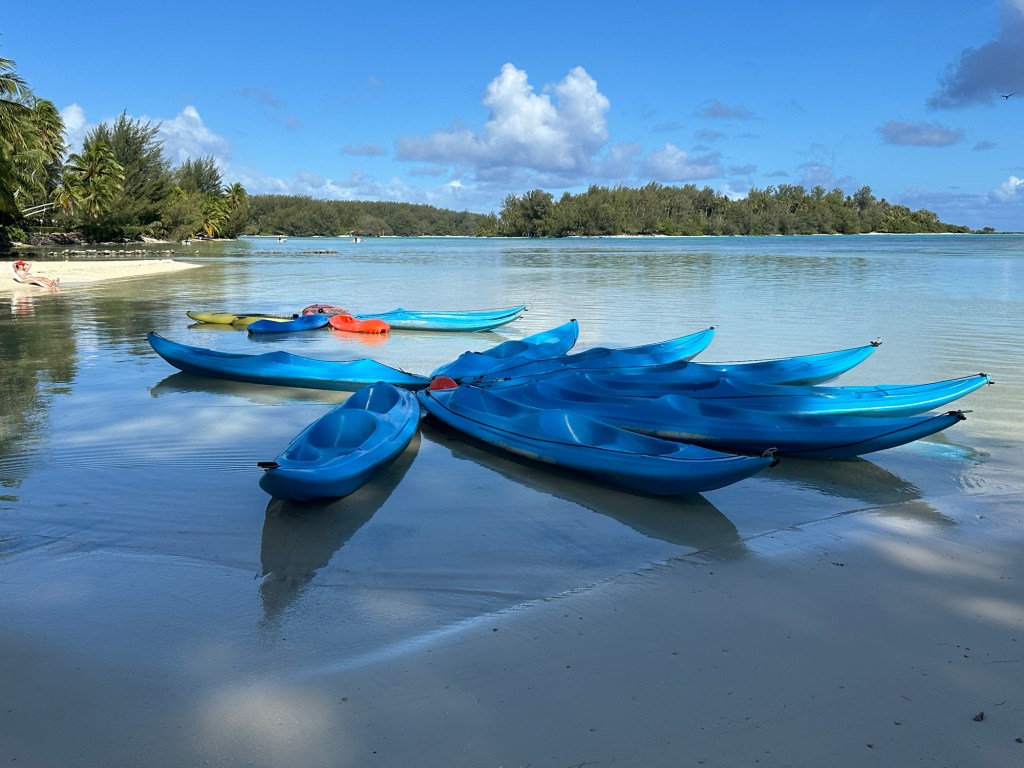
We booked well in advance through booking.com, but our host told us they didn’t get a firm confirmation so they weren’t sure if we were coming . And there was the usual hassle of accepting only cash that is particular to this side of the world. So, if you plan to go there, double check directly with the hosts.
Our host Arii was friendly, half drunk and utterly charming. He told us that his name meant King in the local language. During our time in French Polynesia we met with a number of Ariis, so I’m guessing in Tahiti, lots of people are born to royalty.
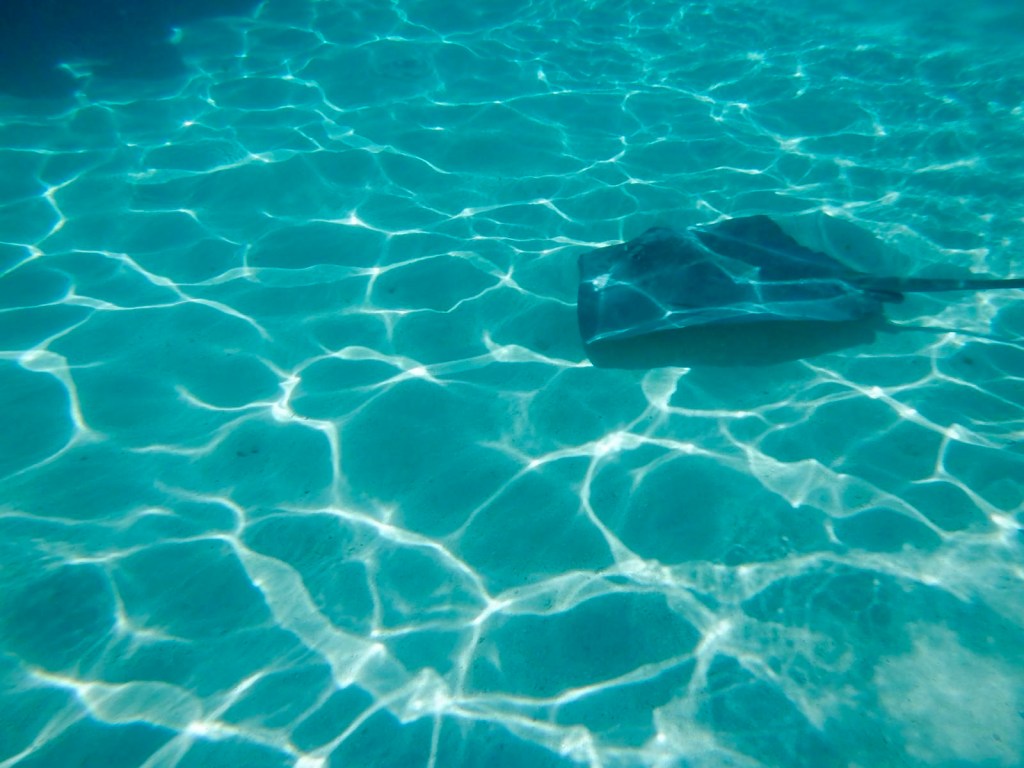
Best things in Moorea are stingrays, whales and sharks. And there are plenty of them to swim with.
Plage des Tipaniers was the place to be to swim with sharks and stingrays. There were some reefs about 100 meters from the shore where Ari told us to check out, so we just took our kayak and snorkels one morning and paddled there.
There were several stingrays and reef sharks, swimming lazily in knee deep waters and we had our share enjoying these beautiful creatures up close. It was kind of surreal to see a stingray swim between your legs, only followed by a few sharks.
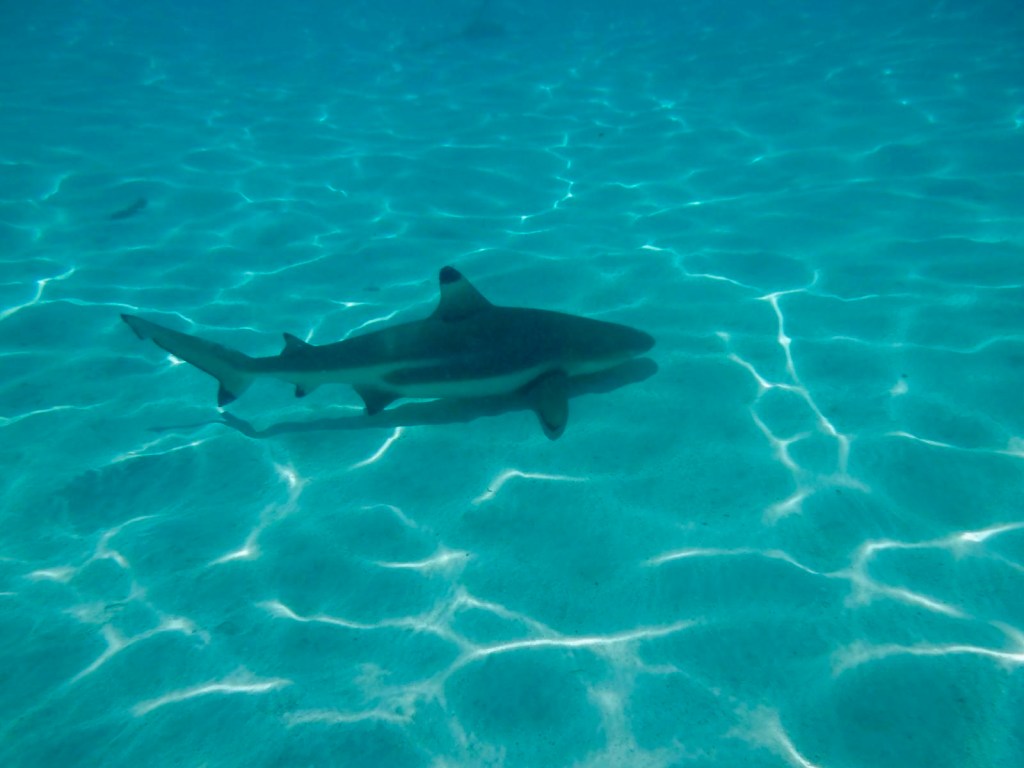
It is best to go early in the morning, for there are many tourist boats coming from nearby resorts. You might end up photographing fellow tourists instead of the sharks.

Afterwards, seeing those wonders became a regular theme, especially when we start seeing baby sharks at the shallows of the beach during our nightly walks. Another shark between my toes, no biggie !
Our whale encounter was something else.
Humpback whales migrate north from Antarctica to the warm waters of Tahiti and French Polynesia from July to November each year to escape the Arctic winter. In the South Seas, they mate, give birth, and raise their young. In Antarctica, they feed.
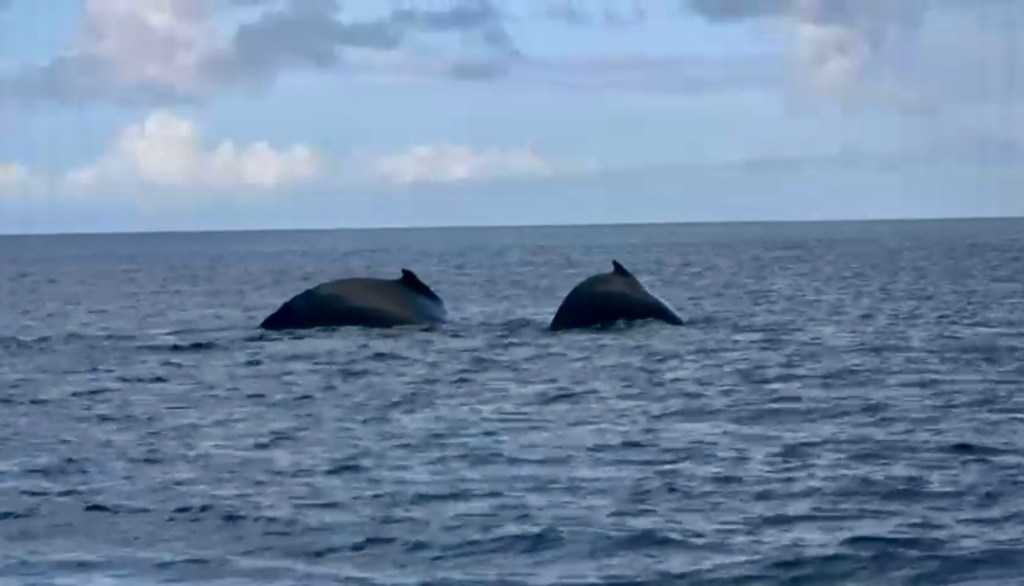
Mothers don’t eat between July and November, and feed their babies who drink around 120 liters of milk daily. Come November, they migrate back to the cold waters of the Antarctica for some well deserved feeding frenzy.
Once devastated by commercial whaling, whale populations have made a remarkable comeback. Since whale watching and swimming are a growing industry, protecting the habitats of these giants are a huge responsibility, and there are some countries that do it better than others. In French Polynesia all cetaceans (whales, dolphins and porpoises) are protected by a public ordinance. Indigenous leaders of Tahiti, the Cook Islands and New Zealand recently signed a treaty that recognizes whales as legal persons, affording them even greater protection.
For our whale watching tour, we booked with Manawa Tours and had a wonderful afternoon. They picked us from the rendezvous point at the Cook Bay on time and gave us careful instructions. Basically, when they spot a whale, they stop some 100 meters away, and you swim or snorkel with your guide to catch a glimpse of these giants. The guide spots the whales and instructs you how to approach.
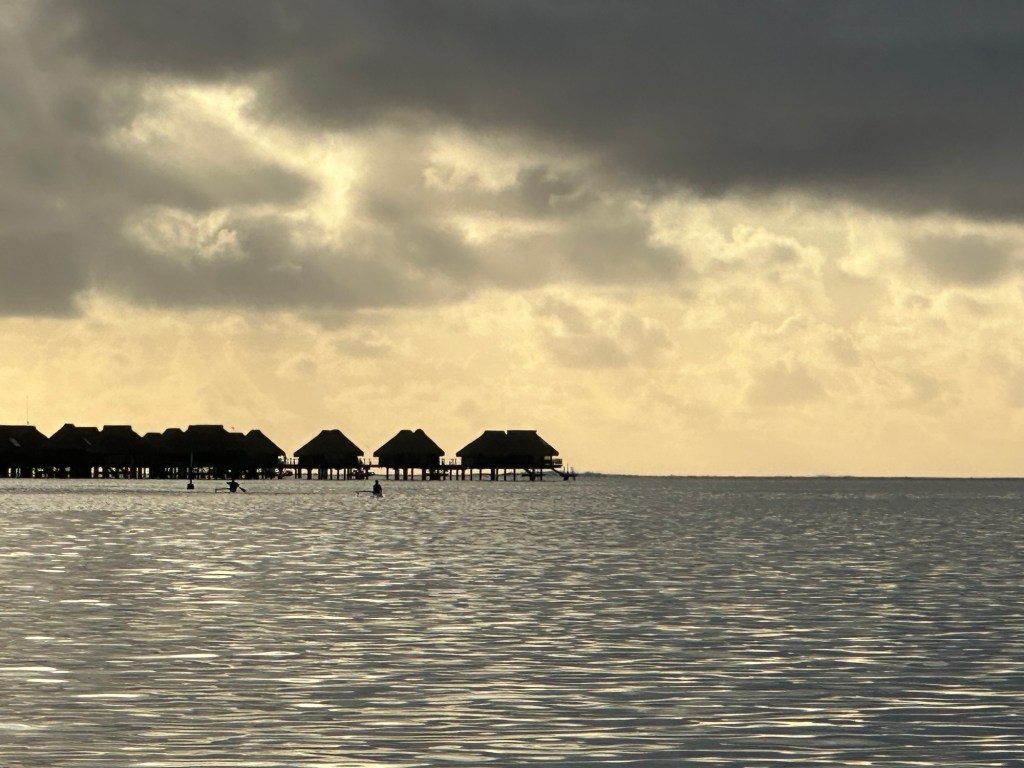
After a short boat ride to get outside the reef, we put on our snorkels, did as we were told and had the most magical experience !
One minute the water was filled with nothing but light rays of the sun, then suddenly two silhouettes appeared from the deep blue, swimming gracefully toward us. A mother and her calf were swimming some distance from us, and for some reason, the mother made the decision to turn towards our group. These 40 ton giants are incredibly fast and graceful, so we just froze, not daring to make any sudden movement that might scare them. When they were passing beneath us, the baby playfully turned on her back, waved her fins and watched us. That moment of contact was unreal.
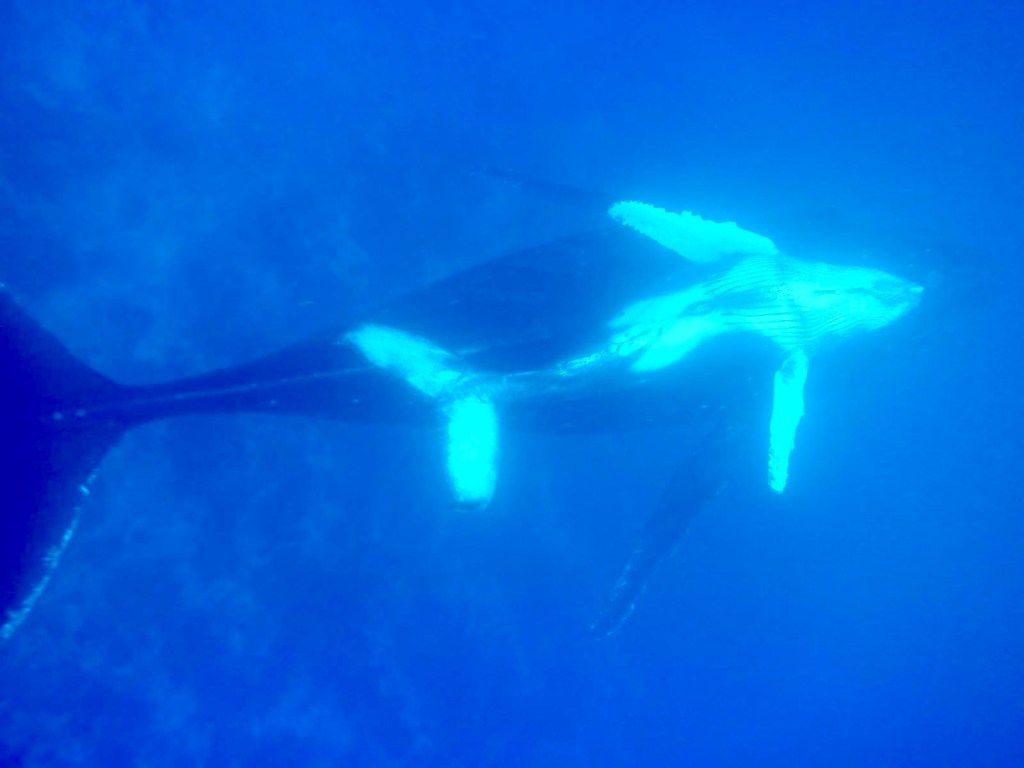
An escort male whale followed them just seconds after that, passing quite close to us, but I was so hooked on the baby that I hardly noticed him. Male escorts follow females in the hope of a potential mating, and keep other male whales and other predators away. Sort of a knight in a shining armor.
Our luck continued on the way back and we came upon another mother with her new born, sleeping peacefully just inside the reef. She was resting, and the little guy was playing in the water, making short dives and always keeping in fin contact. Our guide calculated the baby to be around three weeks old, just around two tons.
I could have watched them for hours, but after 10 mins or so, the mother woke up and took her calf to deeper waters.
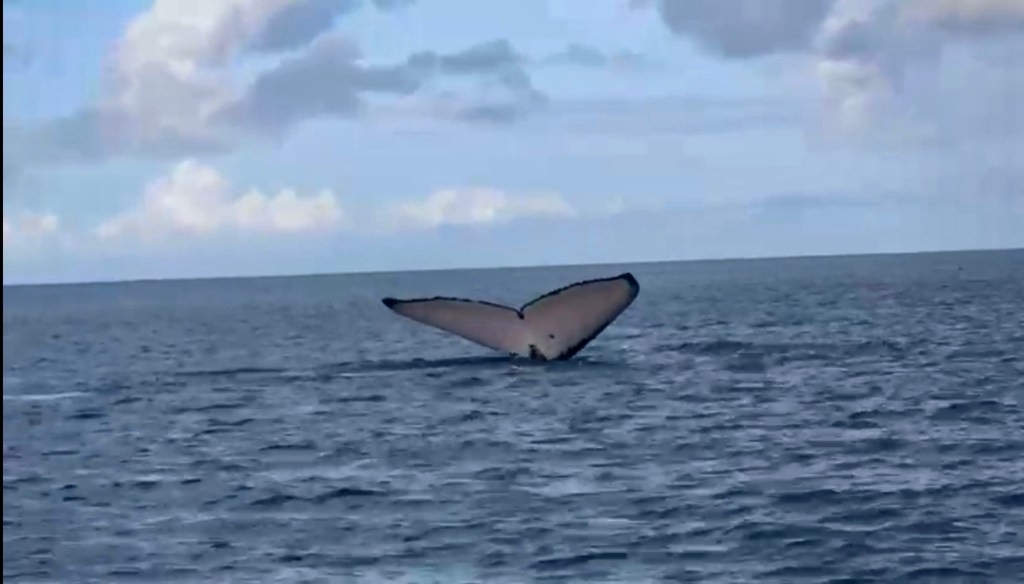
A friend on another dive witnesses another miracle, the whale song of a lonely male. The sound was vibrating through her inside the water, but outside, it was silent. She still had the goosebumps when she was retelling her story.
I feel truly privileged to witness those incredible moments. I know they’ll stay with me.
Moorea is truly a beautiful island, and we spent time driving around and taking in the scenes. There are some hiking routes around Mount Tohivea. Our friends took a half day tour with a local guide, and they came back quite spent. Just listening to them was tiring.
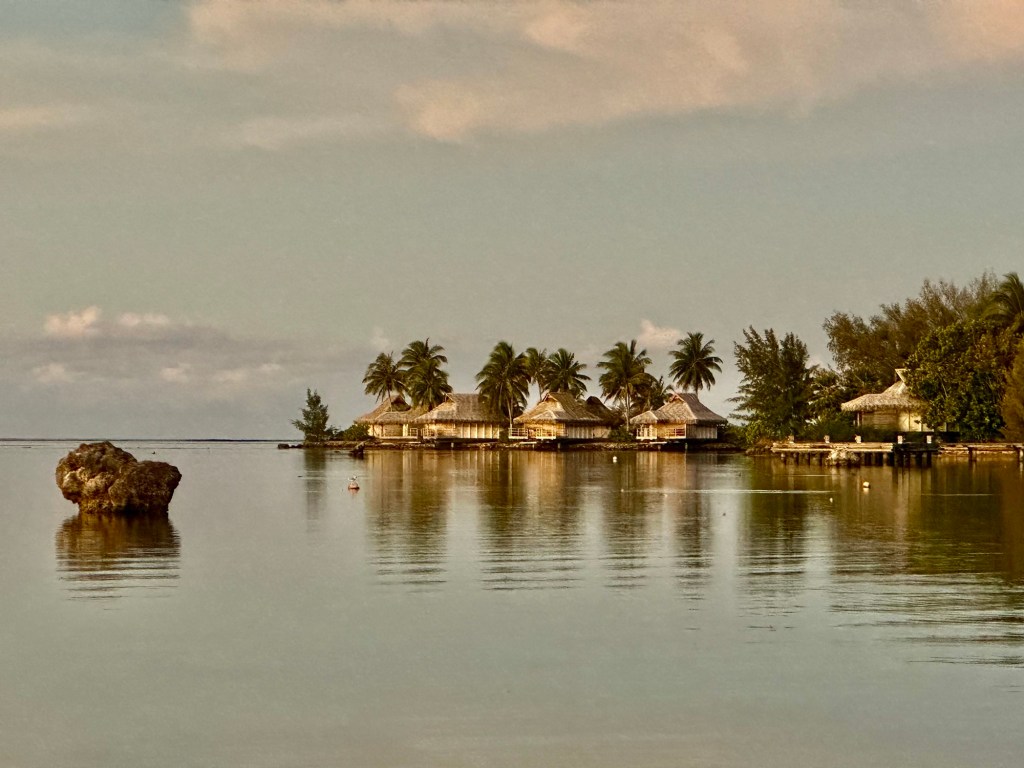
One thing that struck me in French Polynesia and in most of the Pacific Islands I’ve later visited was how deeply religious islanders are. Many Polynesians were converted to Christianity by the Protestant Missionary Society, which arrived on the islands in the 19th century. The Society established schools, churches, and local language translations of the Bible throughout the islands.
Today, there are churches everywhere; we have seen two or three churches belonging to different denominations even in the smallest villages. After from the Protestants, Mormons and Catholics seem to dominate the spiritual playground.
Another thing I loved about Moorea were the casual snack bars. They are mostly on the beach, offering quite extensive menus in comfortable settings. The dress code is bikinis, shorts and pareos. The poisson cru is fresh, the beer is ice cold and the service, efficient and friendly.
Snack Mahana has a stellar reputation, with long waiting lines occurring daily. Moorea Maitai, Coco d’isle and Taoahere Beach House Snack were also places that we enjoyed. Moorea Maitai has killer fish burgers and the chef of Coco d’isle knows how to make mahi-mahi delicious.
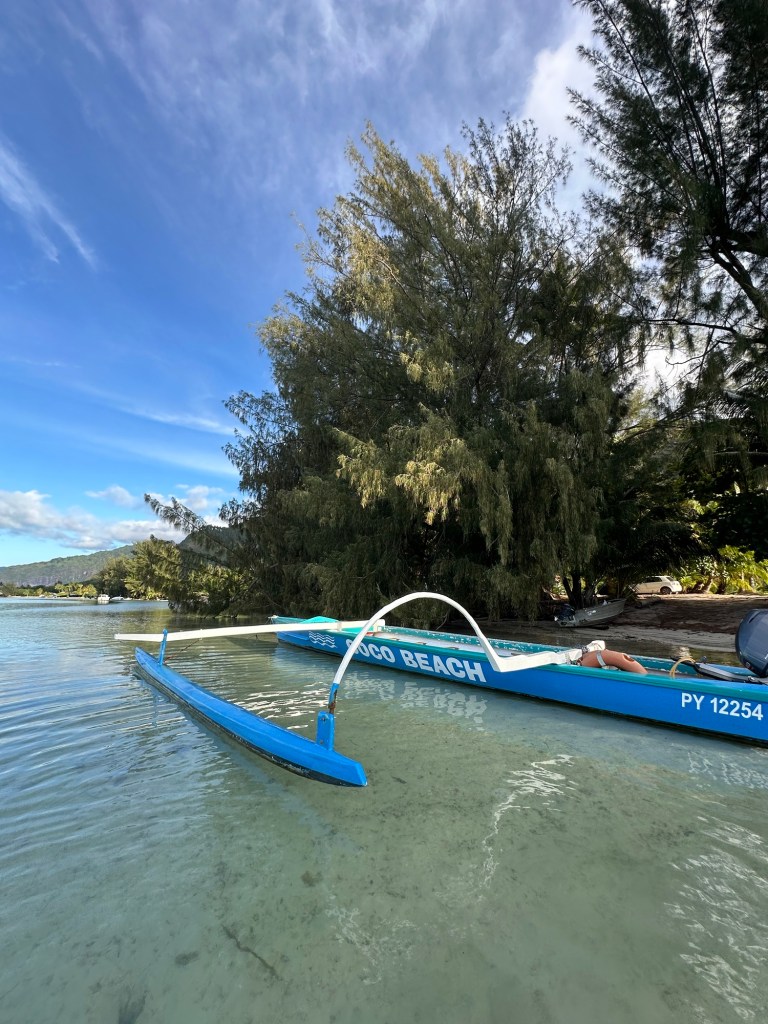
Another place to try is the Coco beach restaurant on Motu Tiahura, just off the Plage des Tipaniers. You can either kayak there, or go with their boat service. Reservations are a good idea, and snorkeling around the surrounding corals helps burn some of the calories.
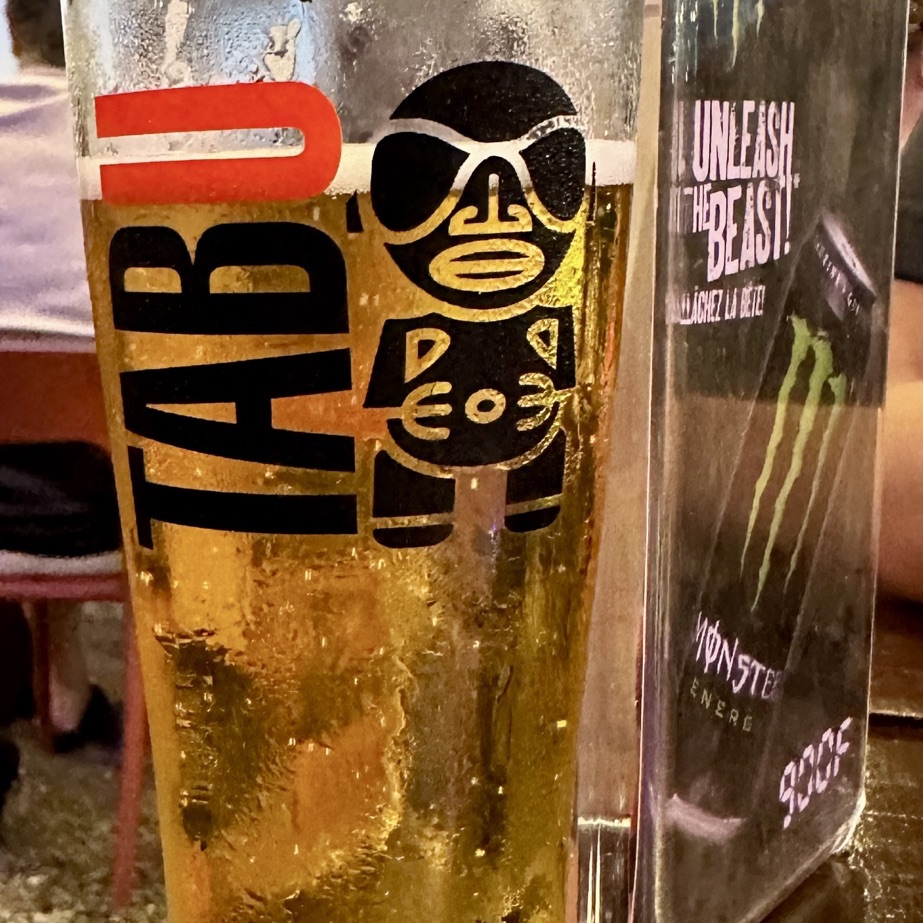
For drinks, there are the numerous exotic cocktails, but my regular choice was the local Tabu beer, ingeniously flavored either with mojito or vodka.
If you are tired of seafood and want something a bit more robust, Holy Steak is a good option.
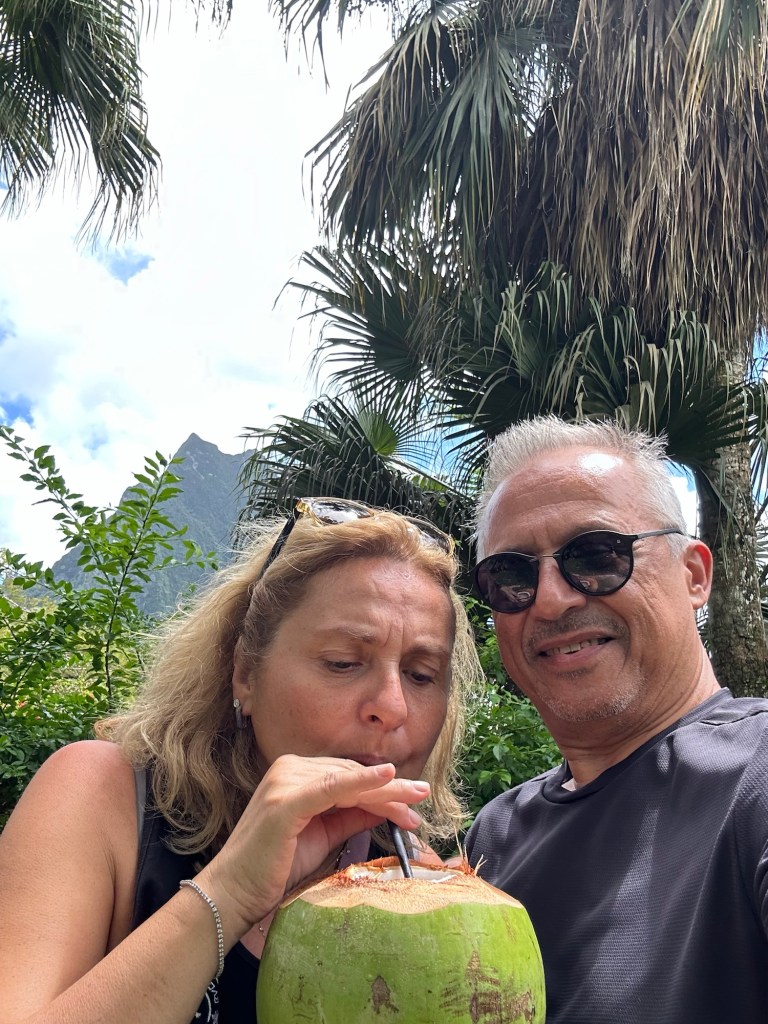
Moorea, with its beauty and vibrancy is a must see. I know I’ll return one day, to check the rays and the humpbacks and enjoy one of earths paradises. And, of course for the fresh coconut juice 🥰.
 CherryPicks