
I always wanted to visit the Pacific. Just hearing the names of the places like Tahiti, Bora Bora and Tonga make my mind go overdrive and my heart miss a beat.
Around a year ago, with a few good friends, we’ve decided to go on a Pacific adventure. We would do some island hopping, some sailing and some cruising.
After endless hours of planning, checking the flight schedules, ferry schedules, distances between local islands and countless other details, we finally agreed on a quite wonderful and equally challenging itinerary.
We decided to start from Tahiti and end in Fiji, some 3,200 km away. In between, we criss crossed the Pacific in planes, a chartered catamaran, ferries and finally a magnificent cruise ship, the Paul Gaugin.
You probably know the ancient saying : Lots of islands, lots of blog posts.
Here we start, with Tahiti in French Polynesia.
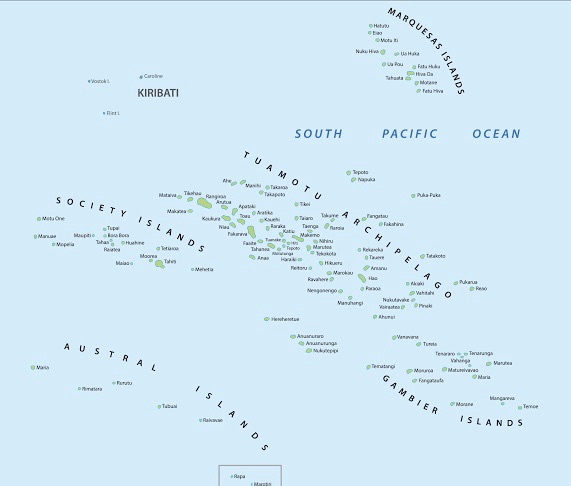
One hundred and eighteen of them scattered across the Pacific, the islands of French Polynesia are astonishing in their isolation and the lushness of their natural setting. They are grouped into five archipelagoes, the Society, Gambier and Austral Islands, the Tuamotus and the Marquesas.
These are isolated islands, born of the mingling of molten lava and ocean waves, resulting from massive underwater volcanic eruptions that happened between 40 and 60 million years ago for the oldest, and 6 million years ago for the most recent. Add to that the erosion caused by the moana (Ocean) and the mā (wind), and voilá, paradise is created.
There are ‘high islands’ with their steep mountains and barely-formed lagoons, islands with more modest hills surrounded by barrier reefs, which result from the development of the corals as the land sinks and the lagoon forms, to atolls or low islands, slender rings of coral barely higher than the sea’s surface.
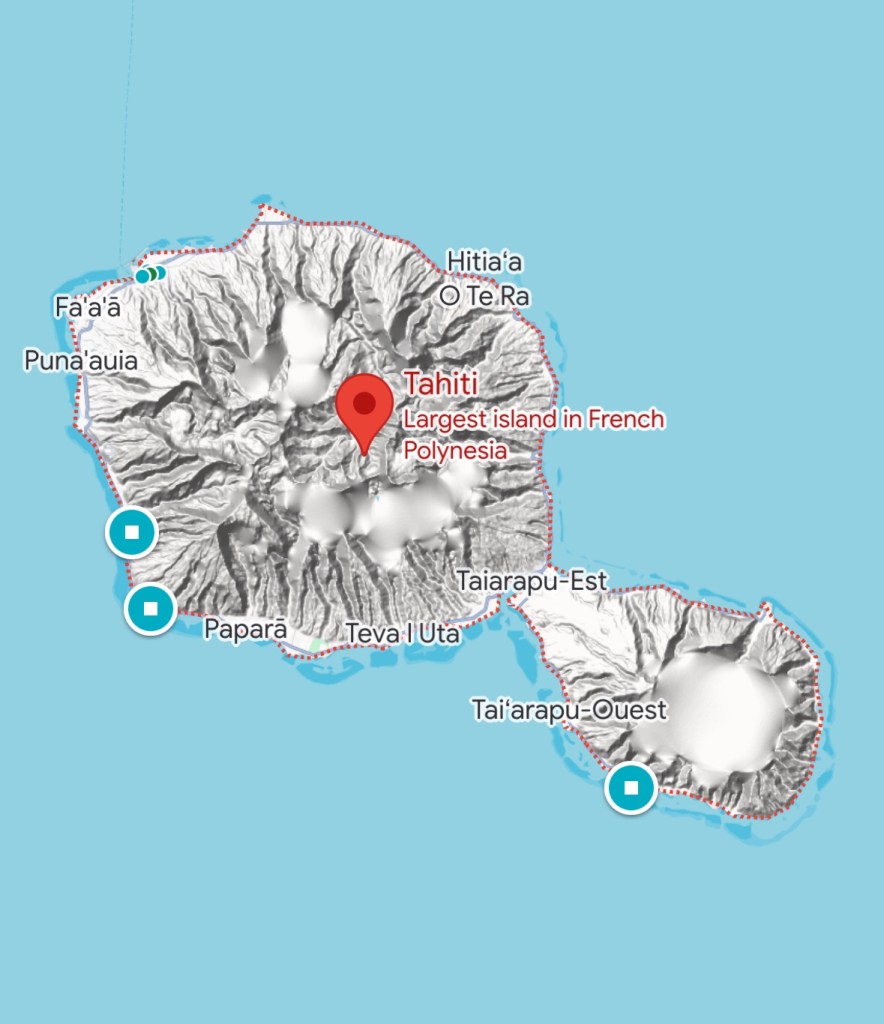
Tahiti, the principle island of French Polynesia is the largest of these islands, and the most crowded. It’s in the Society Islands archipelago. Shaped like a figure-8, it’s divided into Tahiti Nui (the larger, western section) and Tahiti Iti (the eastern peninsula).
Arriving to Papeete, the capital of Tahiti is no child play, one has to earn it.
We started in Istanbul and some 28 hours later (not counting the 2 day stopover in San Francisco, nor the waiting time at the airports), we reached Papeete.
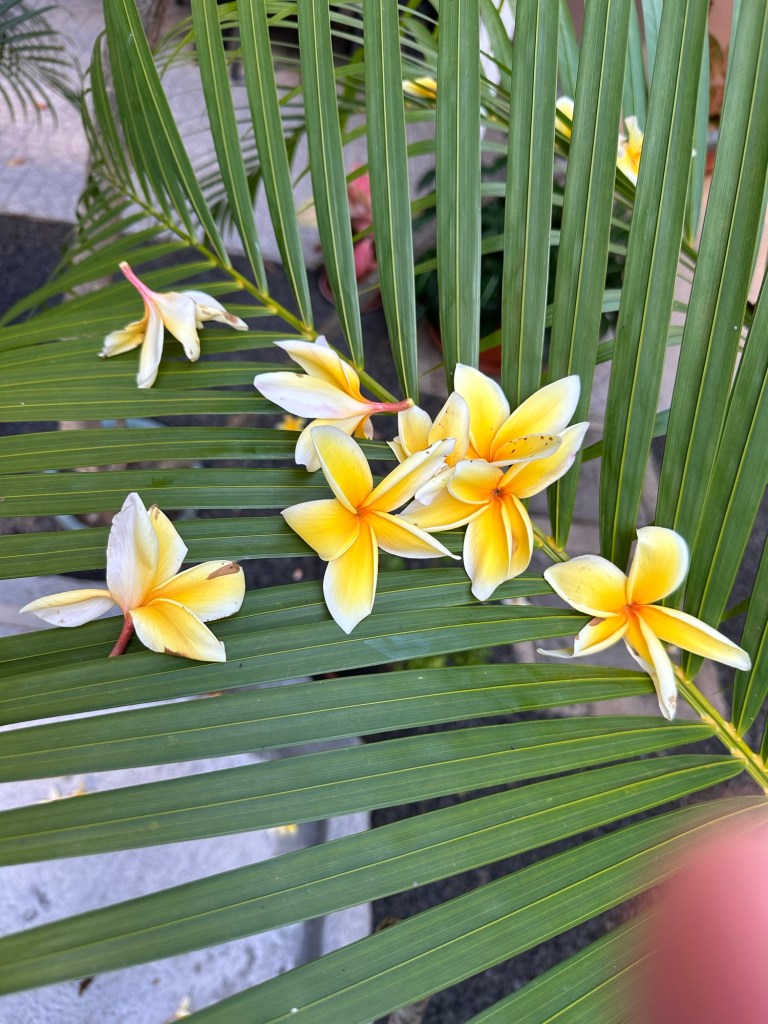
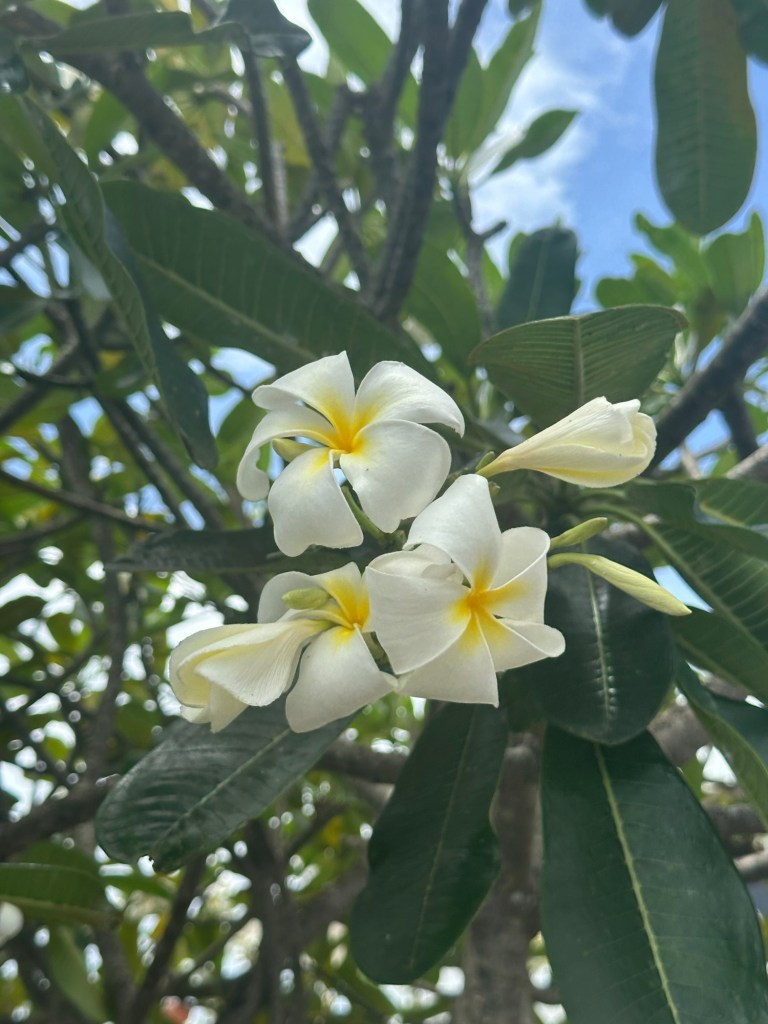
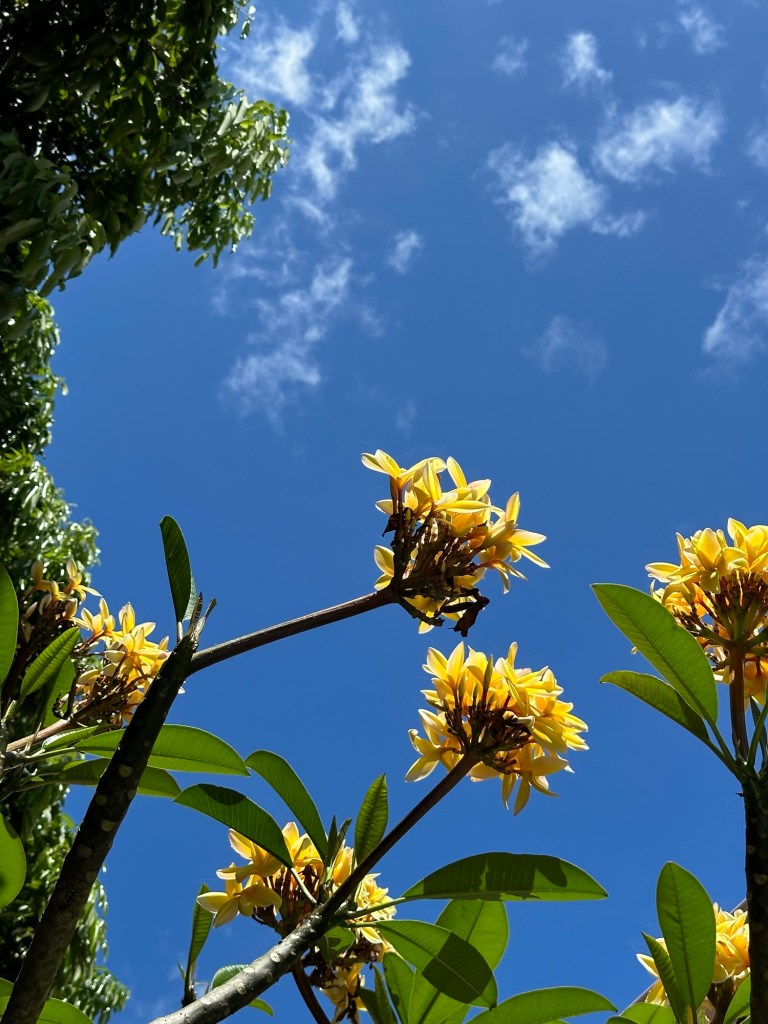
I always like arriving at places where they let you walk on the tarmac to reach the main airport building. They are the places that promise good weather and fun in the sun. In Papeete, and in fact in all the islands we went in Pacific, there was an added bonus of the flowers scents. The flora on these islands is so lush that the islands smell of tiara, ylang-ylang, frangipani and dozens of other flowers that I haven’t even heard of before. It was intoxicating.
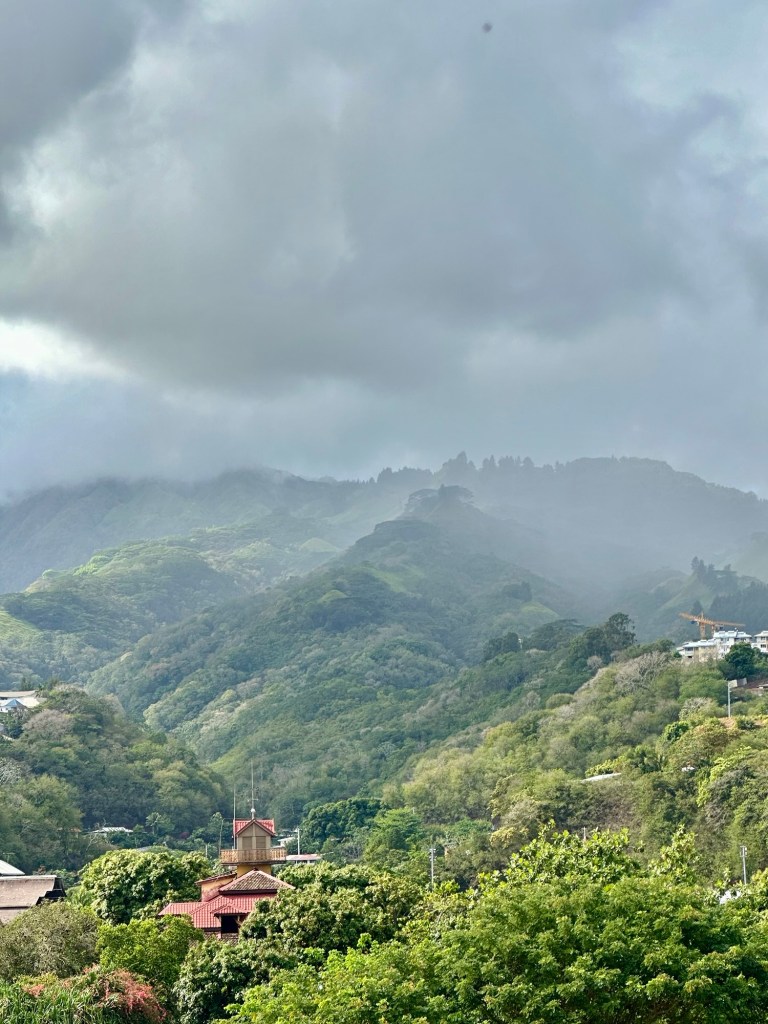
We stayed in two different houses in Papeete, La Maison de Paofai and the Kooka Nui Lodge, and both were in super locations, very comfortable and well maintained.
A word of advice: Most residences don’t accept credit cards, but they don’t mention that little detail on booking.com or airbnb. At the last possible moment, they send a mail asking you to bring cash in local currency; which can be a big nuisance if you are staying more than one night, for the ATMs have a cash advance limit. Best to double check it in advance.
Another thing is choosing the correct digital operator. We bought e-sim packages from Vini, a local operator and had excellent coverage all through the French Polynesia, even during sailing. Our friends who bought from international operators had some connection problems.
Some must do’s in Papeete :
Take a walk at the Pa’o’pai gardens and enjoy the abundance of flowers, overlooking Moorea island.
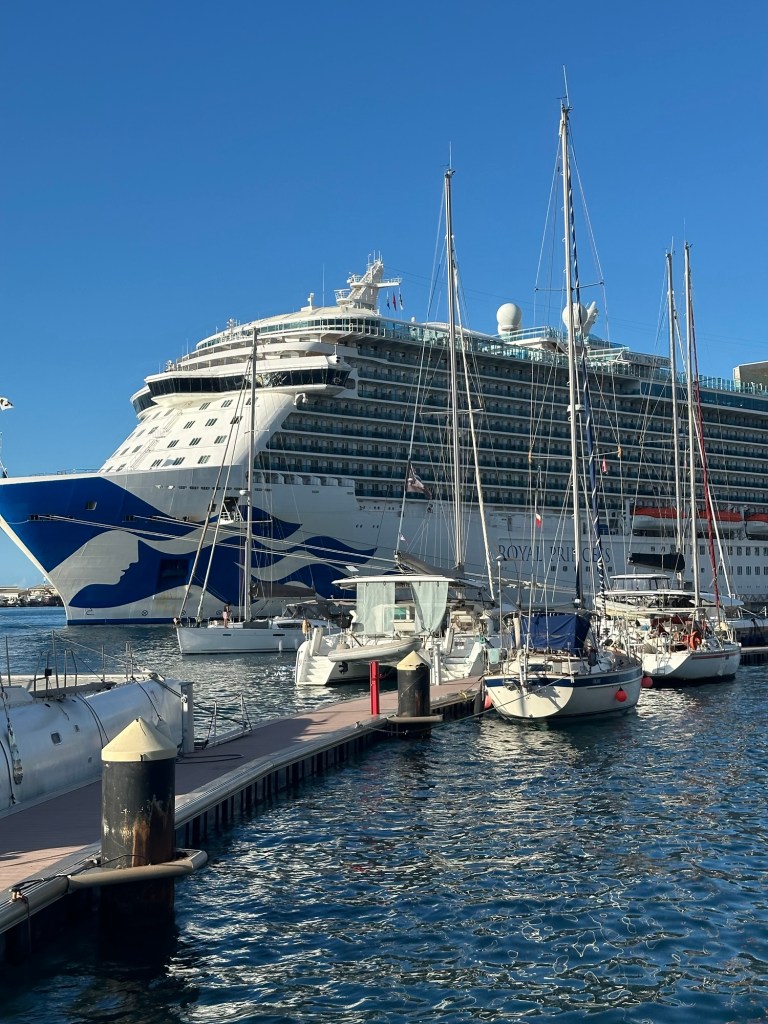
You’ll end up around the marina, where old ocean crossing sailboats are moored close to super yatches of the super rich. With the constant ferry trafic and the cruise ships moving in or out of the harbour, there’s rarely a dull moment.
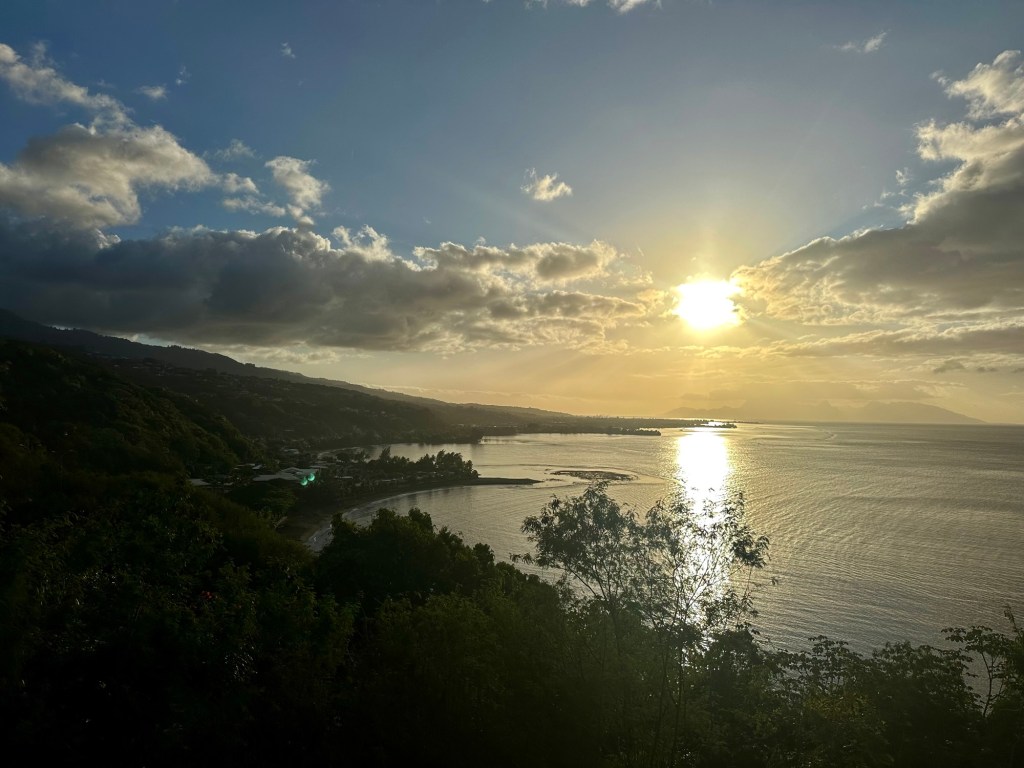
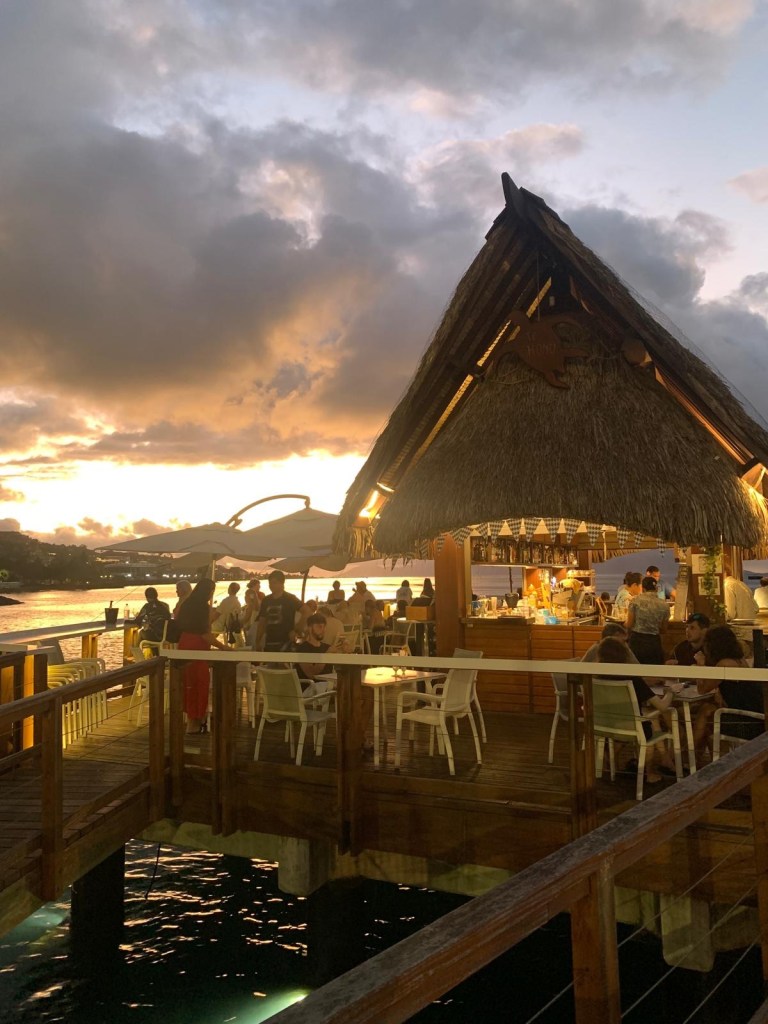
If you go there close to sunset, have a cocktail at The Moana; watching the horizon turning orange, red and violet.
Here, women really adorn their hair with flowers and wear pareos during the course of their day. Seeing the local beauties with their crowns of exotic flowers make one to run to the nearest market to grab some flowers.
The streets around the harbour are full of pearl boutiques as well as antique dealers exhibiting beautifully carved tikis and other objects, especially from the Marquise Islands. It’s a joy to visit these shops.
Black pearls are cool, even for boys ! If you are on a budget, the street sellers and the Papeete Market offer some reasonable alternatives.
Another thing to check is the monoi oil, a natural flower scented coconut oil. Once used as medicine as well as perfume, today it’s a unique and protected product, made from plants indigenous to Polynesia and bearing the guarantee of authenticity, Appellation d’origine (AO, Label of Origin). I bought a small bottle, it’s great on the skin and smells heavenly !
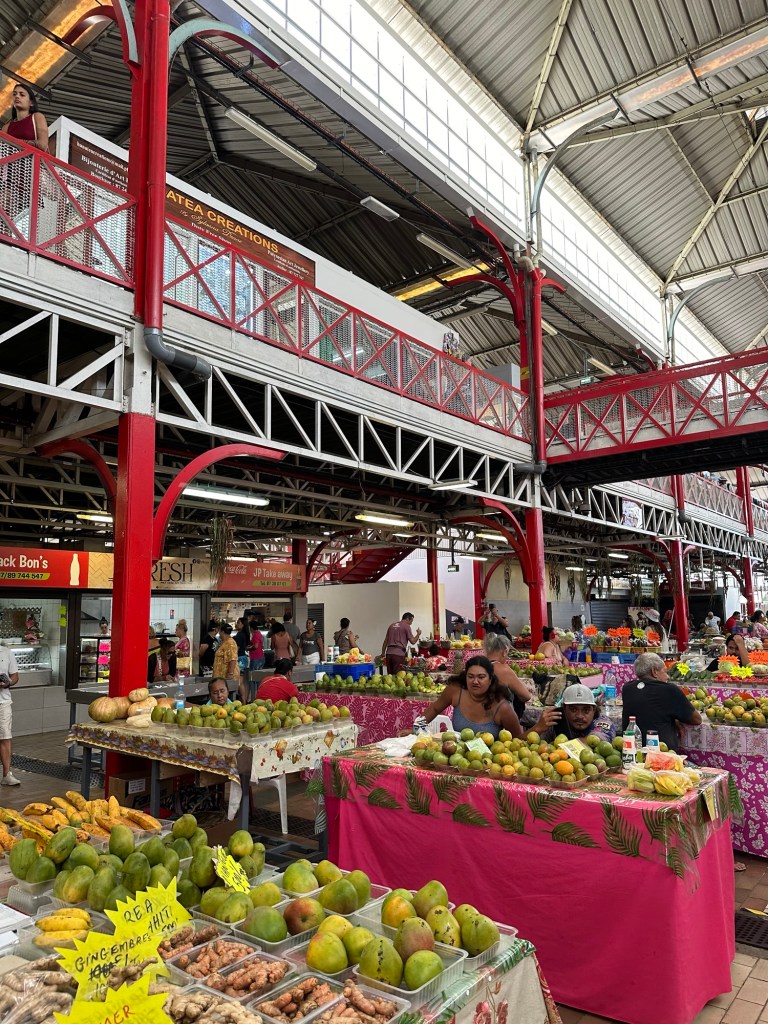
The Papeete Market is the place to buy anything and everything, from fresh seafood and black pearls to flowers, pareos and dresses. The cafe at the second floor prepares great smoothies and fresh seafood plates; as well as the local favourite, poisson cru.
Don’t forget to try the roulotte – the food trucks for a casual diner. Prices are reasonable, service is fast and the portions are huge. Each serve a different cuisine. We tried Chez Dominique at the harbour and had a lovely time tasting their seafood dishes. Everything we ordered was fresh and delicious.
The staple Polynesian dish is the ‘poisson cru au lait de coco’. It is easy to prepare, fresh and oh-so-delicious.
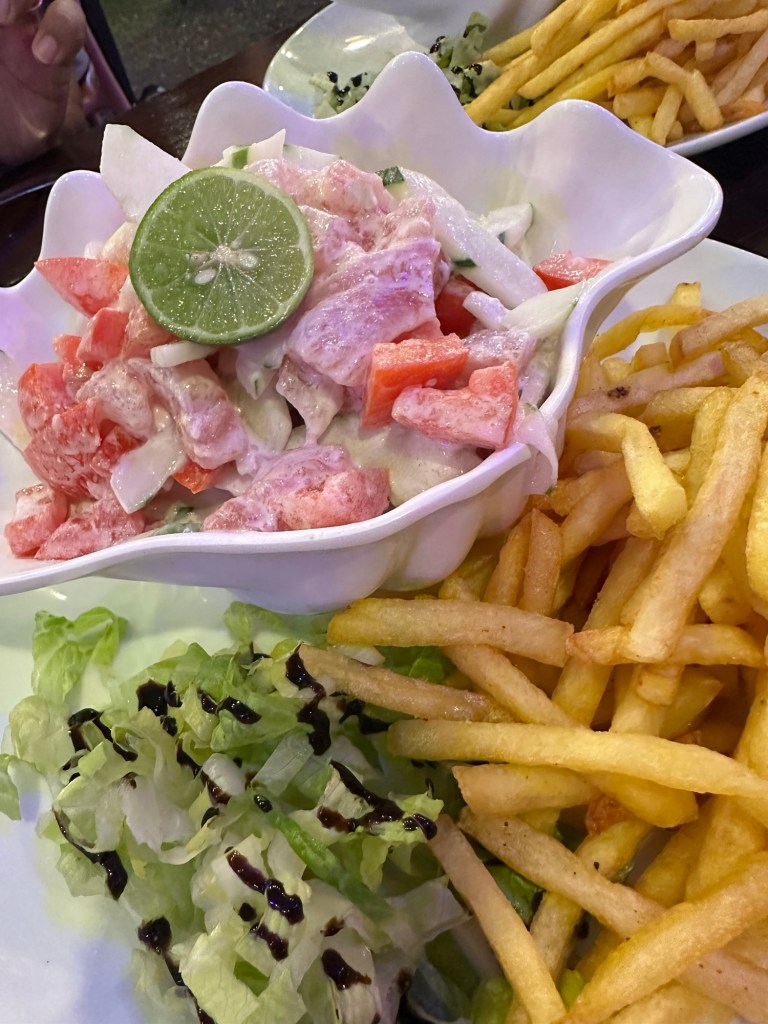
The original receipe has tomatoes, which somehow wasn’t right for me, so I replaced them with carrots.
For 6 people
- 500 grams of red tuna
- 1 small carrot
- 1 small cucumber
- 2 lemons or limes
- 1 onion
- A small piece of grated ginger
- 250 ml of coconut milk
- Salt & pepper
Cut the fish into small cubes and soak them in sea water or salted water for 5 minutes.
Drain the fish and put to one side.
Dice the carrots and cucumber, finely chop the onion and the ginger and put in a salad dish. Add the tuna to the dish and mix with the other ingredients. Squeeze in the lemon and add the coconut milk just before serving. Add salt and pepper to taste.
If you want to pair it with an exotic cocktail, try either Pina Colada or Mai-Tai, the Tahitian Punch.
That’s all. Bon appétit!
Another great restaurant to try is the Brasserie des Remparts, Tahiti. It’s out of the tourist route, with a quirky design and incredibly tasty food.
Learn a few words in Tahitian. These are proud people that came to these lands centuries ago and built a civilization all over the Pacific, long before the Europeans set foot on the first island. They were never slaves, but master navigators and survivors. They created Rua’s, the star pathways to populate a region covering 30% of the planet.
They are also very friendly. Strangers in the street will greet you with calls of ia orana (pronounced yo-ra-nah; meaning hello and have a good day) ; and a simple mauruuru (Thank you) goes a long way.
Rent a car or arrange a tour to go around the island. Since there were 7 of us, we opted for a private tour organised by uniquetahiti.com
While driving, our guide talked about the island politics. Tahiti, as well as all French Polynesia is a semi-autonomous territory of France with its own assembly, president, budget and laws. France’s influence is limited to subsidies, education, and security. But France is footing the bill, to the tune of 2 Billion Euros per year. I guess that’s the cost of having a piece of the paradise, as well as a foothold in the Southern Seas.
Among Tahitians, there are pro-independents who want, well, independence and pro-autonomist who want to protect the status quo.
Later, someone told me ‘the autonomists are independents with the French money, and the independents are autonomists without the French money.’ I guess that summed it up perfectly.
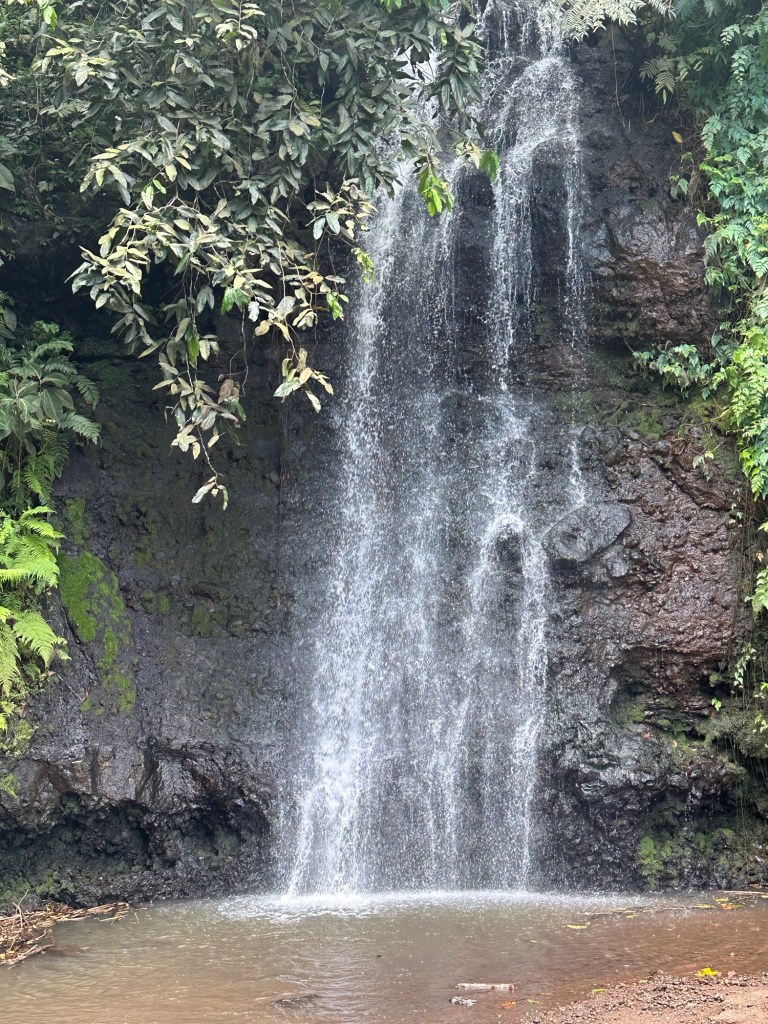
We started at Papeete and drove south, enjoying the stunning scenery that this spectacular island has to offer. The scenery changed from crystal clear waters to volcanic mountains covered in all the shades of green, with a few waterfalls in between. Along the way, we saw local fishermen selling their daily catch and tradesman selling their fruits. Overall, it was a delightful day.
We visited the Grotto Vaipoiri, a natural and connected cave system with freshwater pools and thought about Paul Gauguin who drew inspiration from this peaceful site. There were other grottos in short walking distances.
Then we continued to the water gardens at Vaipai, a beautiful, lush botanical garden dotted with waterfalls and small pools, enhancing the serenity of the place. Among many fish that we saw in the pools, as well as the rivers connecting to the ocean, there were a few lazy eels; which we learned to be sacred.
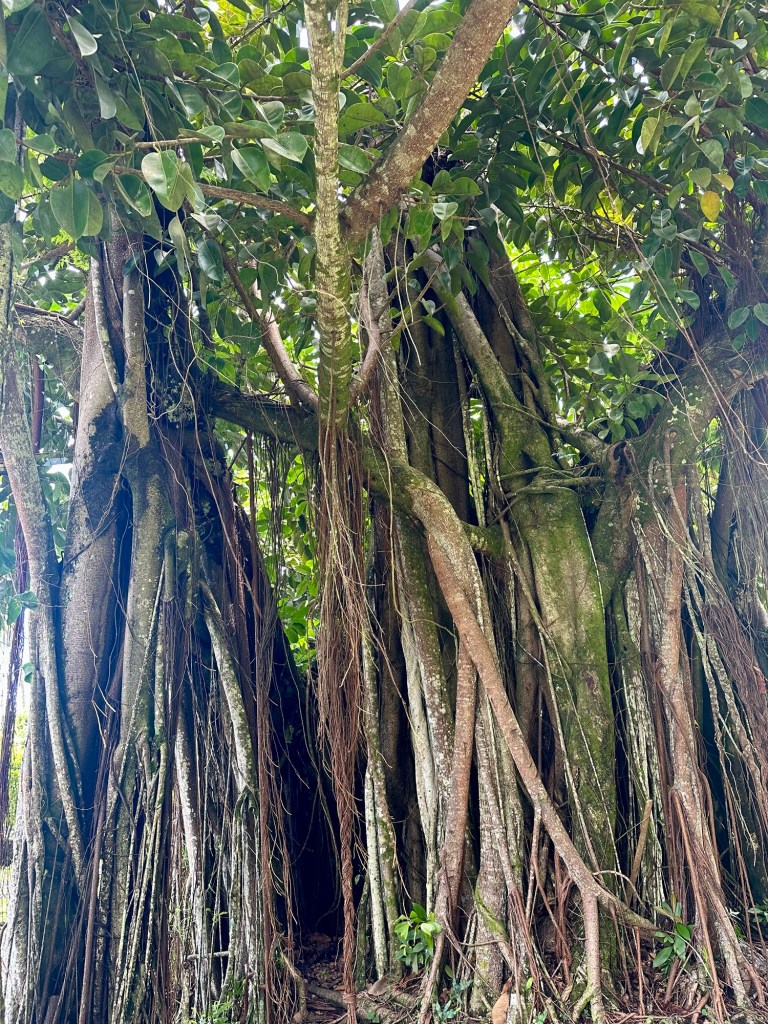
There was a local vendor selling breadfruit chips and ice cold fresh drinks. A delicious pit stop, if there was ever one. It turned out the roosters walking around liked breadfruit chips as well, so we made some friends.
A note on the roosters – they are everywhere! We went to mountaintops or beaches or chic restaurants only to be greeted by roosters. Le Coq, the Gallic symbol that represents France as a nation has serious competition in the form of Le Coq Tahitien.
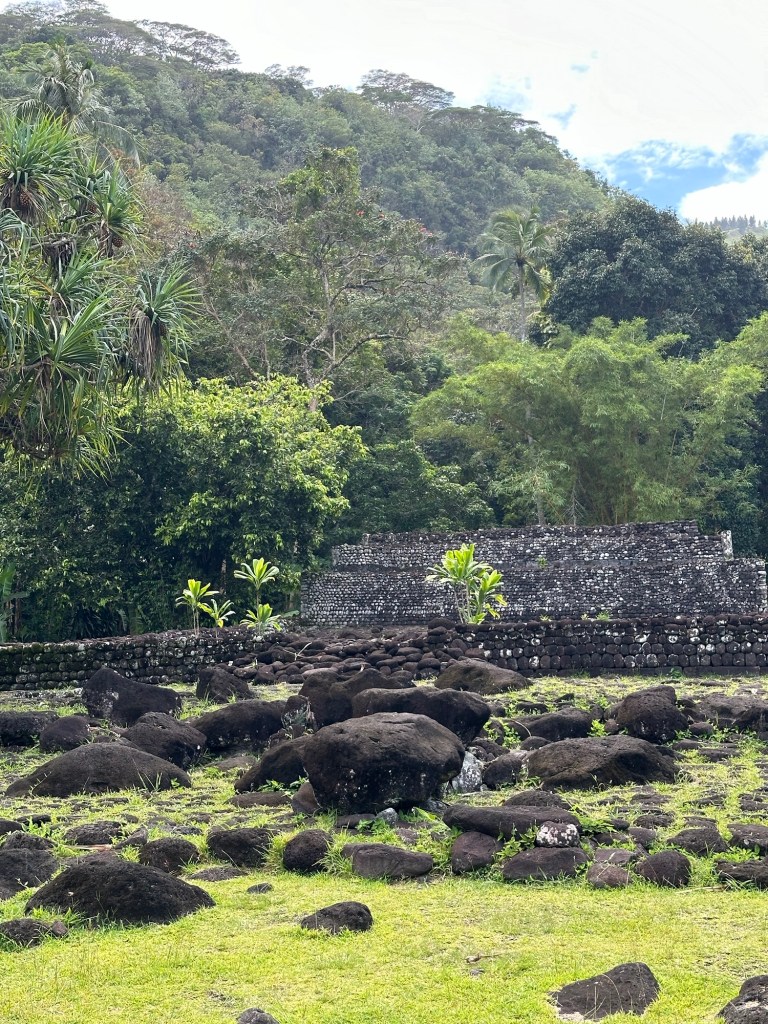
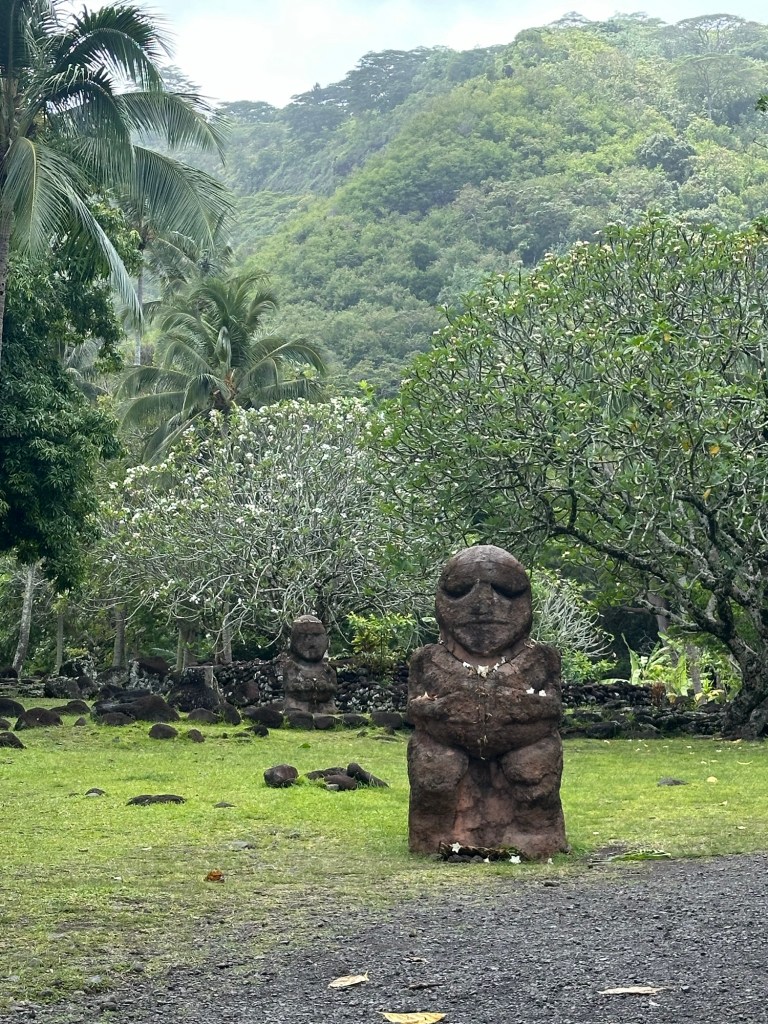
We stopped at the ancient religious site, Marae of Arahuruhu, set against a picturesque backdrop of tall trees and flowers. It was protected by two tikis, Haitā, the octopus and Moana , the ocean. In Polynesian mythology, the octopus represents adaptability, intelligence, and the mysteries of the ocean and ocean is life.
It is the most sacred of all.
I wanted to visit the Paul Gauguin museum, but after learning it is closed for restoration and it only exhibits reproductions anyway, I felt dissapointed; for I wanted to see some of the paintings in the places that inspired him and so many people around the world.
Another museum to visit , if we had the time was the Museum of Tahiti and the Islands. Luckily we had many island visits and tours planned, so we were lucky enough to get a strong feeling of the history and culture of these beautiful lands first hand.
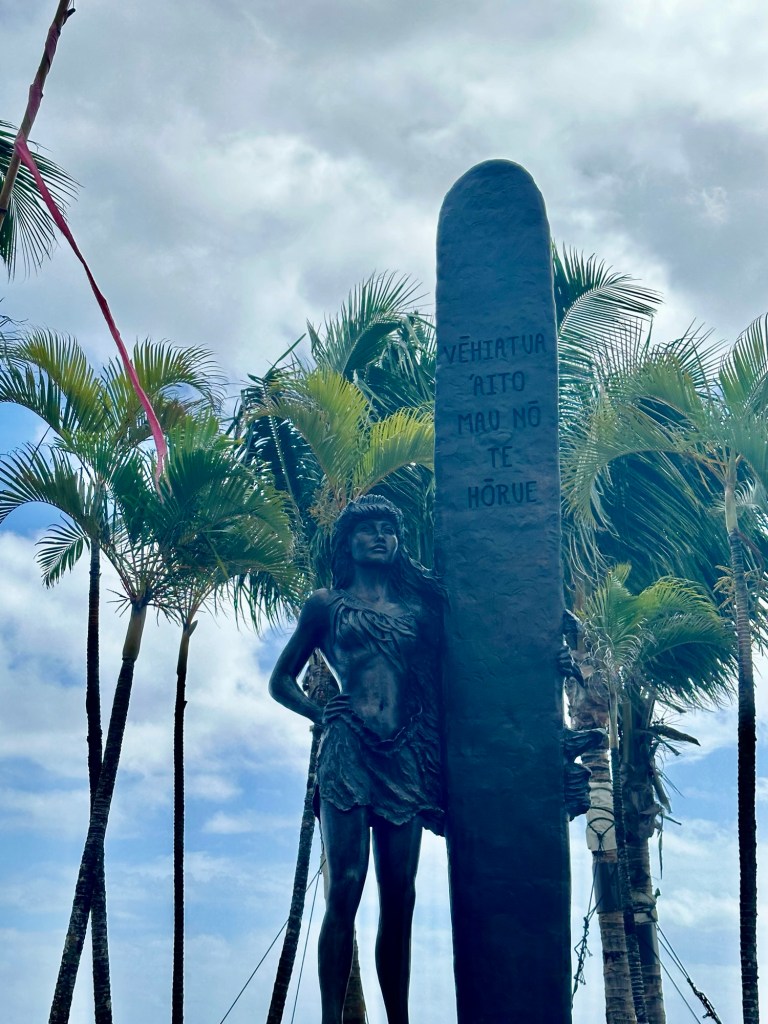
An unforgettable spot was the Teahupo’o, an iconic surf spot renowned for its massive, barreling waves, attracting surfers and spectators from around the world. It is truly a beautiful place where a river runs to the sea and mountains form a deep valley. The beach seems endless, as is the ocean.
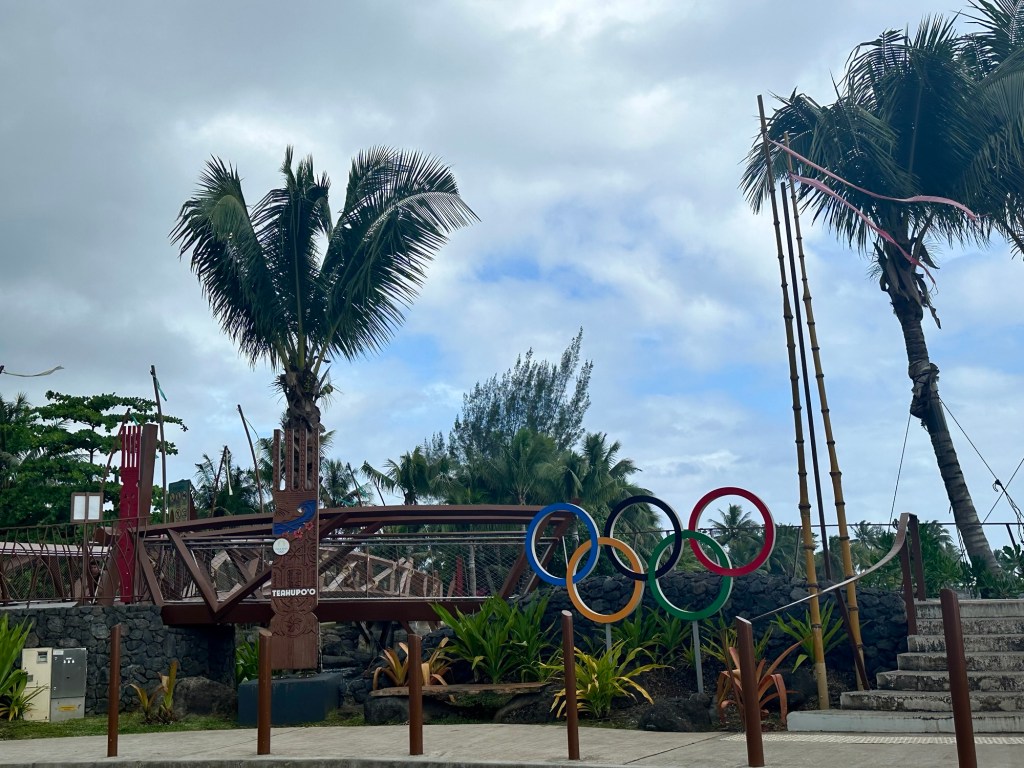
It was the spot chosen for the surf competitions for the 2024 Paris Olympics.
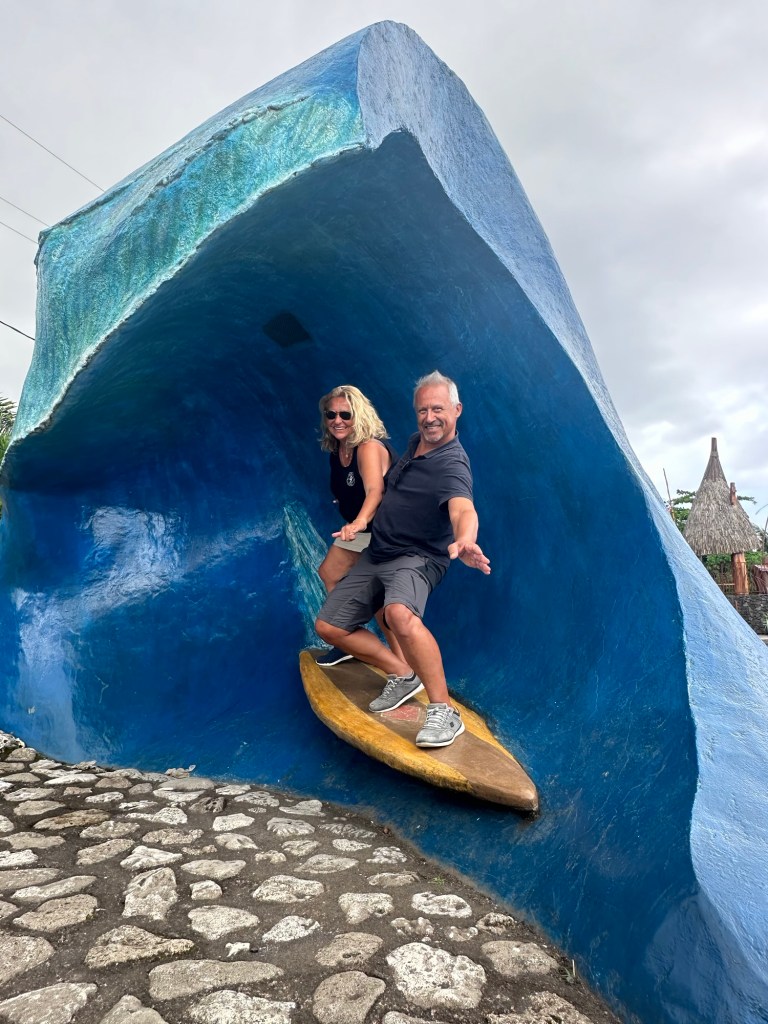
We stopped at a small restaurant right on the beach. Le Plage de Mauri turned out to be a hidden gem in Tahiti Iti. The food was delicious and the portions were huge. No wonder this place is a hot spot for the surfers, who would need all the energy to fight the famous waves of Tahiti.
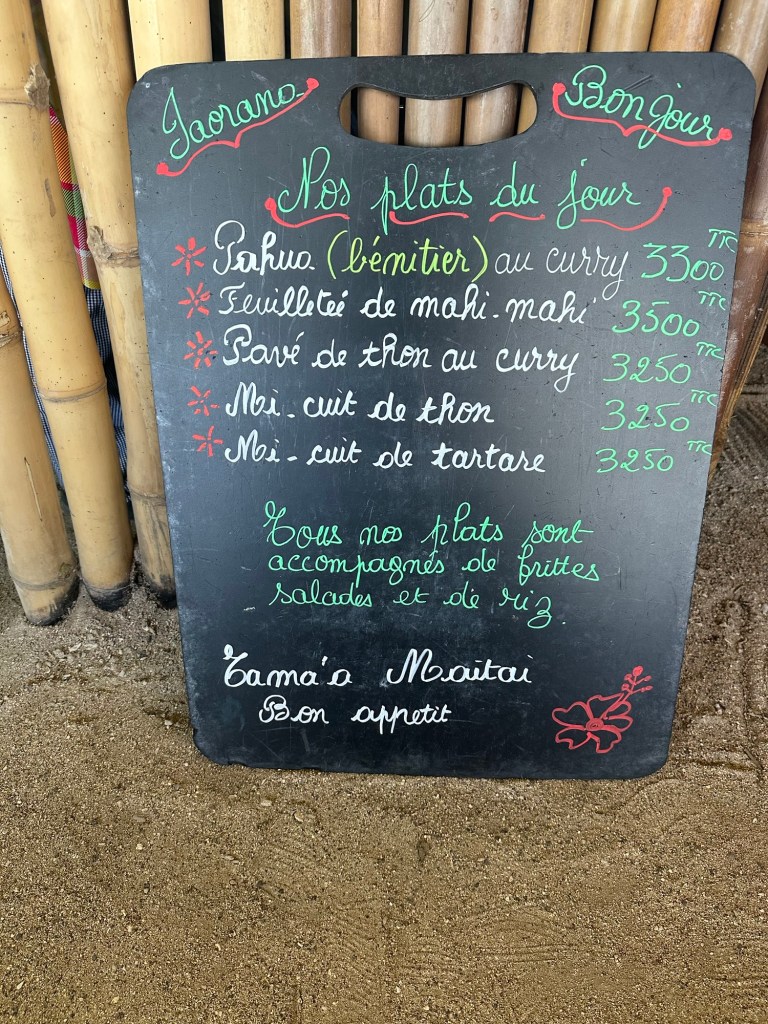
We then continued to the north side of the island.
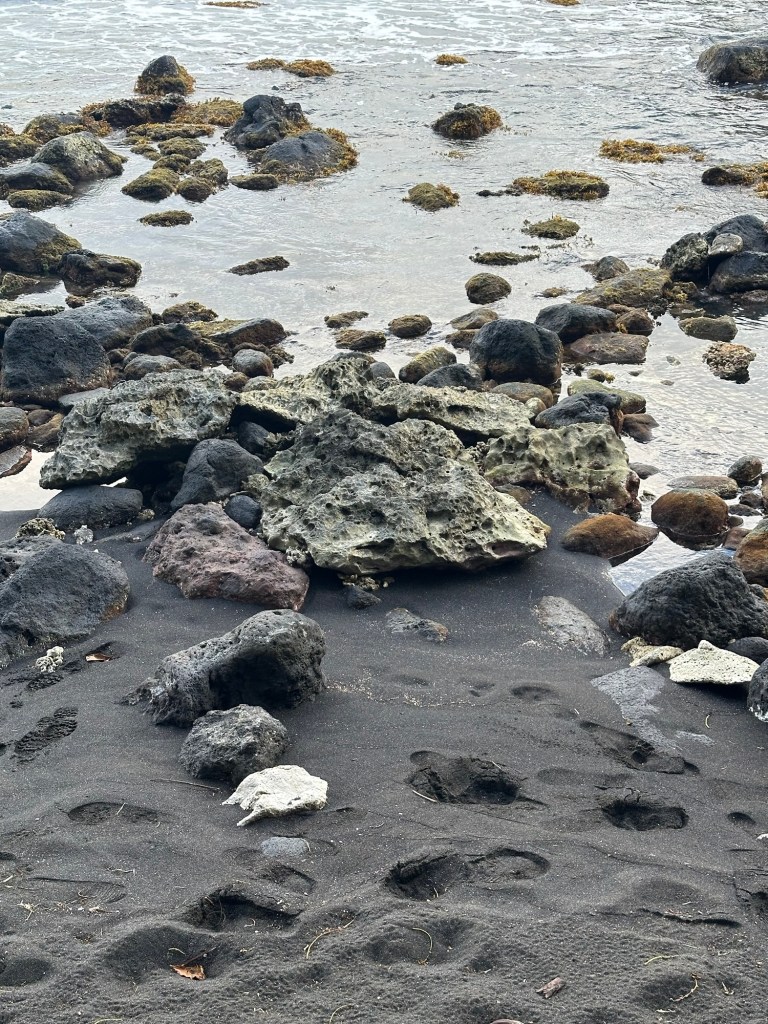
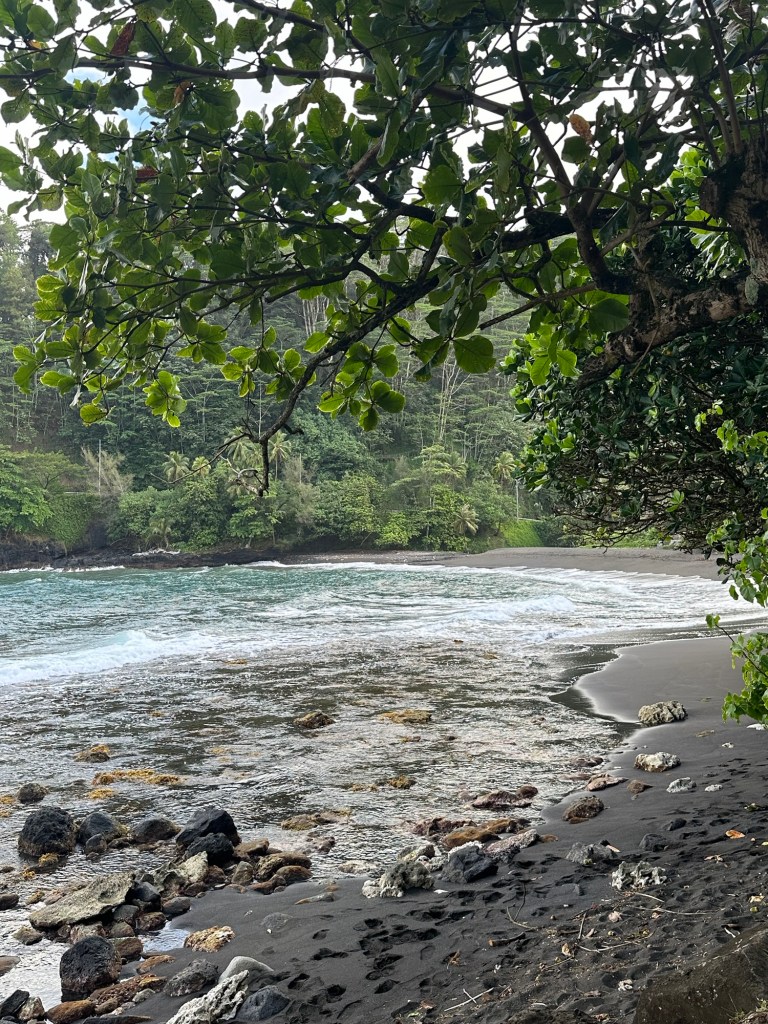
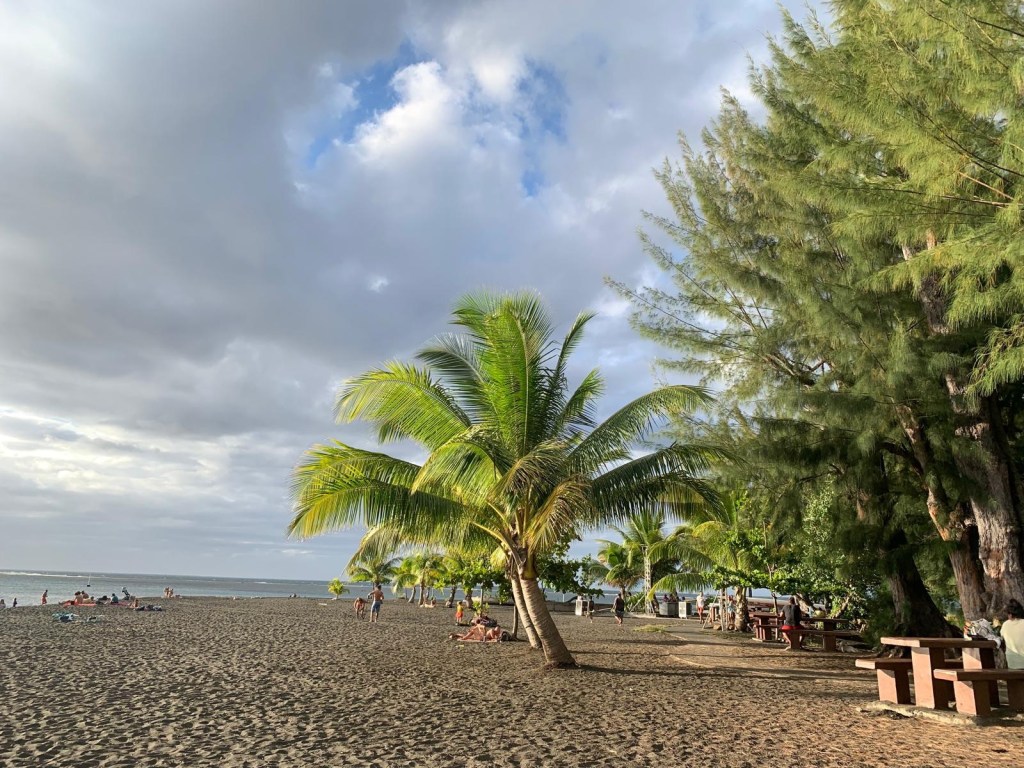
Here, the mountains get closer to the ocean, the plains disappear and the nature becomes more wild. The coral reef that protects the south side has eroded into black sand where local kids learn to surf.
The first European ship to raise the spectacular peaks of Tahiti was the Dolphin commanded by Captain Wallis in 1767. Close in the wake of this British ship was the French vessel Boudeuse commanded by Captain Louis de Bougainville. The reports of both these able and articulate navigators caused immediate interest in all European maritime nations. The fabled Pacific paradise was real.
In August 1768 a joint scientific expedition of the Admiralty and the Royal Society was dispatched to Tahiti to make astronomical observations and follow up Wallis’ discovery. The expedition was commanded by James Cook, maybe the greatest of all the eighteenth century explorers. Captain Cook and his company stayed at Tahiti for three months during which they had close contact with Tahitians. Some of the Britons even learned to speak a little of the local Polynesian language. It was the first time that a Pacific island people had come under such close and sympathetic contact with the outside world.
In his company, there was a certain Lieutenant Bligh.
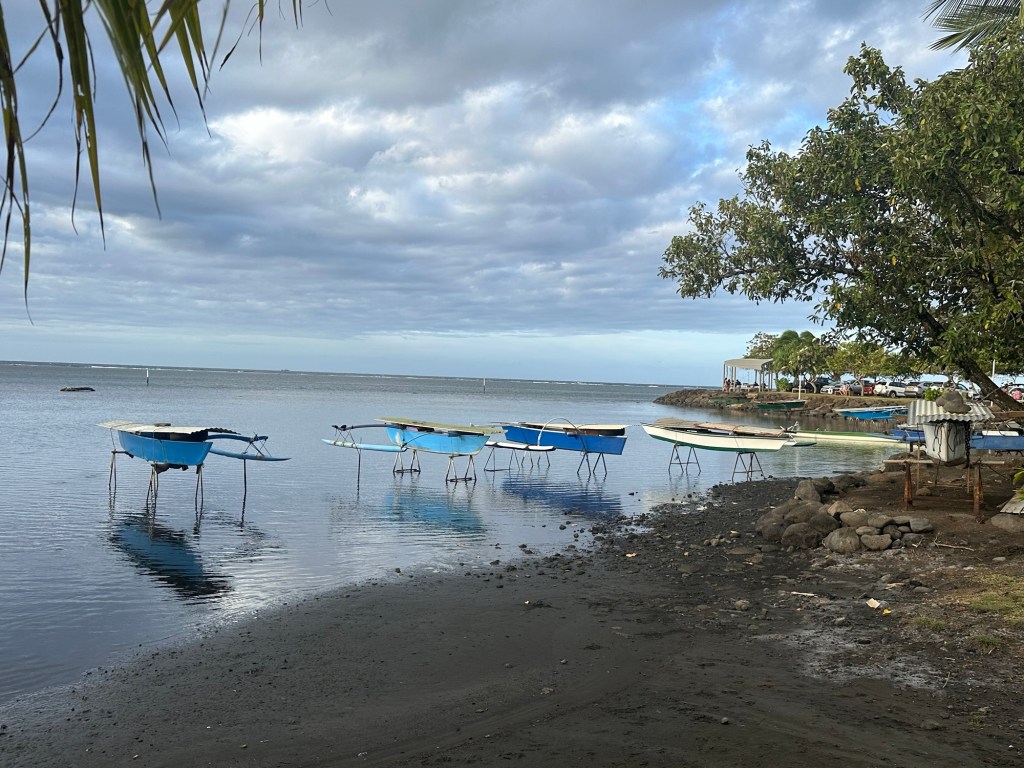
Captain Bligh came back to Tahiti in 1788 in his ship, the HMS Bounty to collect and trasport breadfruit to the West Indies. They had a long layover at Tahiti, during which many of the crew lived ashore and had relations with the Tahitians.
They already knew that the Tahitians were an attractive people, especially the women. They were much fabled for their beauty and their willingness to sleep with the visitors. Tahitian attitudes toward sex were a sailor’s dream come true and a source of fascination for all Europeans but the most Puritanical. The crew of Bounty were not Puritans.
After they finally set sail, Captain Bligh tried to re-establish discipline; his crew, led by Christian Fletcher, his second-in command, wanted to return to Tahiti and so they rebelled. They put the captain and the crew who are loyal to him on a small boat with a few days food and drinks and went back.
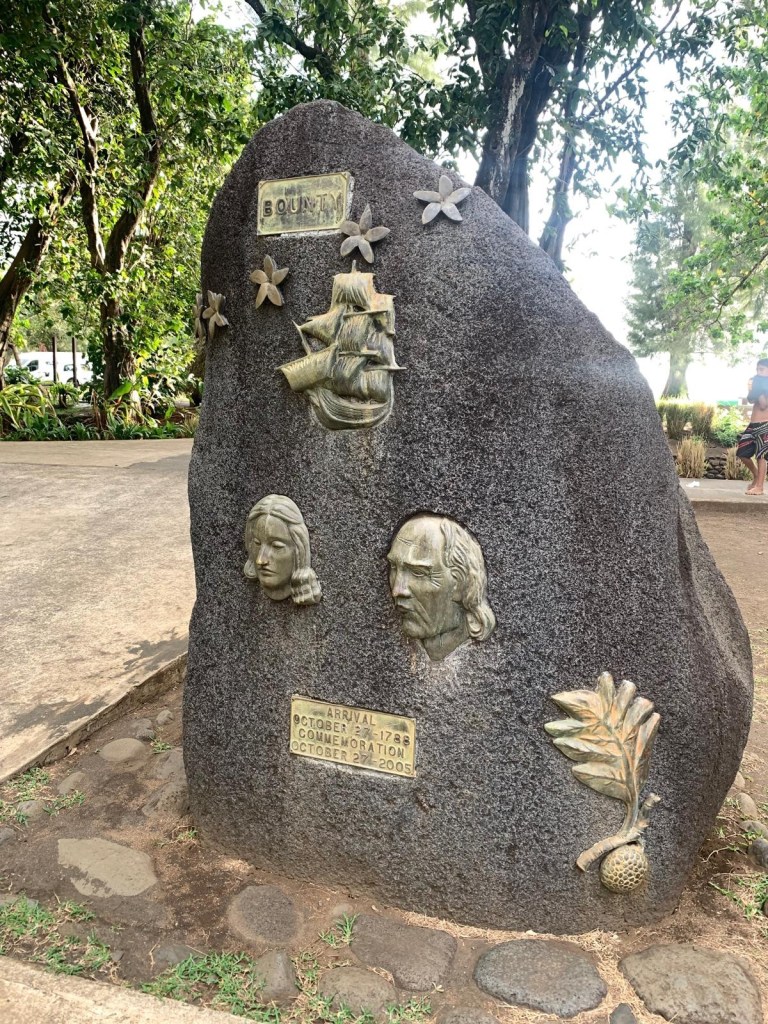
Most of them didn’t live long enough to enjoy their rebellion, but that’s another story.
Bligh turned out to be a hell of a captain and managed to reach land after some 3,500 nautical miles. That’s another story as well.
Fast forward to 1962, when MGM decided to make a big movie, chose Marlon Brando for the role of the rebel Christian Fletcher, and art imitated real life. During the filming, the star fell in love with his French Polynesian co-star, married her and bought the island Tetiaora where he built a mansion to live in. Today, it’s luxury hotel named The Brando.
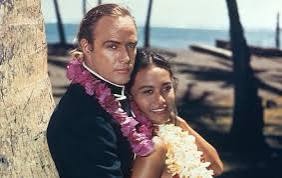
That is the story and everywhere you go, there will be someone who’ll remind you of the mutiny on the Bounty and the handsome Hollywood star who married the Tahitian beauty.
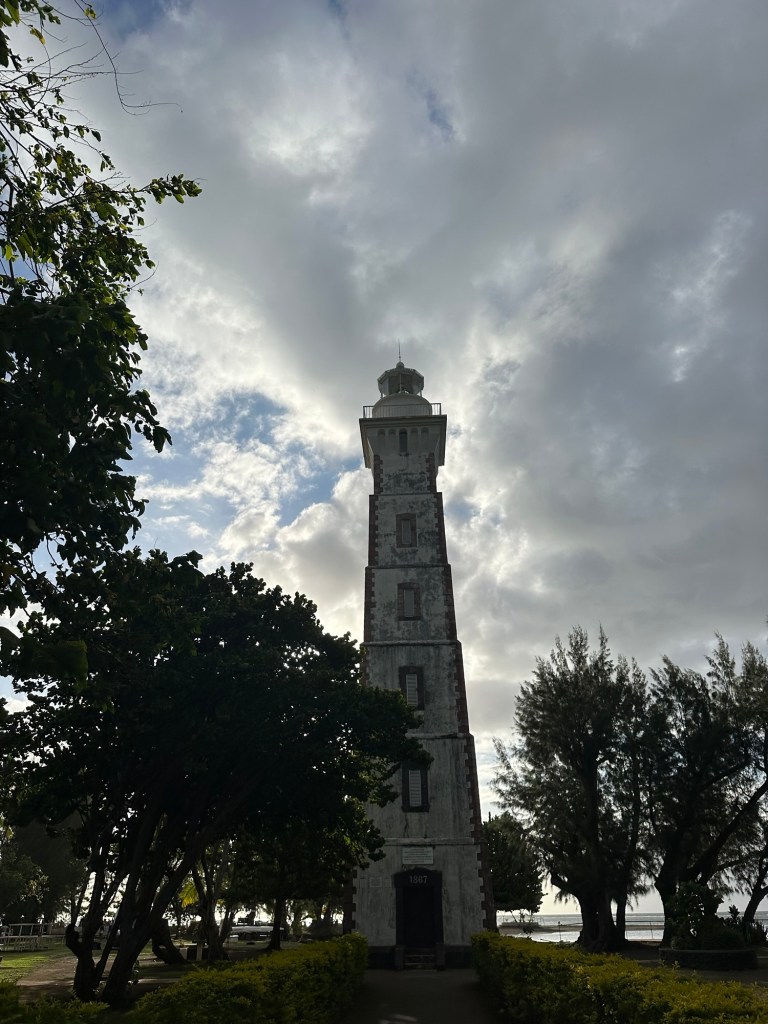
Being an island, Tahiti has some great beaches. I especially liked the one around the Venus Point. It is a picturesque anchorage, as well a beautiful beach.
This is where Captain Cook chose as his fortified camp to build an observatory in 1769. His main objective was to observe the transit of Venus.
Today Tahitians and tourists come here to swim, to surf, to dance and have a good time with friends and family. There are small cafes and bars around; the sand is black, the beach is wide and the sunset spectacular. What more does one need in life ?
Well, we found the answer to this question in Moorea, just a short ferry ride away.
 CherryPicks